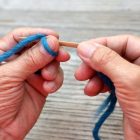
Many projects that you can make with needlebinding are started with a circle : bags, a sweater or hats.
Knitting socks is done with cicelcular needles, or with 3 or 4 needles, the great thing about needlebinding is that you only need One Needle.
When you start a project you can choise a stitch you like, every stitch is different in size and thickness and tight or very loose.
Your thumb size and whether you nalbind loose or tight and the stitch and connection stitch choice determines how the fabric will look.
I made some swatches with 30 stitches in a row and 5 rows long.
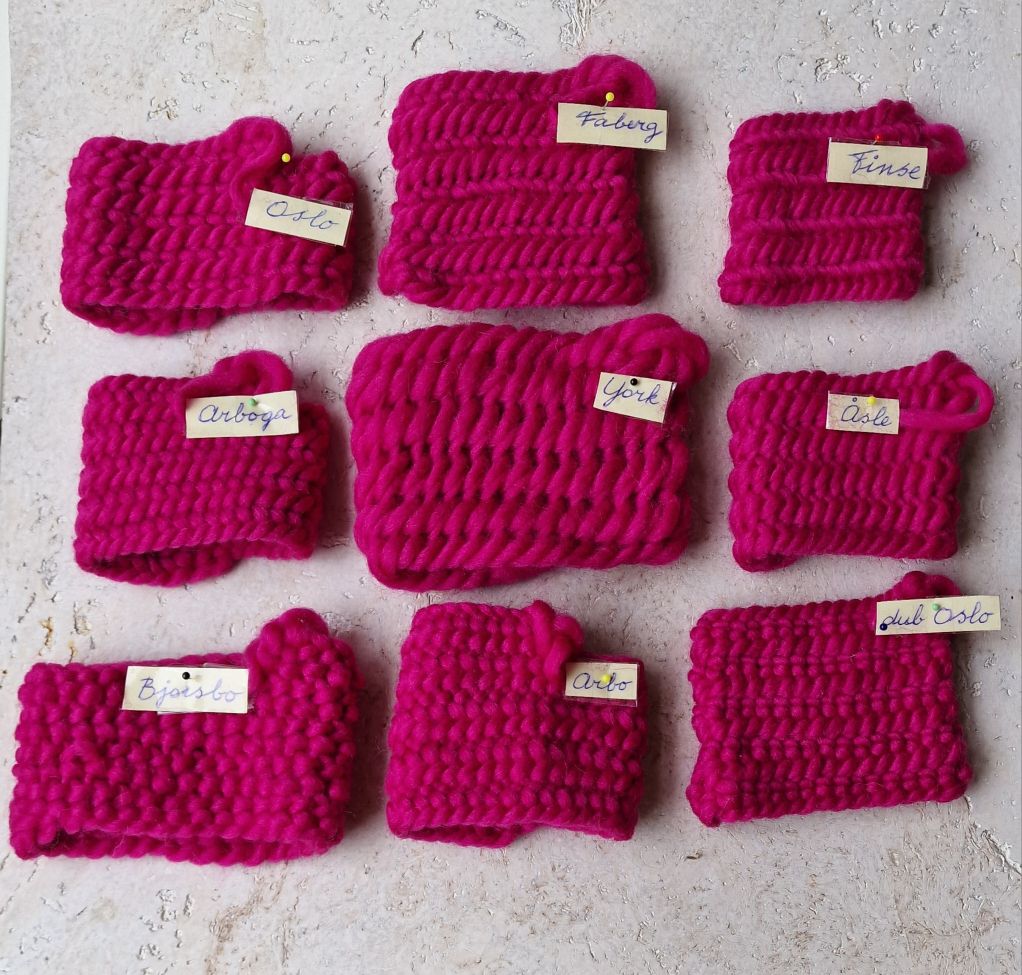
All the swatches are made with the connection stitch F2, (you pick your old loop and your next loop on your needle and make your stitch).
The Oslo stitch was used in the next project.
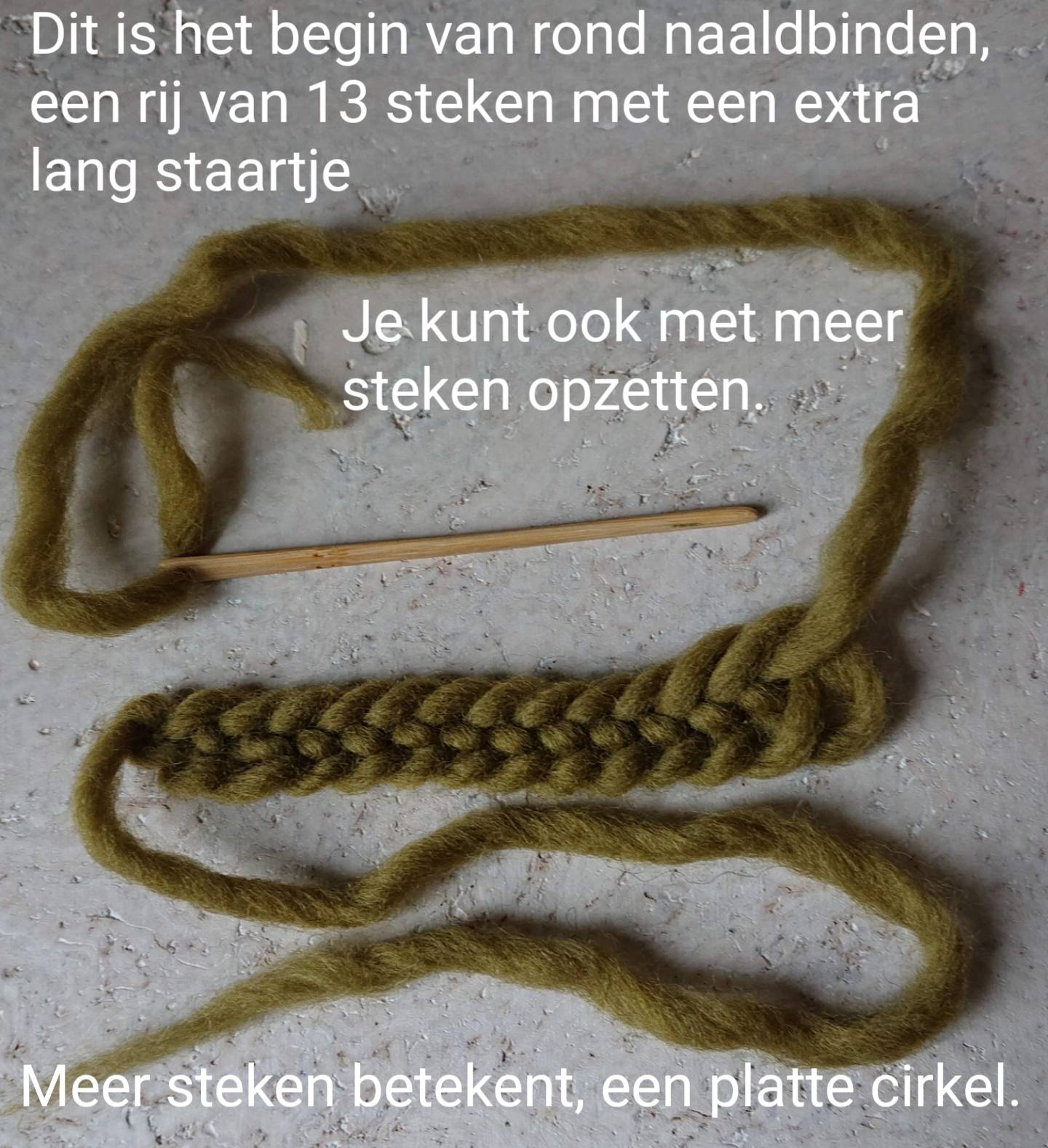
This is the start of needlebinding of a row of 13 stitches with the Oslo stitch and extra long tail. You can also set up with more stitches, the hat is going to be bigger.
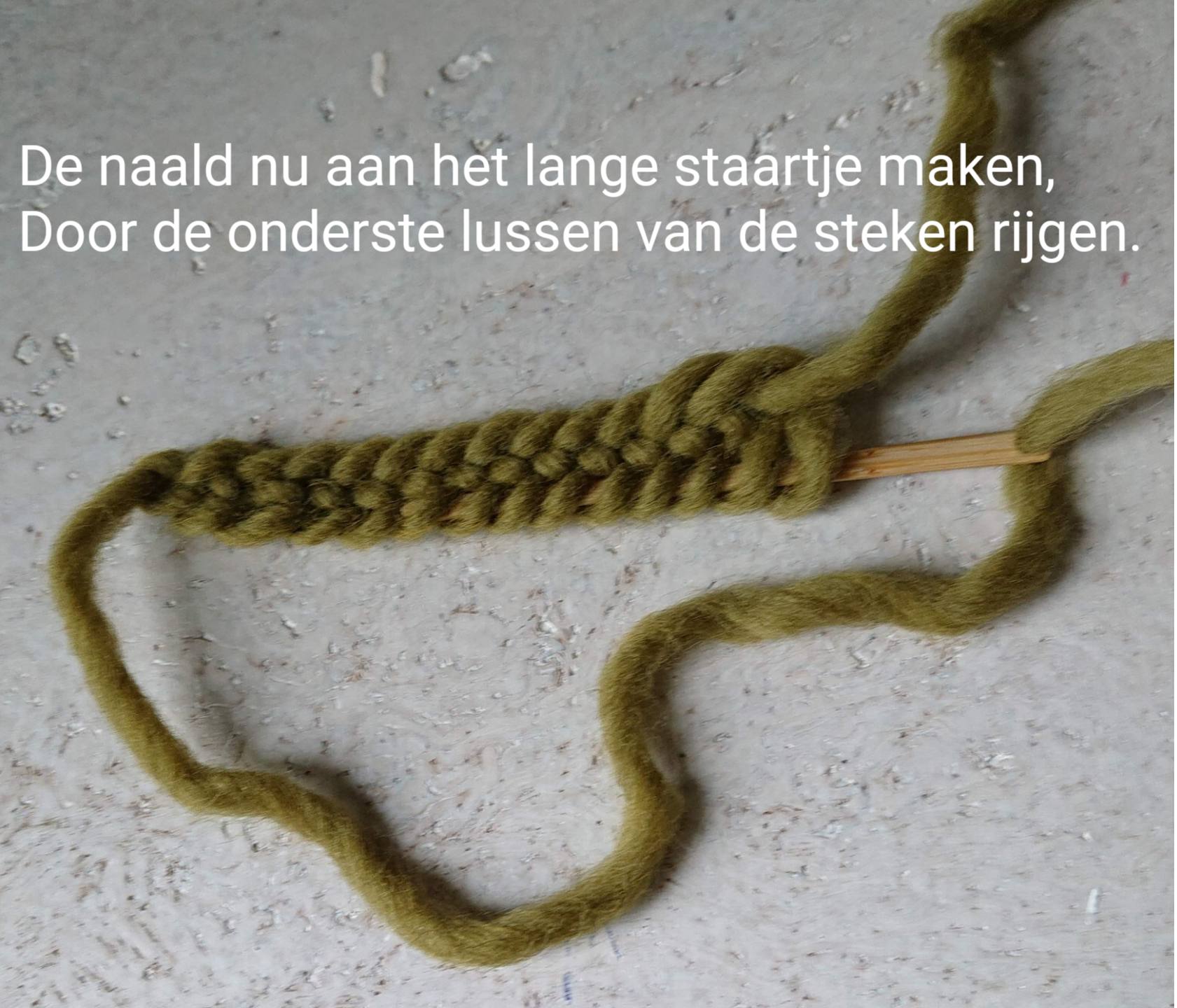
Make the needle on the long tail thread through the lower loops of the stitches.
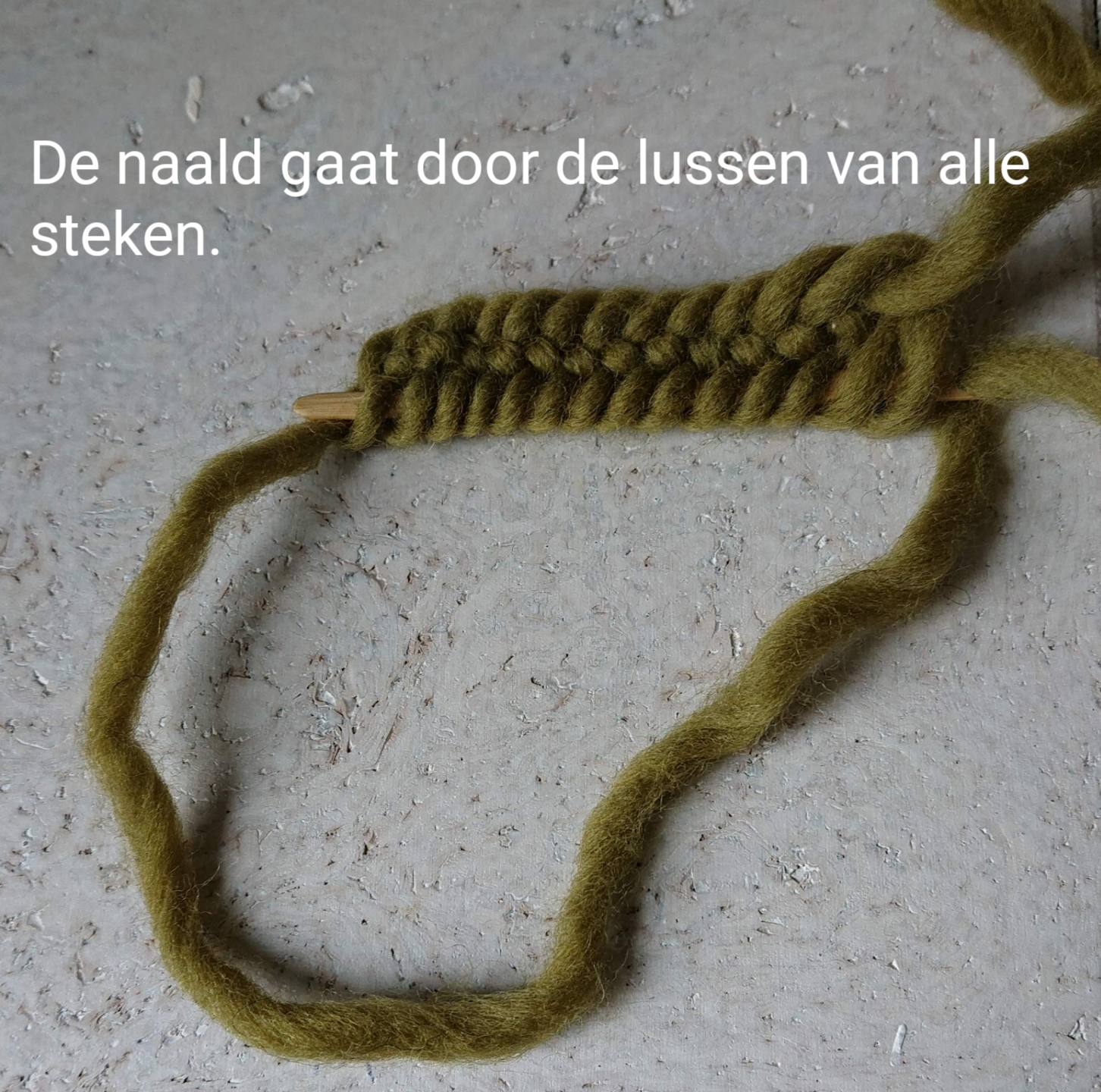
The needle goes through the loops of all stitches.
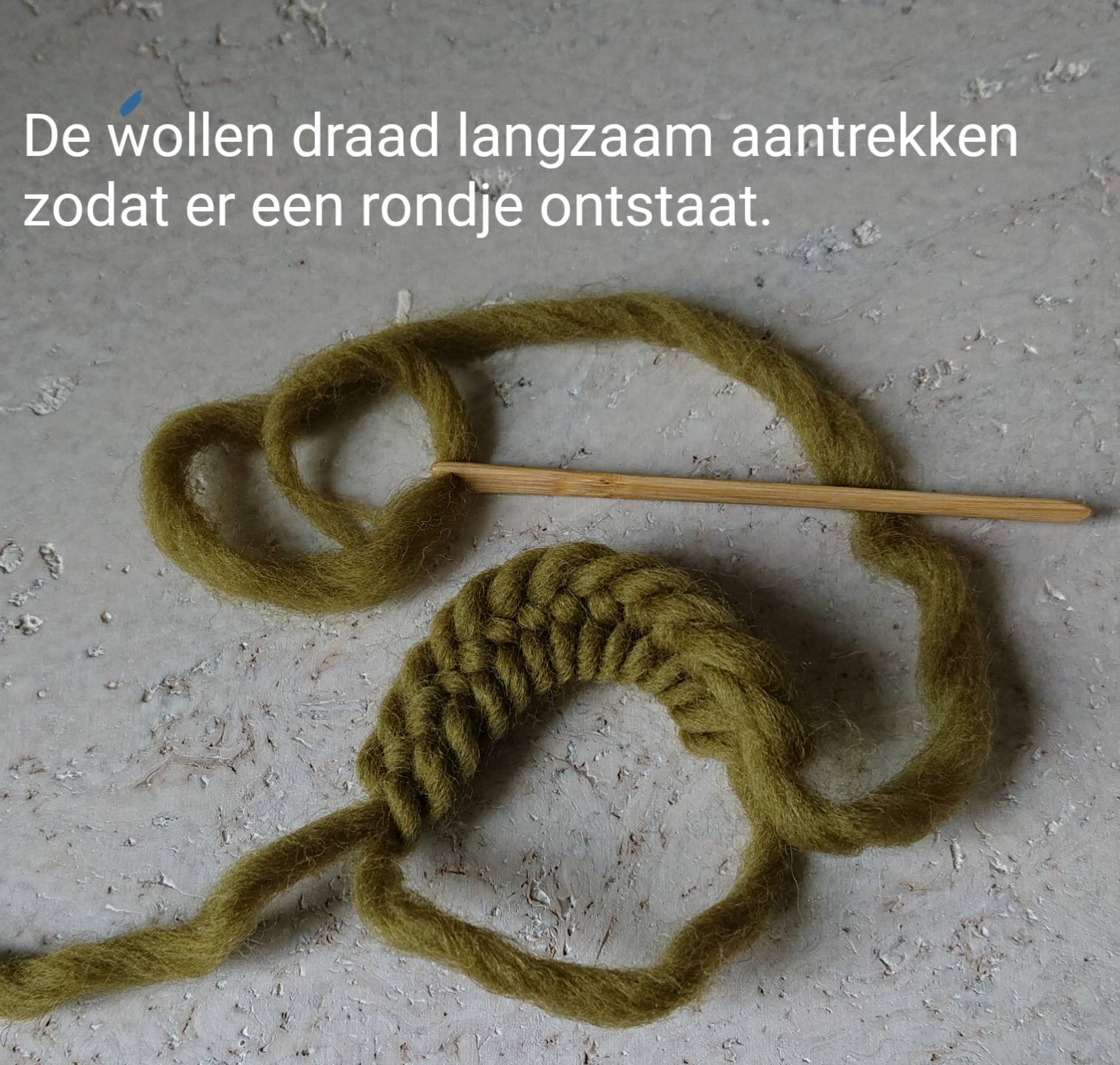
Slowly tighten the woolen thread to create a circle.
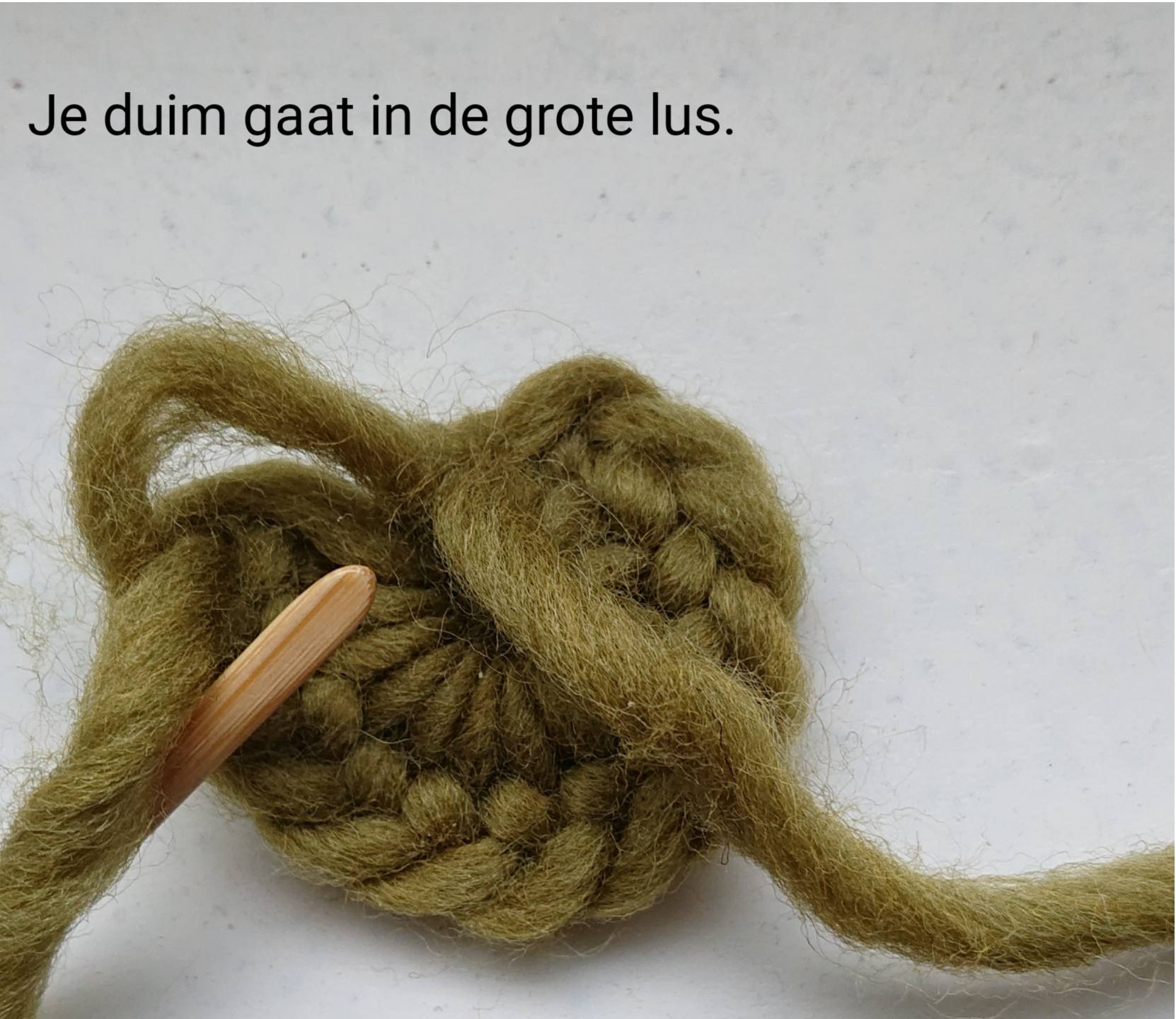
Your thumb goes into the big loop.
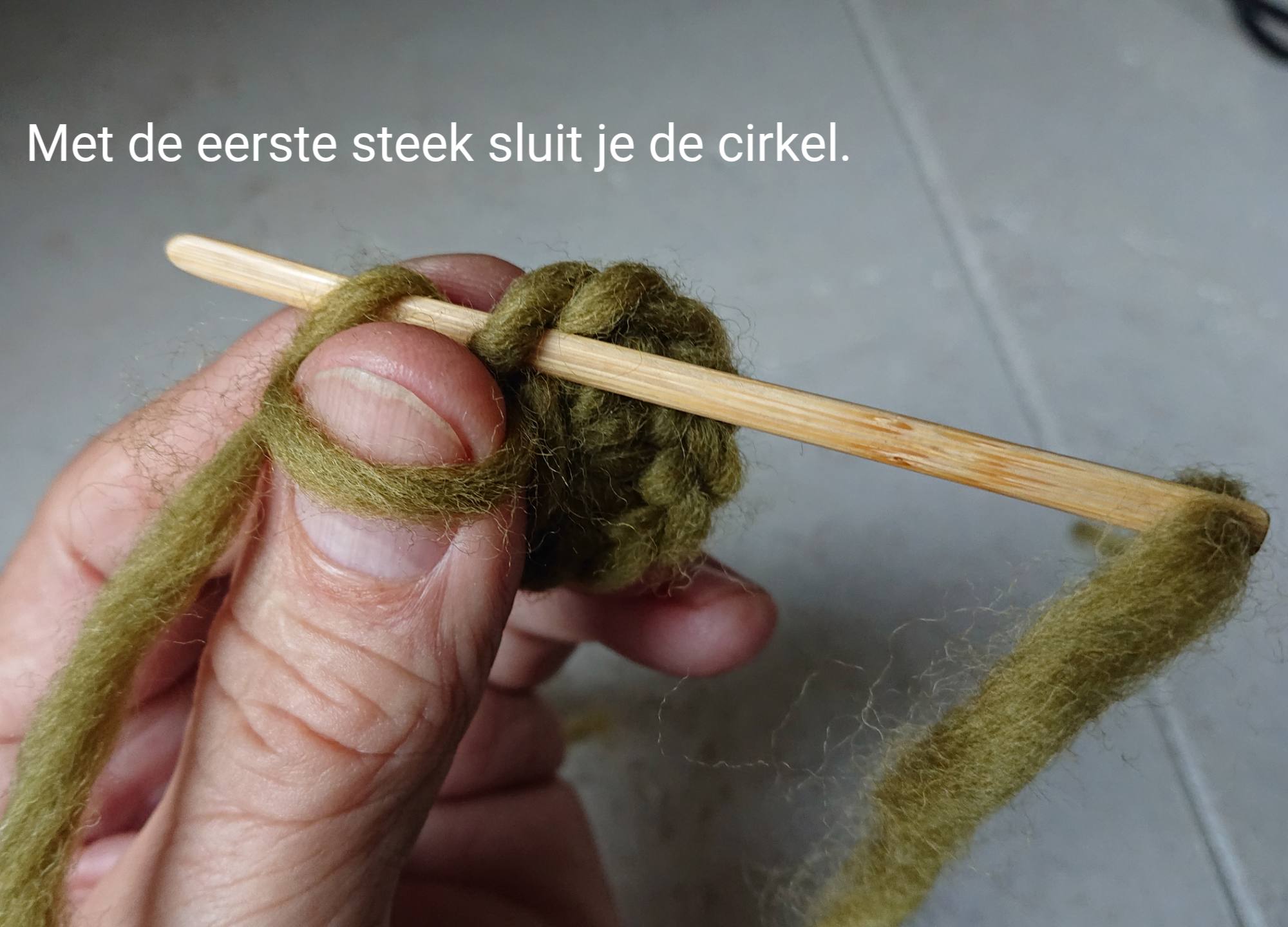
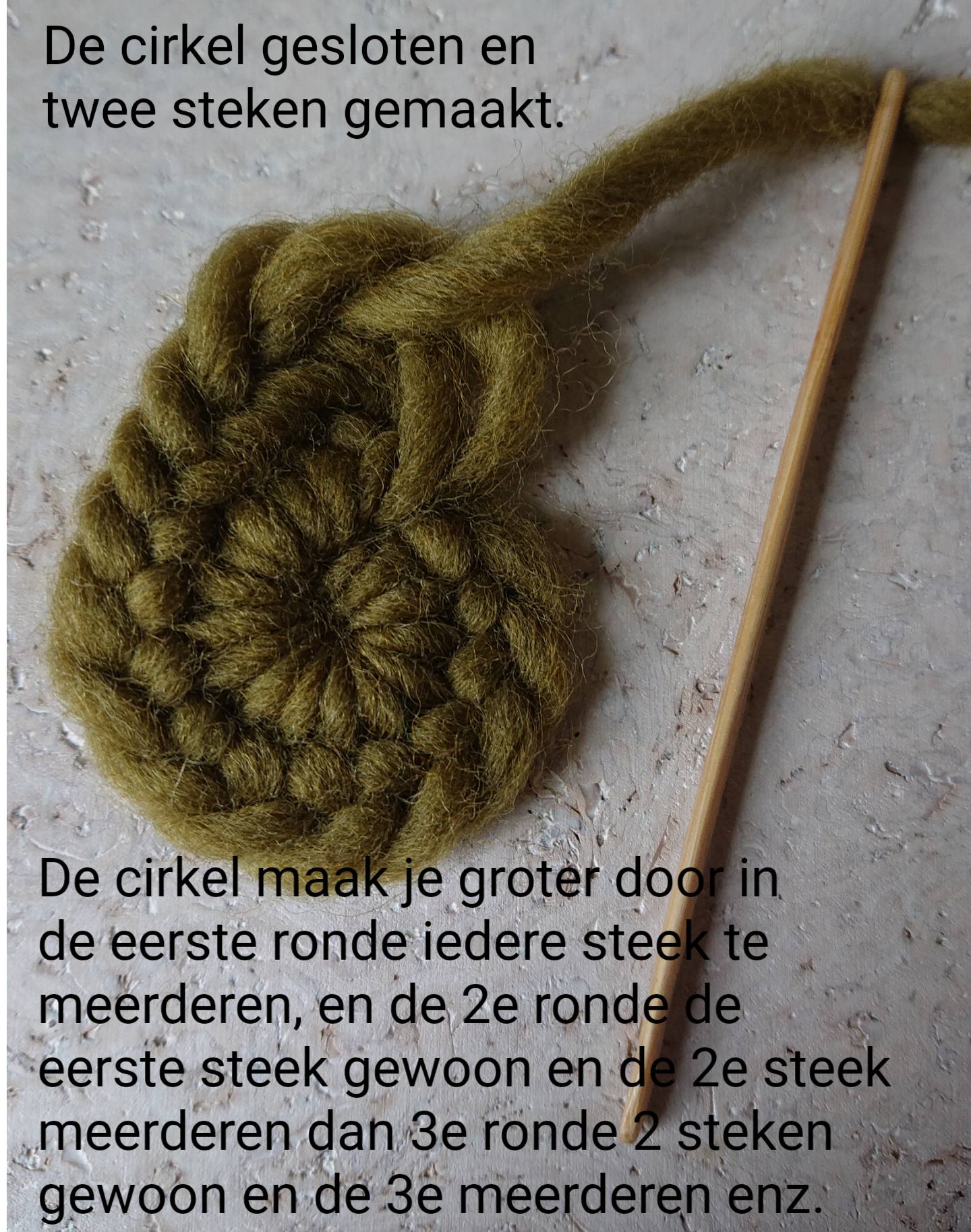
Close the circle with the first stitch.
I always forget to ask if you’d like to subscribe to my YouTube channel: happy needlebinding If I have a lot of subscribers, I can email magazines to write an article about this wonderful old craft so I can pass it on to the next generation.
Thank you kindly in advance. bert veugelers.
Closed the circle and made two stiches.
The first round make the circle larger by increasing every stitch.
After the first round you attach a stitch marker so that you know when a round starts and ends. The 2nd round, one stitch normal and the 2nd stitch increase.
The 3nd round, two stitches normal and the 3nd stitch increase.
The 4nd round three stitches normal and the 4nd increase.
The 5nd round four stitches normal and the 5nd increase.
The 6nd round five stitches normal and the 6nd increase.
Now just measure the diameter, is it 21 cm (for my head the circumference is 56.5 cm than : The 7nd round just needlebinding don’t increase or decrease.
After this round you are going decrease stitches.
The 8nd round five stitches normal and the 6nd decrease.
The 9nd round four stitches normal and the 5nd decrease.
The 10nd round three stitches normal and the 4nd decrease and measure and finish the edge. How to finish the hat see picture chapter increase and decrease.
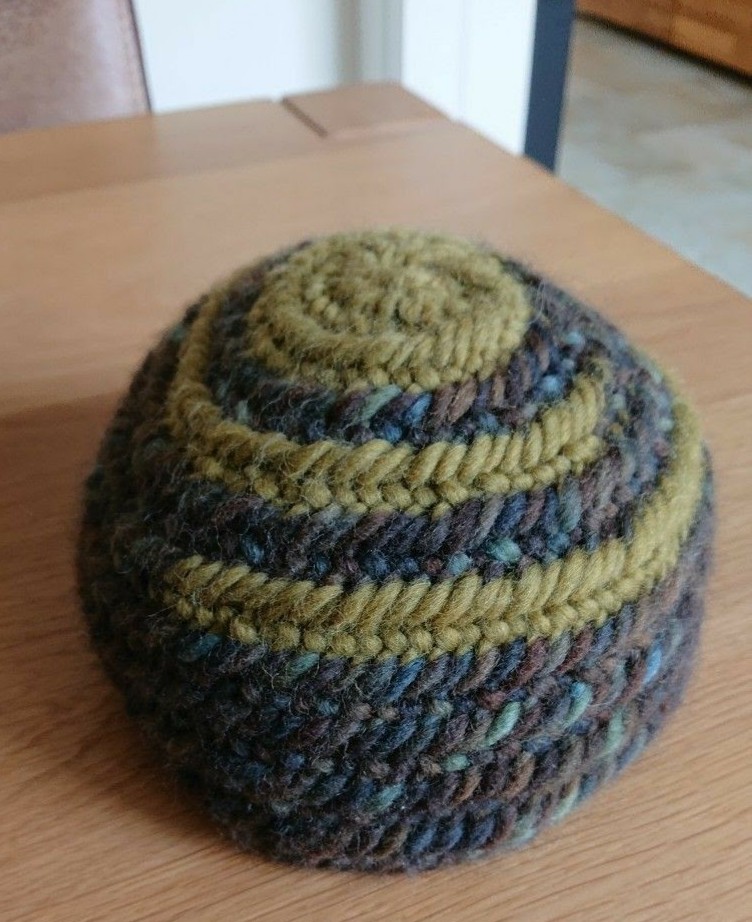
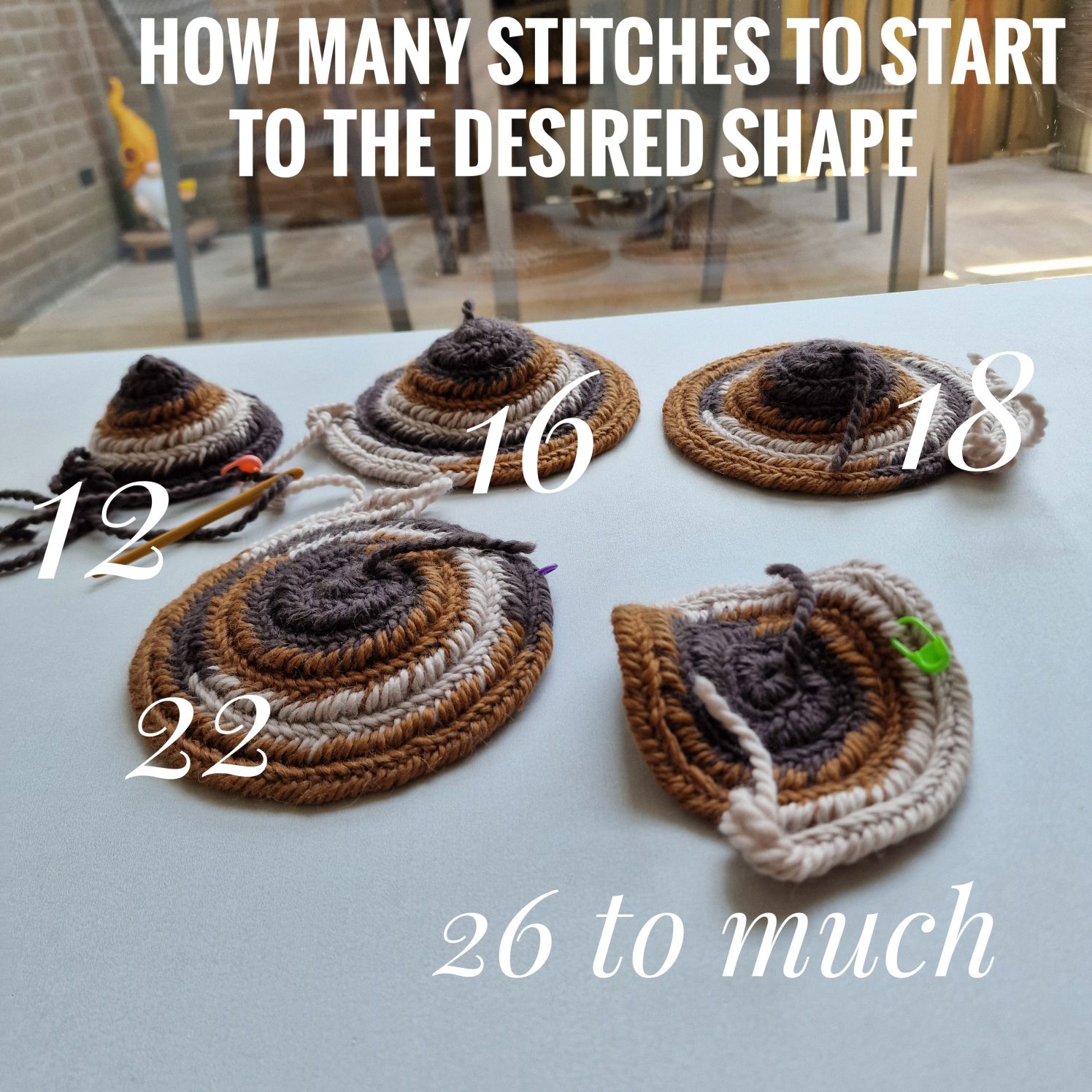
If you want to make a bigger hat start with a longer row stitches in the beginning when you make the circel (magic loop they called it with crochet).
So different stitches also different sizes.
The photo below shows examples of needlebinding with the Finnish stitch and with the connection stitch F2.
More hats.
This hat is needlebound in a Finnish stitch 2+2 F2.
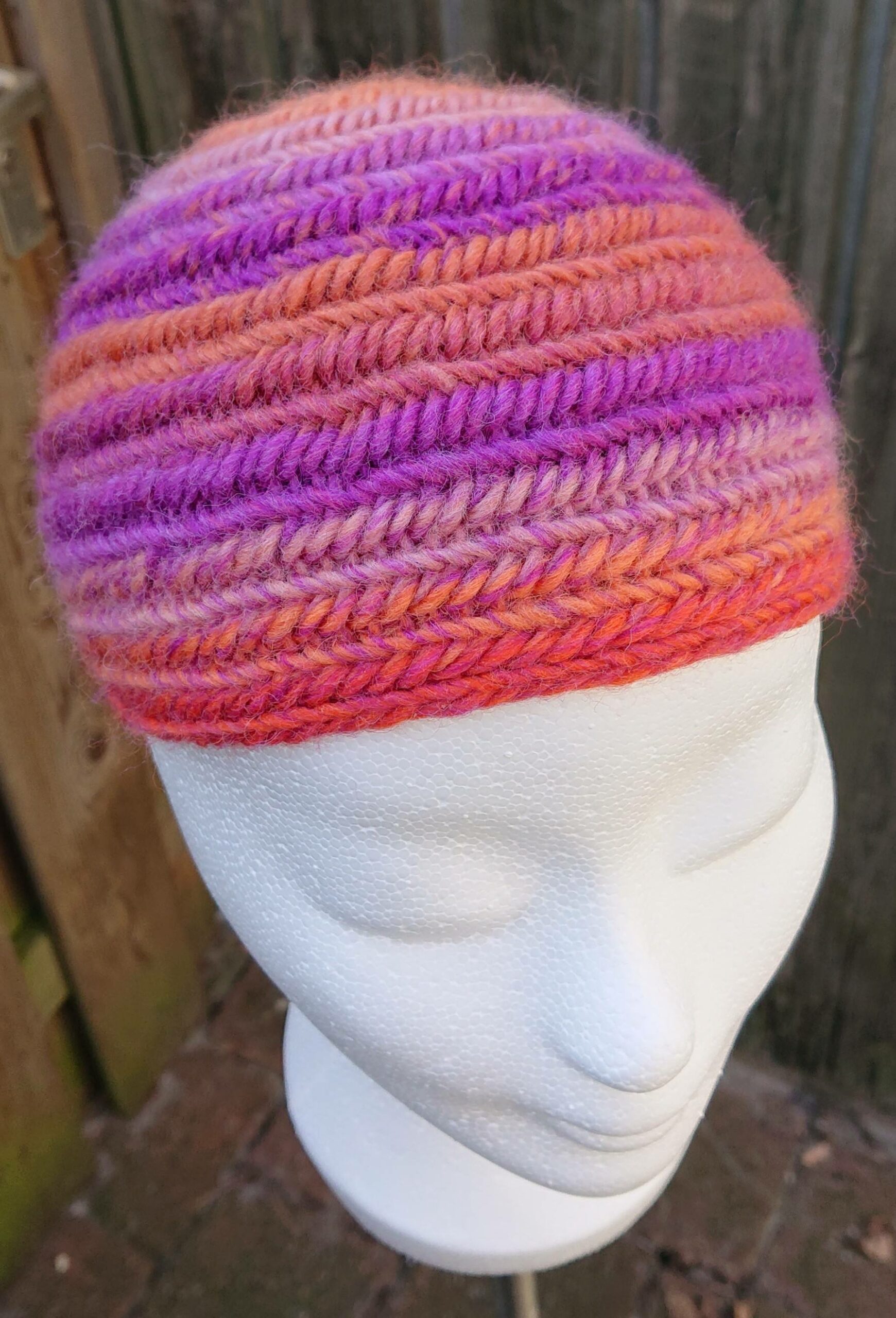
This hat is needlebound in a Finnish stitch 2+2 F2.
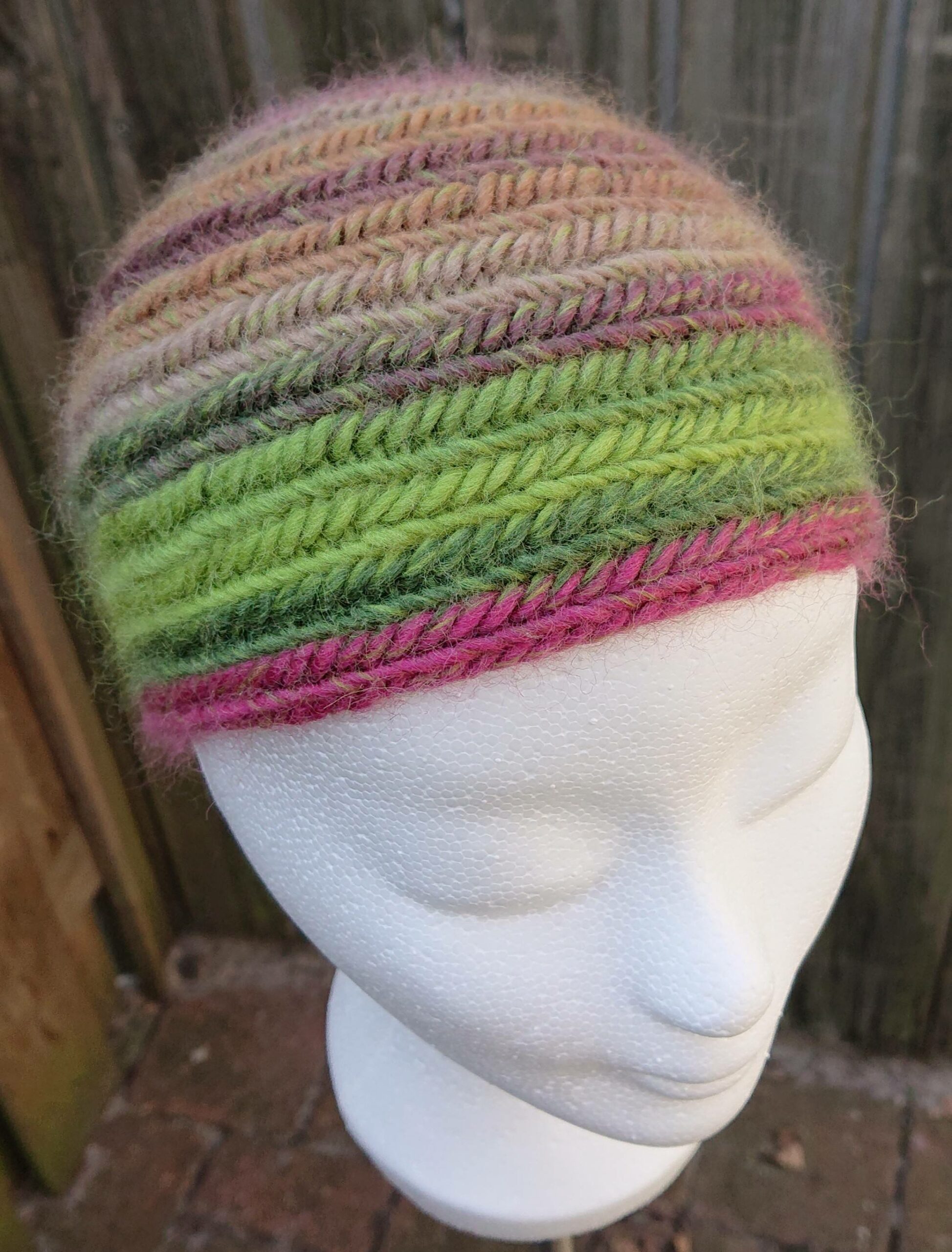
This hat is needlebind in a Finnish stitch 2+2 F2.
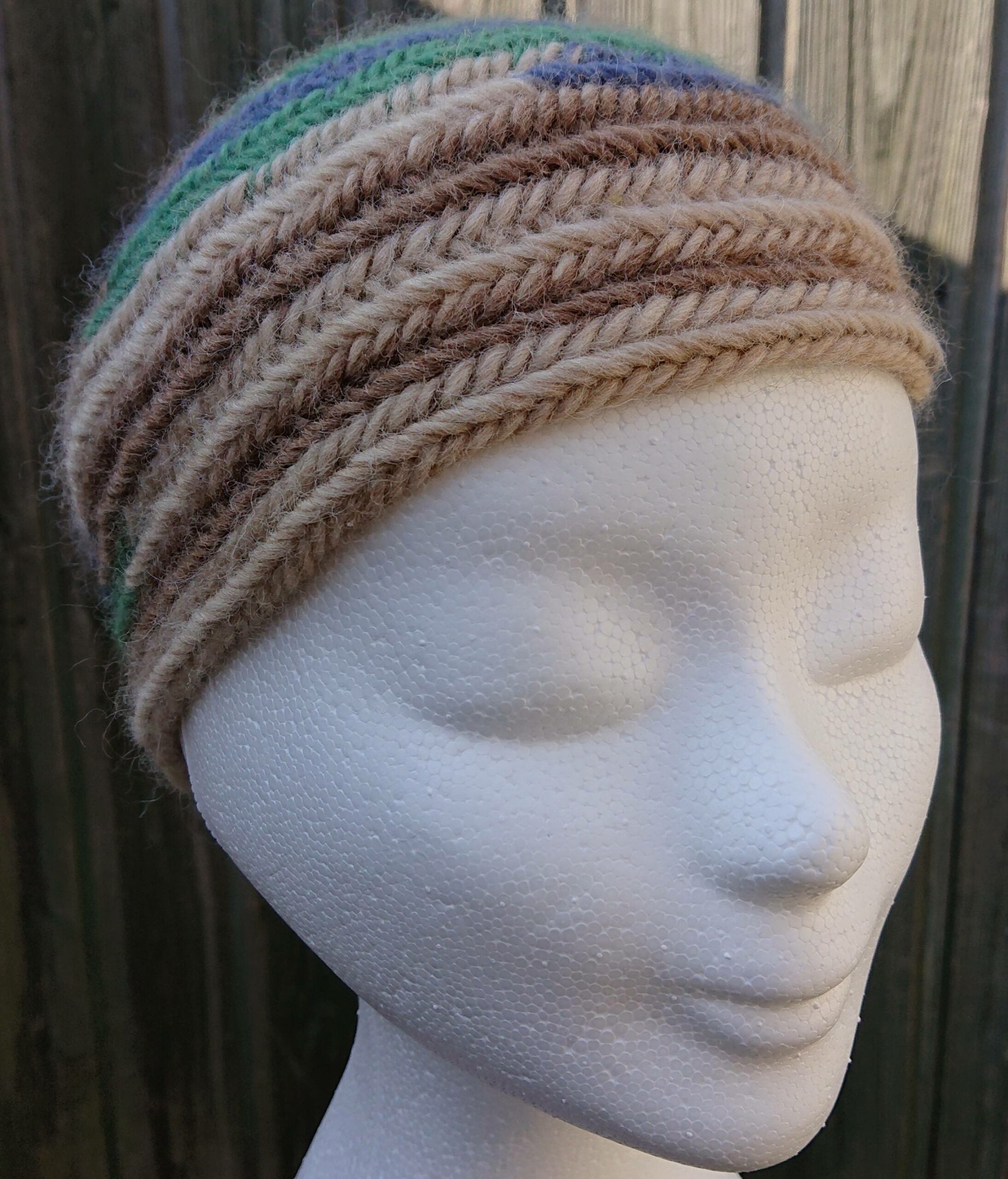
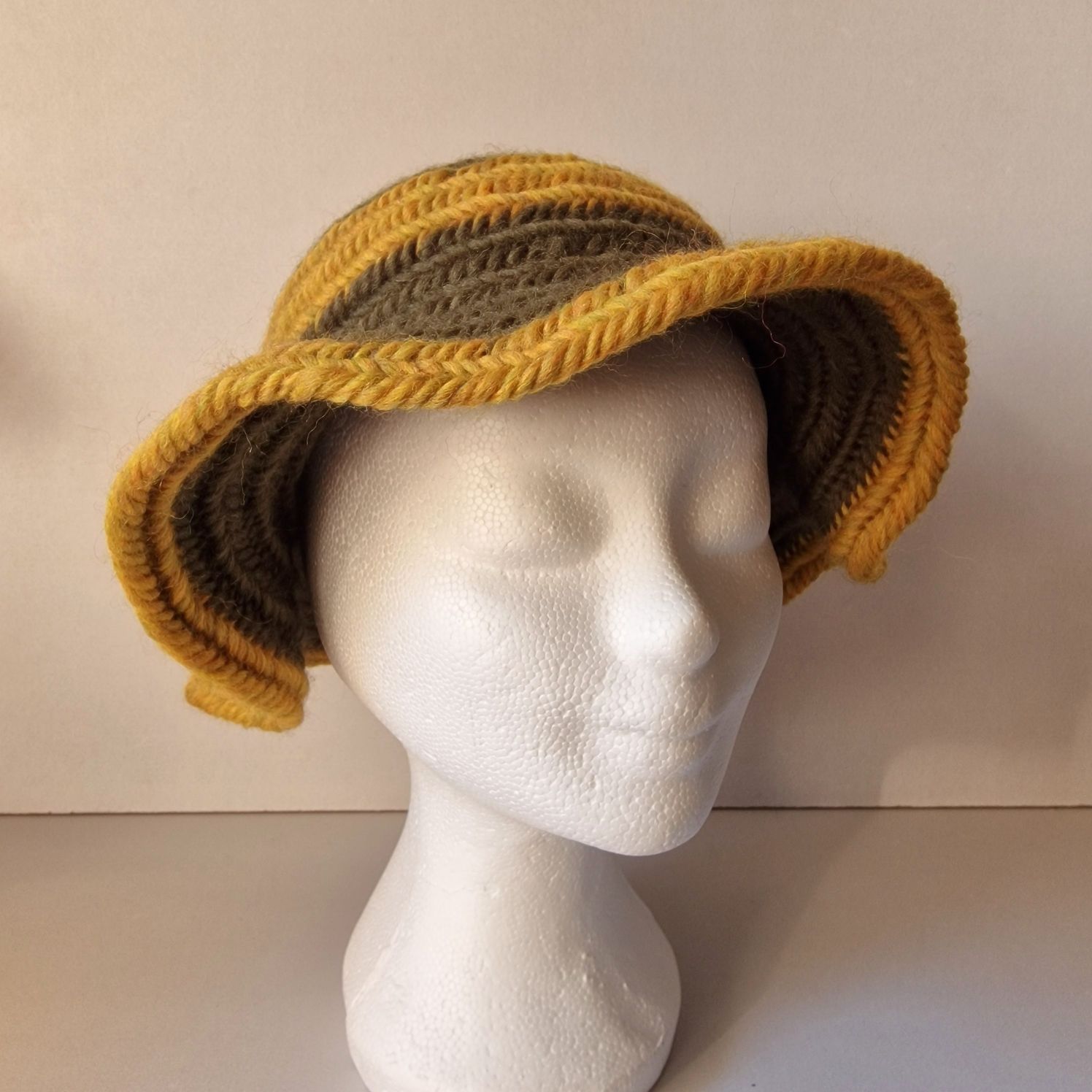
A hat with a brim.
I made this hat with a Finnish stitch 2+2 and F2 as a connecting stitch.
I started with 18 stitches with a round start.
After the circle has been closed and you have attached a stitch marker, you will increase all stitches in the 1st round.
During the 2nd round you will increase every other stitch.
The 3rd round 2 stitches normal and the 3rd increase.
The 4th round 3 stitches normal and the 4th stitch increase.
The 5th round 4 stitches normal and the 5th stitch increase.
The 6th round 5 stitches normally and the 6th stitch increases and then you put your hand on a circle and that is approximately the size of your head. (photo is of a different hat).
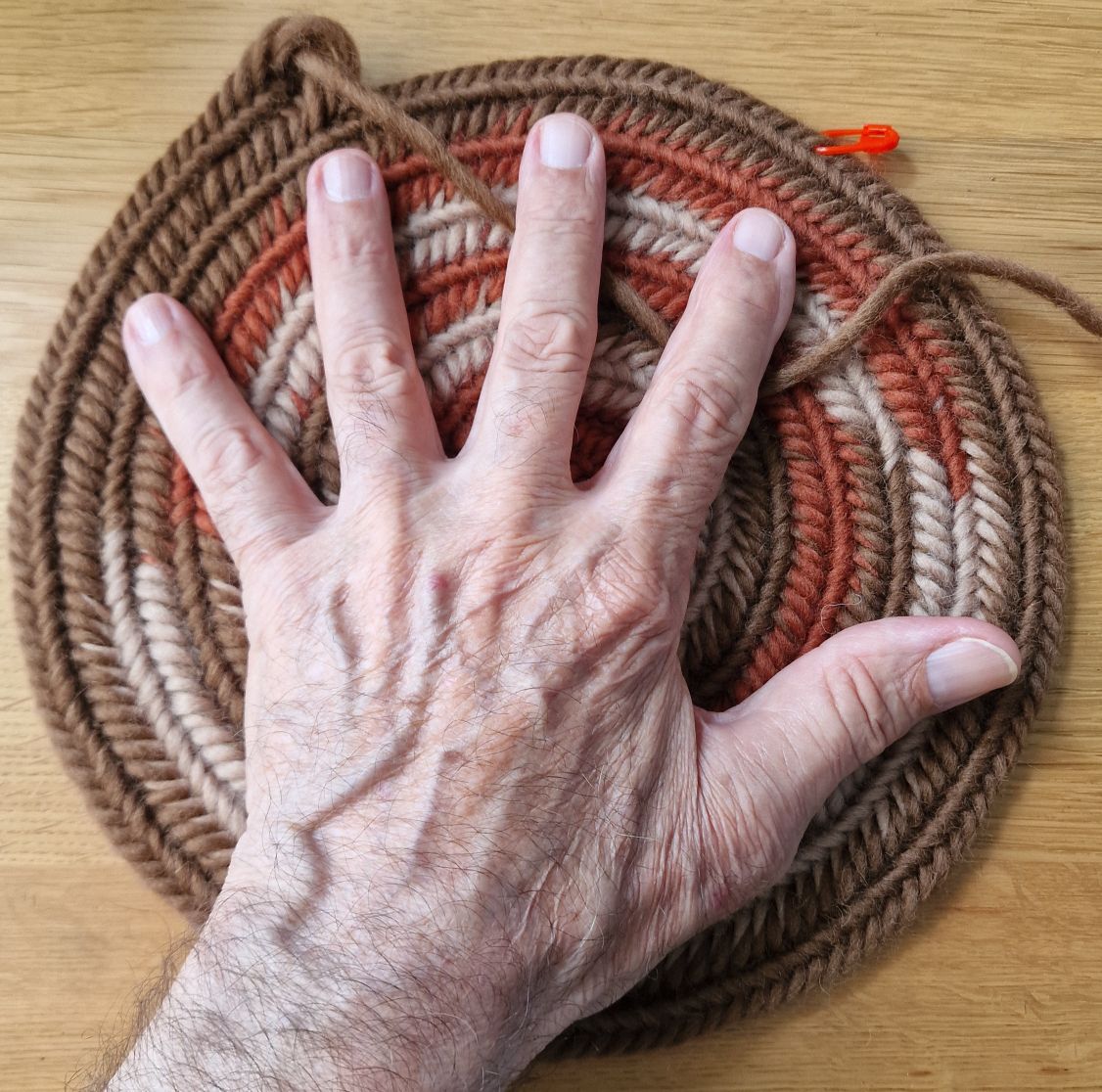
The 7 round just plain nalbinding.
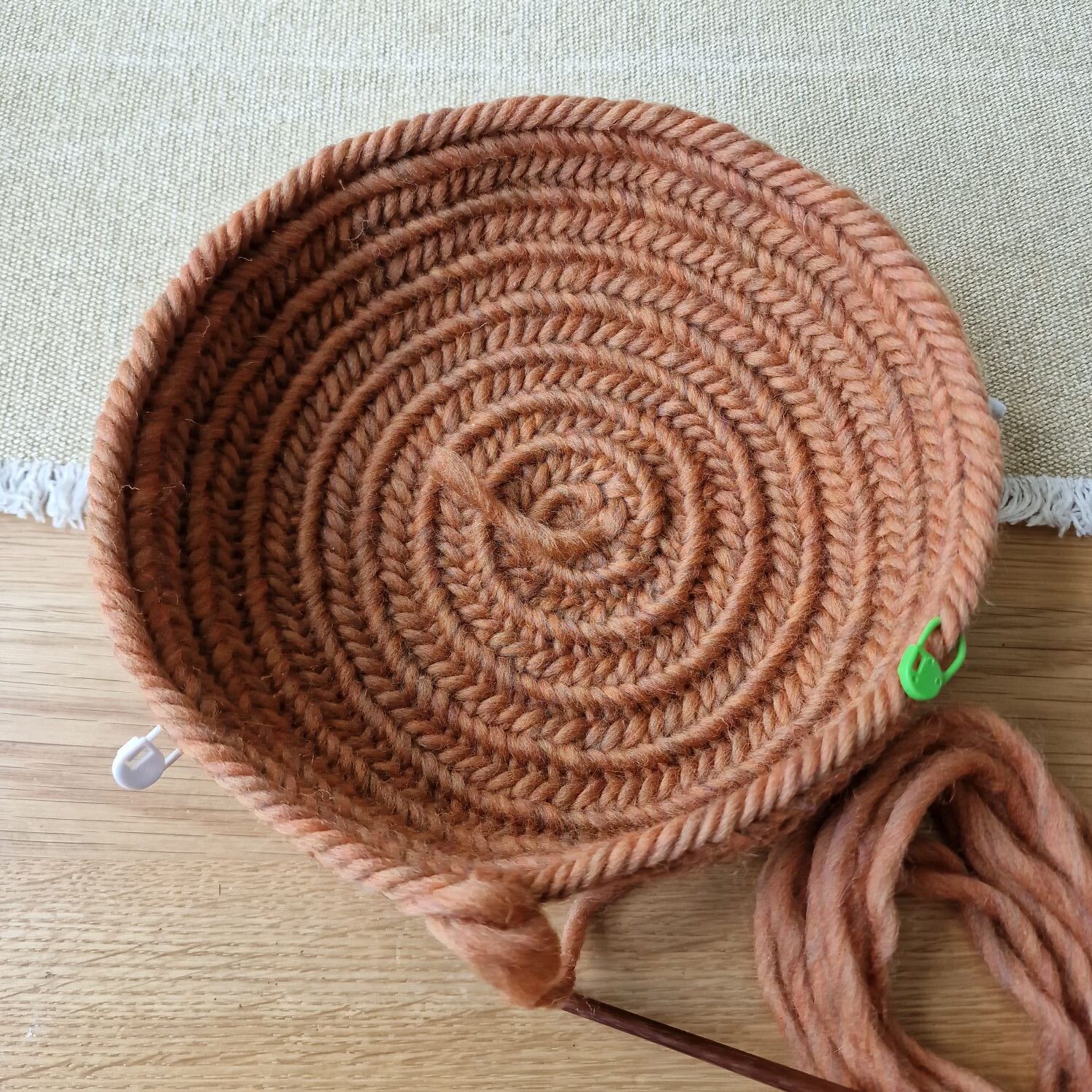
After this you will decrease the next round
The 8th round 5 stitches normal and the 6th decrease.
The 9th round 4 stitches normally and the 5th stitch decrease and try on your hat.
Once your hat fits you will make the brim of your hat.
You will make the brim of your hat by increasing, first I increased all the stitches and that resulted in a very wavy edge, this was way too much, so cut it off and start again.
Then I chose to simply increase 2 stitches and the 3rd stitch, which was better.
The next round 3 stitches normally and the 4th increase, this 2 round I used a mixed color.
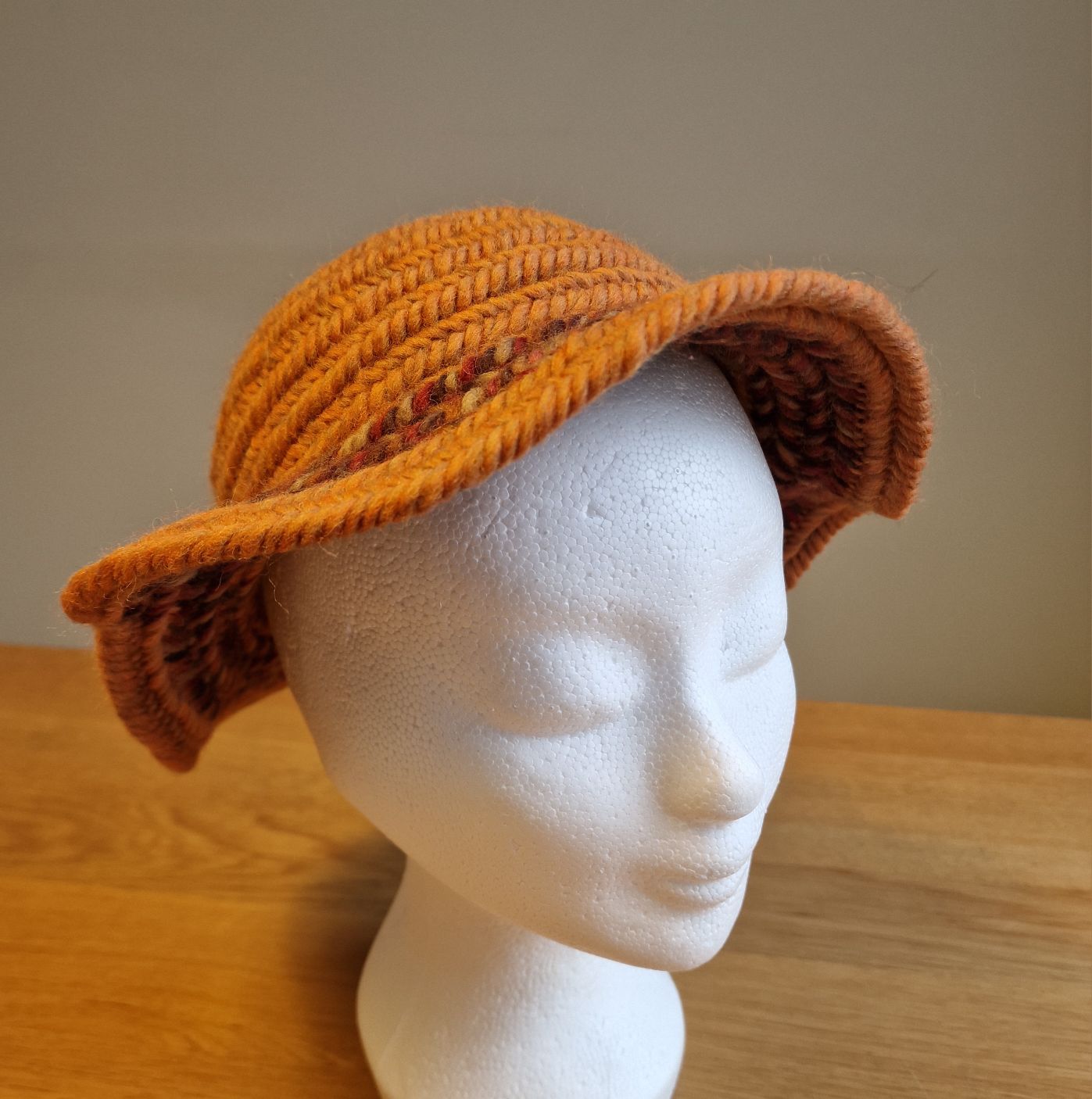
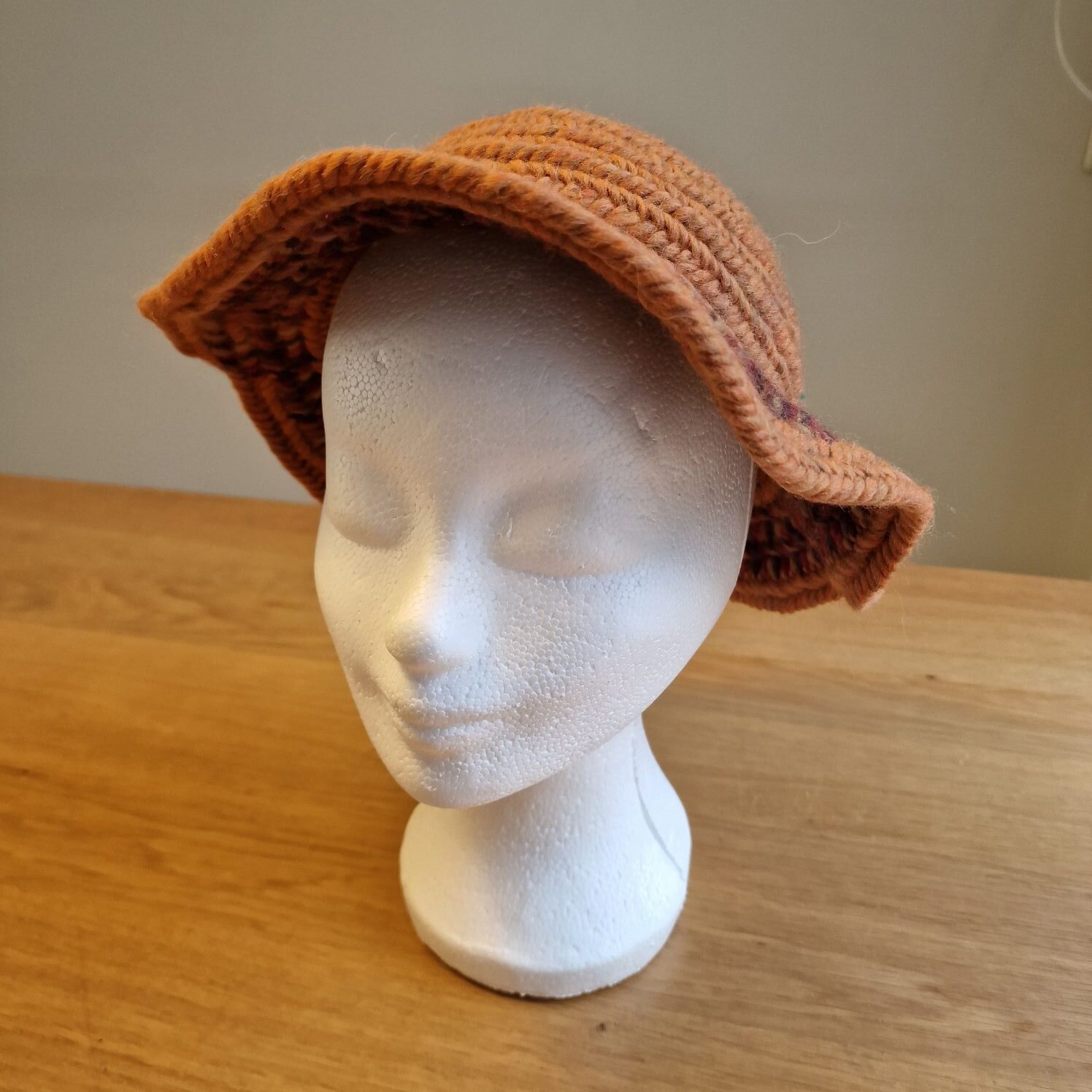
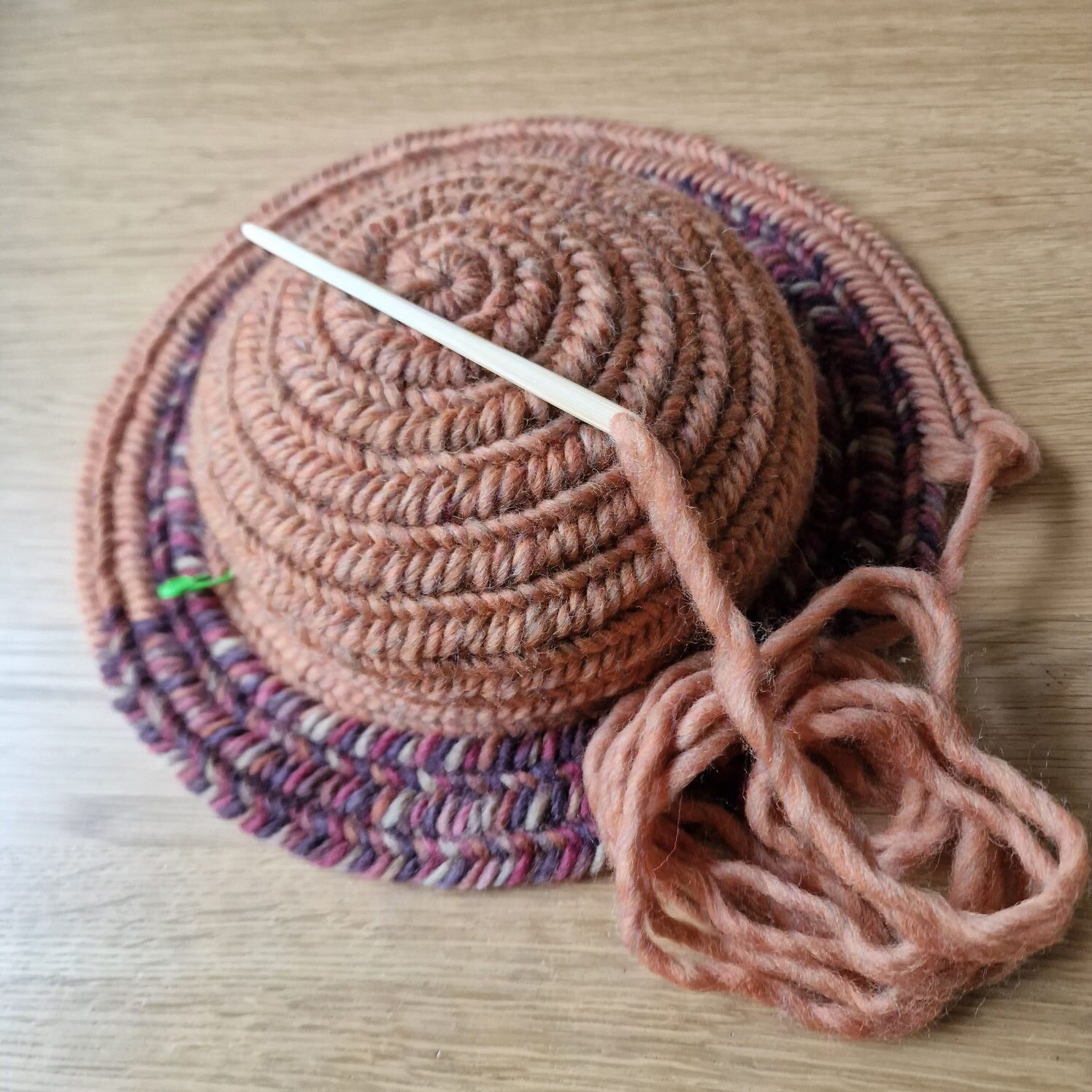
The last round I used the camel color again and because the edge became a little more wavy again, I used 10 stitches normally and the 11 increases with needle binding.
This is my first cheerful hat with a brim with thicker wool for Autumn/winter and I have learned a lot again and (taken out/cut)
I am going to make many more hats with a brim from all kinds of wool, thin, thick 1-2- 3 ply wool or combinations of wool and acrylic but NOT superwash wool because you cannot felt it.
Today 15 december 2023 i made a new video called: needlebinding nalbinding a hat.
Have fun with my patterns and also take a look at my YouTube Channel: happy needlebinding for even more needlebinding videos in (Dutch, English and German).
My second Hat with a brim
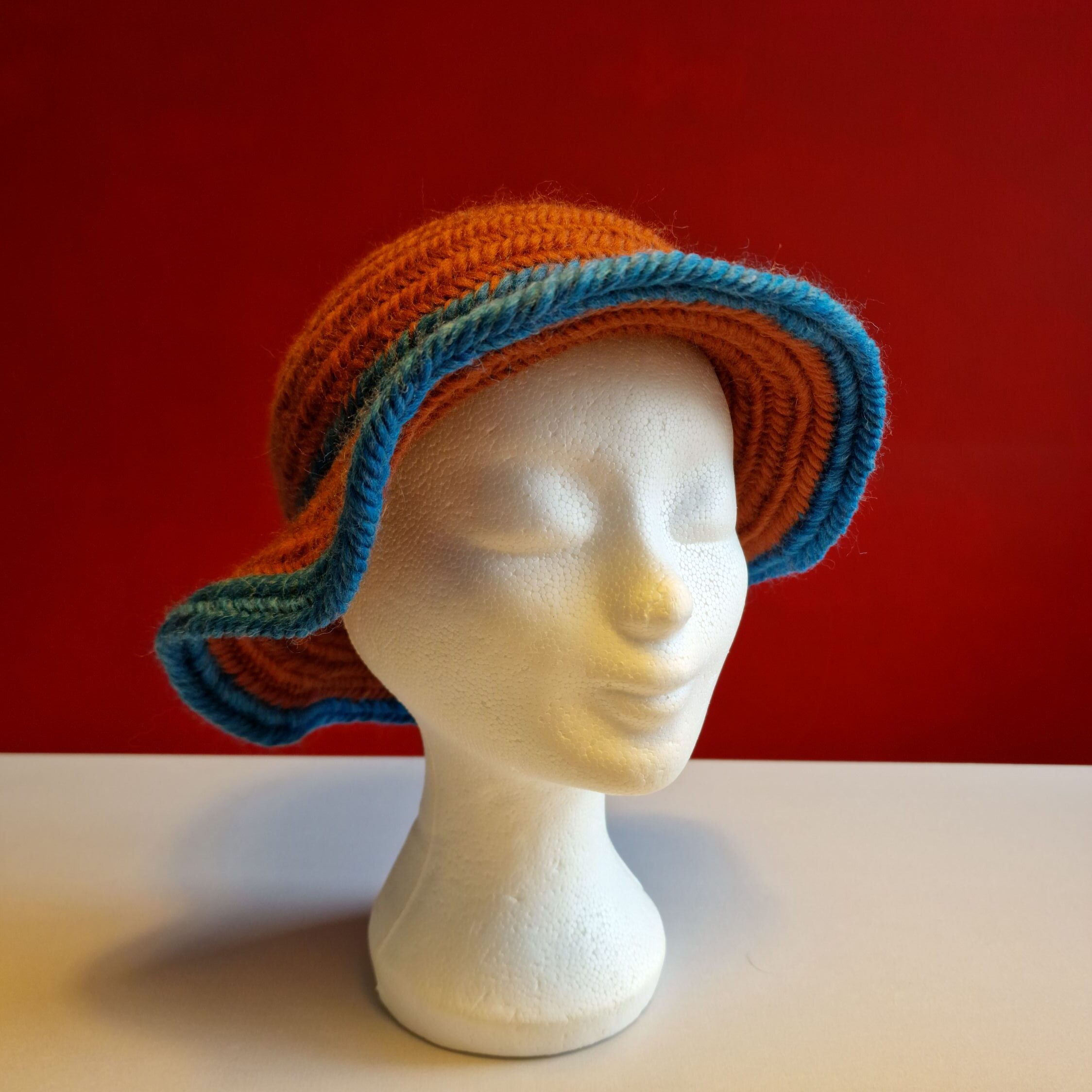
I needlebind my 2nd hat with the Finnish stitch 2 + 2 and with F2 as a connecting stitch.
I started with 18 stitches with a round start.
After the circle has been closed and you have attached a stitch marker, you will increase all stitches in the 1st round.
The diameter is 7.5 cm
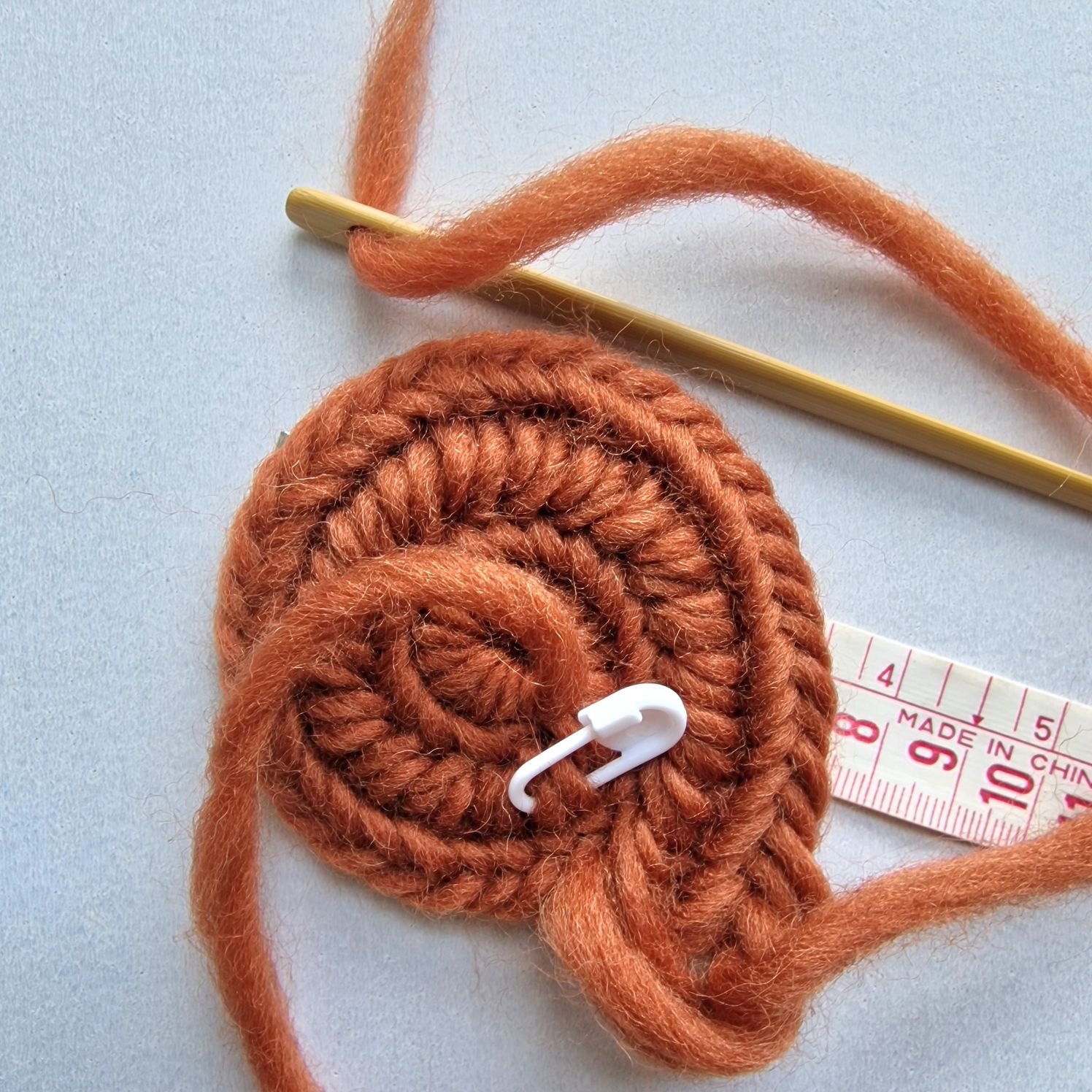
During the 2nd round you will increase every other stitch. The diameter is 11.5 cm.
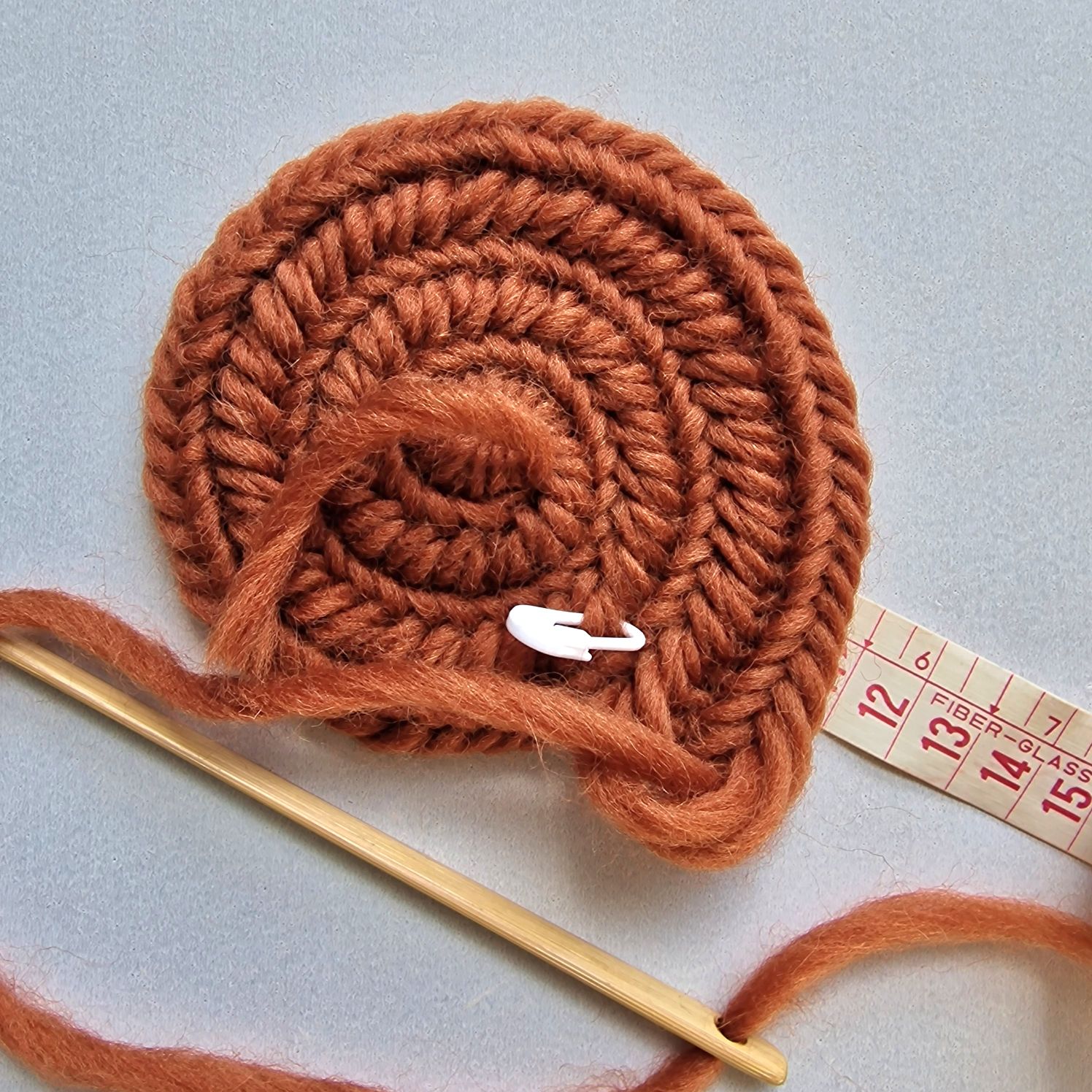
The 3rd round 2 stitches normally and the 3rd stitch increases. The diameter is 13 cm.
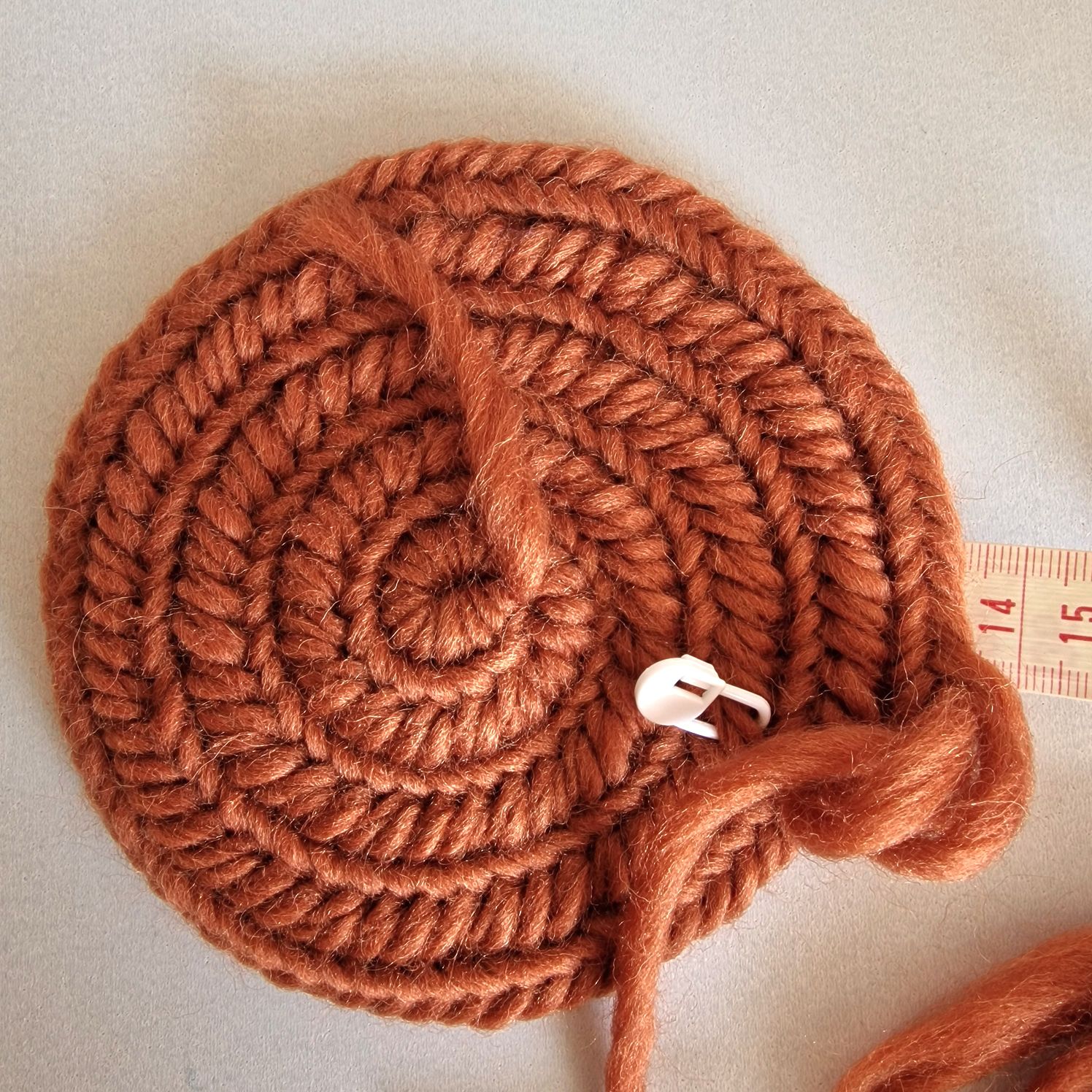
The 4th round 3 stitches normally and the 4th stitch increases. The diameter is 16 cm.
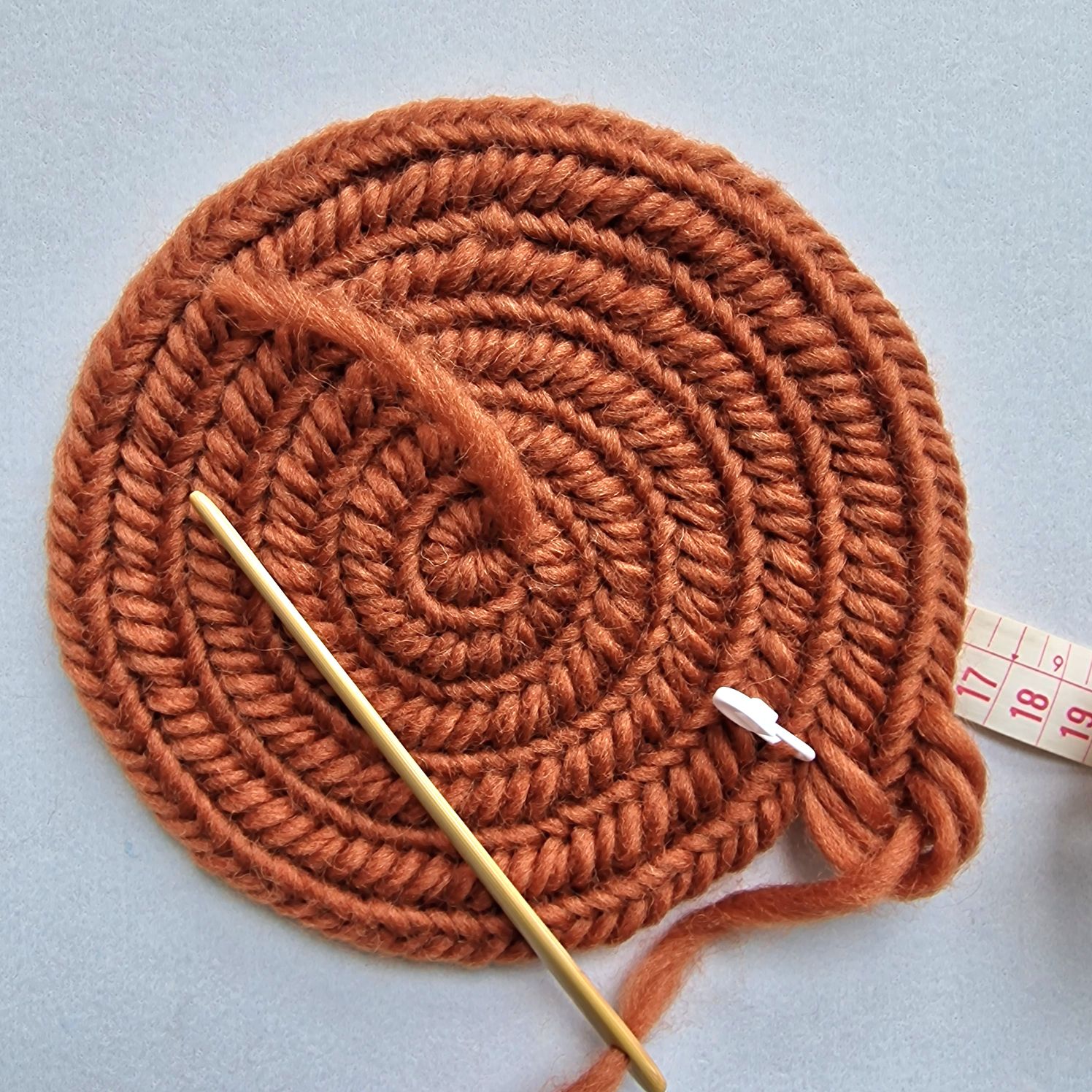
The 5th round 4 stitches normal and the 5th stitch increase. The diameter is 19 cm.
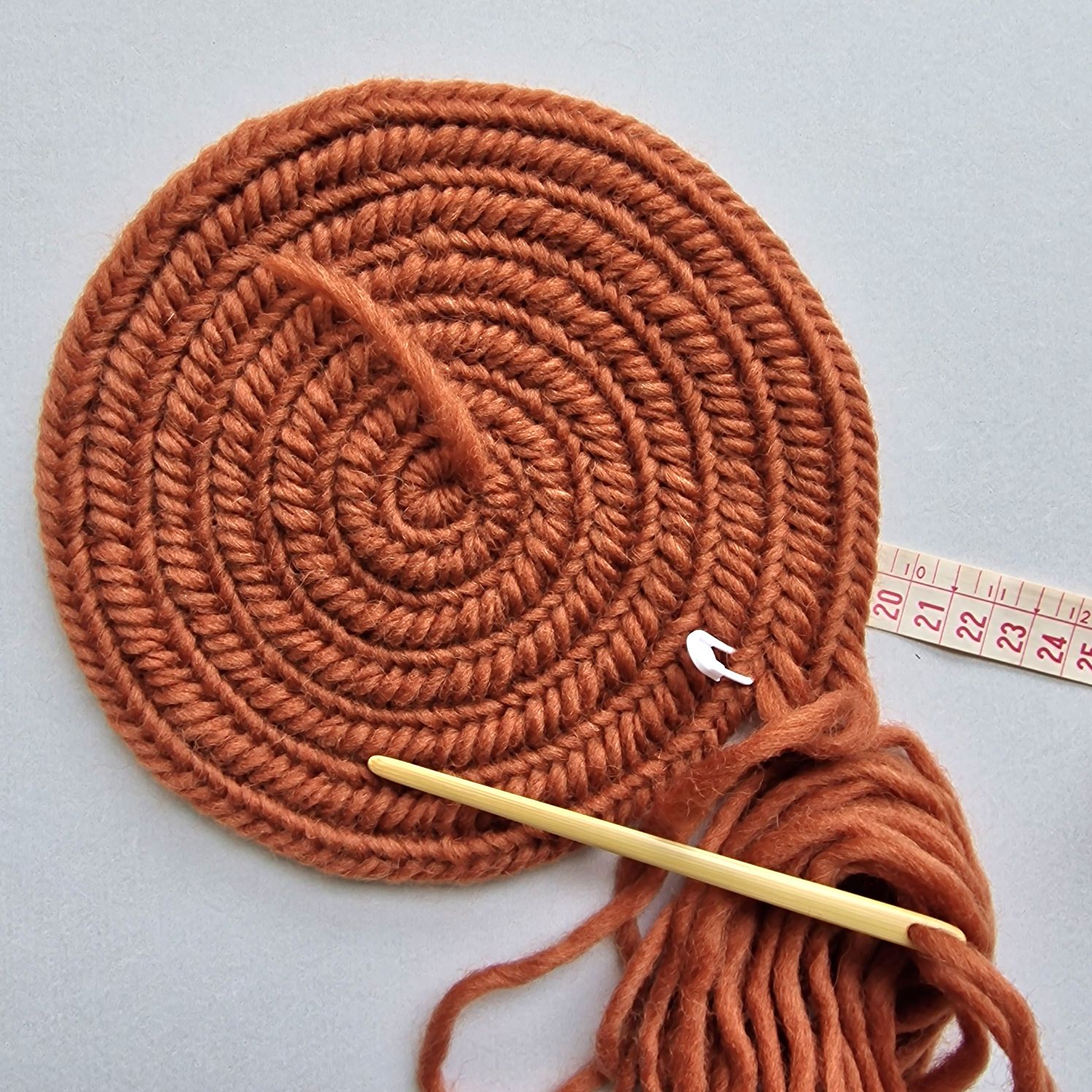
The 6th round 5 stitches normally and the 6th stitch increases and then you put your hand on a circle and that is approximately the size of your head.
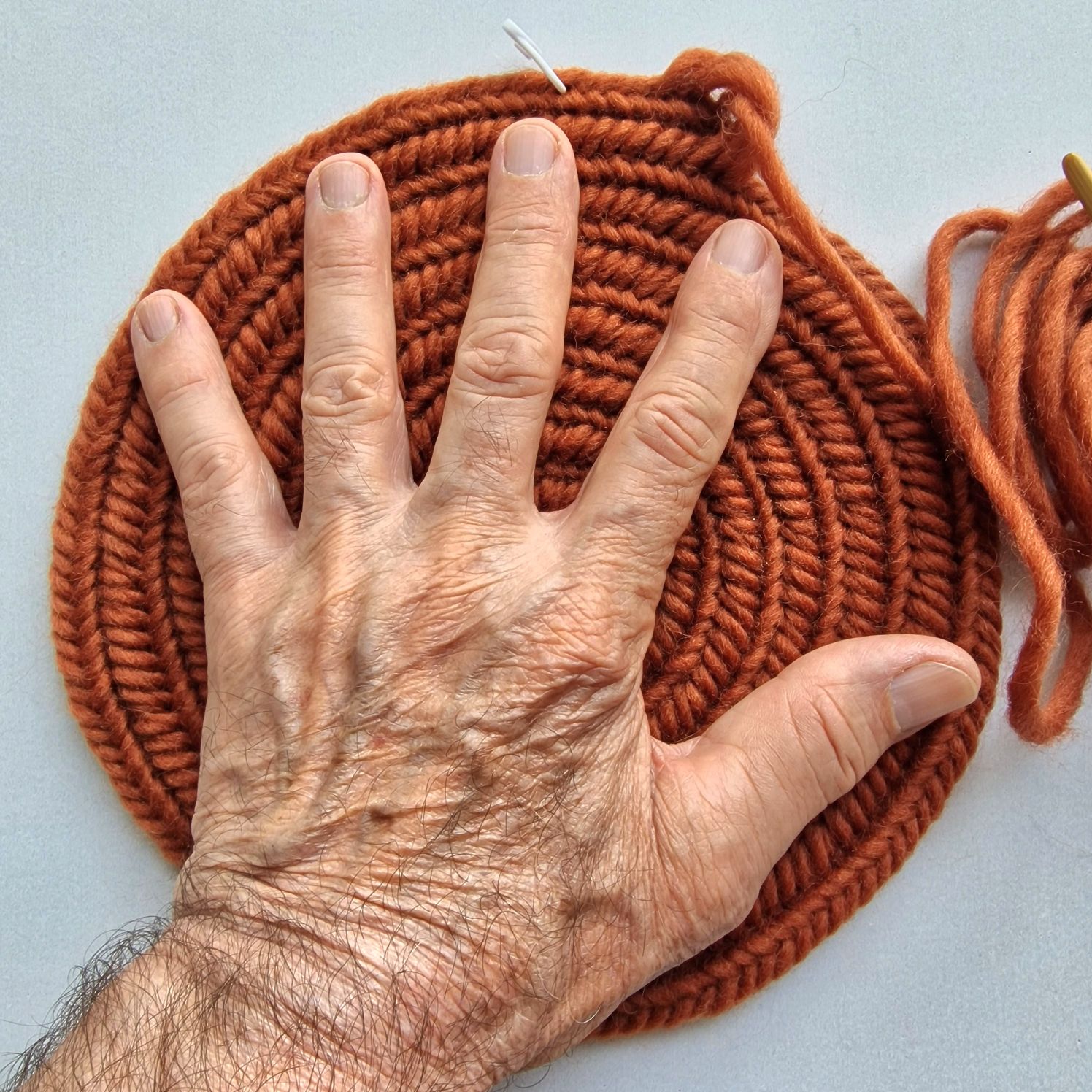
The diameter is 22 cm. On the 7th round you will simply needlebind all stitches (no more increasing/decreasing), and I will change the color to blue.
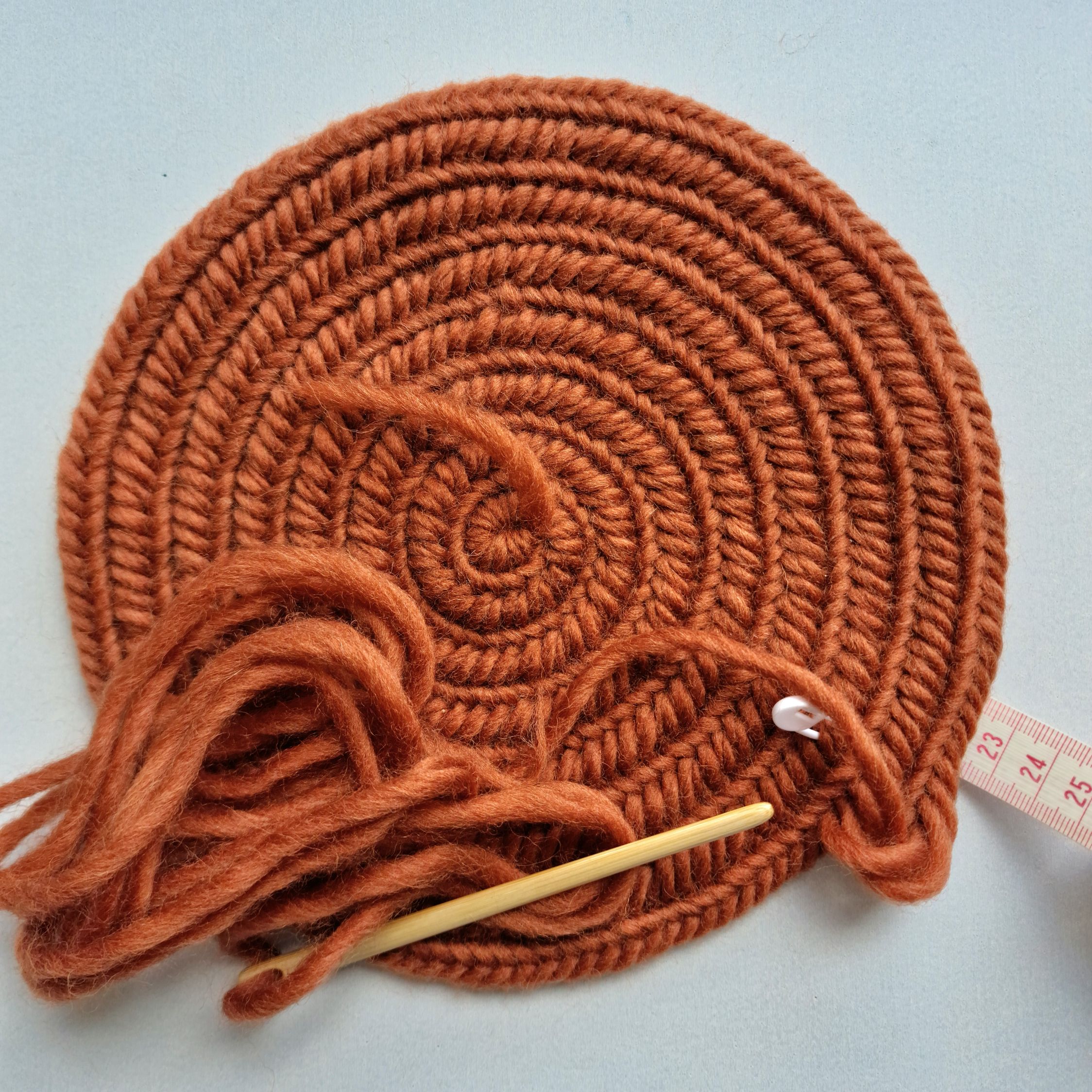
After this you will decrease the next round, and the color will become camel again.
The 8th round 5 stitches normally and the 6th stitch decrease.
On the 9th round, 4 stitches normally and on the 5th decrease stitch and try on your hat.
When the hat fits well, you can make the brim of the hat.
On the 10th round you will increase again, 3 stitches normally and increase the 4th stitch.
The 11th round 4 stitches normally and the 5th stitch increases.
The 12th round 5 stitches normal and the 6th increase.
The last round I will change the color back to blue, 6 stitches normally and increase the 7th stitch.
This 2nd hat now has a nice flat brim. I really enjoy making hats and I will make many more.
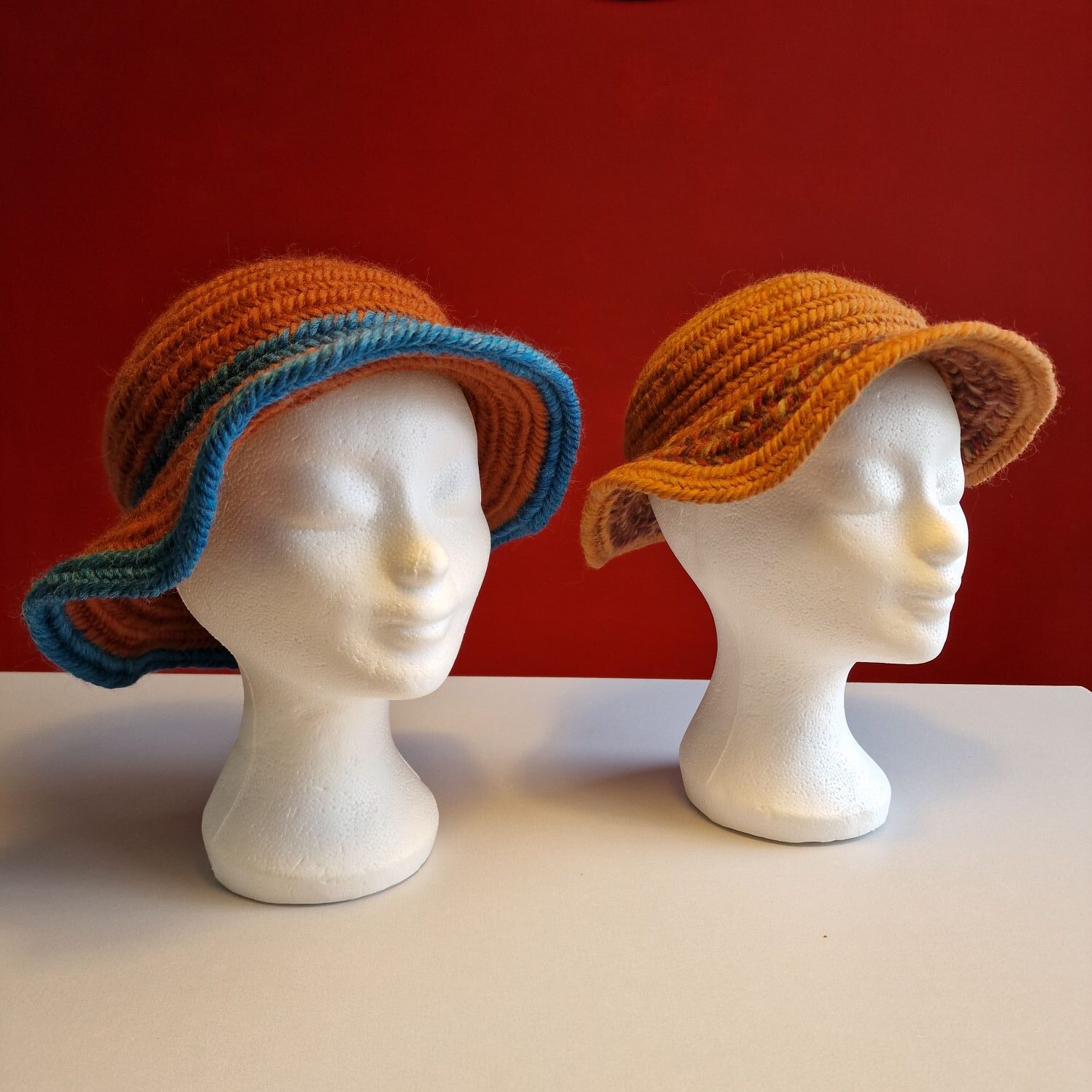
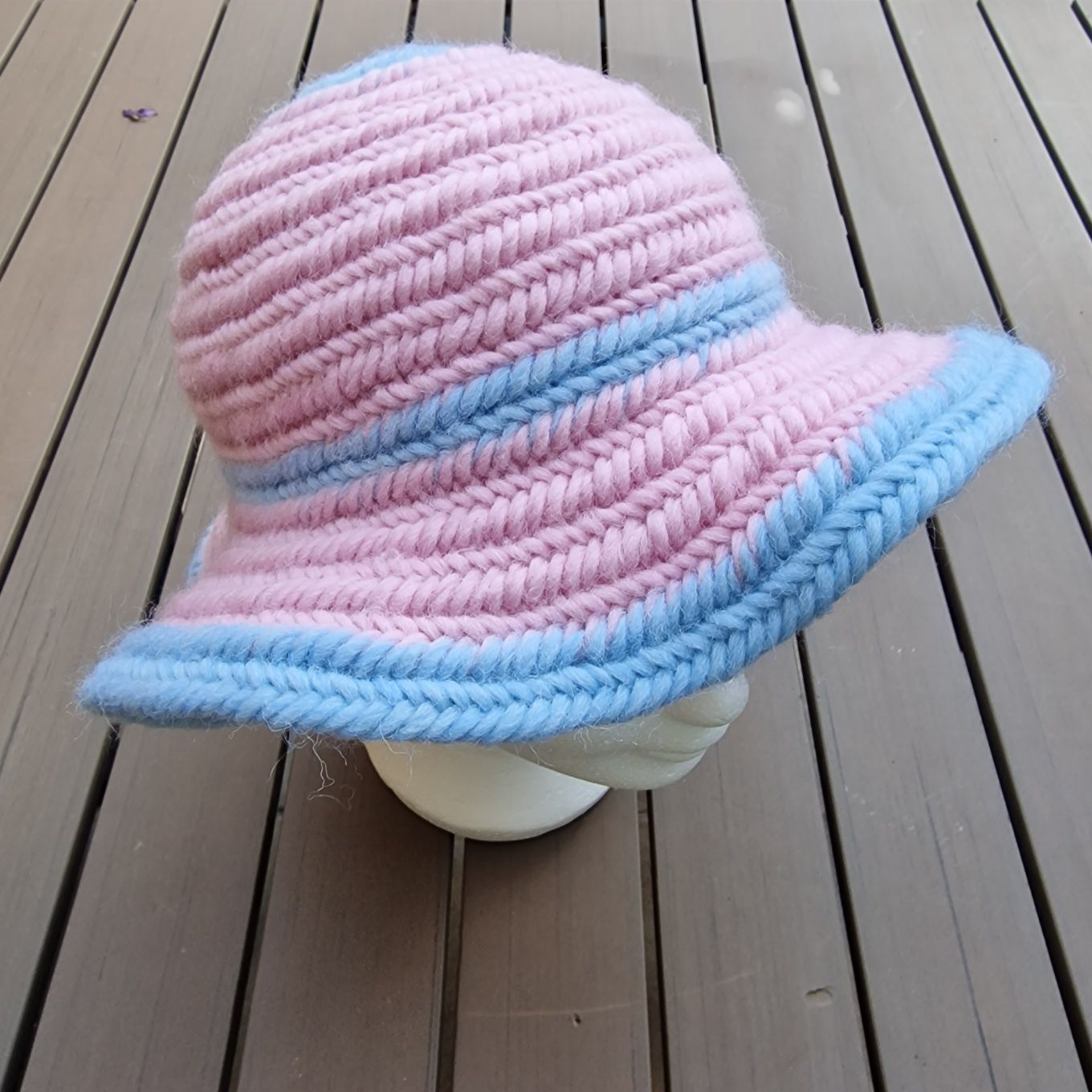
My third hat with a brim.
My third hat has the same pattern as the second hat.
My 4th hat with a brim.
My 4th hat has the same pattern as the second hat.
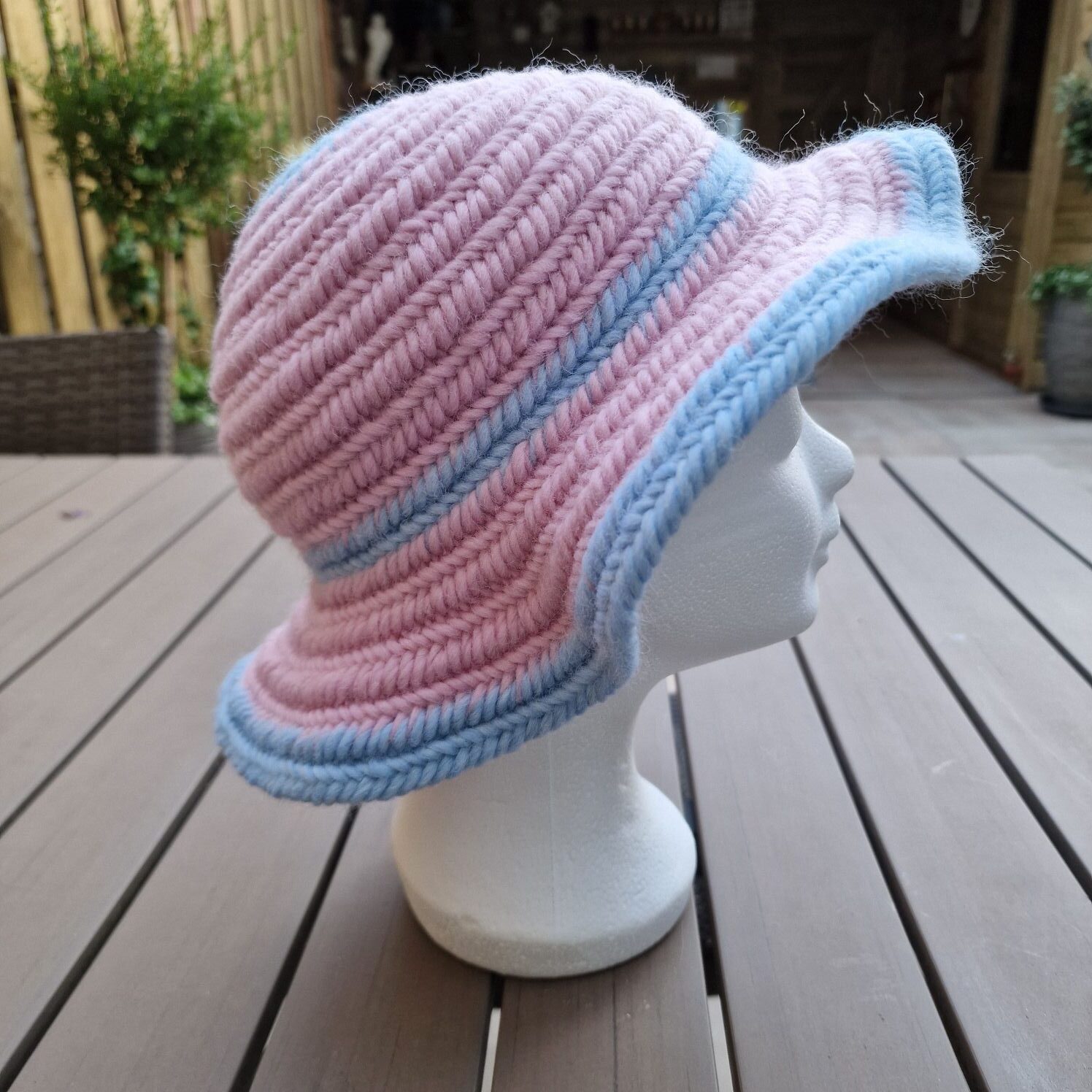
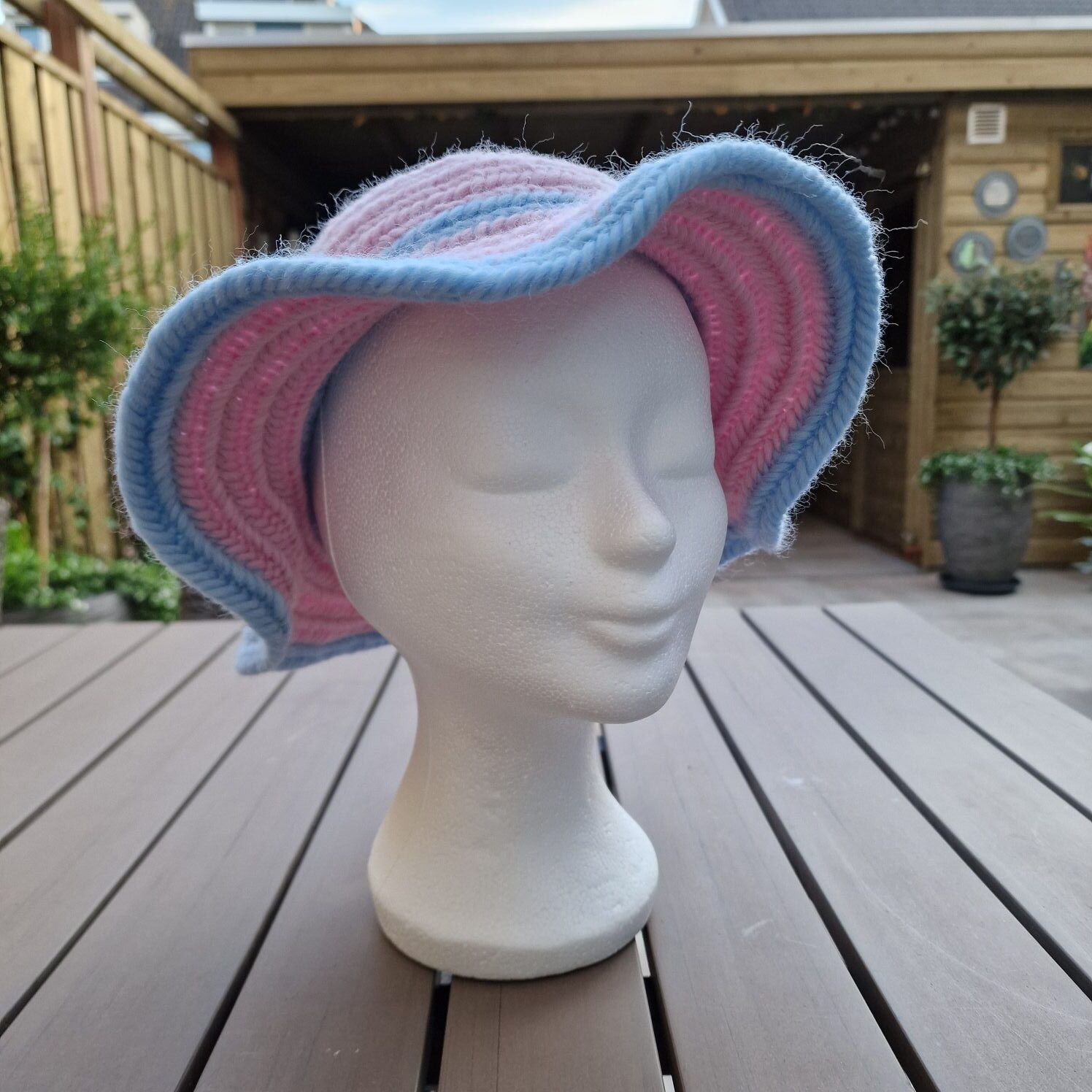
After i made the hat i made a video about how to make one.
Number 40. YouTube video called: nalbinding a easy hat with a brim.
I made a summer hat with the Oslo stitch and connection stitch F2. The edge of the hat i made with the faberg stitch.
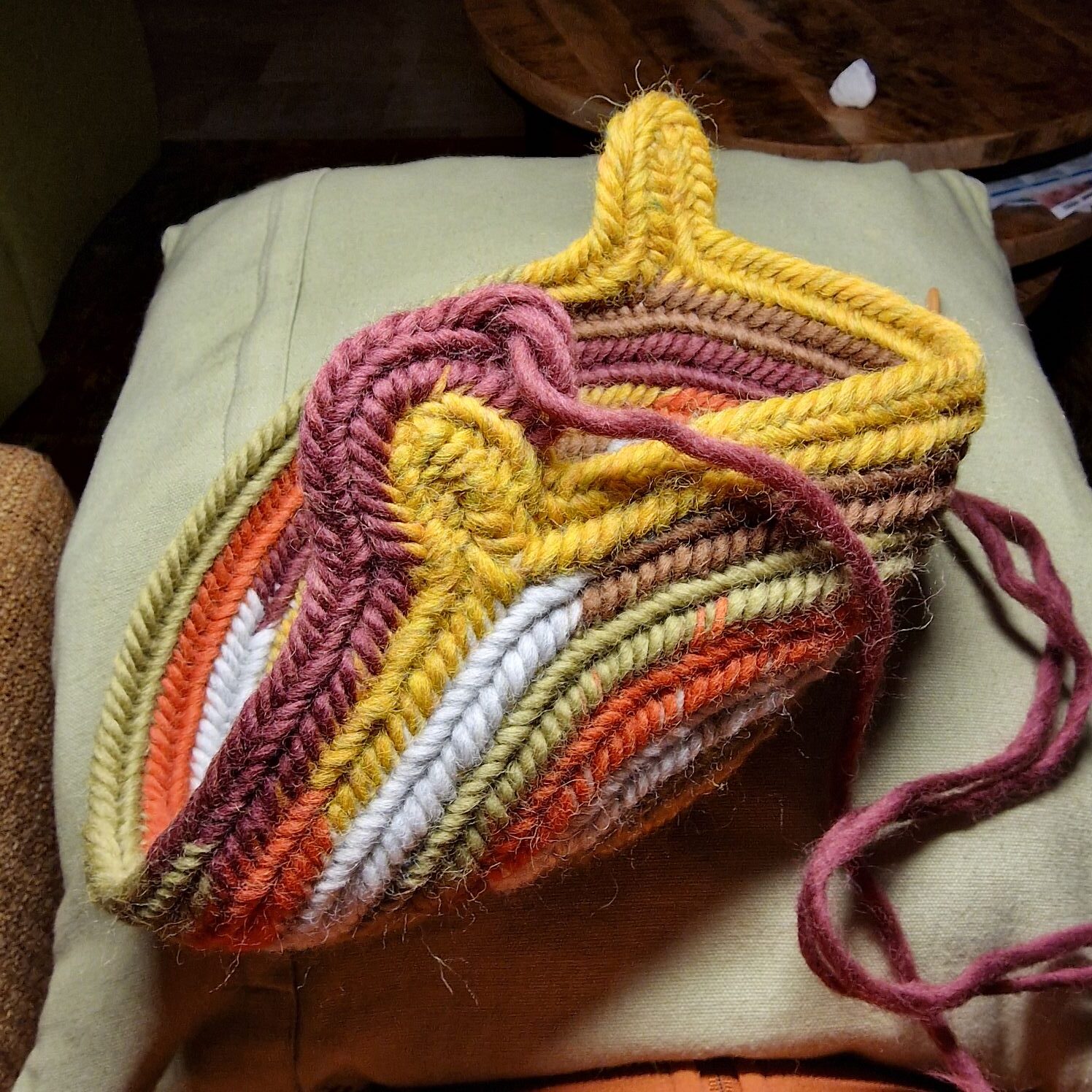
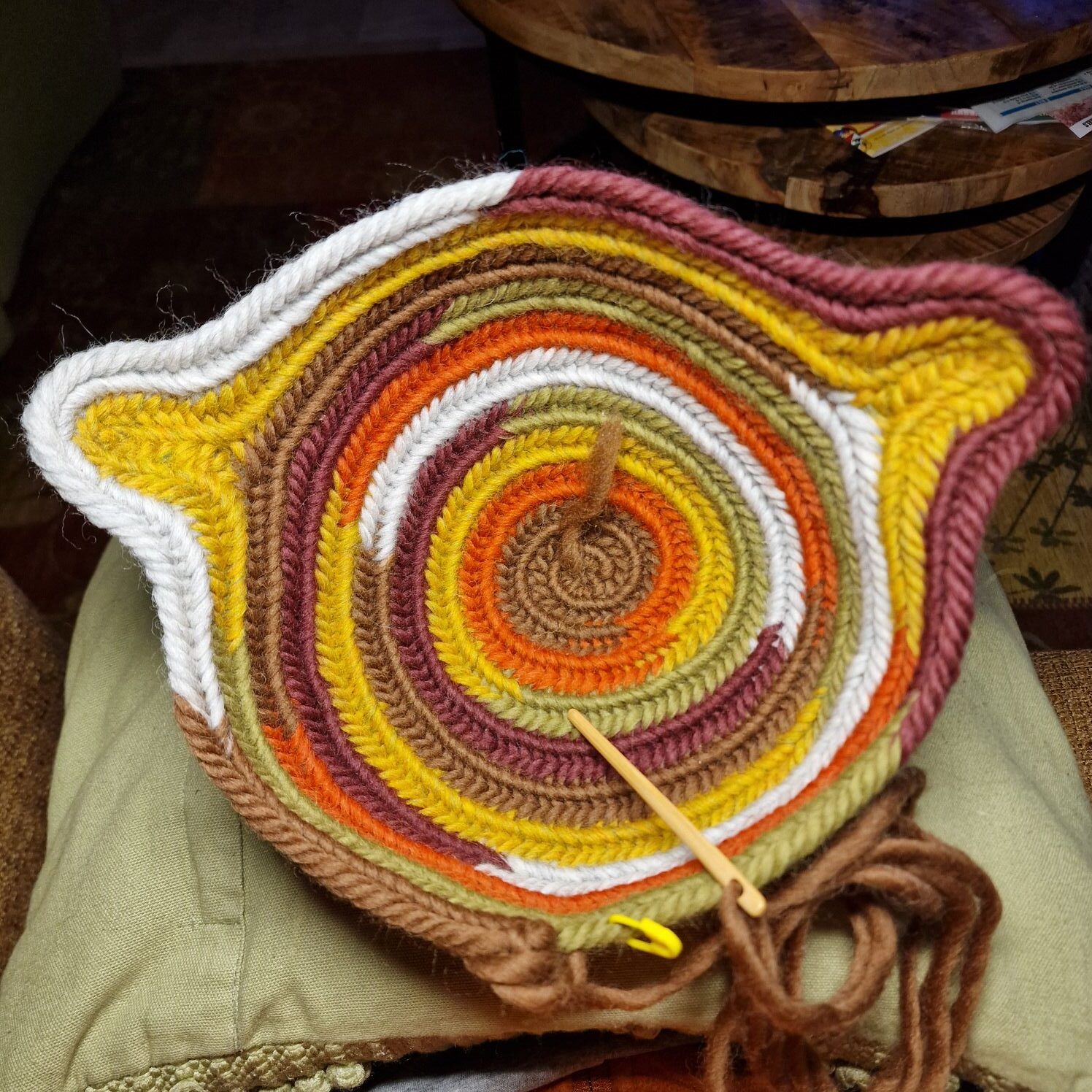
A hat with earflaps 80% wool en 20% acryl.
The hat is needle-bound with a Mammen Stitch with stitch F2 as the connection.

You start with 16 stitches and make the tail longer because you start round, see video. Increase all stitches in the first round.                                                                                                            Second round, 1 stitch as plain and increase the 2nd stitch.                                                                         Third round 2 stitches plain and the third stitch increases.                                                                Fourth round, 3 stitches as plain and increase the fourth stitch.                                                                    Fifth round, 4 stitches plain and the fifth stitch increasing.                                                                      Sixth round 5 stitches plain and the sixth stitch increase.                                                                            Seventh round, all stitches plain.                                                                                                           Eighth round (all stitches plain) and now you are going to make the ear flaps.                                                                                                                                               You do this by making a loose row of 7 stitches (they often call this a finger) and make a bend (next row) and attach this again to the edge of the hat.                                                     Make a mark in the center of the finger which is also the location of the center of your first ear flap.
Use a mirror to determine the location of the next ear flap and place a marker.                                            Ninth round on the tip of the fingers you will increase 3 stitches and between the markers at the back of the hat you will plain needle bind, and at the front of the hat you will nalbind 5 stitches plain and decrease the sixth stitch.                                                                                                Tenth round nalbind at the back plain stitches and fingers and nalbind 4 stitches at the front and decrease the fifth.                                                                                                                      Eleventh round same as the tenth round but 3 stitches normal and the 4th decrease. Twelfth round just needle binding plain stitches and your hat is ready  :)
This pattern is a guideline, you can also make the earflaps larger and a little rounder so that your ears fit nicely. I did this on the next hat, by making the finger 9 stitches long and increasing 5 stitches in the next 2 rounds and then 3 stitches on the tip of the fingers. And a few extra rounds of plain needle binding to make this hat a bit bigger.
This hat is needlebind with 100% wool and with the Finnish stitch and a connection stitch stitch F2 and starts with 16 stitches. The pattern is the same as the hat above, but with slightly larger ear flaps.
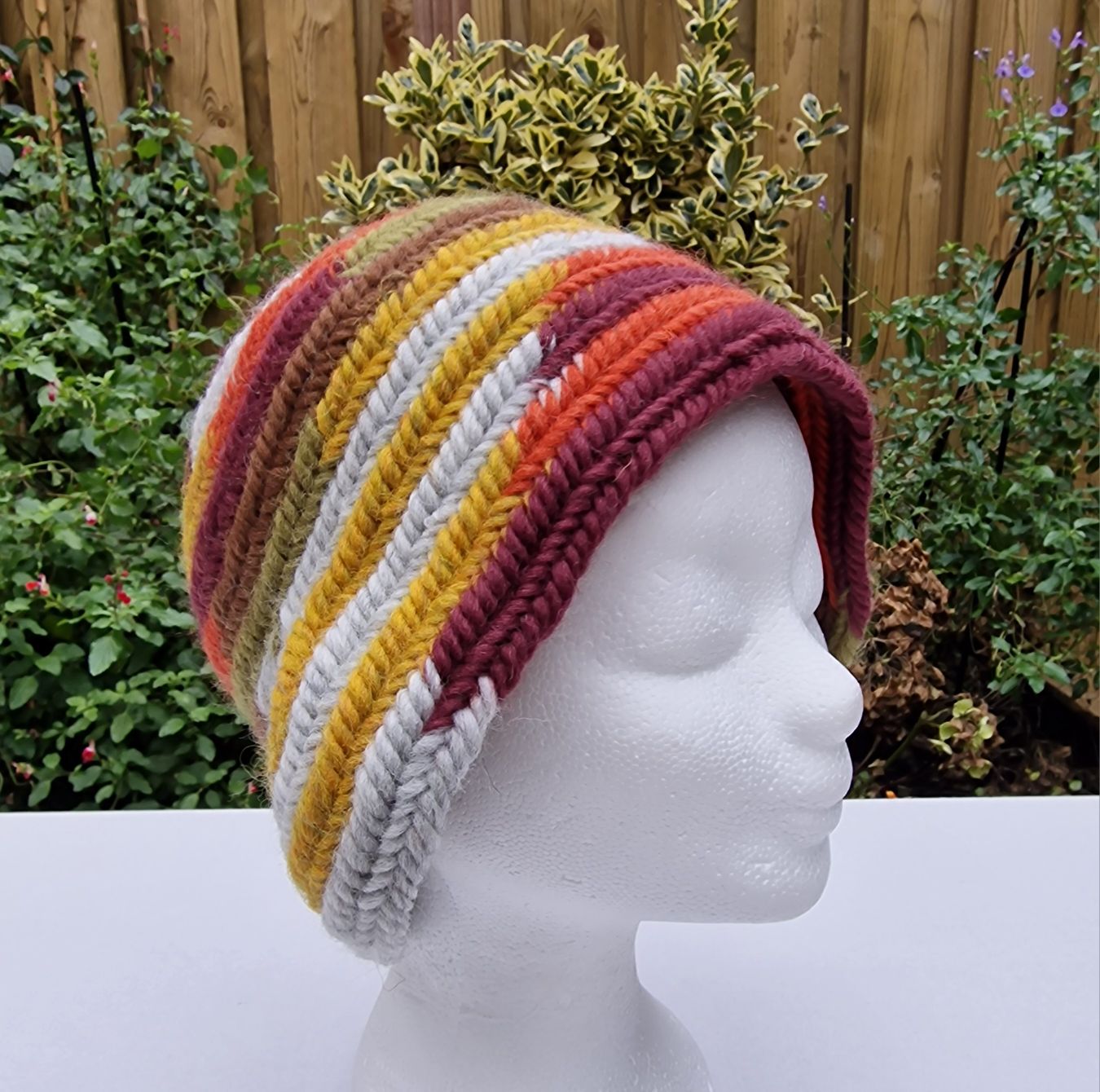
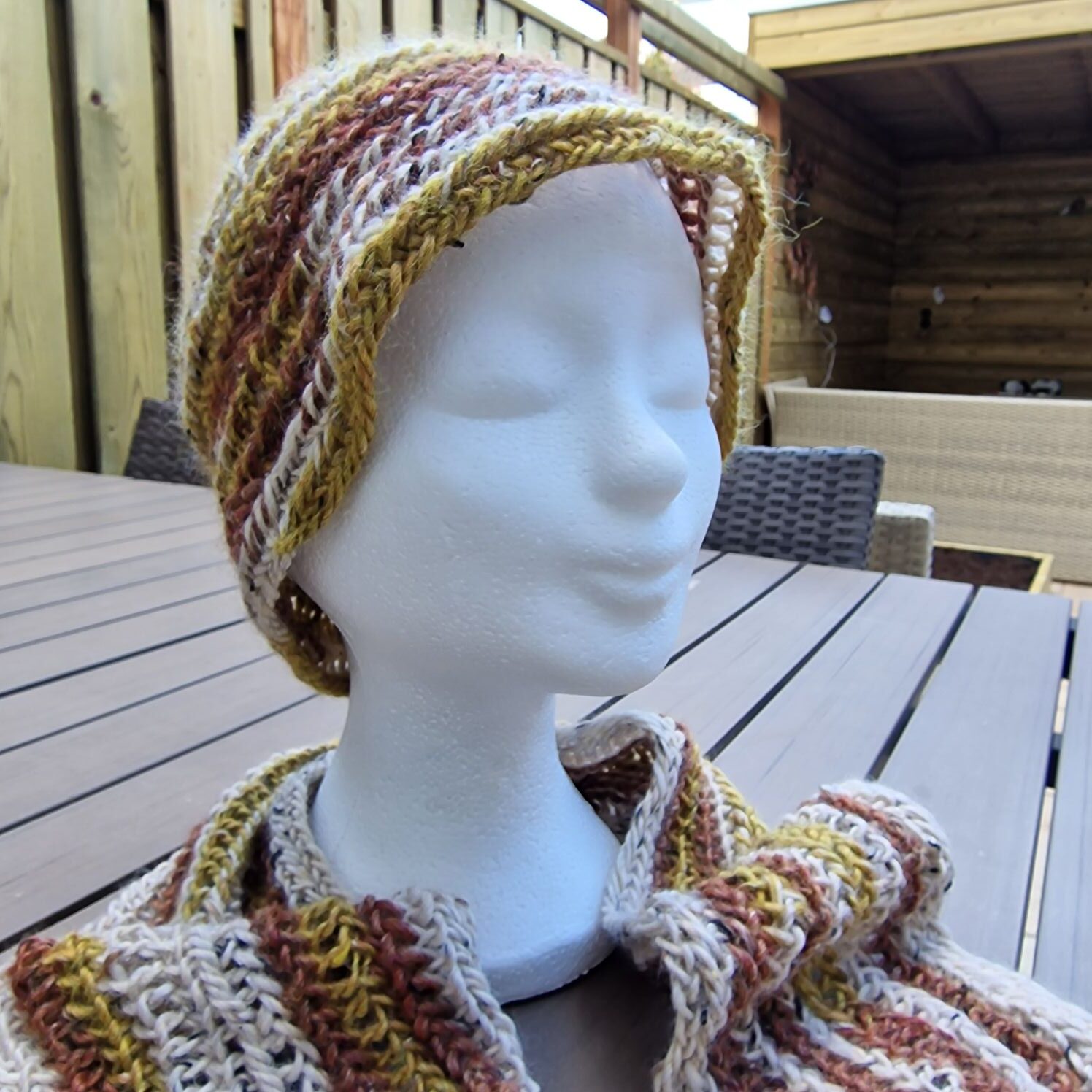
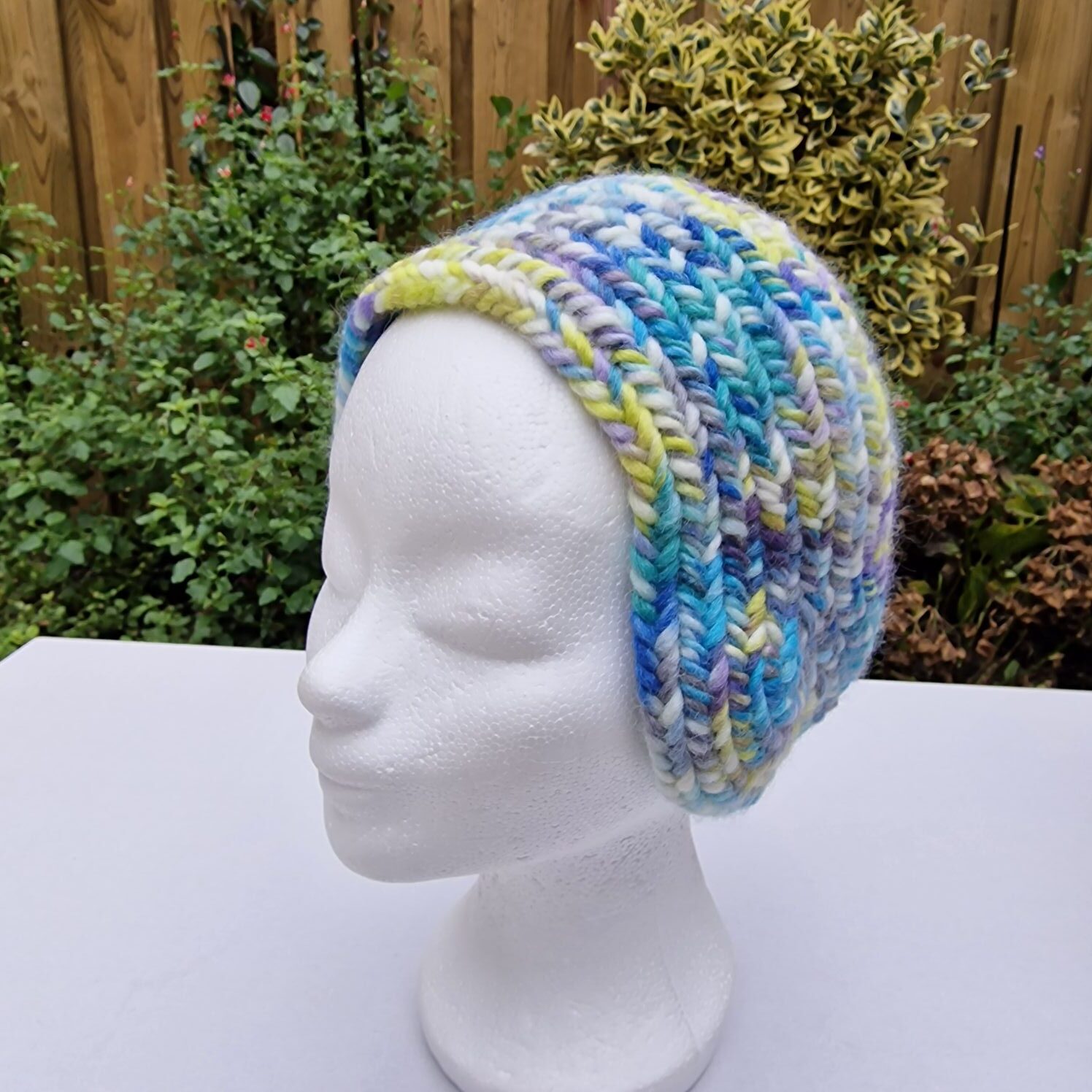
If you wear glasses like me and you have a hat on your head and you want your entire ears to be covered, the edge of your hat presses on your glasses and then on your nose annoyingly. The solution :) A nice warm hat with ear flaps.
A hat, a hat and a beret needle binding with 80% wool and 20% acrylic. I made this in December 2024.
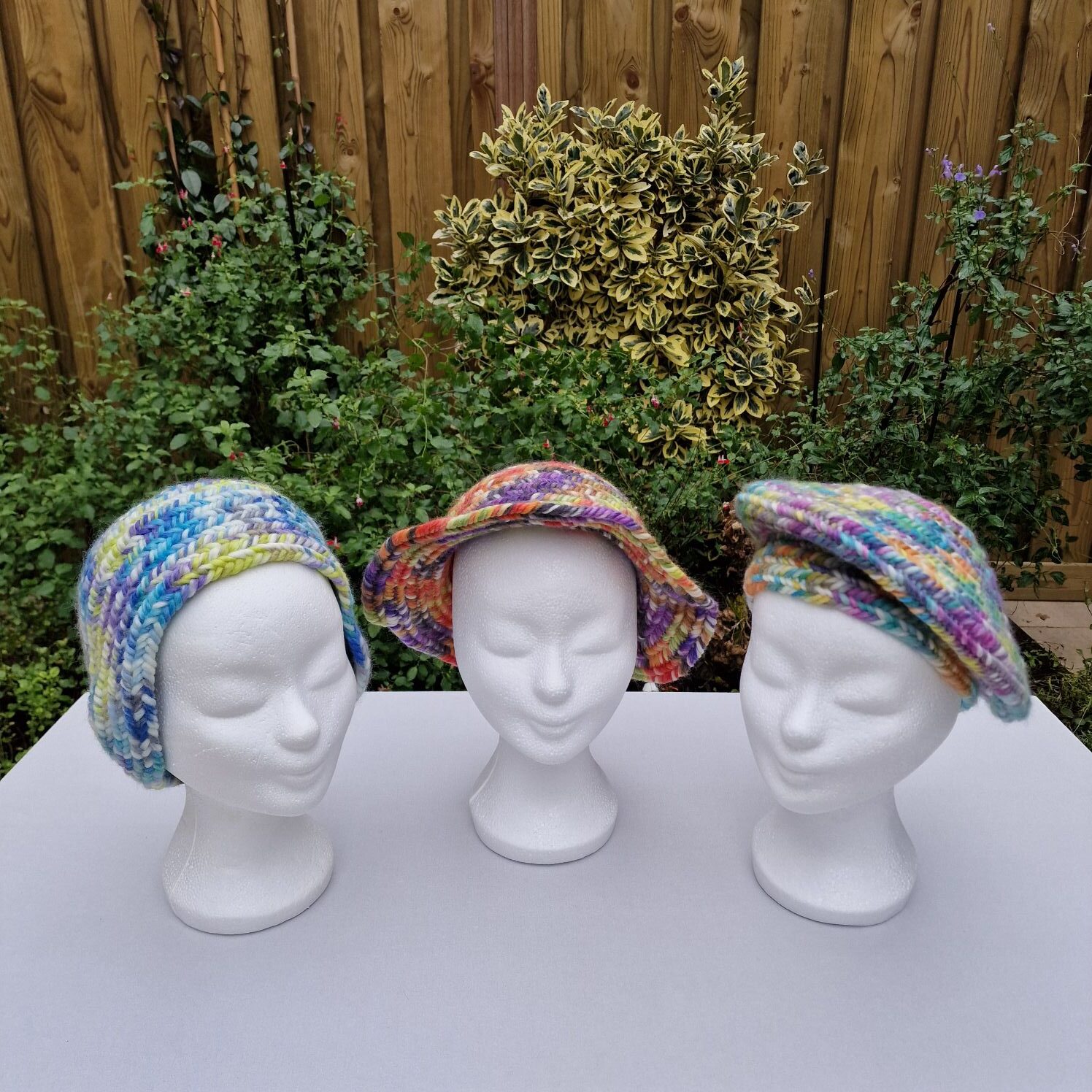
The wool I often use is single-ply and fairly thick, so the stitches stand out clearly. Of course, you could also use a thin 3-ply wool, for example.
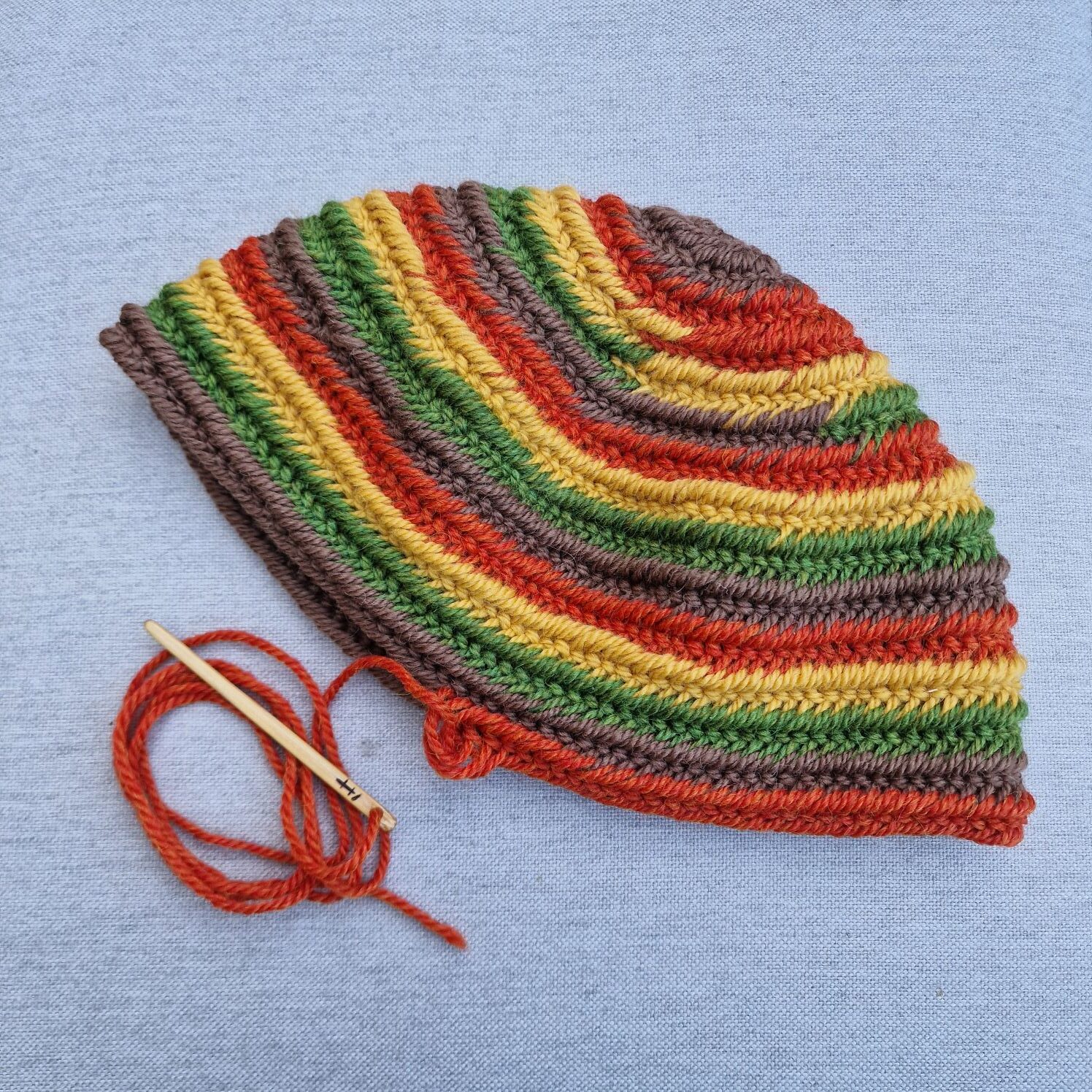
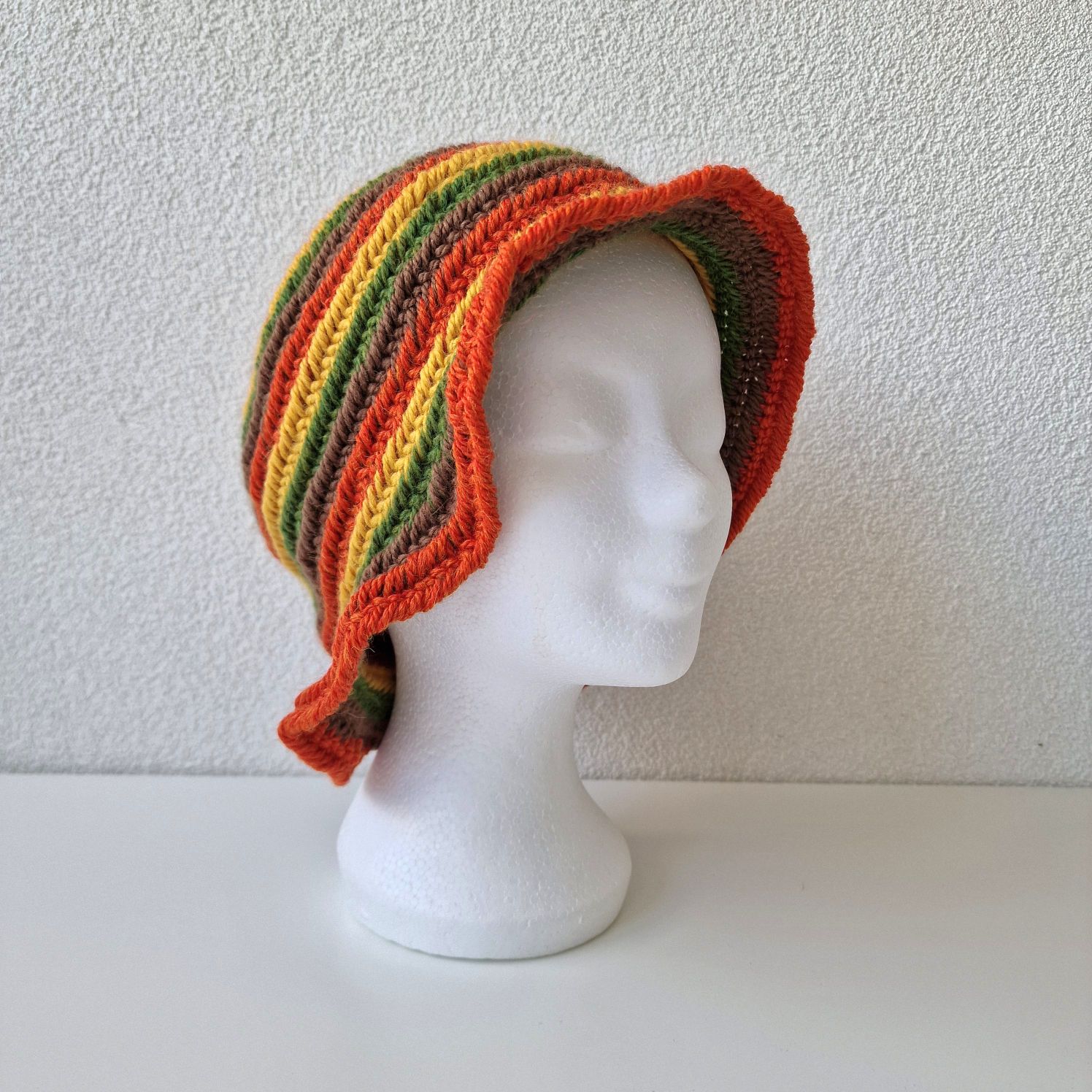
The hat shown above was made as follows.
It is made of a 3-ply blend of 65% wool and 35% alpaca (suitable for 4mm crochet hooks or knitting needles). Start with 12 stitches using the Faberg stitch and the F2 joining stitch. After completing the initial circle, increase in every stitch. In the next round, work 1 stitch plain and increase in the 2nd stitch. In the following round, work 2 stitches plain and increase in the 3rd stitch; continue this pattern, increasing in every 10th stitch (working 9 stitches normally before the increase) until that stage is reached. Next, work 6 rounds using the standard needle-binding stitch. Then, work 9 stitches plain and decrease in the 10th stitch, and take a quick measurement. Follow this by working 8 stitches plain and decreasing in the 9th; halfway through this round, I switched to working only normal stitches. To create the brim, you need to increase. In the next round, work 2 stitches plain and increase in the 3rd stitch. In the following round, work 3 stitches plain and increase in the 4th stitch; the hat is then finished. The ears and neck are covered for protection against the sun or cold wind.
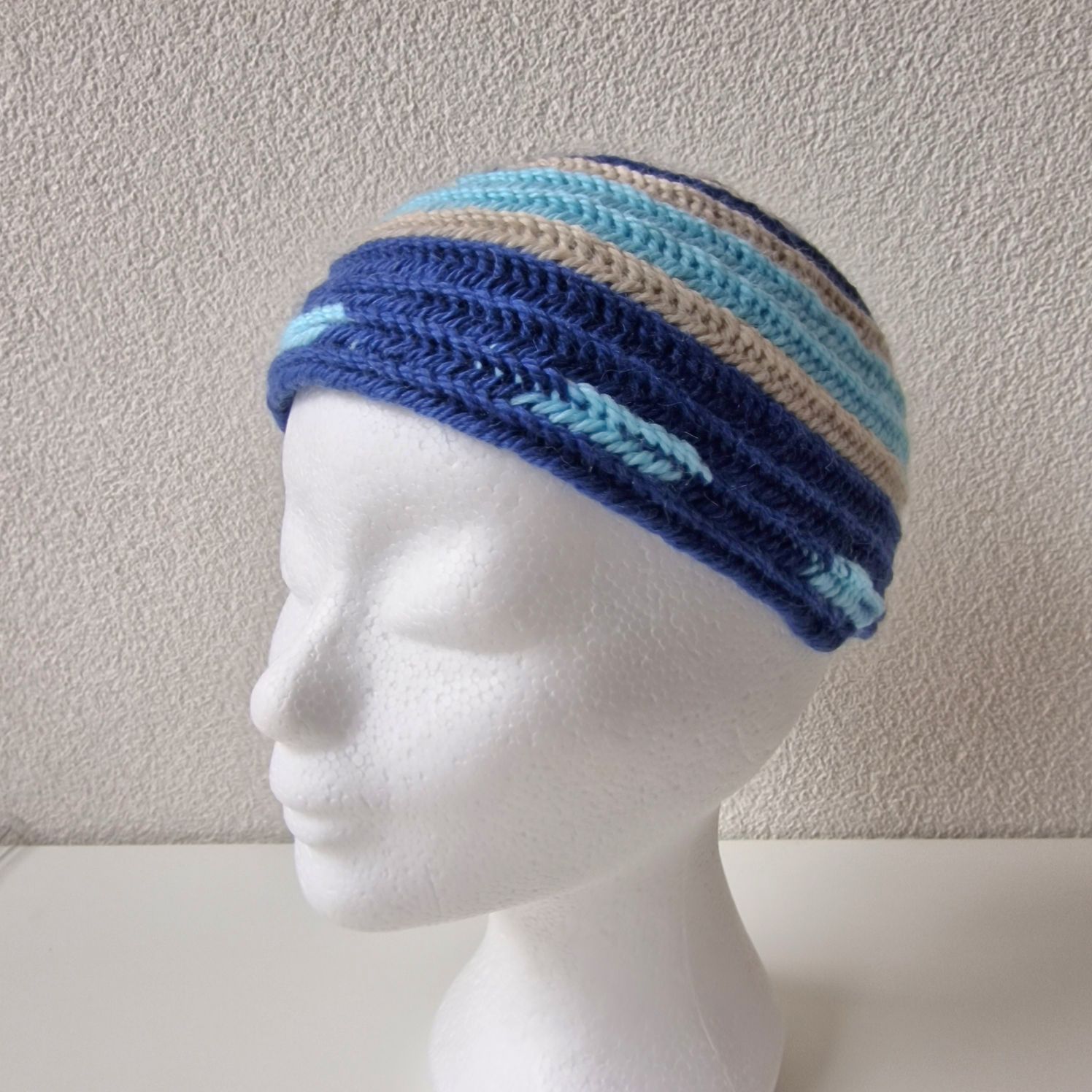
Start with 12 stitches using the Finnish 2+2 stitch and the F2 join. Yarn: 65% wool and 35% alpaca. After completing one round, increase in every stitch. In the next round, work 1 stitch plain and increase in the 2nd. In the following round, work 2 stitches plain and increase in the 3rd; continue this pattern up to working 7 stitches plain and increasing in the 8th. Measuring now, the diameter is 21 cm. After this, I worked another 4 rounds plain. This hat is exactly the same as the green one shown above, but made with thick wool and a different stitch (Oslo). It fits my bald head perfectly and is nice and warm, thanks in part to the alpaca content in the yarn.
I saw some funny, crocheted witch hats for Halloween on Facebook. I thought to myself, "That could certainly be done using nalbinding, too." When I received a request on my YouTube channel, "Happy Needlebinding," to create one using this technique, I got started right away. It is now October 24, 2026, and Halloween is next Saturday.
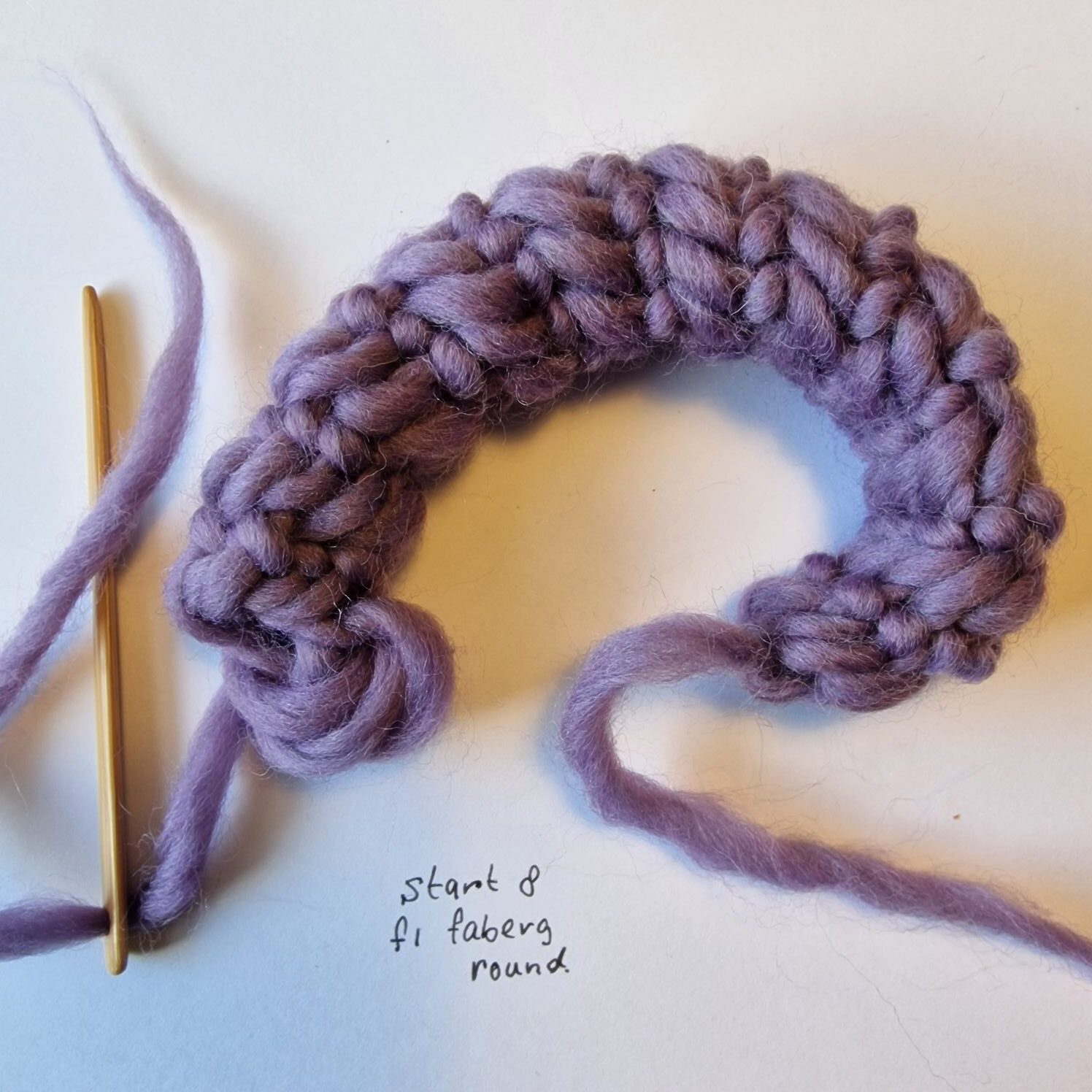
I started with 8 stitches using the Faberg technique and then worked one round of nålebinding. Below, you can see a video showing how to make a round.
Once the tip was long enough, I felted a dark green color onto it and, after the first stitch, attached a stitch marker.
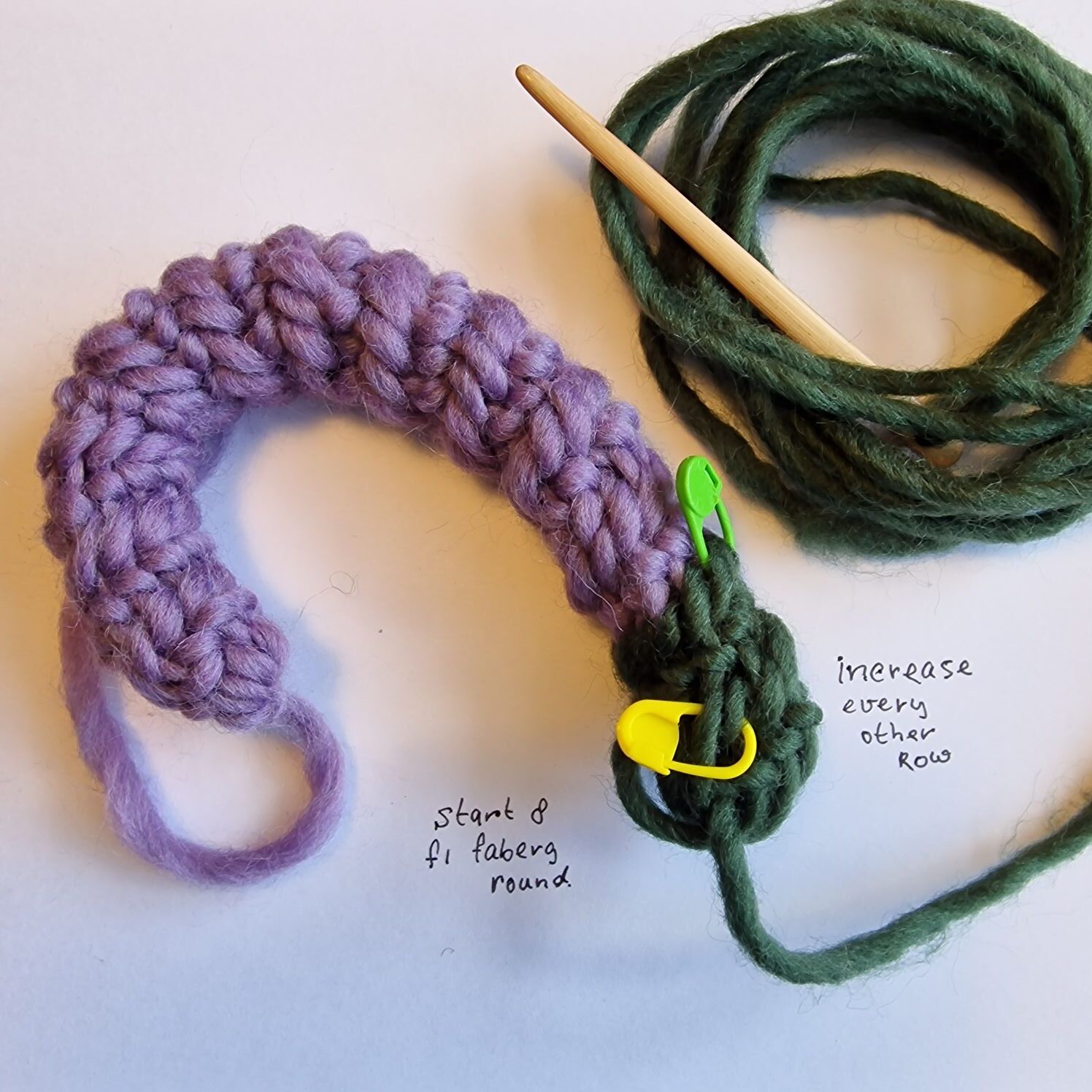
I forgot to mention "increase one stitch every other row"—in other words, add one stitch every second row. The tip needed to be a bit more tapered, so after two rounds, I decided to increase by two stitches per round.
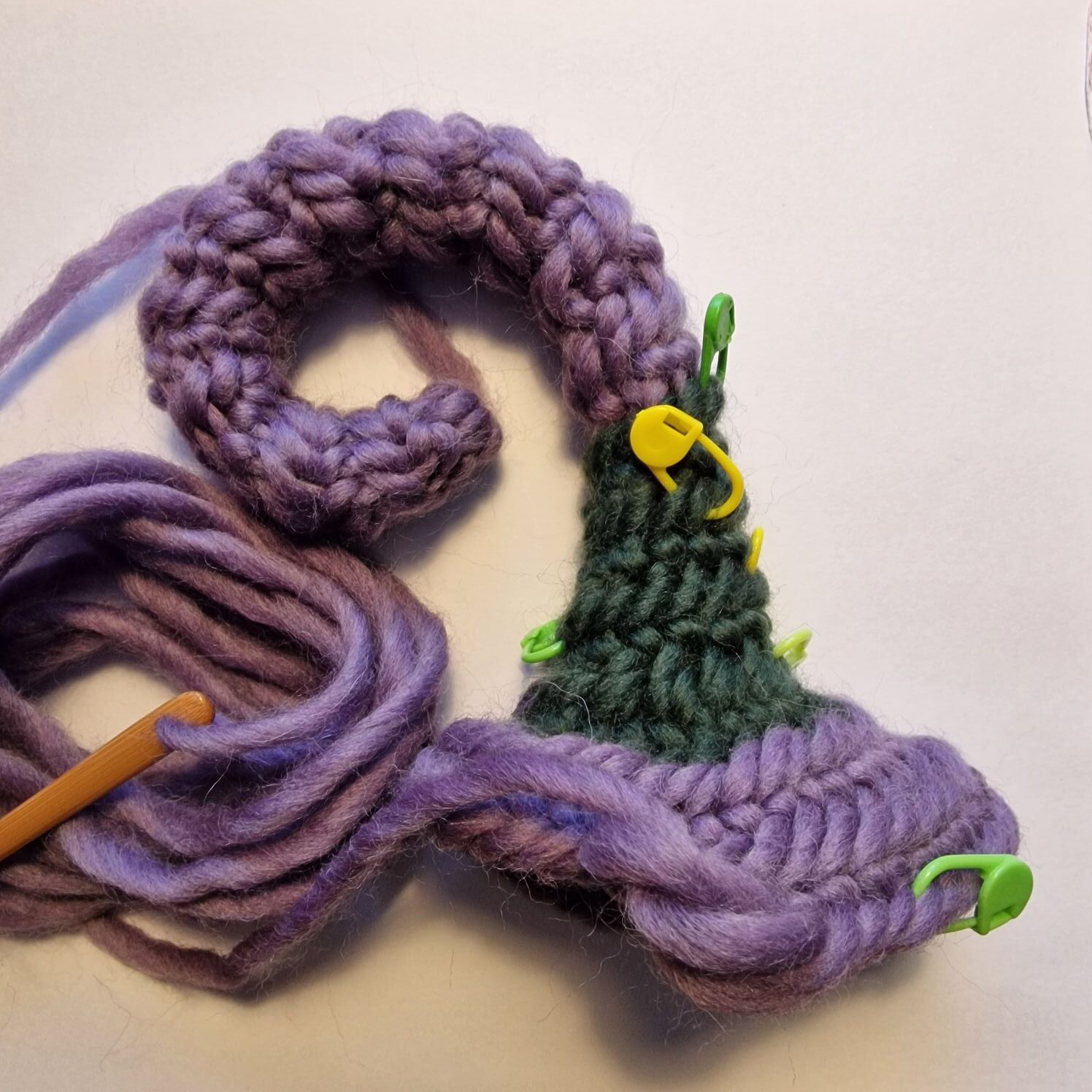
When two stitches didn't provide enough of a taper, I increased every stitch in the following round and attached a stitch marker (so I would know where each round begins and ends). The diameter of the circle is now 6 cm, consisting of 30 stitches—though this will vary depending on the size of your thumb, the thickness of the yarn, and how loosely or tightly you work your nålebinding. Next, I work one stitch normally and then increase on the second stitch. In the following round, I work all stitches normally. After that, I work two stitches normally and increase on the third stitch. In the next round, I work all stitches normally—and so on, until you feel that the tip of the hat is sufficiently high and large.
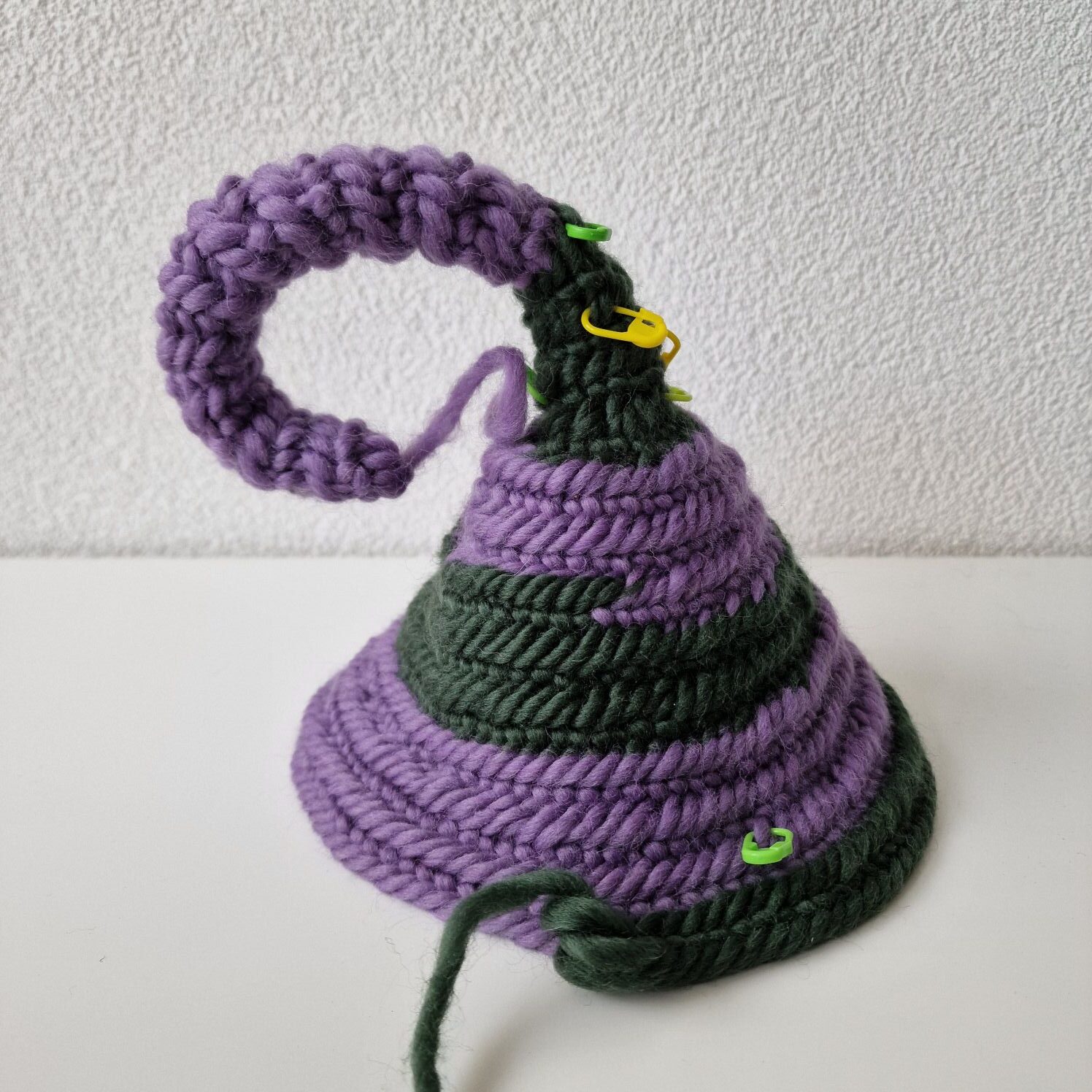
Once the height and size are sufficient, I will begin the *naaldbinden* (needle-binding) process for the wavy brim of the hat. I’ll attach a stitch marker, then work 3 stitches normally before increasing on the 4th stitch. This creates a wavy edge. For the next round, I’ll work 4 stitches normally and increase on the 5th stitch.

You can already see the wavy edge forming with the pattern of 3 regular stitches followed by an increase on the 4th stitch.
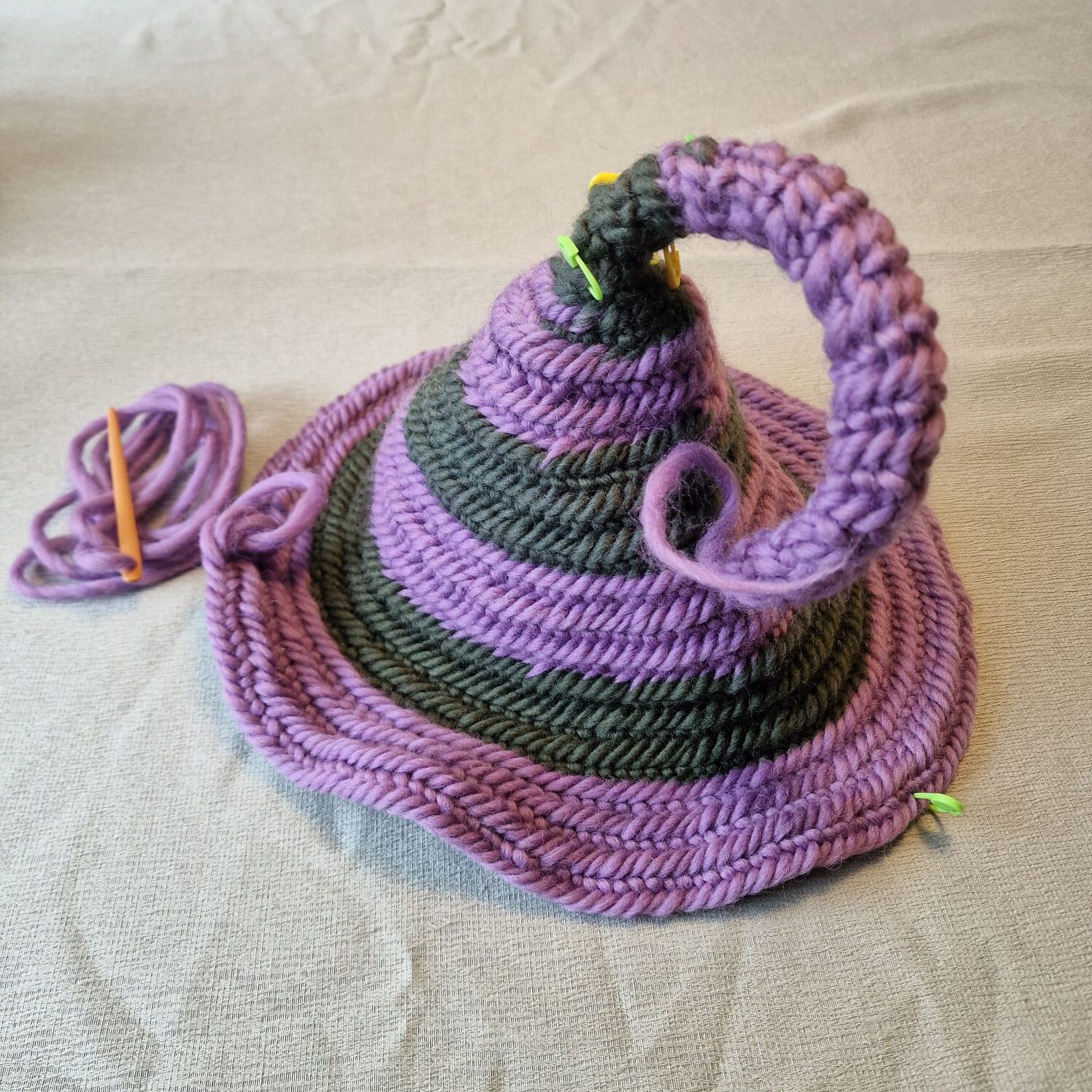
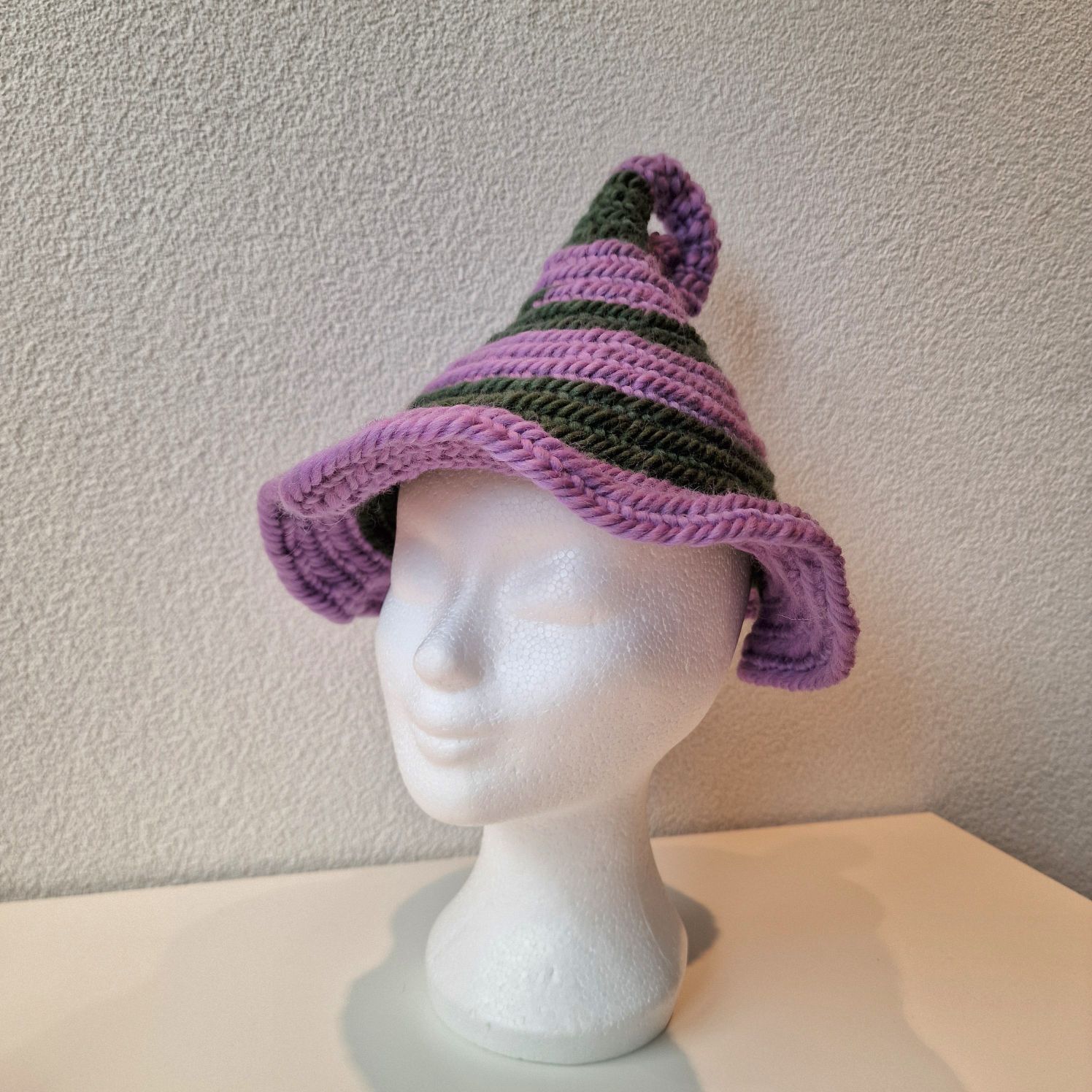
It is now Sunday, Oct 25, 2026, and my Halloween witch's hat is finished—time to pass it on! :)
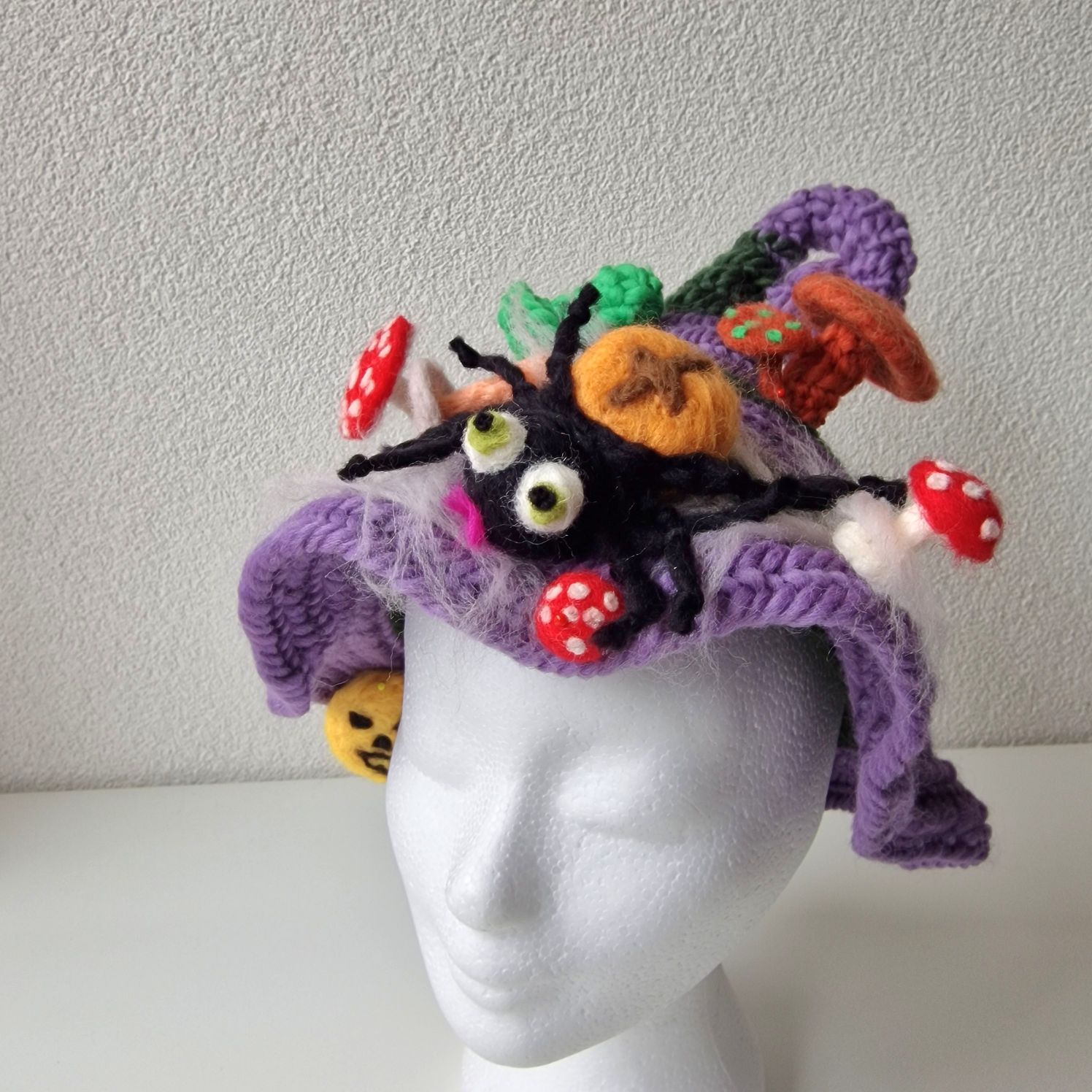
Now, the hat also needs some decoration—think of a spider, pumpkin, mushroom, toad, skull, bat, or anything else fun.
                                                                                                                                                            Today it is Halloween and the witch hat is ready  :)

I saw this example of a witch's hat on Facebook; it was crocheted by Amy David. She creates many other beautiful witch's hats, along with a wide variety of other lovely crochet artworks.
Needlebinding berets.
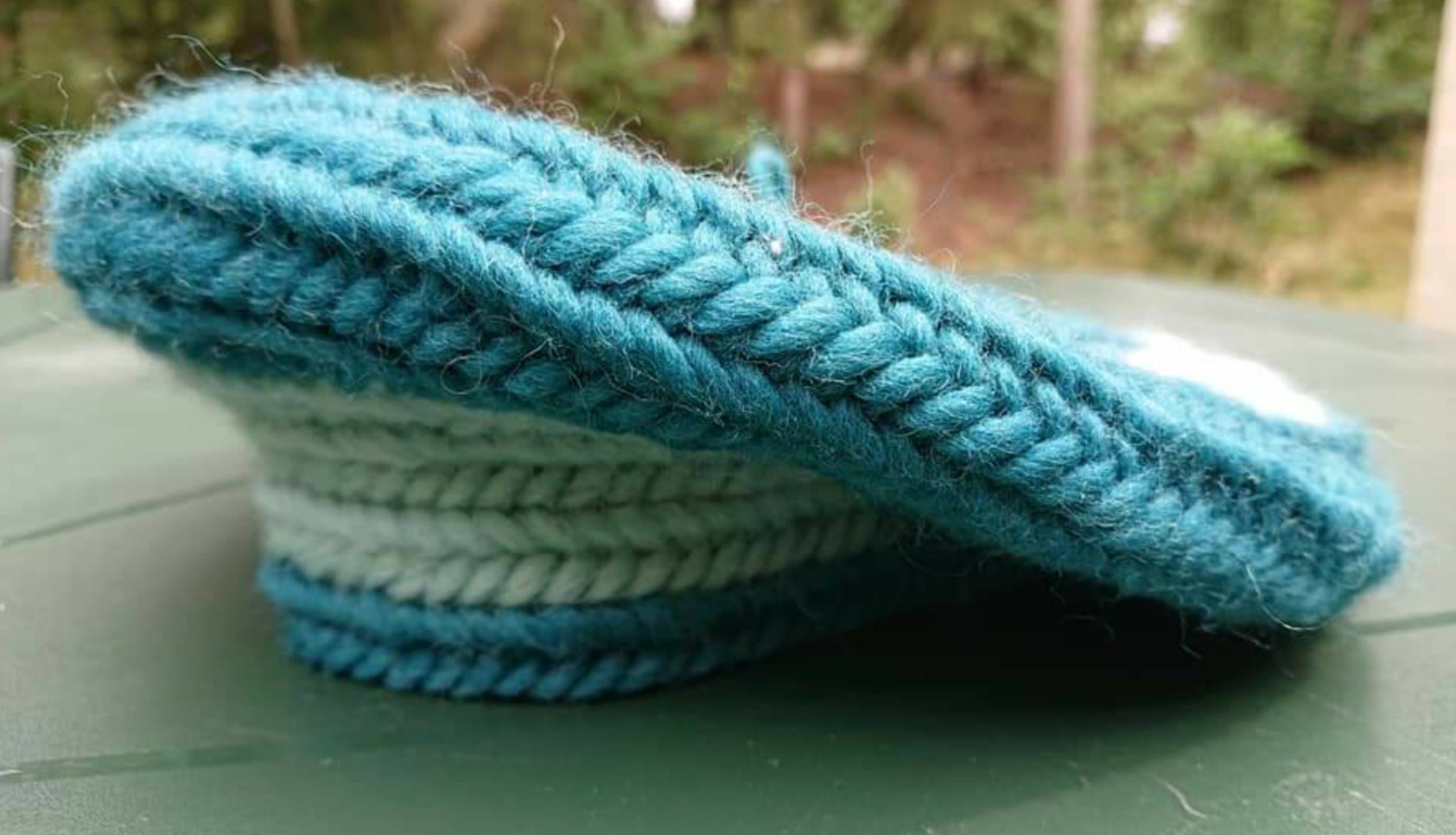
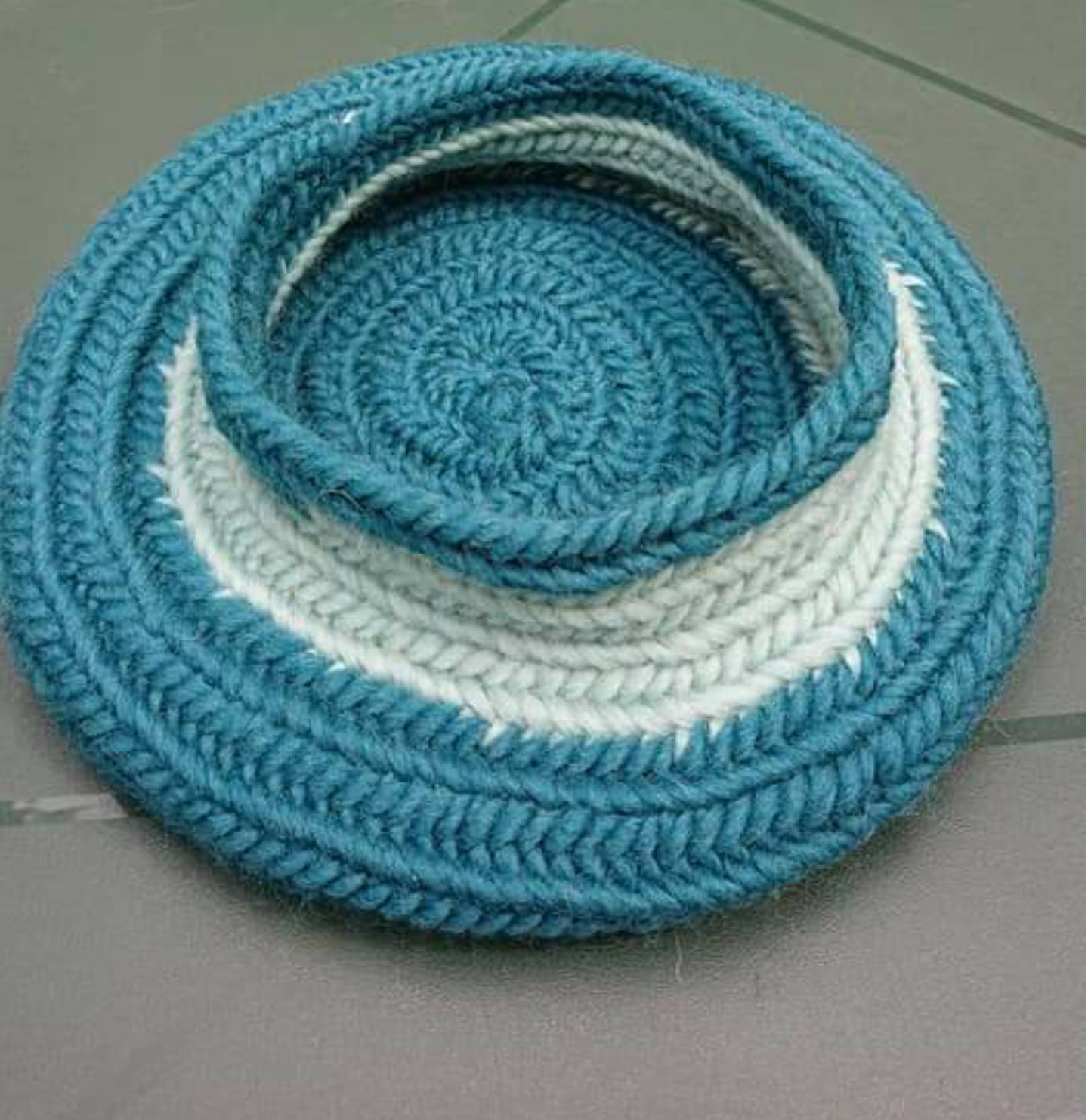
Needlebind round start.
I start with 18 stitches with the Finnish stitch 2+2 F1.
In the 1 rnd you increase all stitches and then attach a stitch marker, you know when a round starts and ends.
The 2 rnd 1 stitch normal and the secound increase.
The 3 rnd 2 stitches normal and the third increase.
The 4 rnd 3 stitches normal and the fourth increase.
The 5 rnd 4 stitches normal and the fifth increase.
The 6 rnd 5 stitches normal and the sixth increase
The 7 rnd measure, is the diameter 25 or 26 cm then all stitches normal one round, depending the size of your head.
The 8 rnd 5 stitches normal and the sixth decrease.
The 9 rnd 4 stitches normal and the fifth decrease.
The 10 rnd now measure, if the baret fits then two rounds normal needlebinding for the edge. (if not than another round of 3 stitches normal and the fourth decrease and measure).
Then finish the beret.
You can also simply pull this beautiful beret over your ears when it’s very cold they stay warm. 🙂
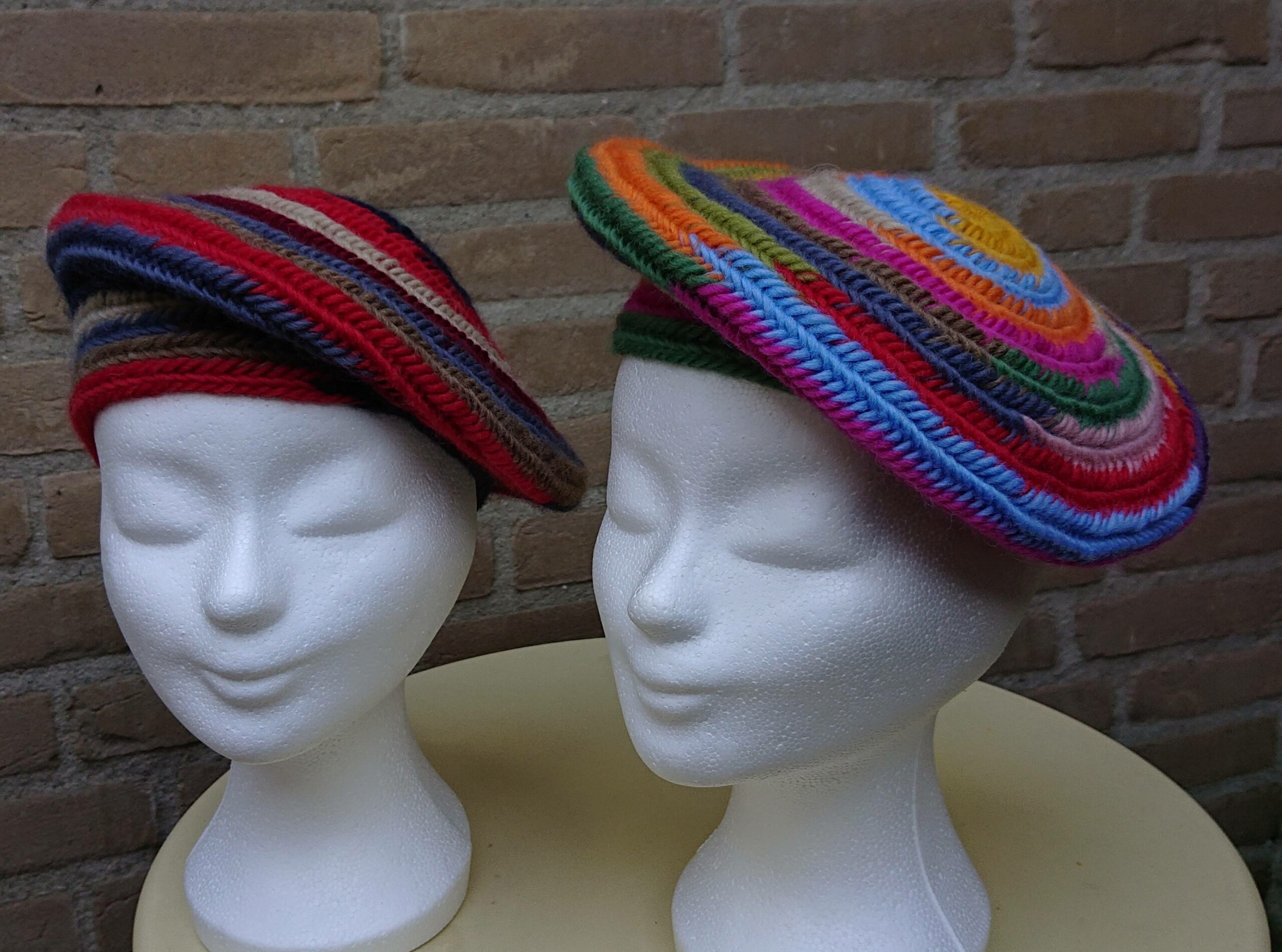
These berets are made with Fin. stitch 2+2, and starts with 20 stitches.
The barets are made the same as the top pattern, and the thick wool barets are start with 18 stitches.
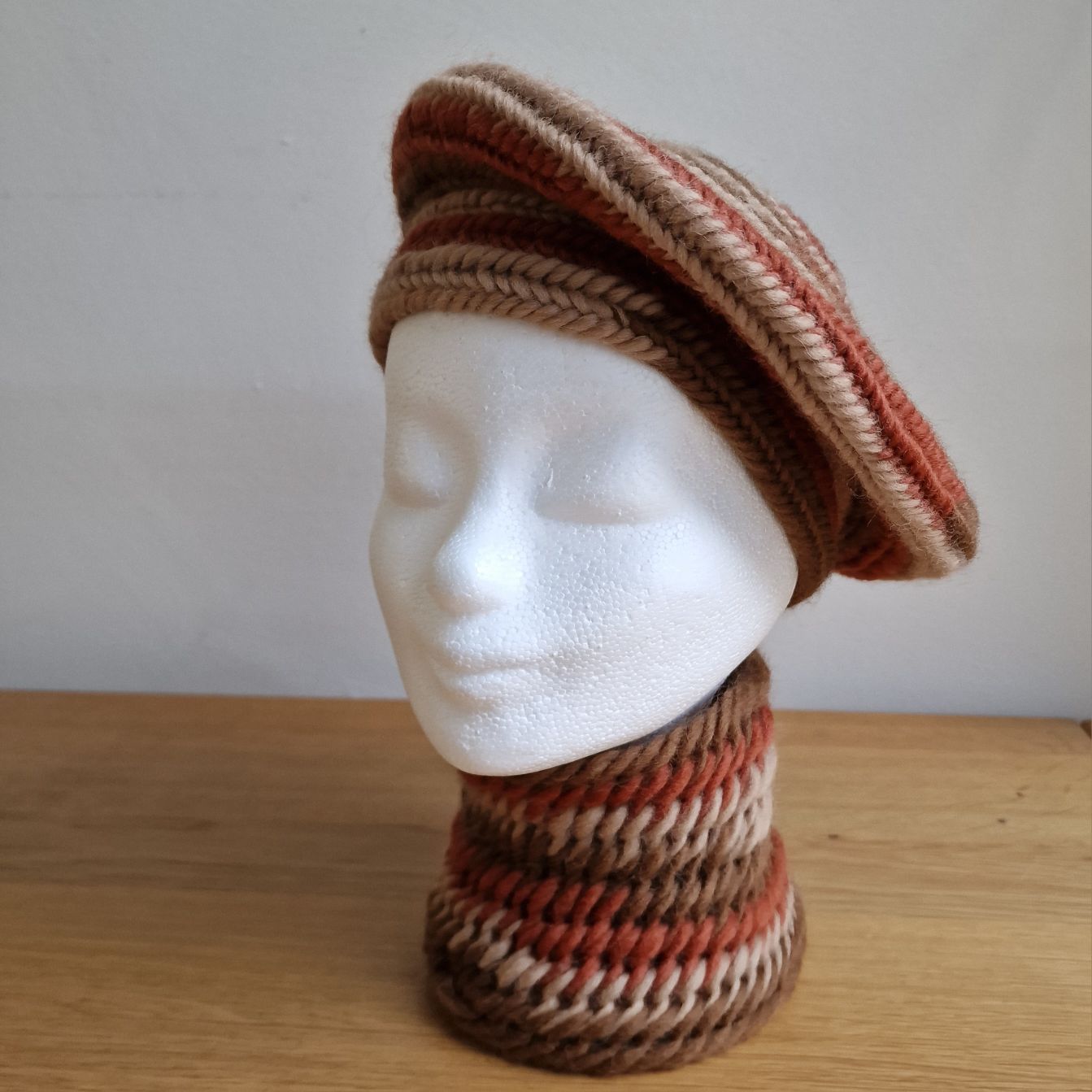
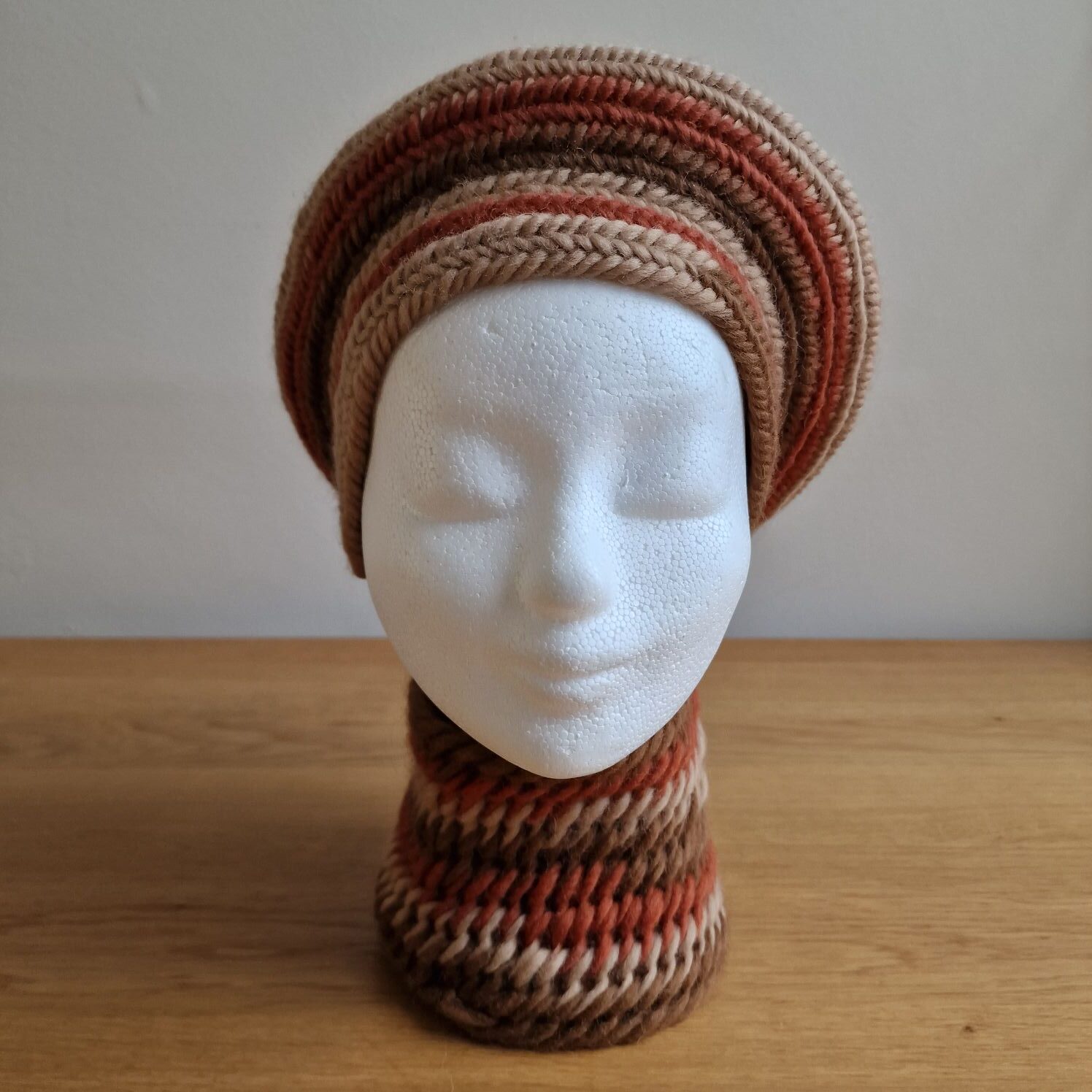
The barets are made the same as the top pattern and 100% wool.
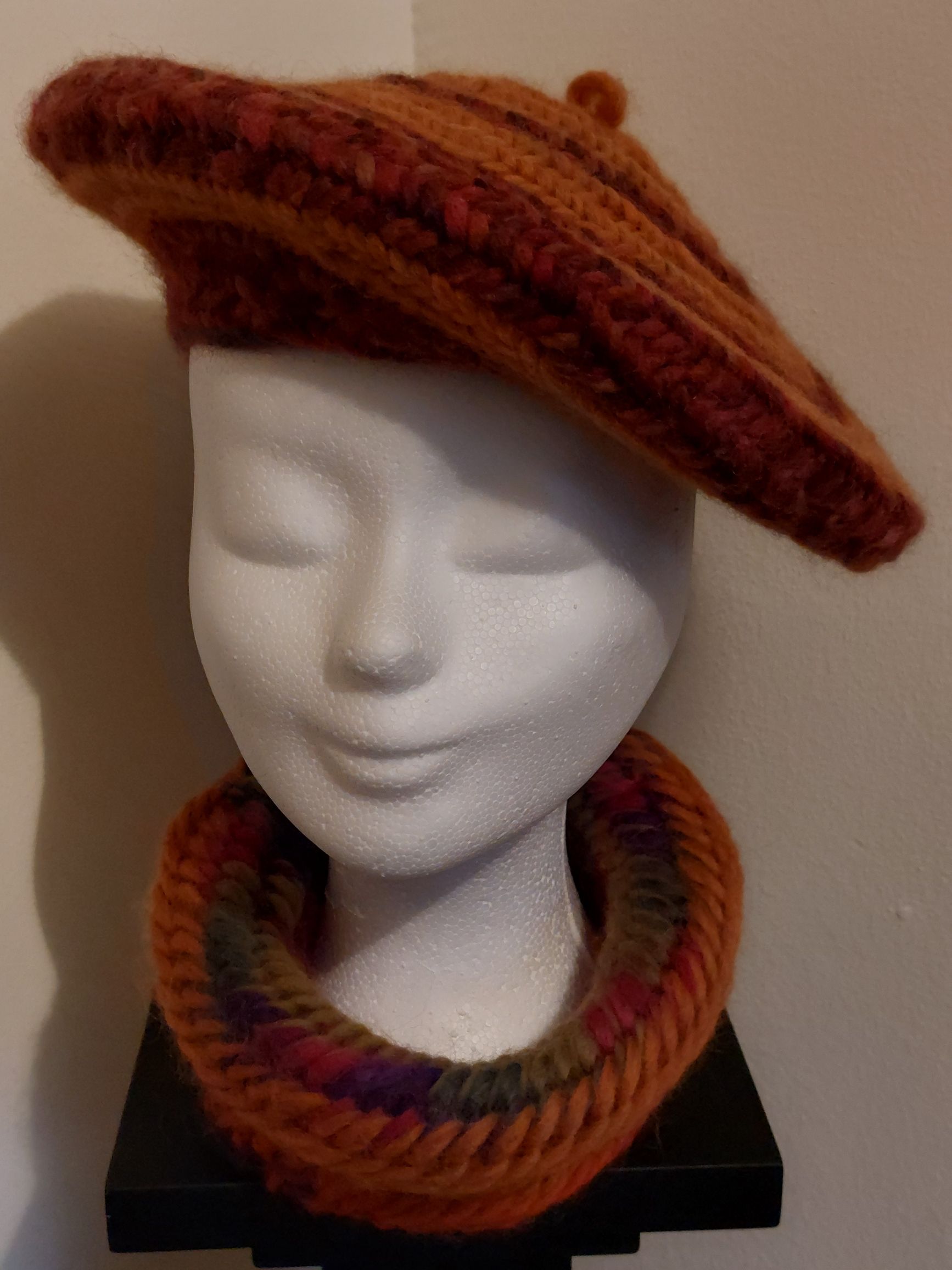
This baret is made with a Fin. stitch 2+2 and F2 connection stitch.
The cowl is made with the York stitch and F2 connection stitch.
You can also wear the baret in this way.
The next baret is 100% Alpaca, it is very smooth an soft yarn.
The yarn is very smooth, it slides easily and fast through the stitches while nalbinding.
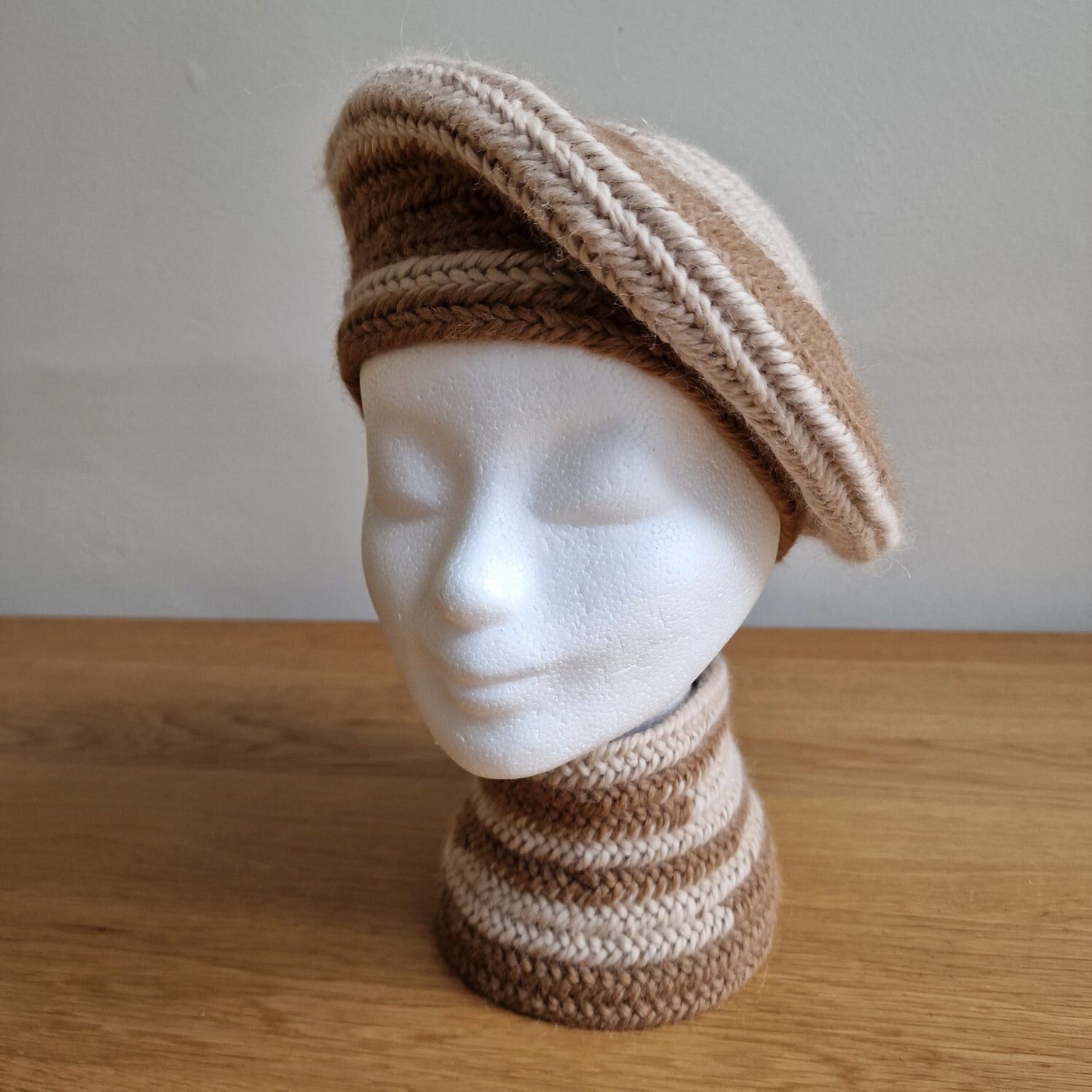
This baret is made with a Fin. stitch 2+2 and F2 connection stitch.
The cowl is made with the Arboga stitch and F2 as connection stitch.
The baret is made the same as the top pattern.
You can also wear the baret this way.
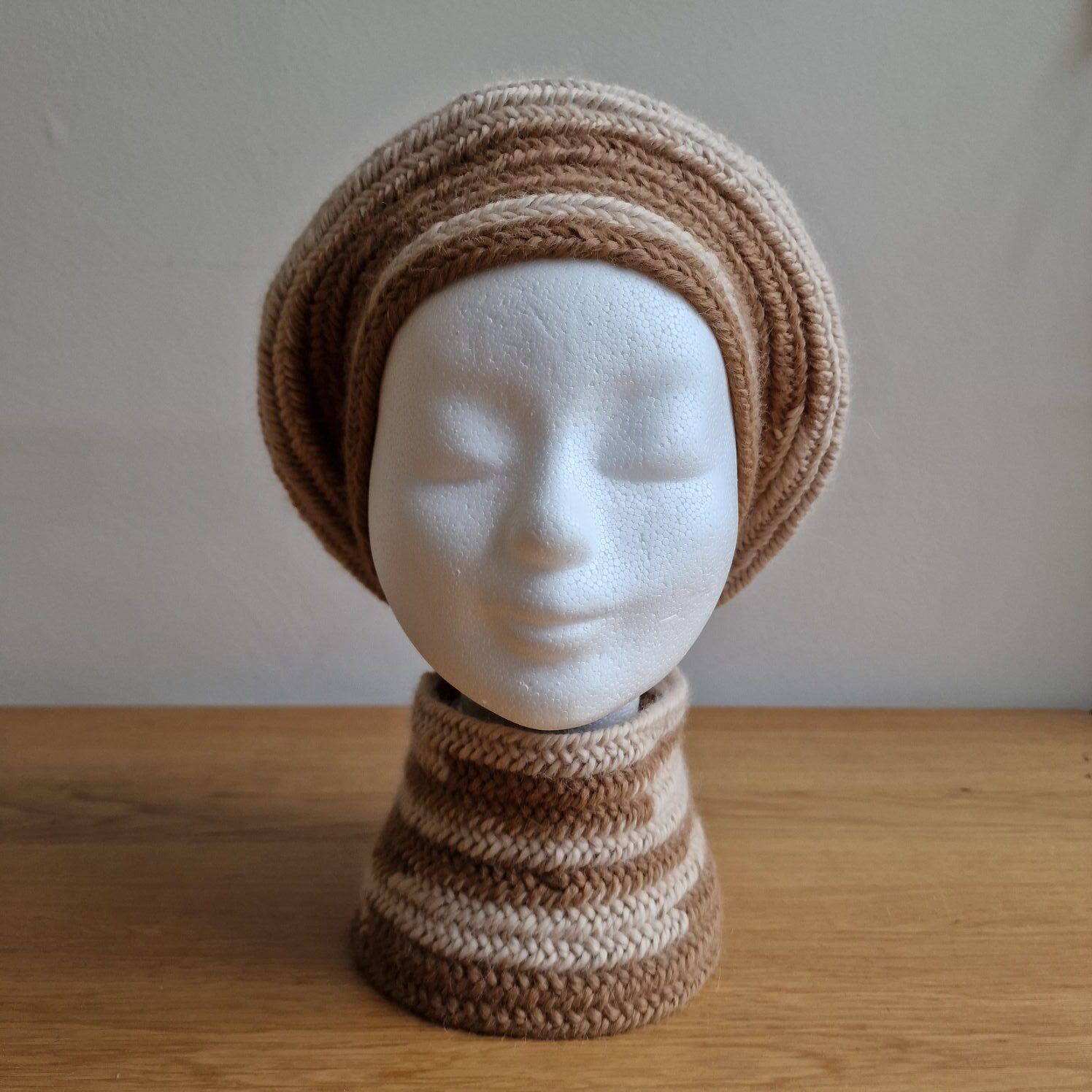
It is the first time that i have needlebind with 100% alpaca natural colors.
This super yarn is smooth, soft and fits well and it does not sting.
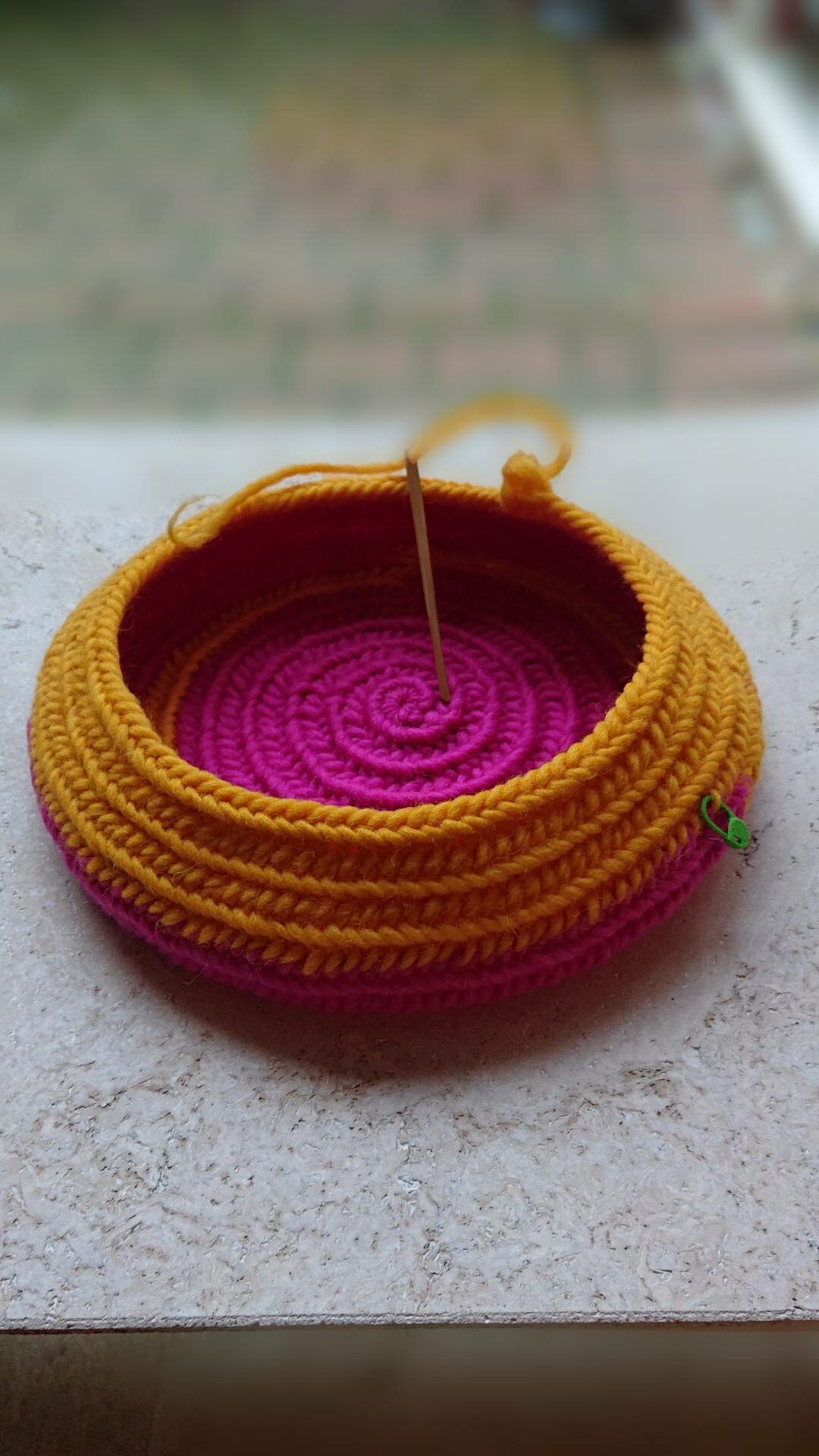
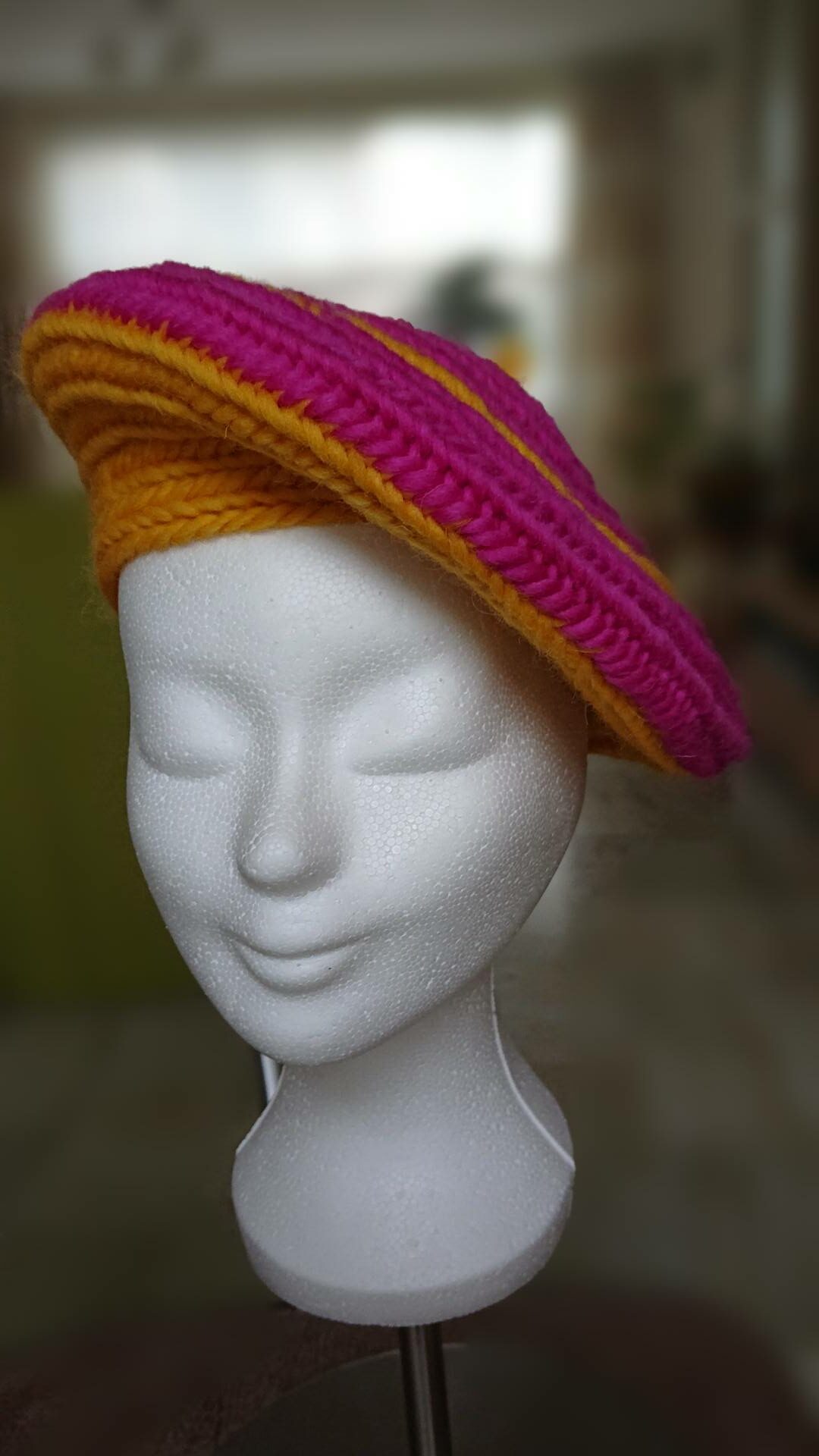
The Beret is made with the above pattern and with the Finnish stitch 2+2 and F2.
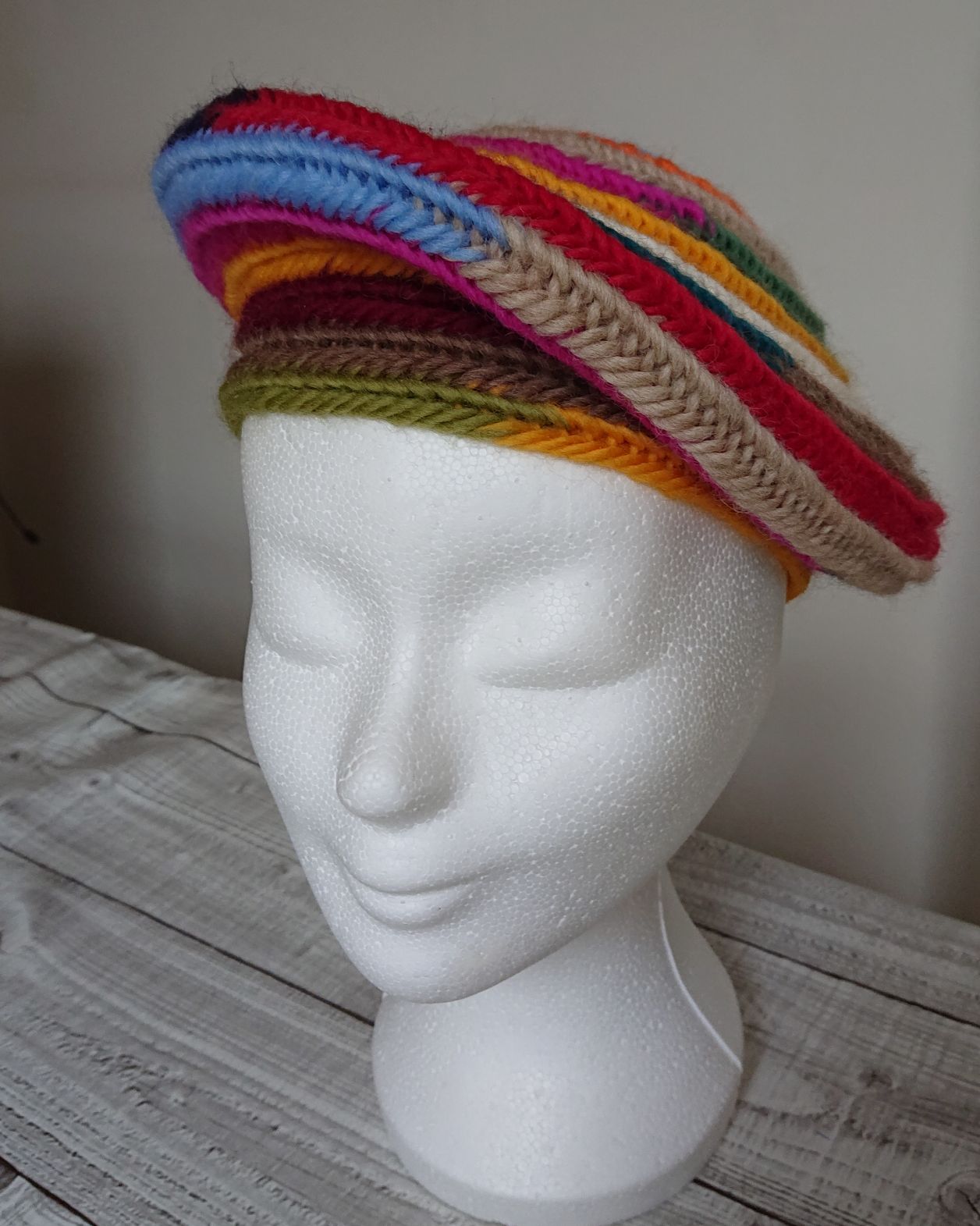
The Beret is made with the above pattern and with the Finnish stitch 2+2 and F2.
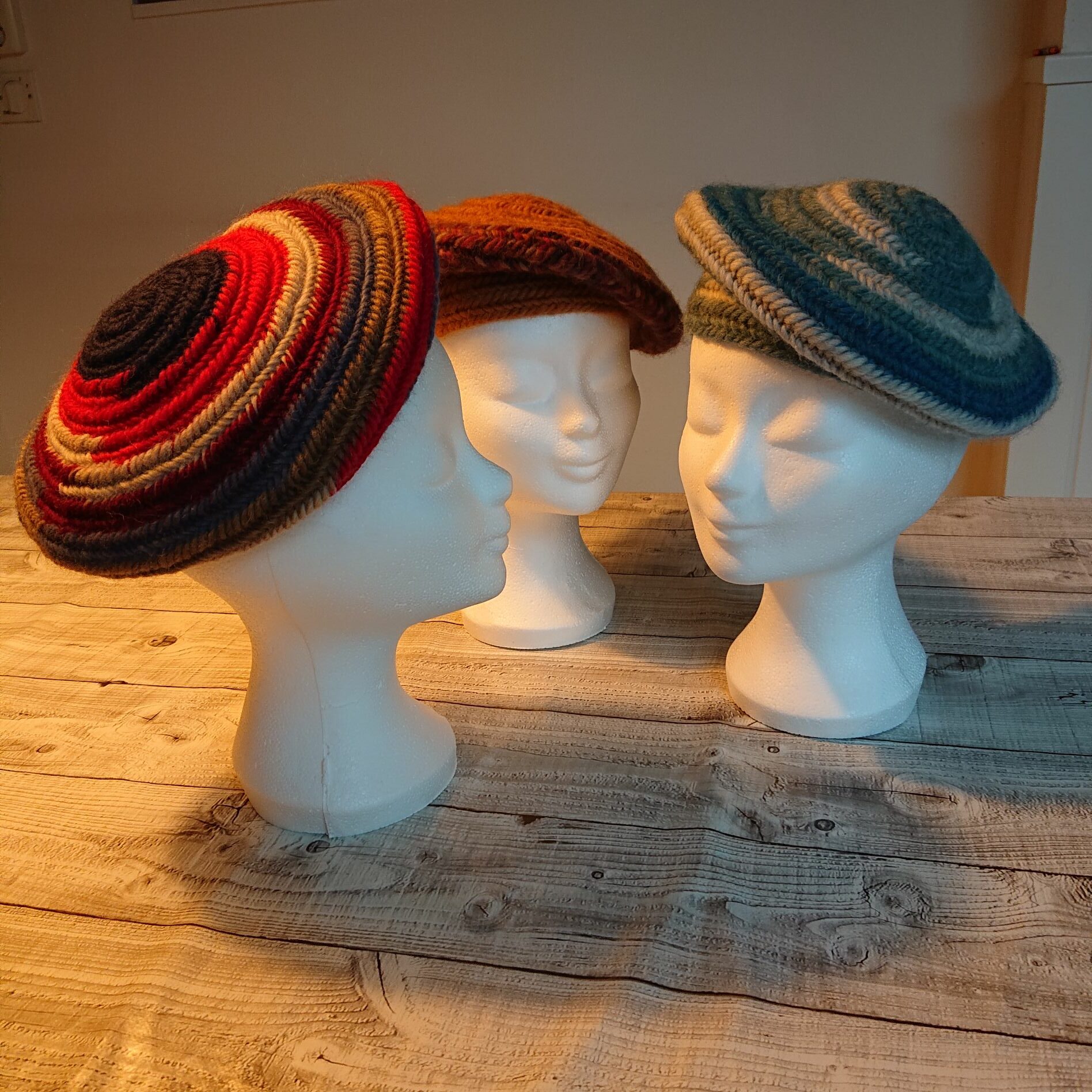
The Beret is made with the above pattern and with the Finnish stitch 2+2 and F2.
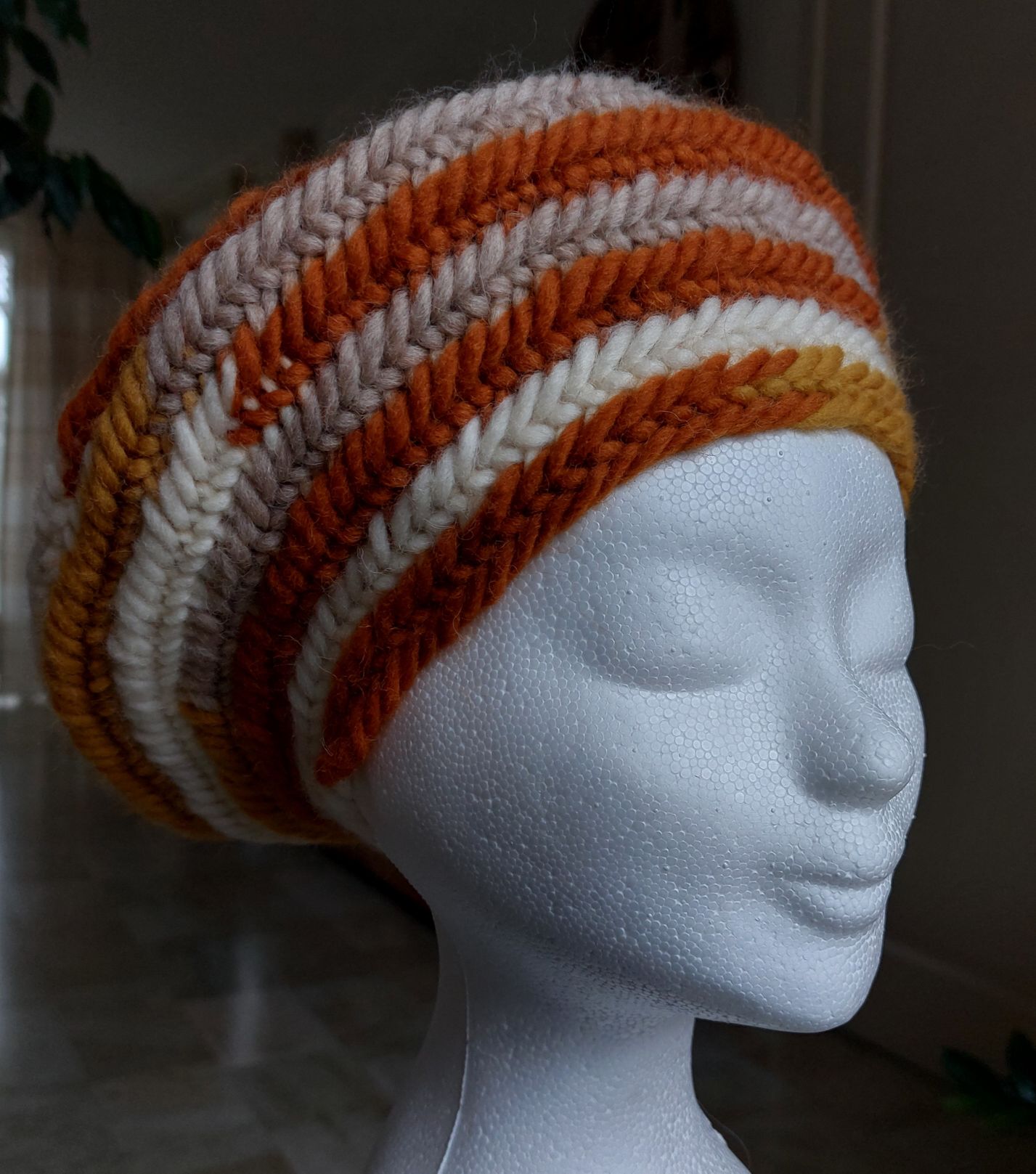
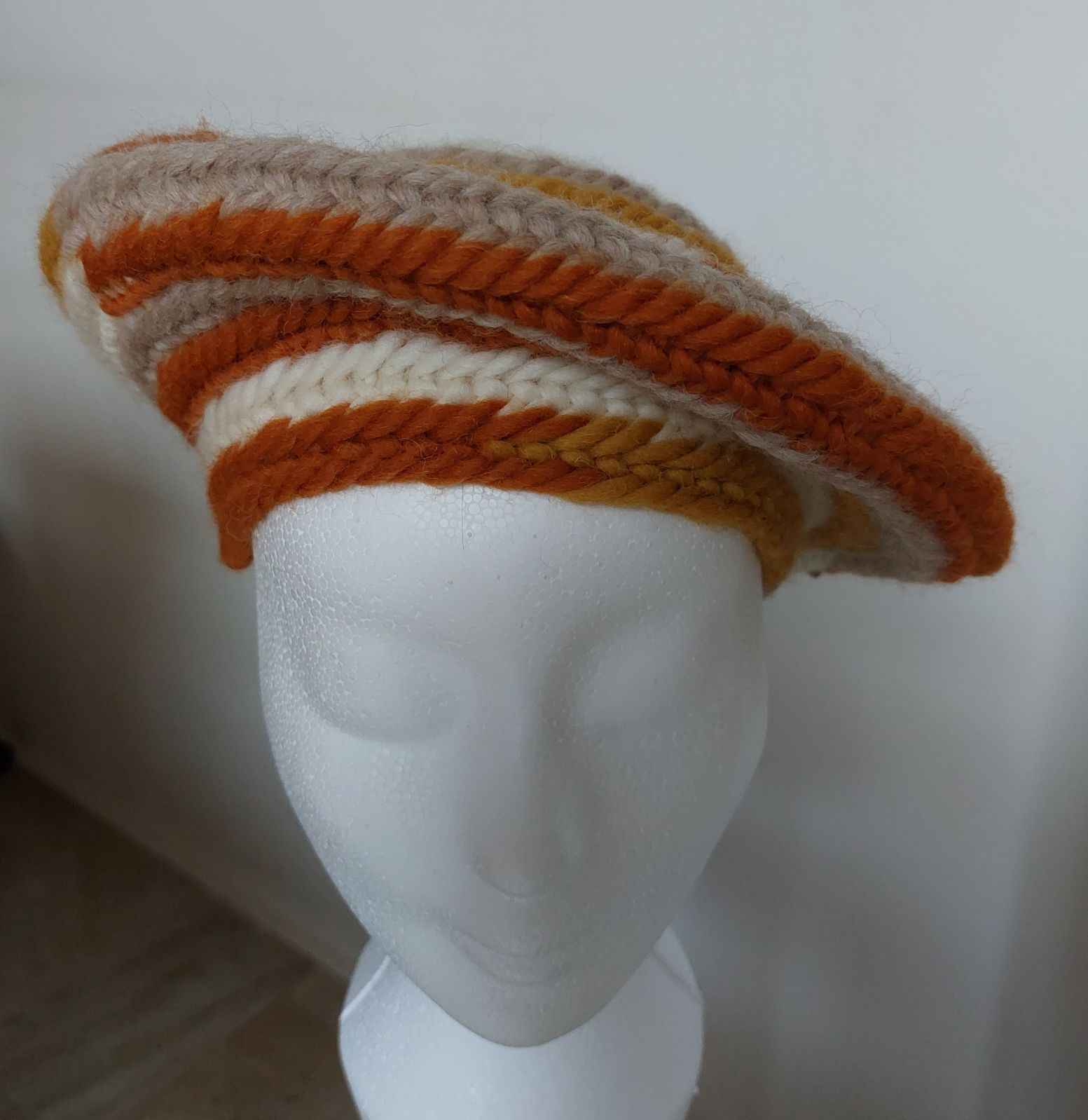
The above beret is made according to the pattern and this time I start with 16 stitches and with the Faberg stitch (2 +1) and F1 as connecting stitch.
The fabric you get with the Faberg stitch with F1 is looser and more flexible than with the Finnish stitch F2 and also lighter.
The Finnish (2+2) with F2 is much denser and warmer and is widely used in the Scandinavian countries.
Currently I am making Beret with the Double Oslo stitch (this is my first beret with the double Oslo stitch) with connecting stitch F1 and with 18 stitches for the round beginning.
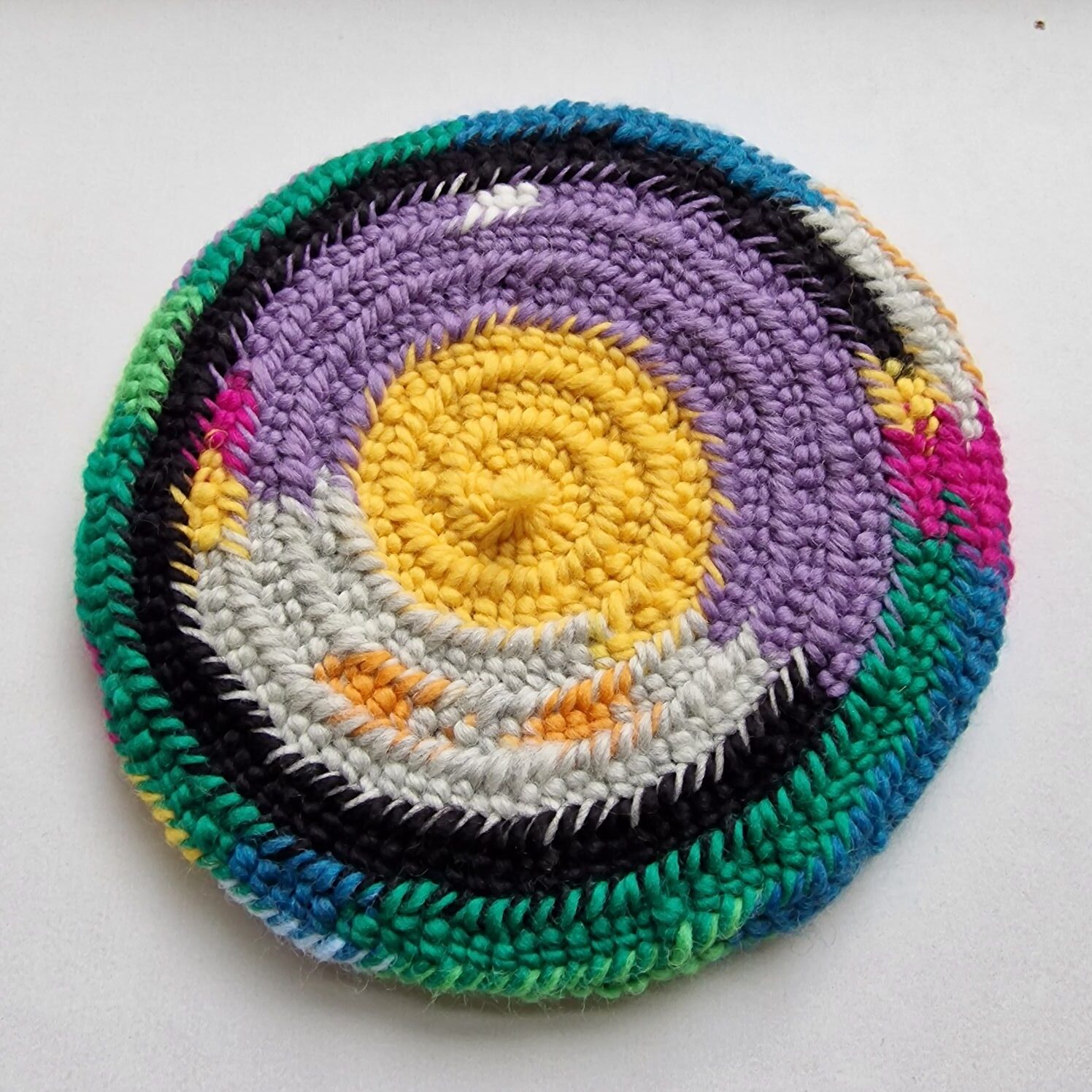
The edge of the beret is 1 row of stitches high, but you can also make them higher.
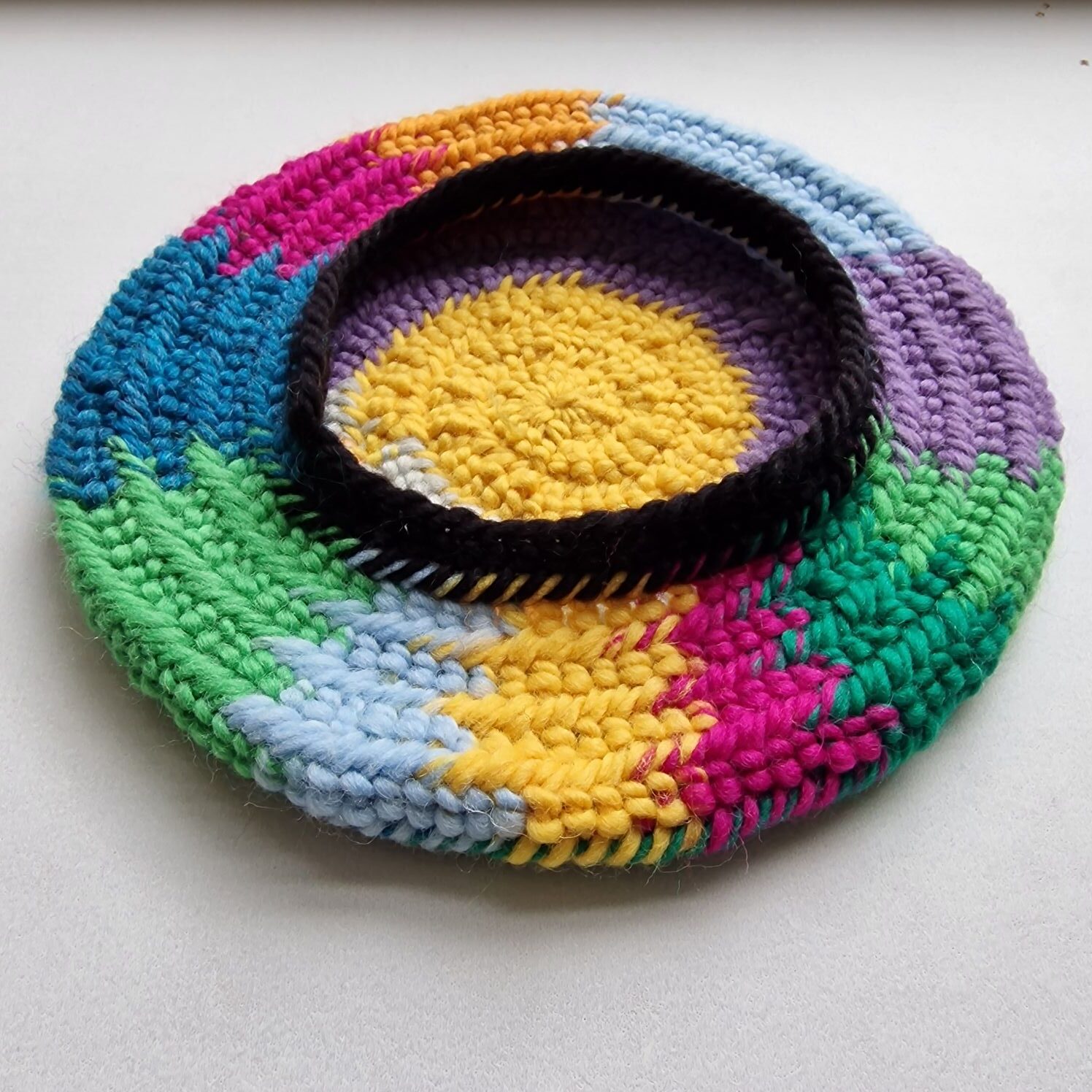
This beret has a round start of 18 stitches with connecting stitch F2.
After you have made the circle and closed it, place a stitch marker.
The double Oslo stitches are slightly wider than the regular Oslo stitch, so you can finish it faster.
The 1st rounded increase all stitches.
The 2nd round, just one stitch and increase the 2nd stitch.
For the 3rd round, simply make 2 stitches and increase the 3rd stitch.
The 4th round just 3 stitches and the 4th stitch increases.
The 5th round just 4 stitches and the 5th stitch increases.
The 6th round just 5 stitches and the 6th stitch increases, the diameter is approximately 26 cm. On the 7th round you will simply needlebind all stitches.
The 8th round 5 stitches normal and the 6th stitch decrease, and adjust for a moment.
The 9th round 4 stitches plain and the 5th stitch decrease and if the beret fits. Then you make the edge 2 0r 3 rounds nalbind just plain stitches and finish it.
Next video shows how you finish your nalbinding project.
You can choose whether you want to make the border larger or keep it that way.
This Beret took a lot more time than the Berets I have already made and that is because I had to felt many short pieces of wool together, but I think the result is very beautiful.
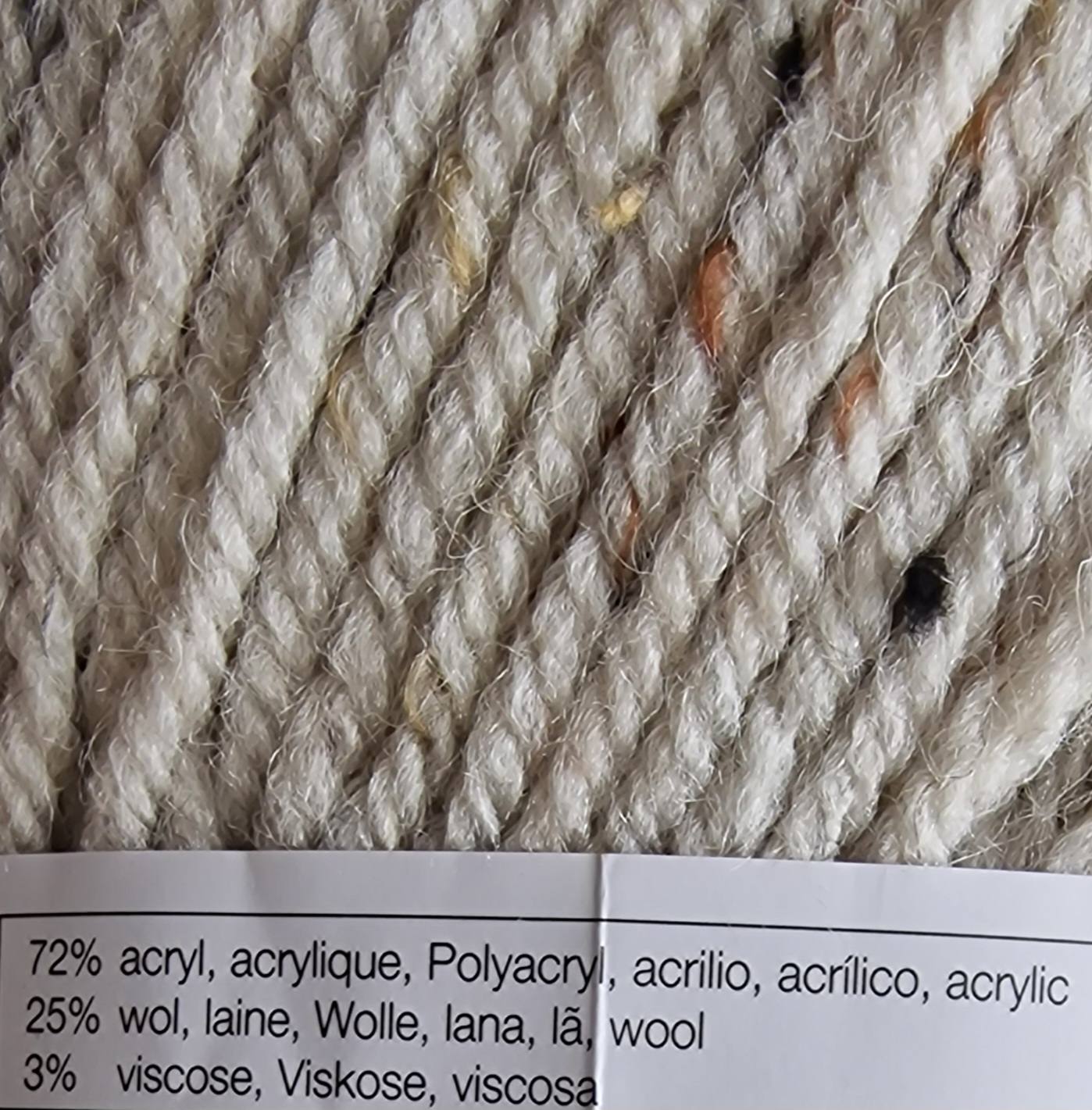
The next Baret is not 100% wool, just 25 % wool and it is not superwash.
With so little wool in the yarn, I will fluff out 4 cm of yarn and then place it on top of each other, wet it thoroughly and rub it thoroughly.
You have to be careful that you hold the felt spot in the middle, otherwise it will come loose
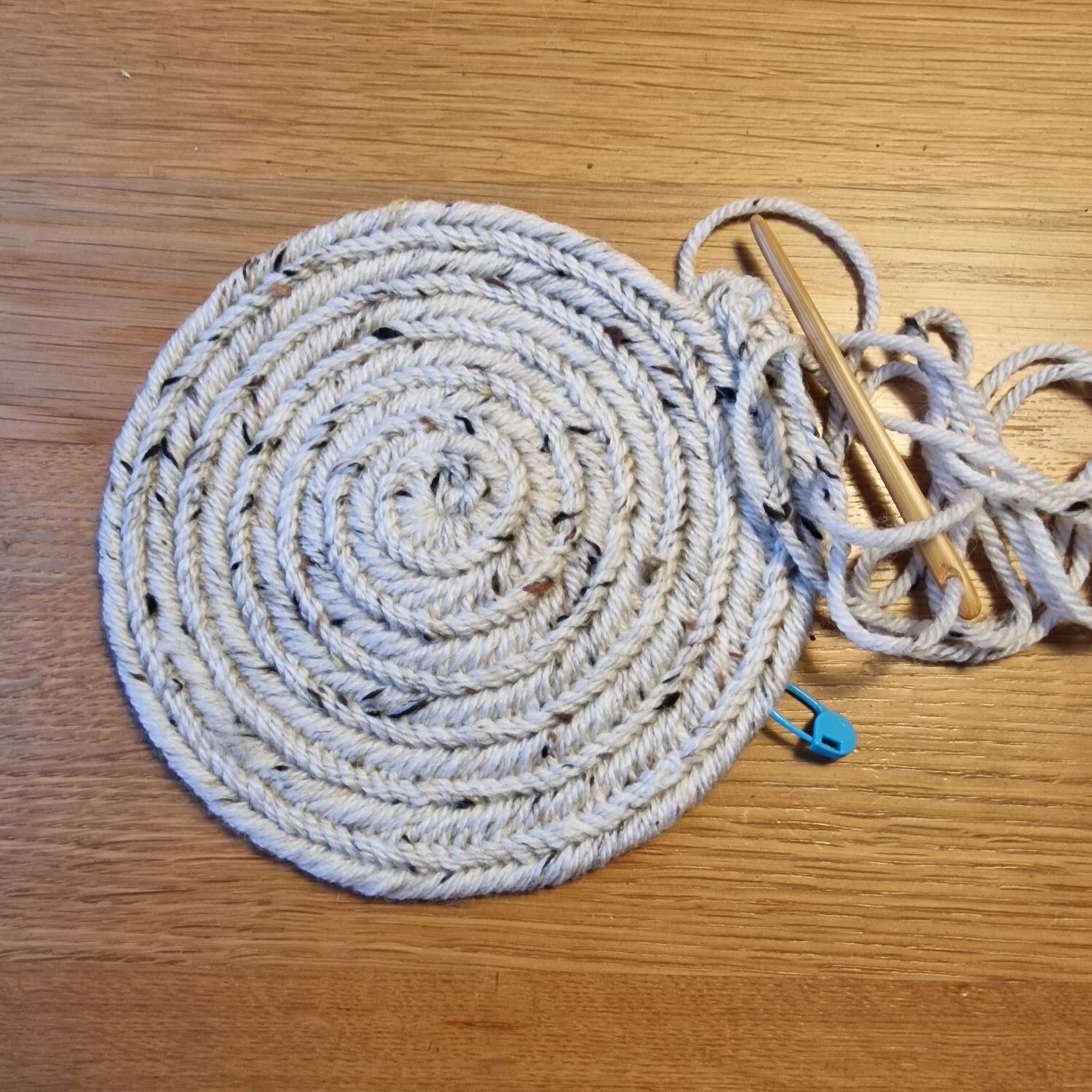
The Baret is made with a finish stitch 3+2 and F2, and start with 18 stitches.
The Fabric is very dense and stong.
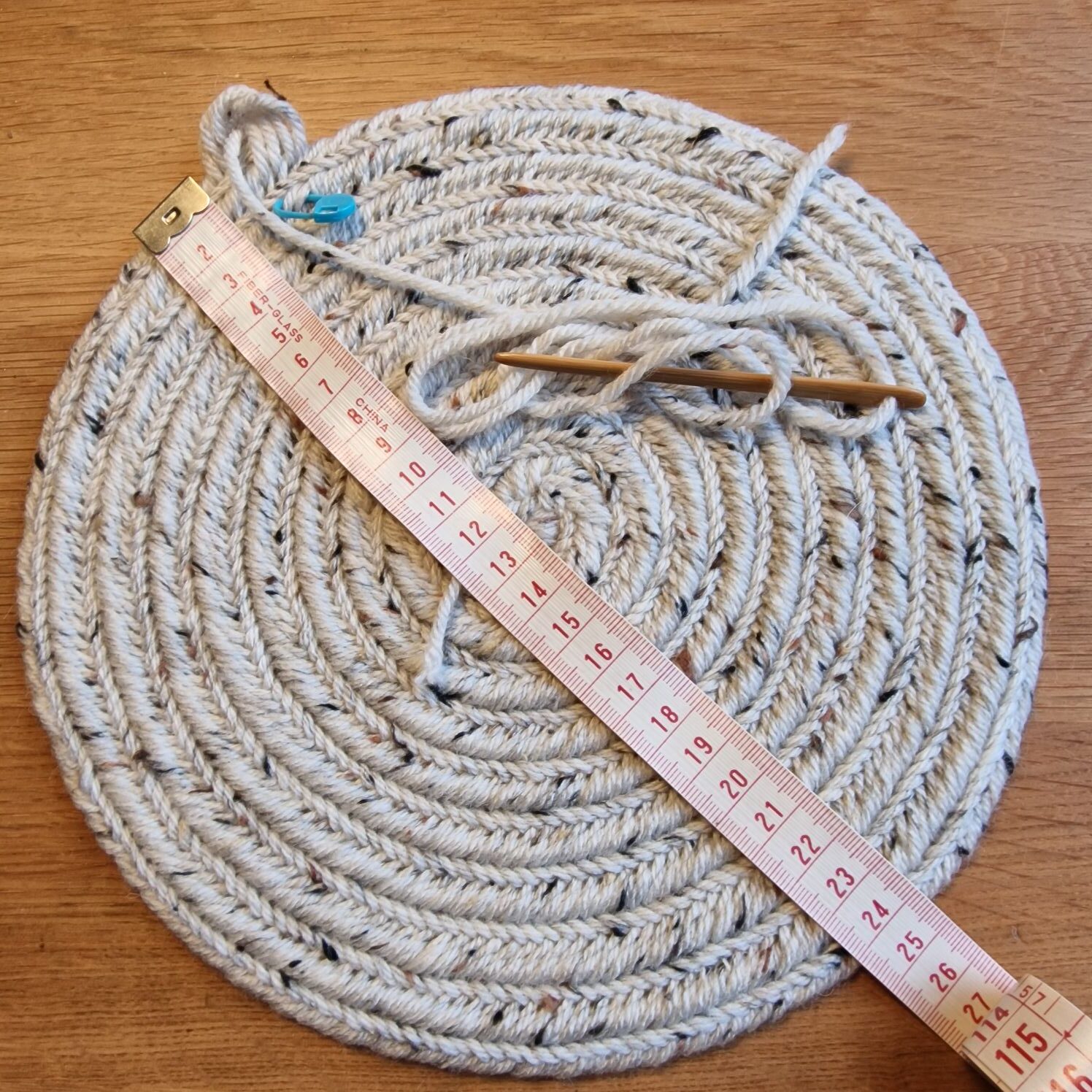
After this diameter you will simply needlebind plain all stitches in the next round
Now you will decrease 8 stitches plain and decrease the 9th
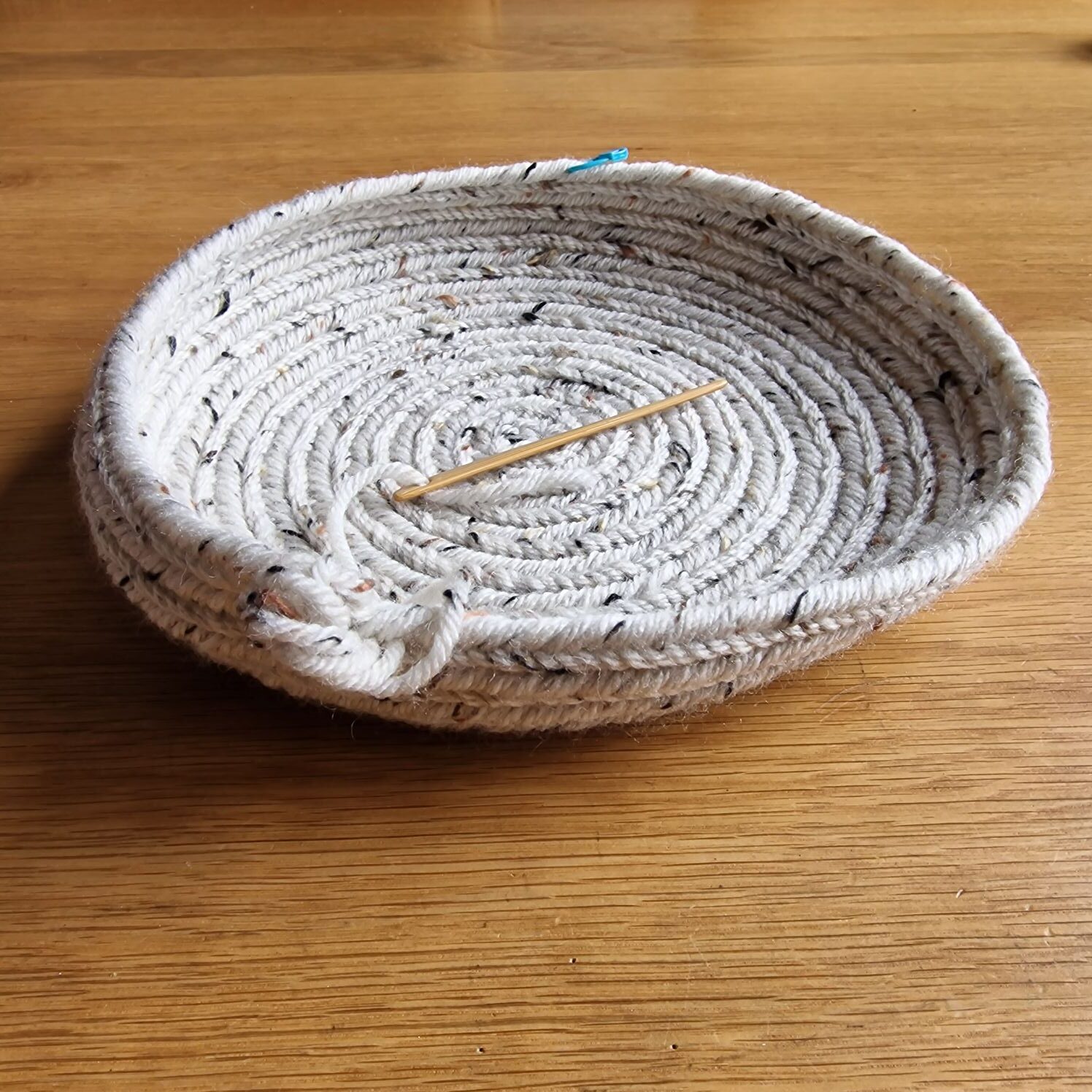
The shape is created by the decreases.
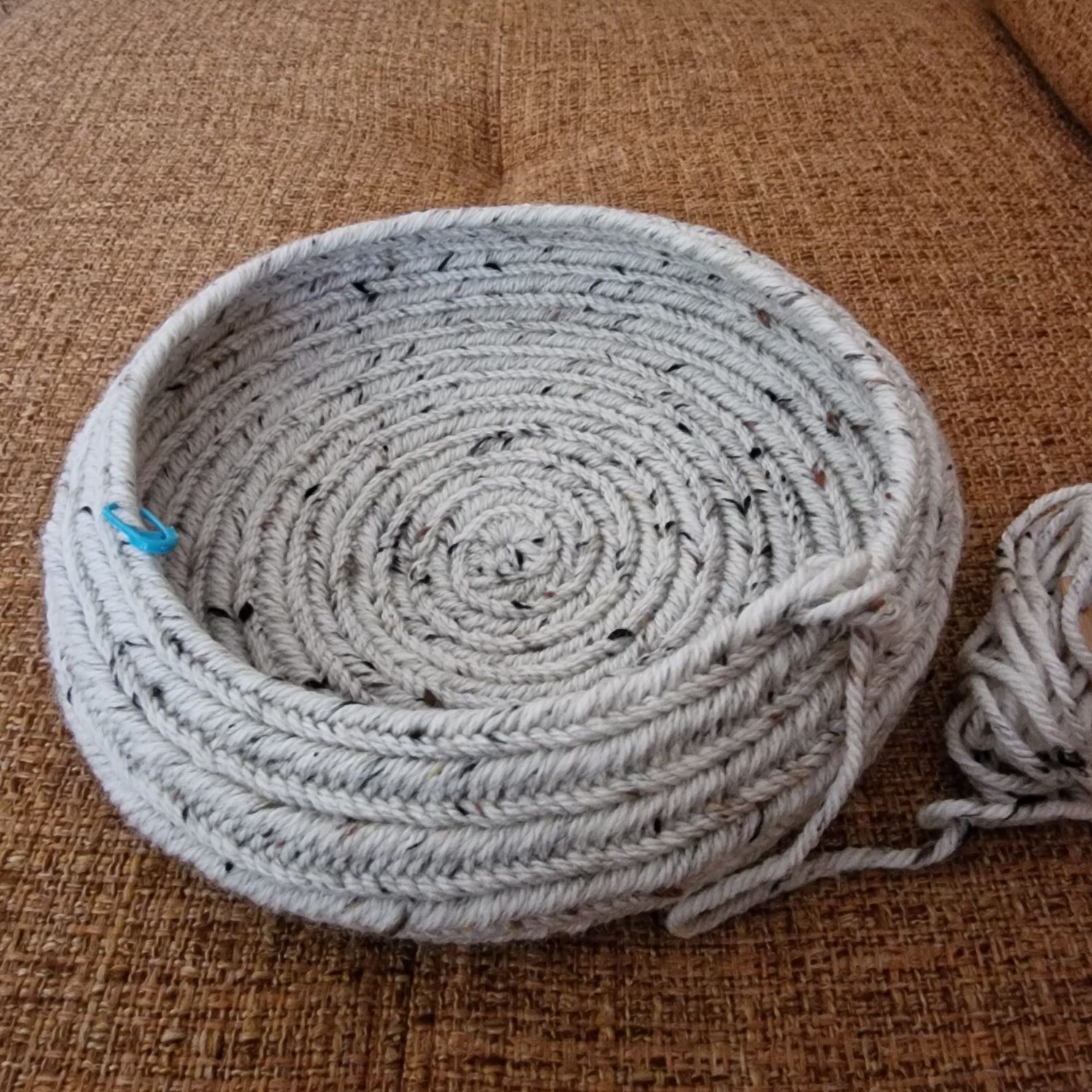
With 6 stitches plain and the 7th decrease, you will measure whether it fits. If it fits, you can now simply needlebind all the stitches plain, You can choose whether to make the edge one row or higher
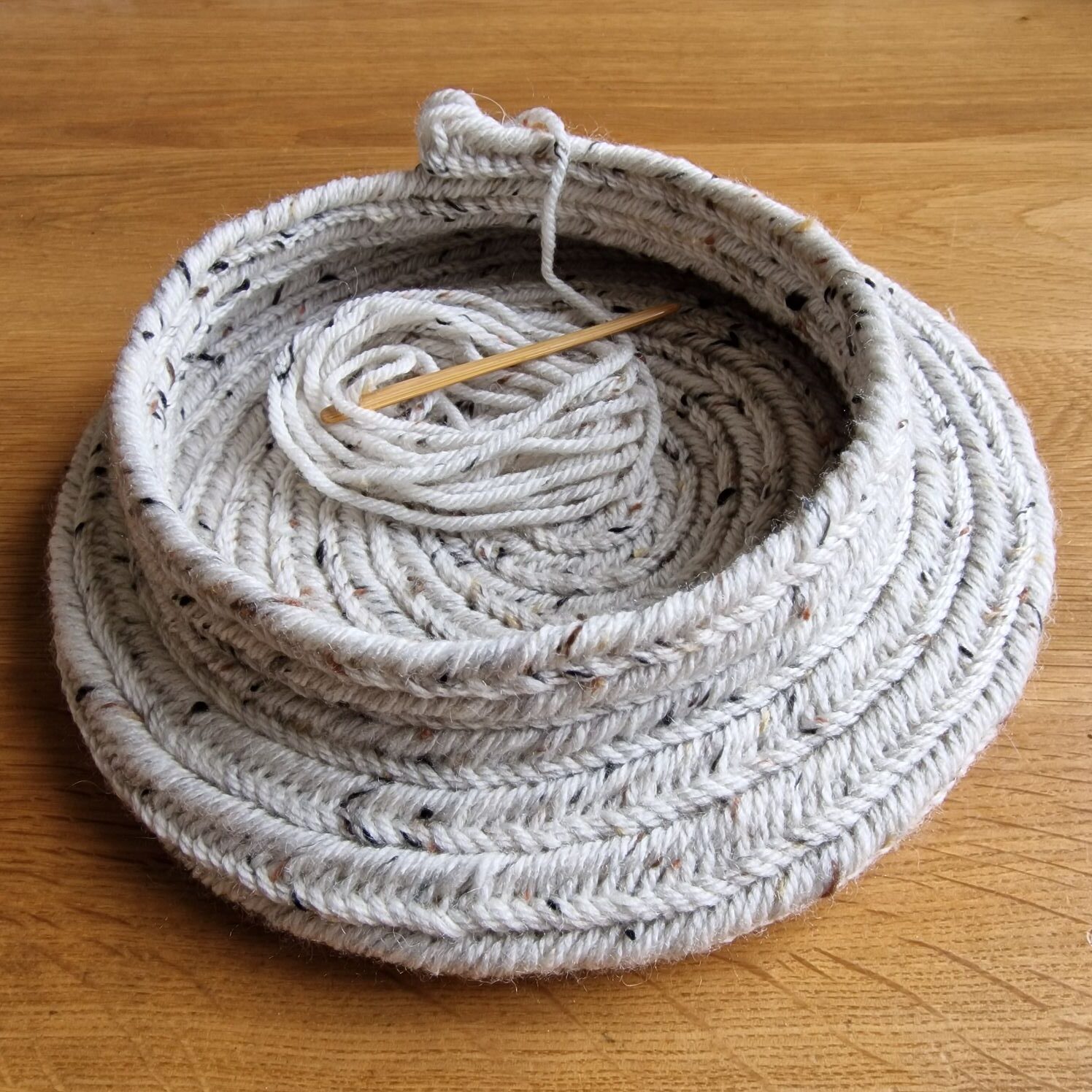
My first tweed baret turned out very beautiful.
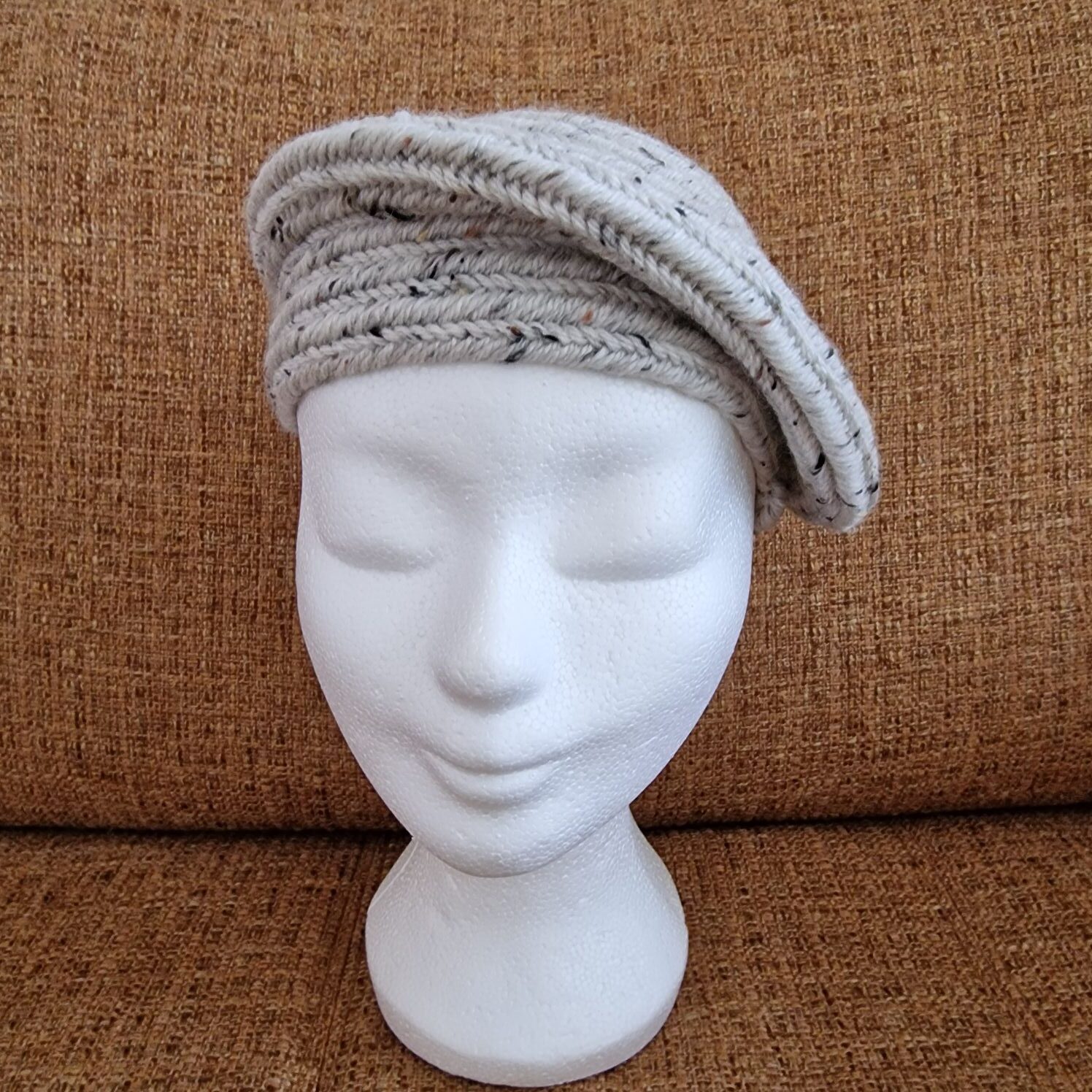
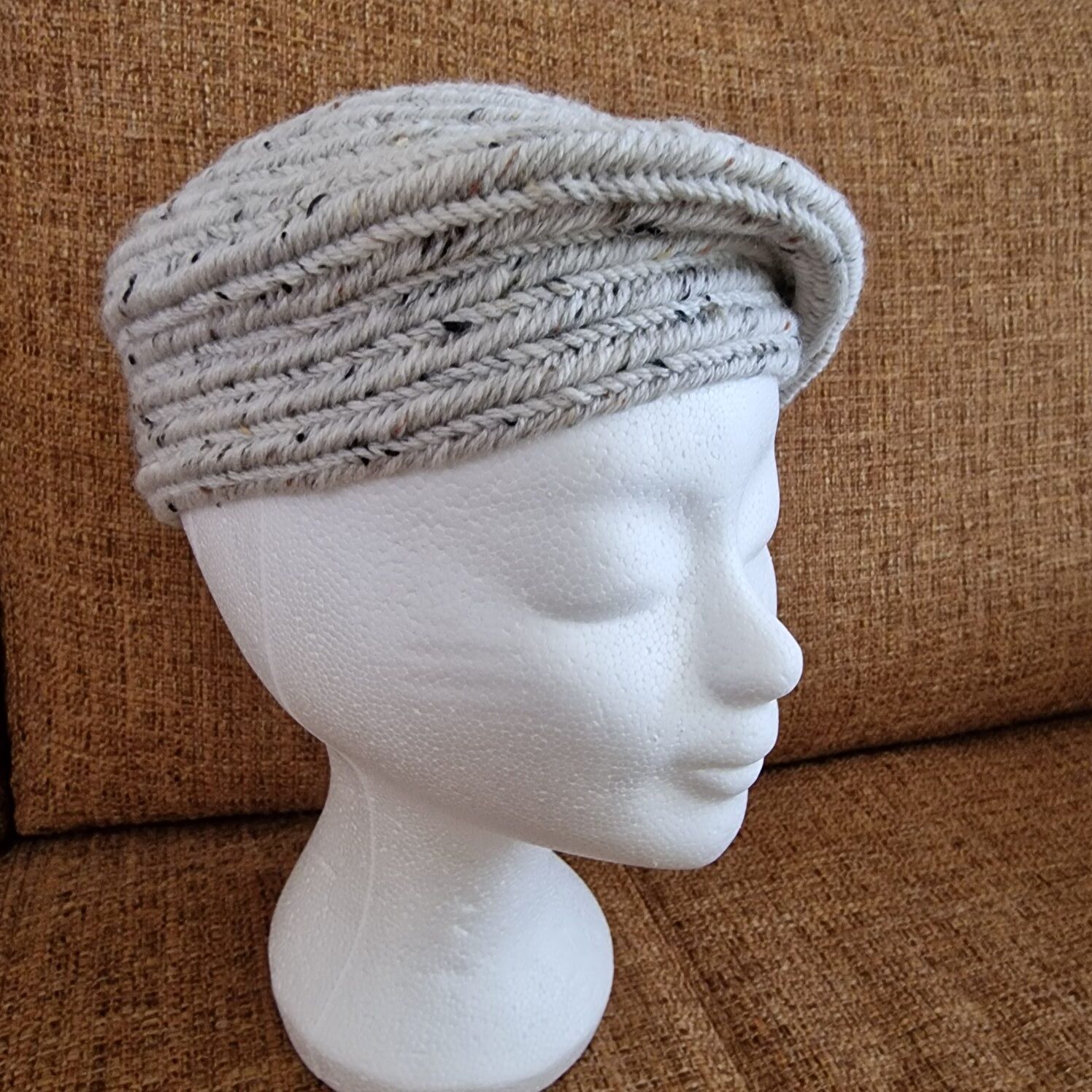
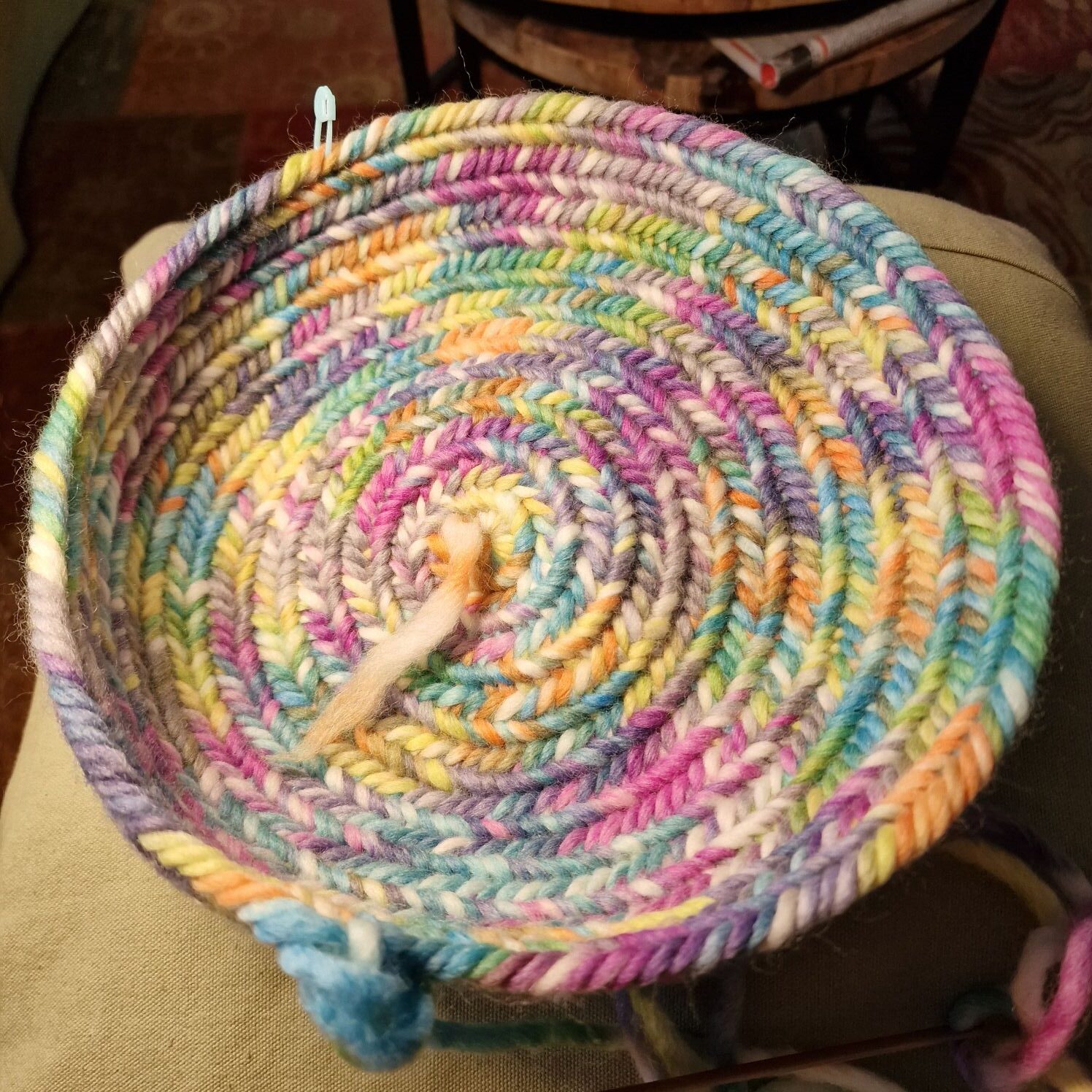
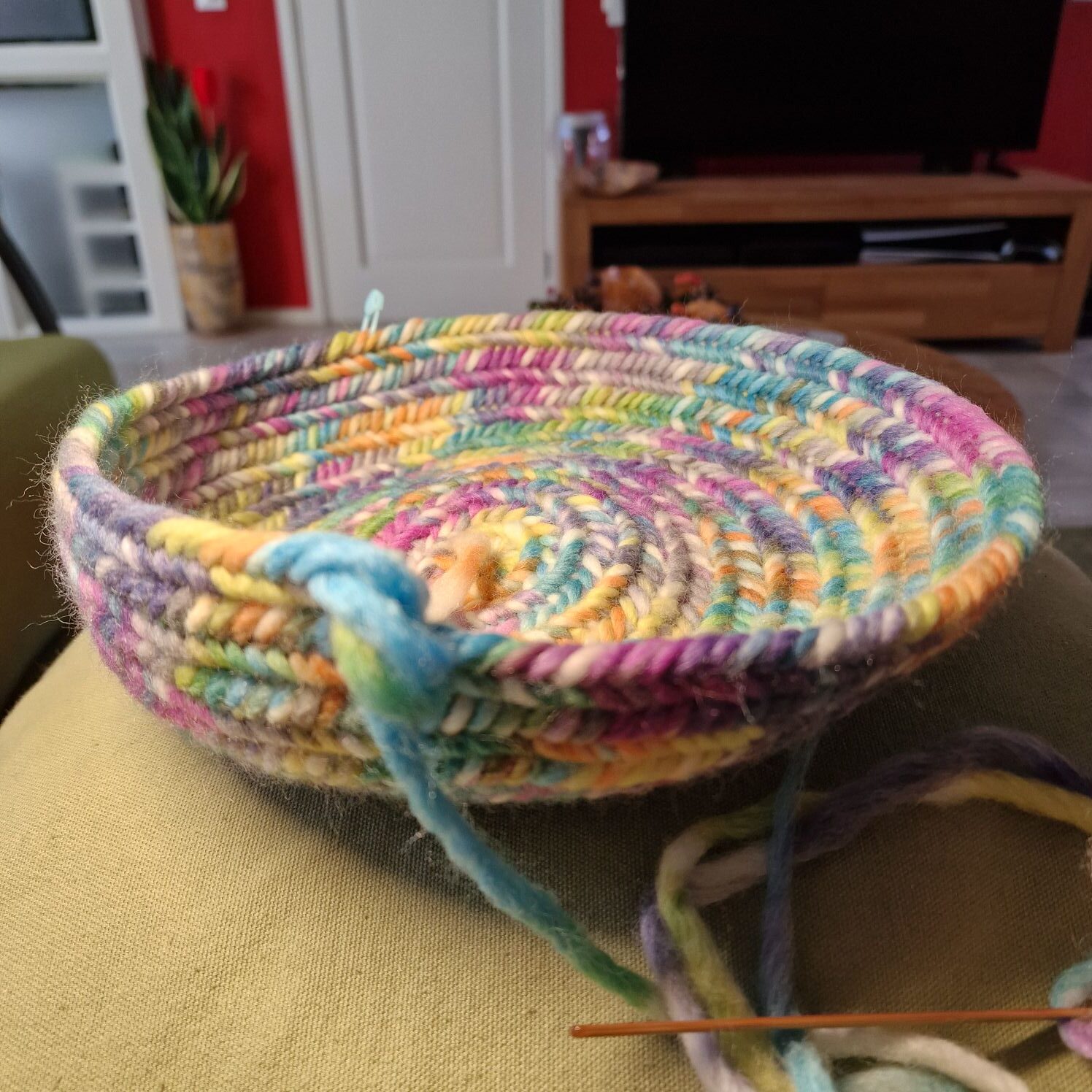
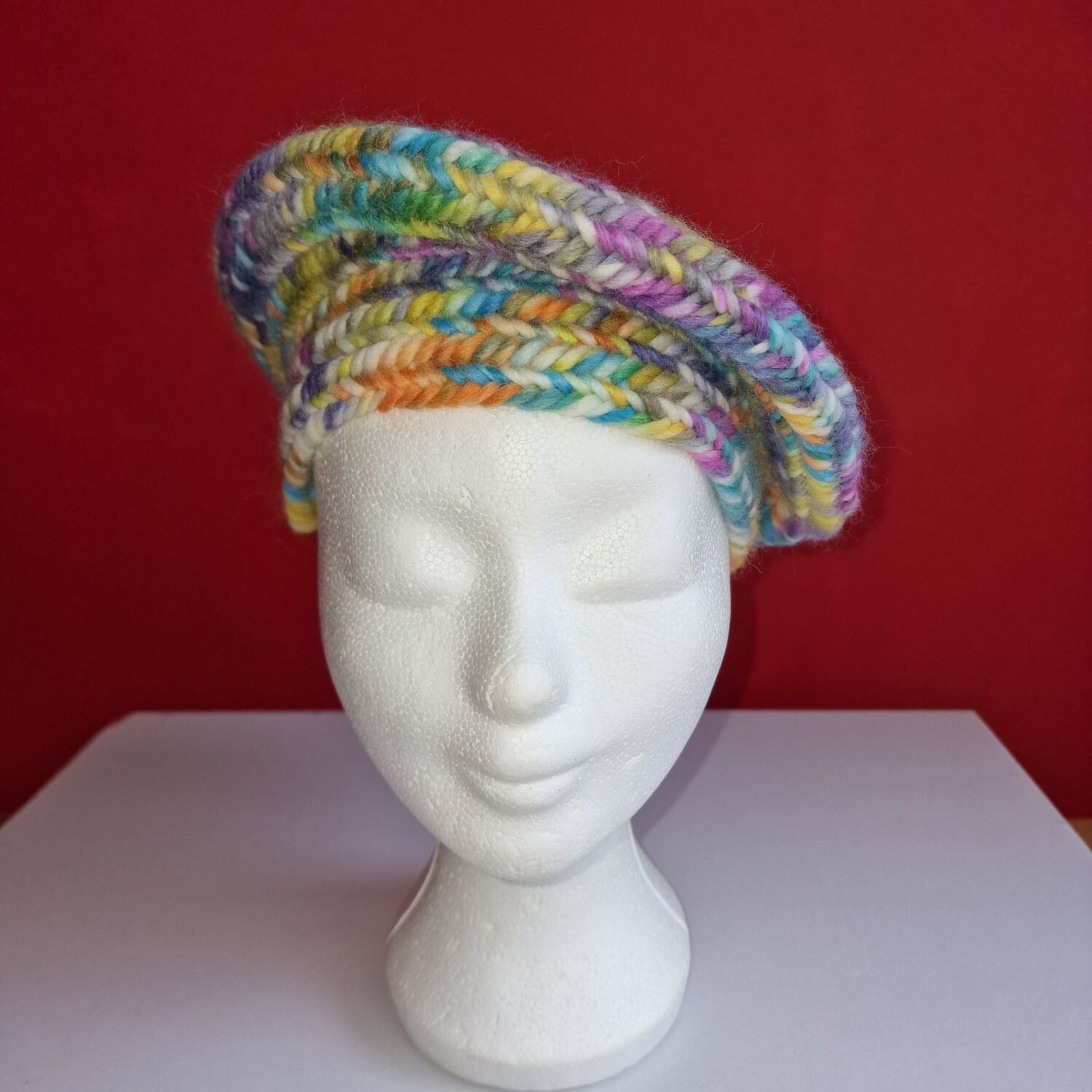
The next Baret is made with the Arboga stitch and with the connection stitch F1. I start with 16 stitches and a round start. After 7 stitches normal and the 8th stitch increase. Next round all stitches normal. Then 7 stitches normal and the 8th stitch decrease. Then continue like the patern as usual.
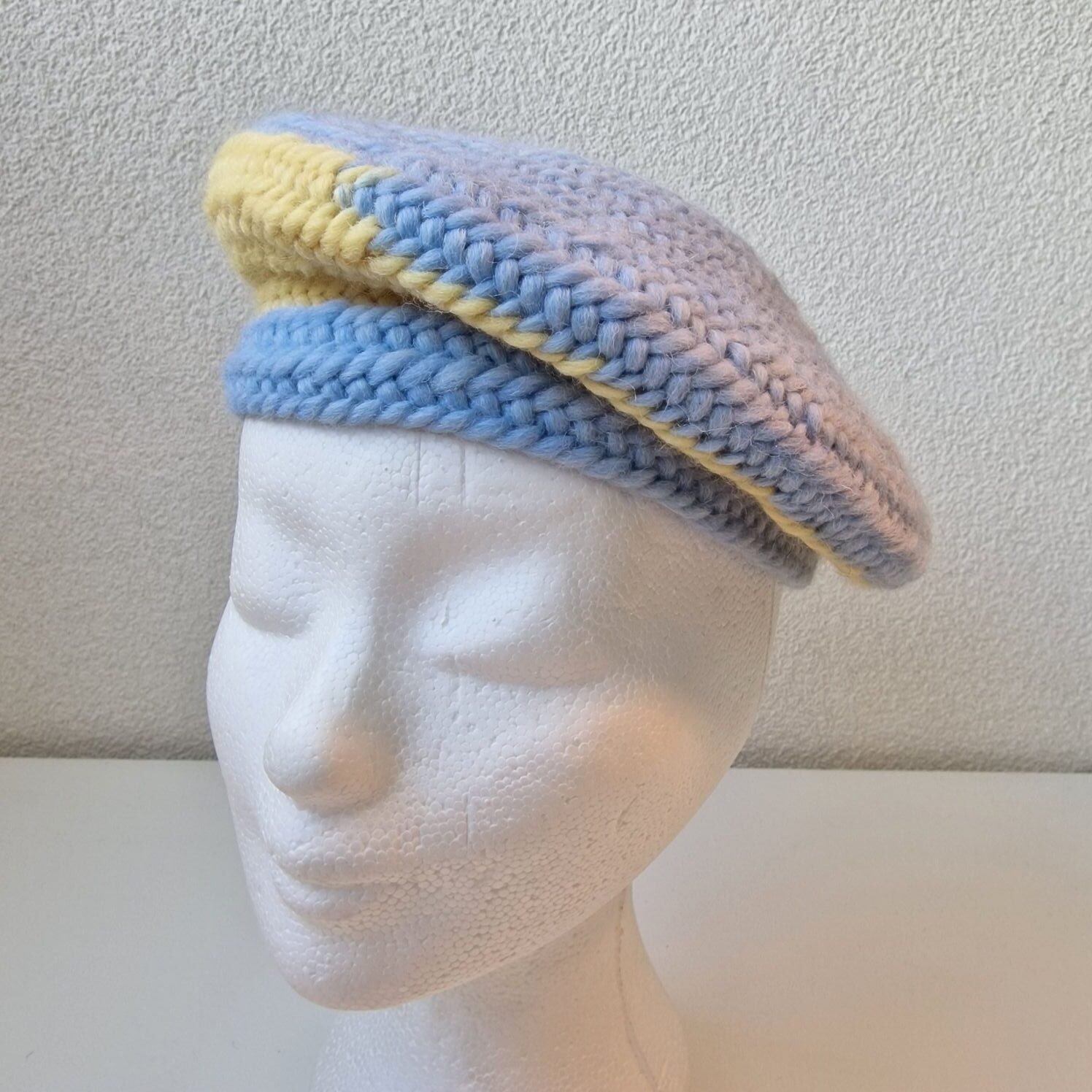
I hope and pray that peace will come.

This baret is made with the Arboga stitch and with the connection stitch F1 with the same patern as above and start with 16 stitches.
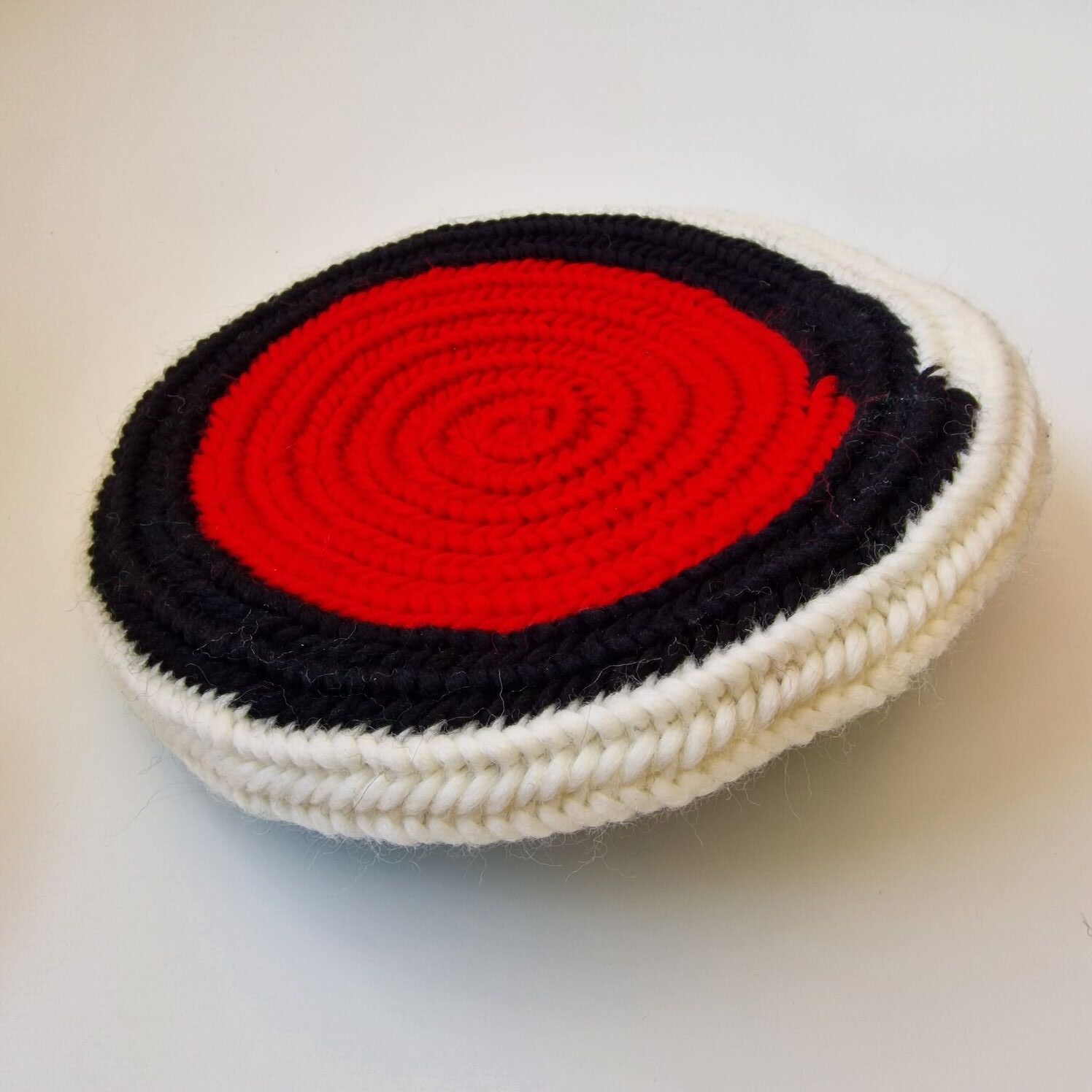
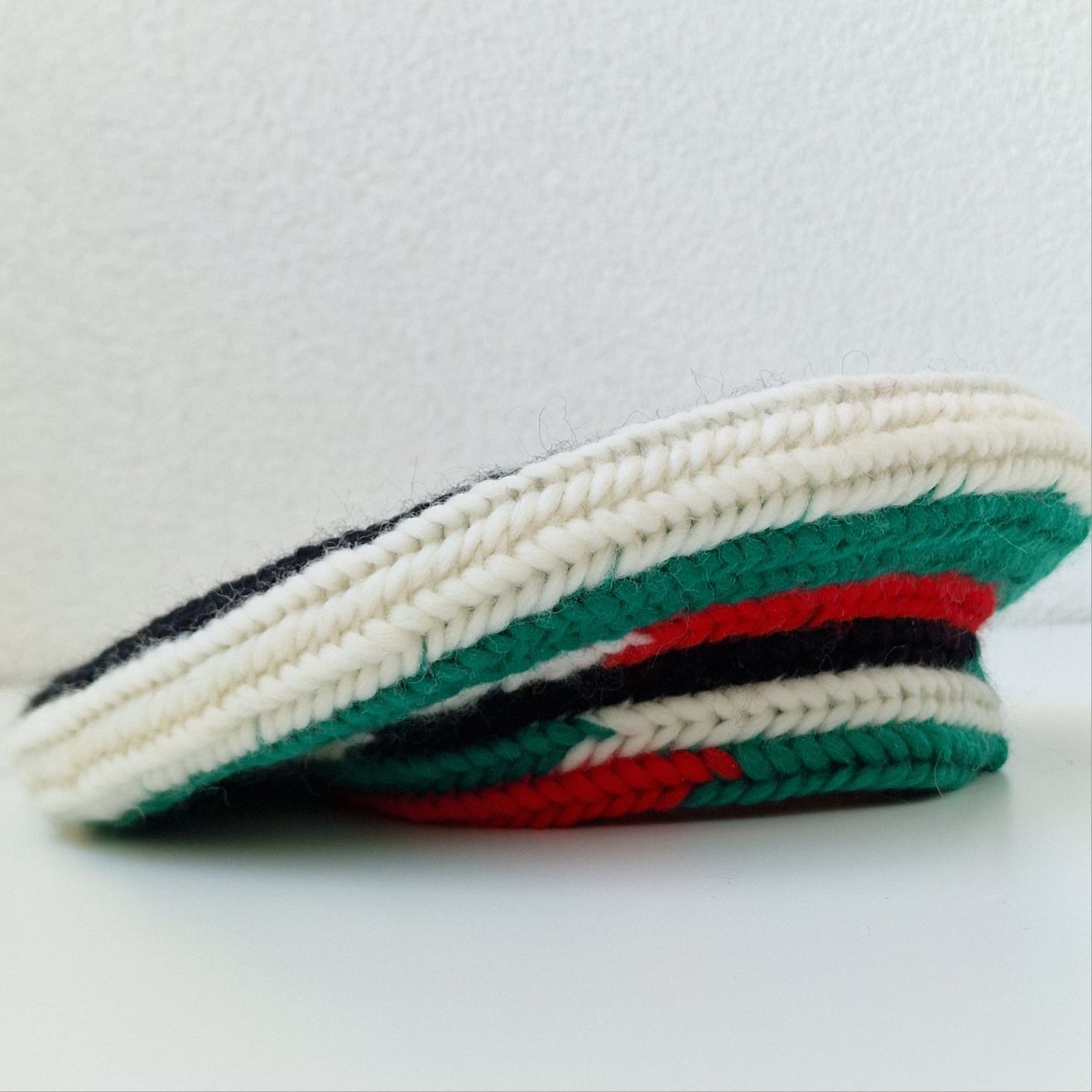
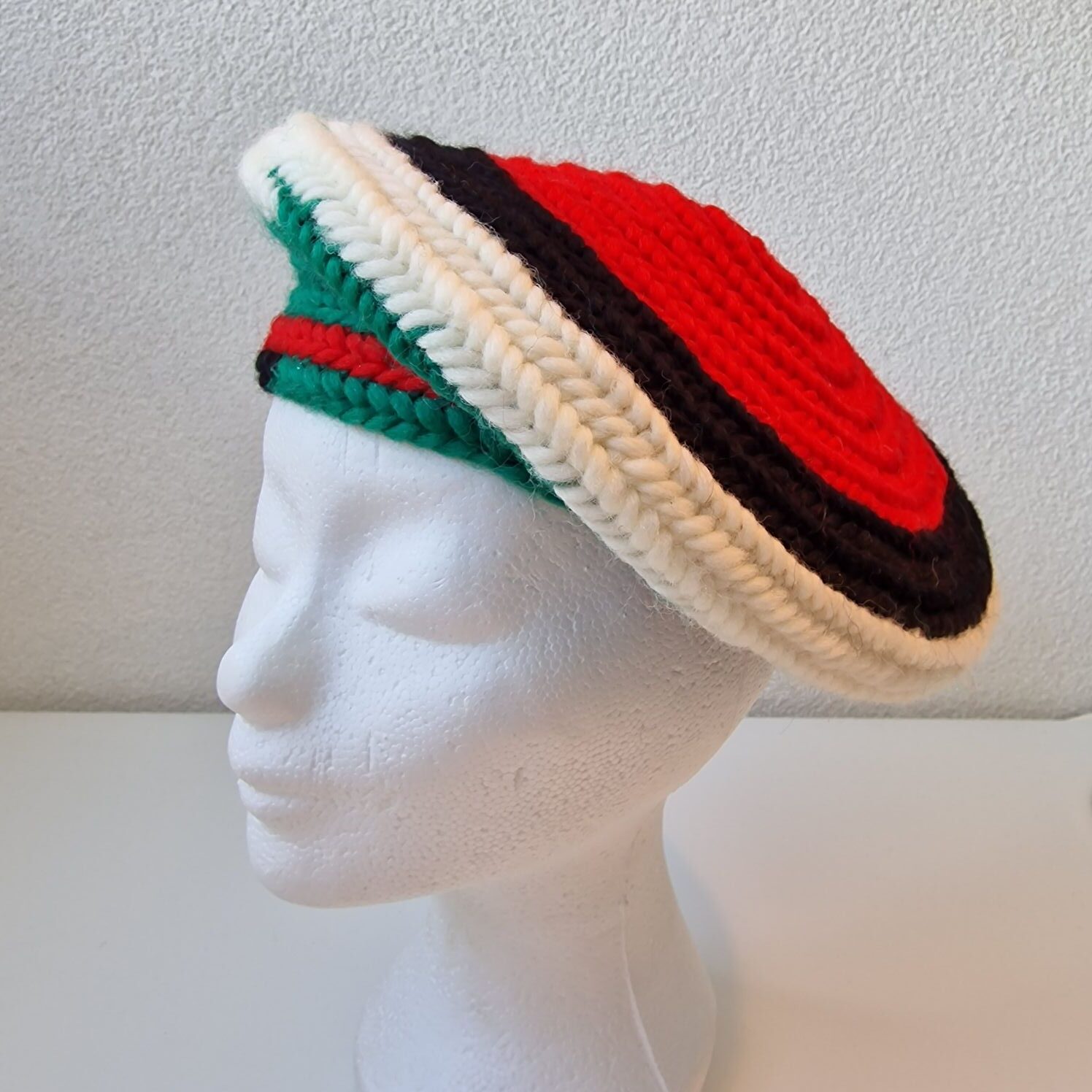
More Barets Pattern as above Fin. stitch 2+2 F2
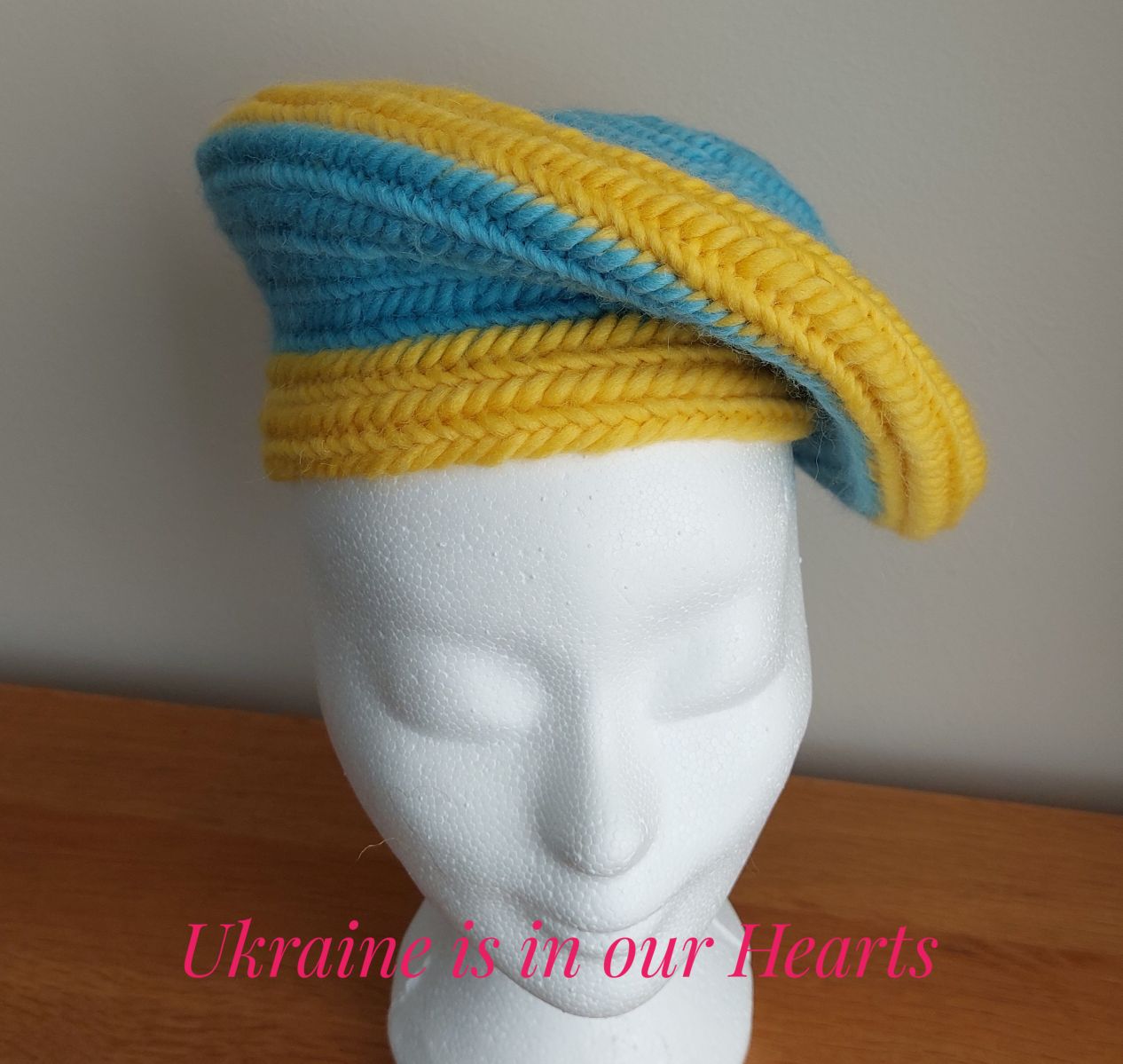
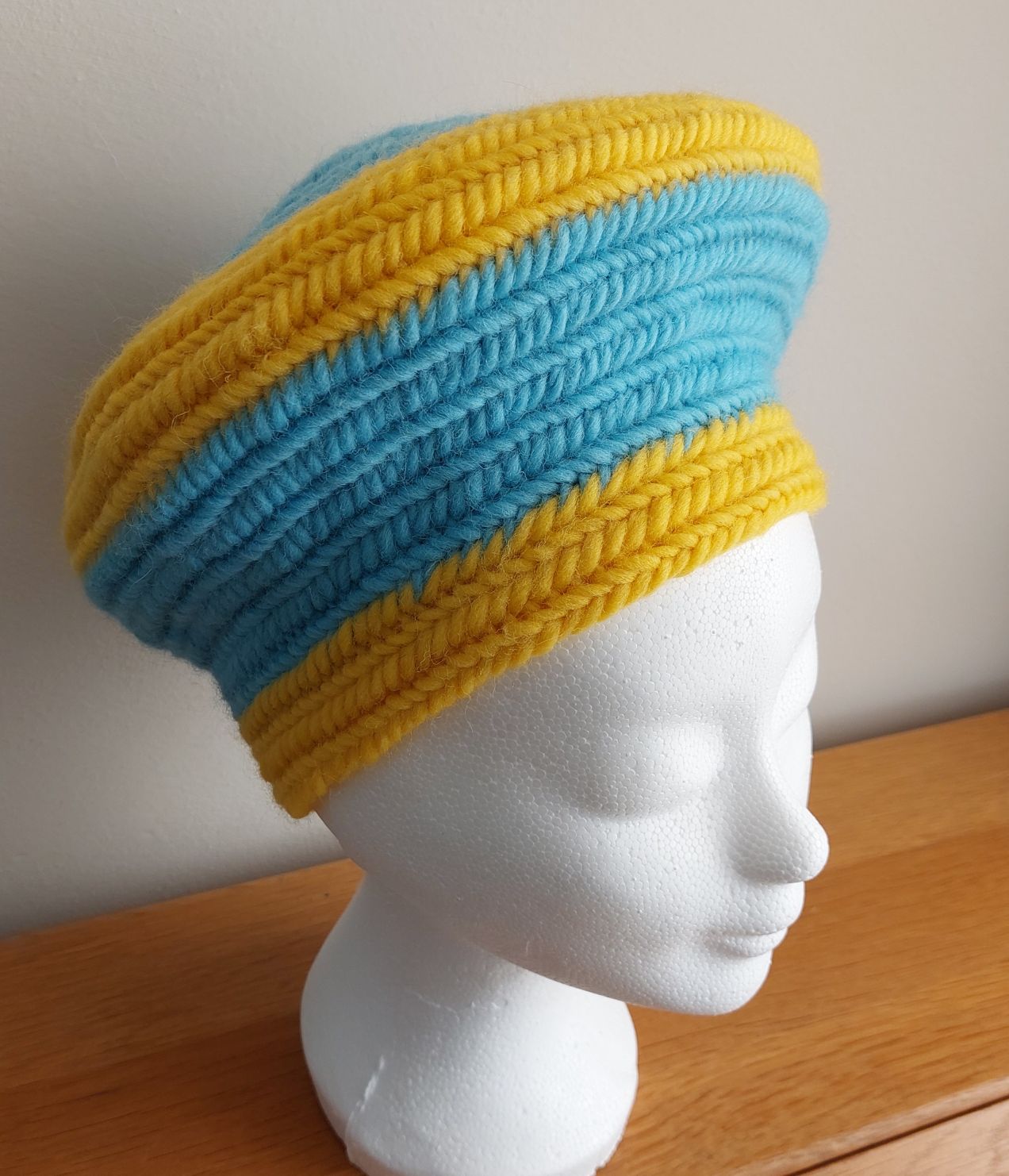
More Barets Pattern as above Fin. stitch 2+2 F2
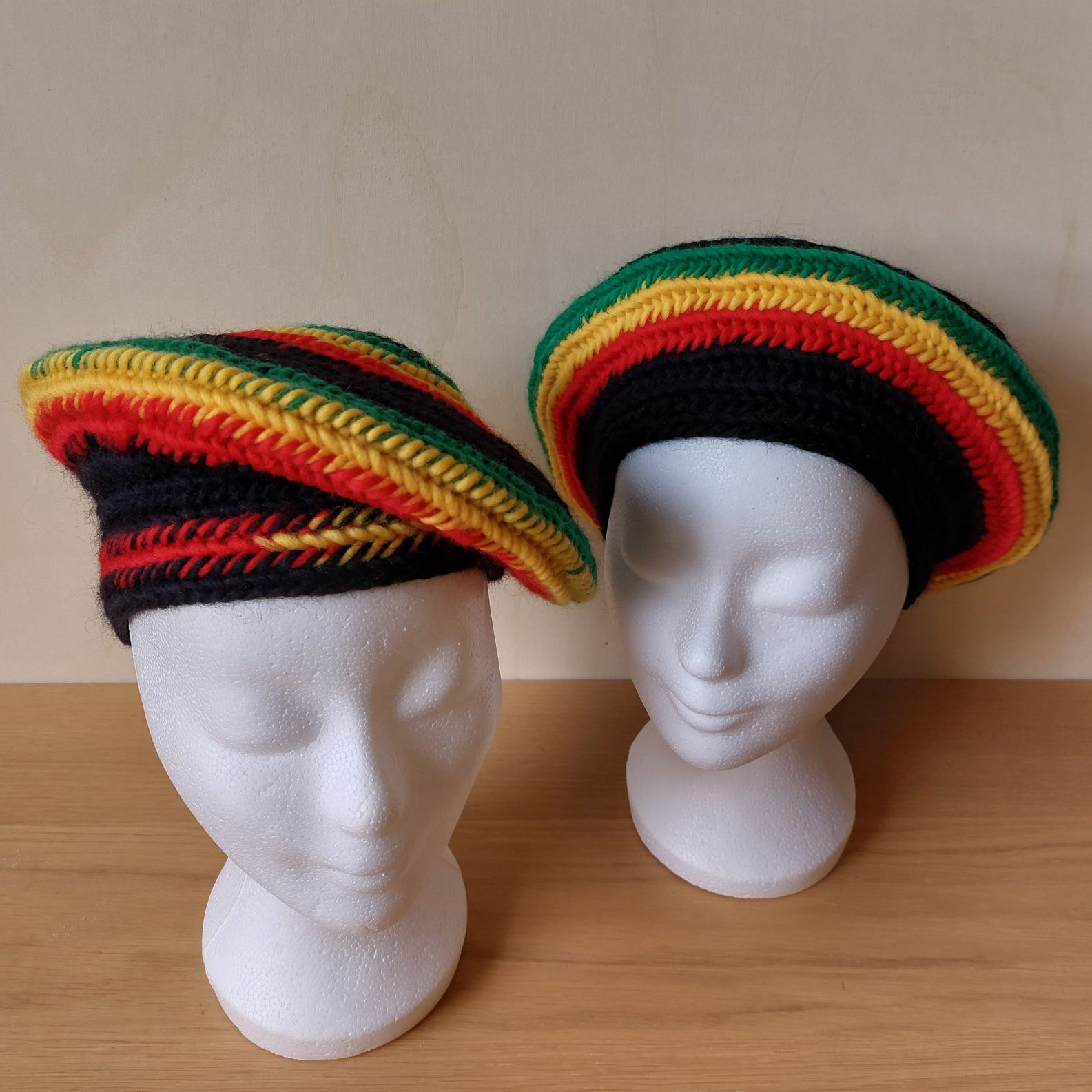
An 11 color Baret with the Faberg stitch and connection stitch F2 and i started with 14 stitches because this stitch is wider then Fin, or Arboga stitch. I start with 14 stitche with a round start. After 7 stitches normal and the 8th stitch increase. Next round all stitches normal. Then 7 stitches normal and the 8th stitch decrease. Then continue like the patern as usual.
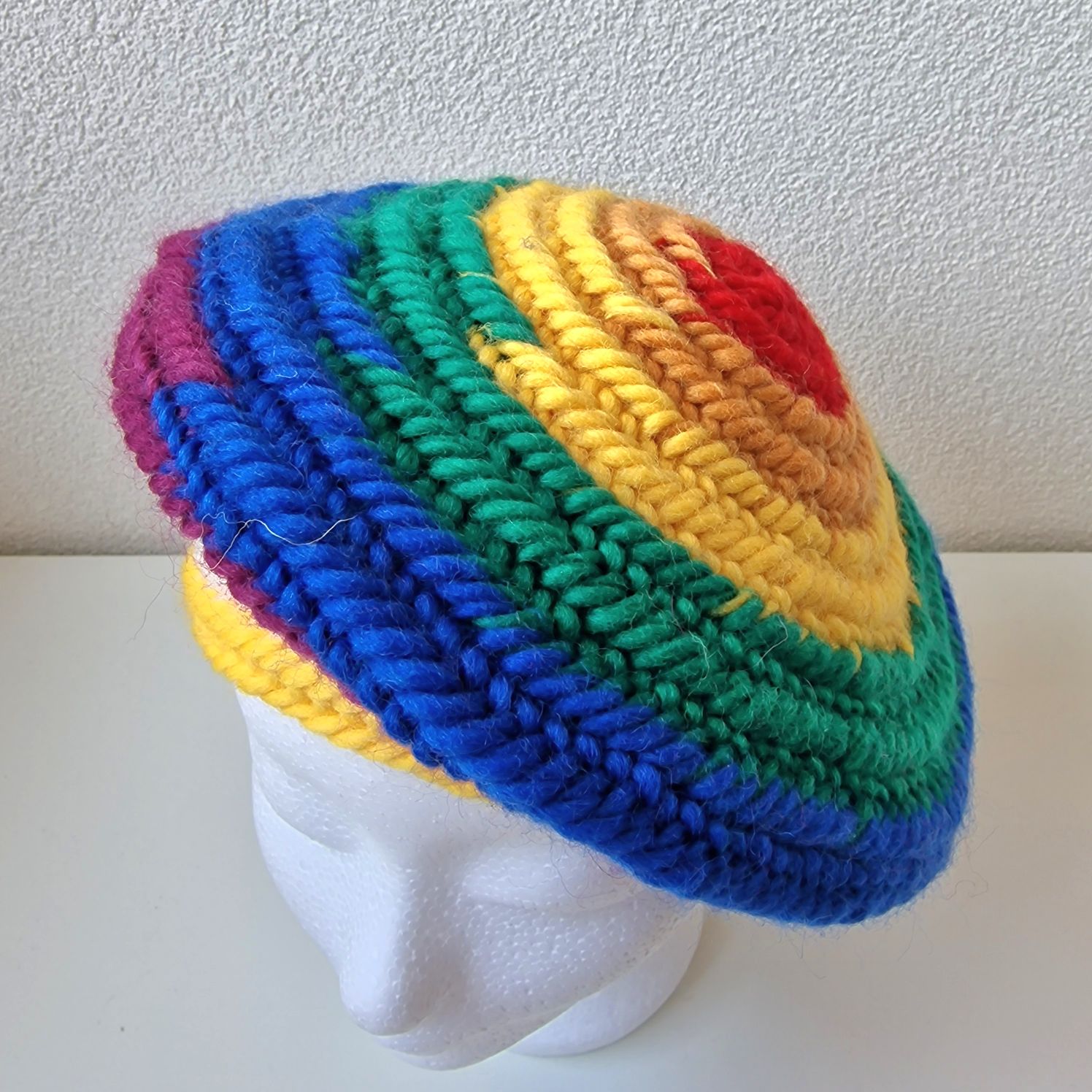
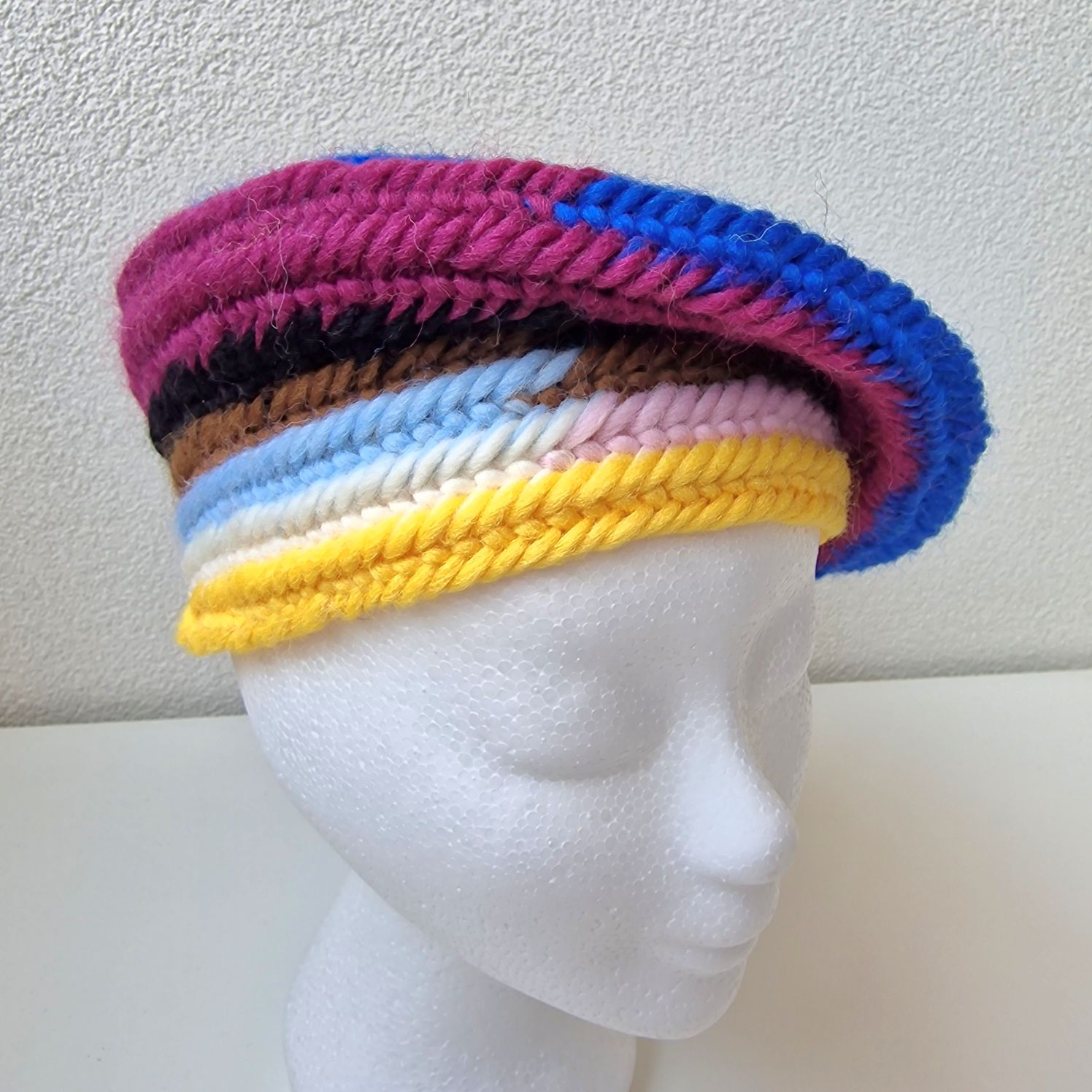
De baret vind ik erg mooi vanwege de 11 kleuren 🙂
i
Thank you for the wonderful directions!