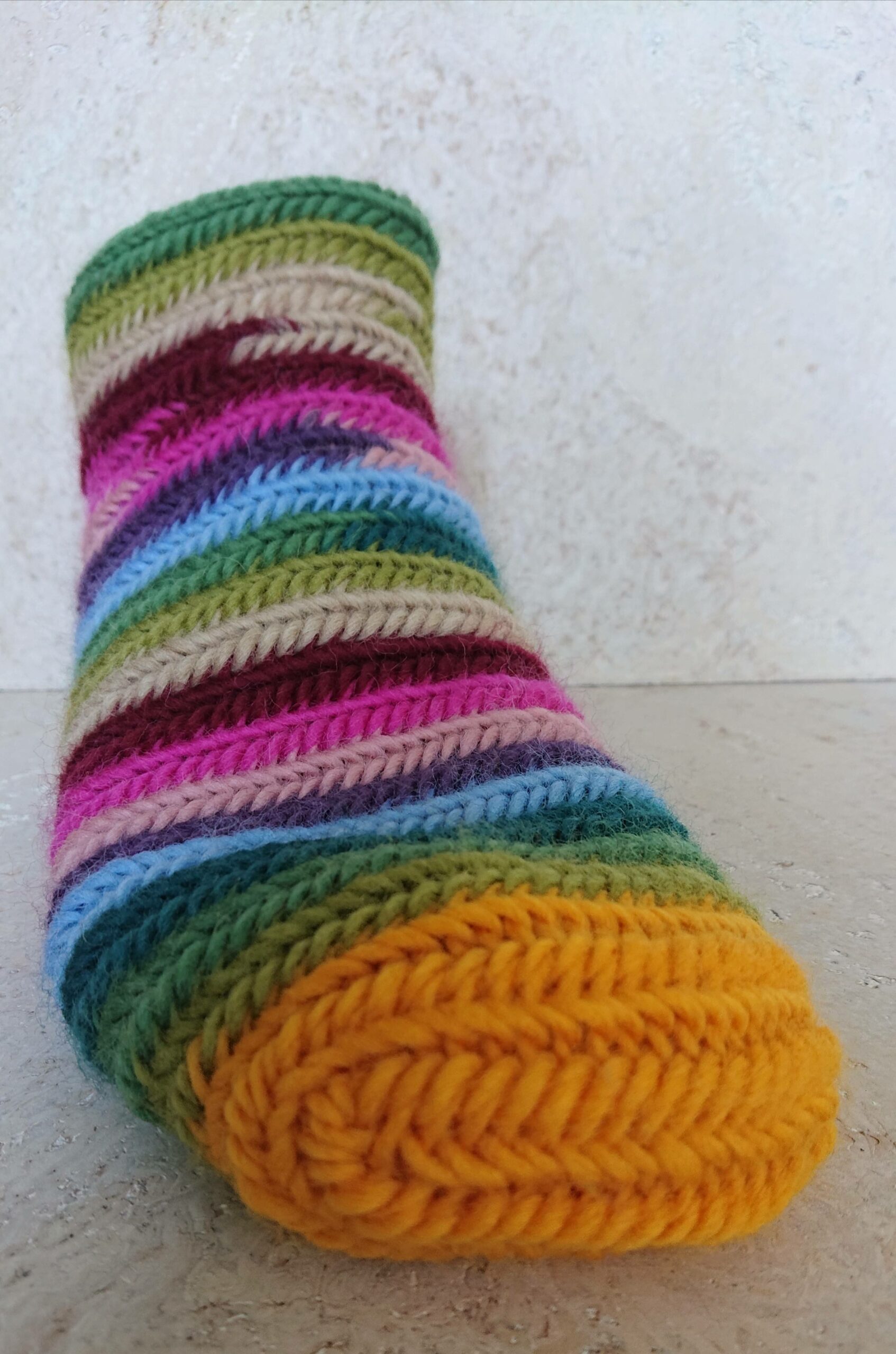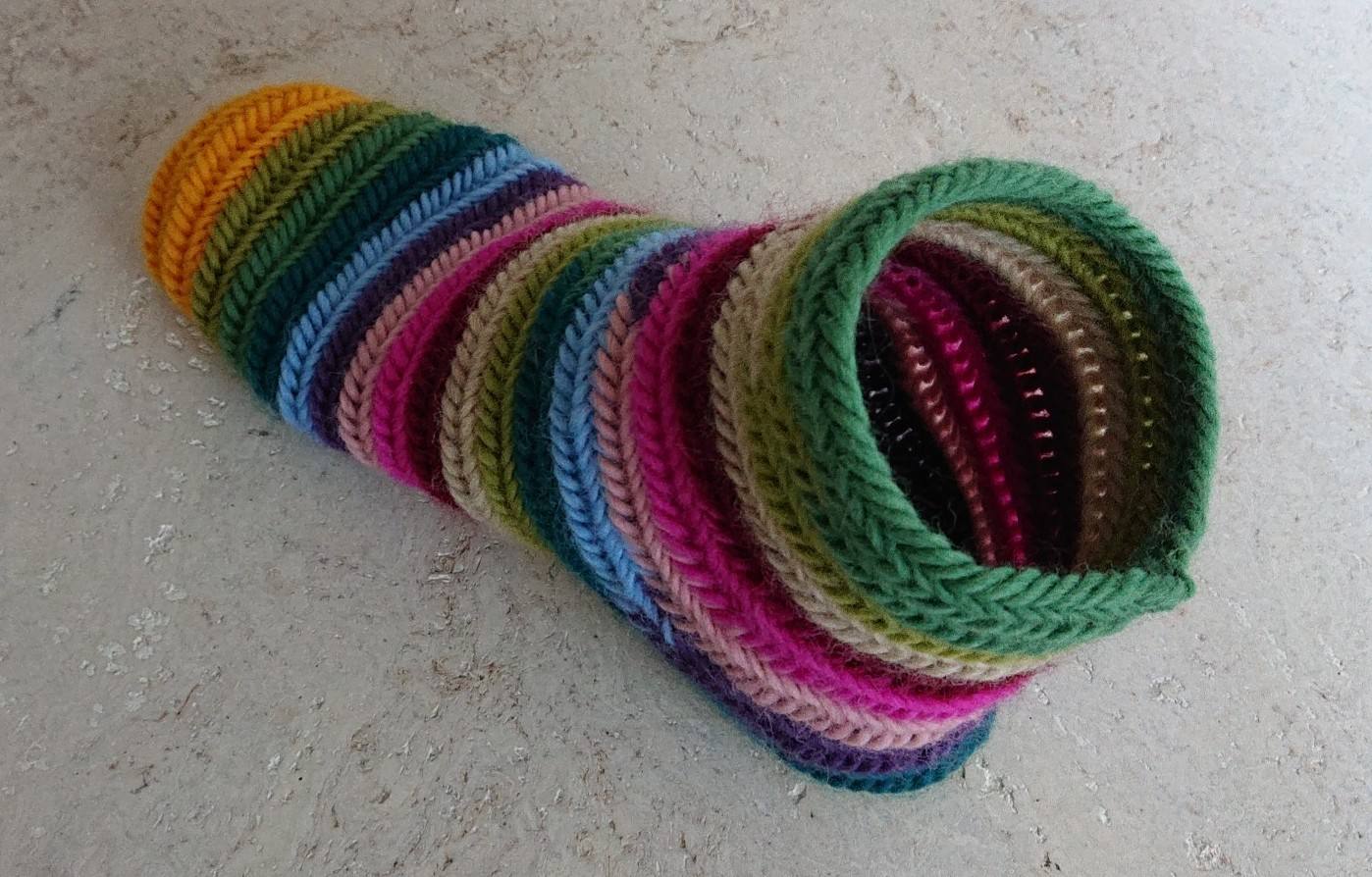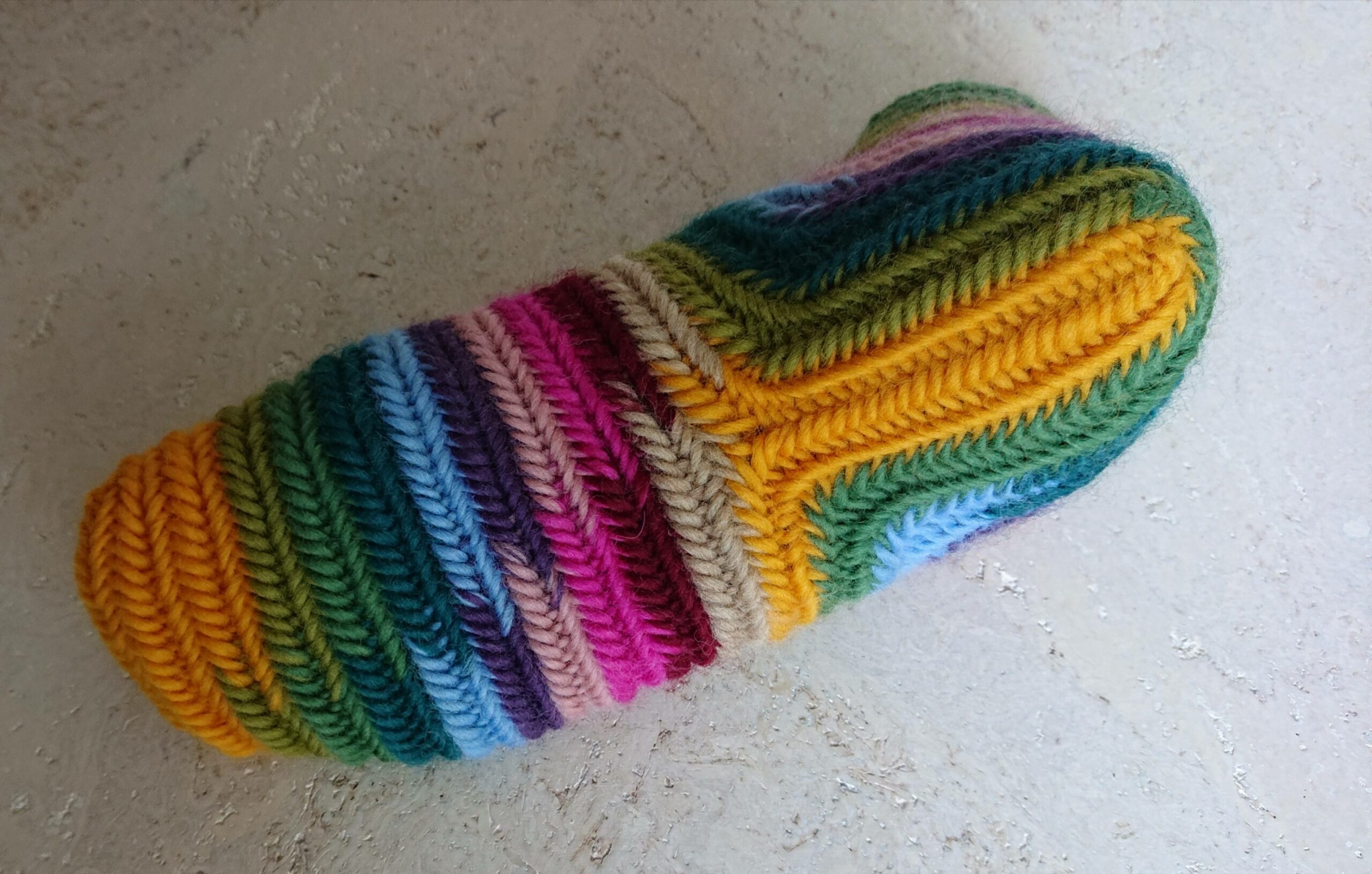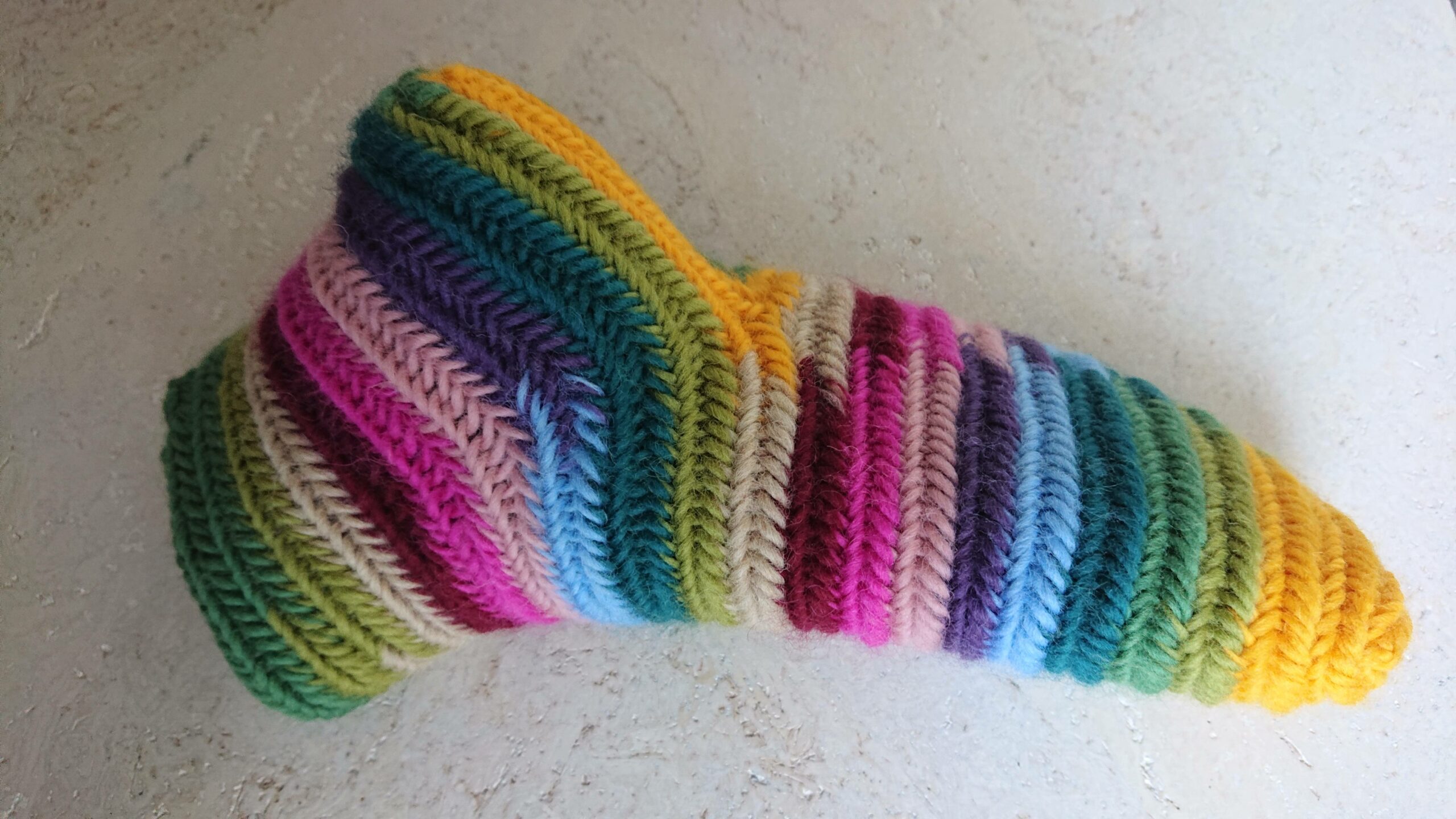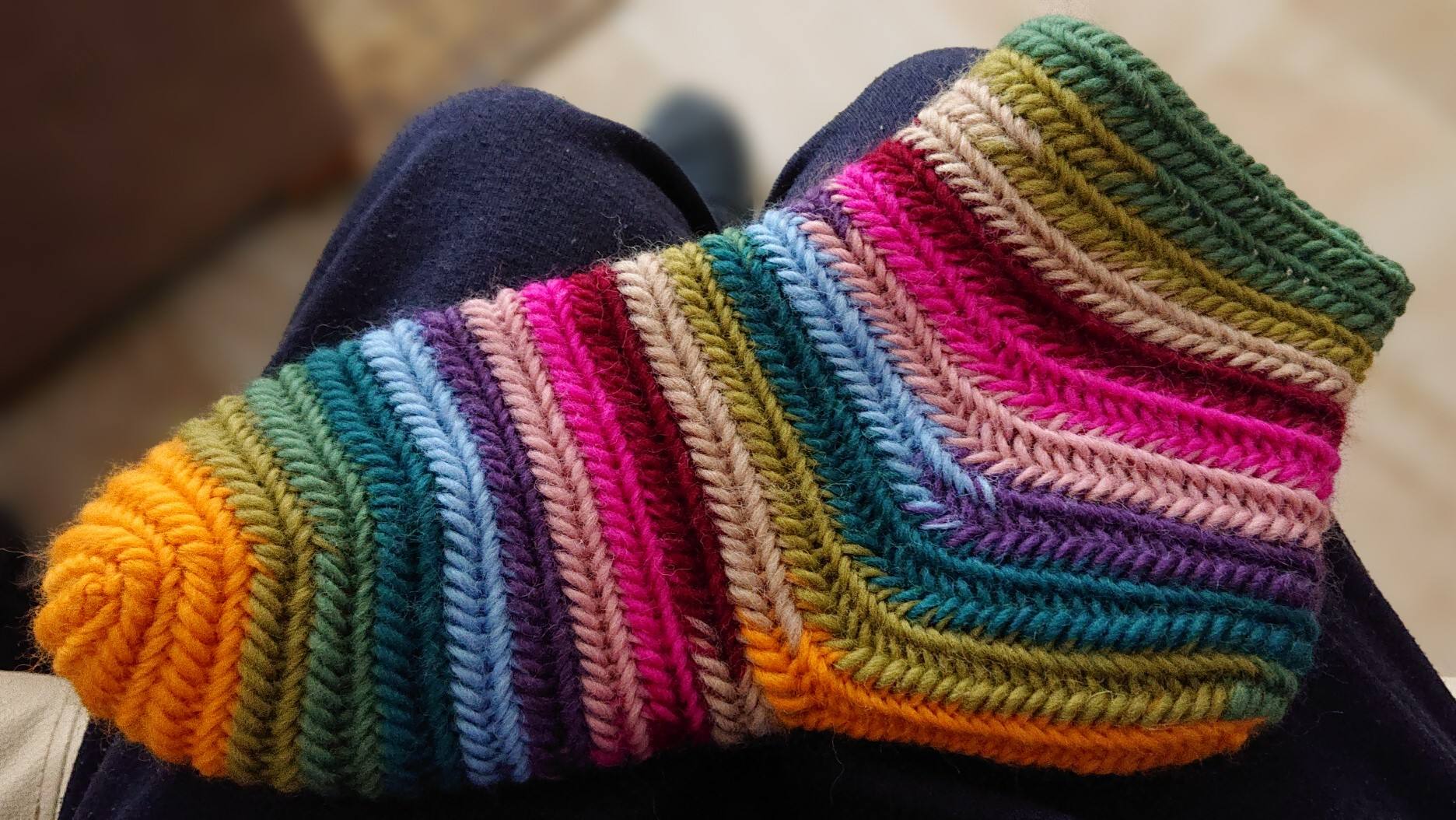
Needlebind socks with the Swedish Klas Brita style you get a different kind of heel than the basic socks (no small holes).
These socks are easy to needlebind and have a very beautiful heel and with one needle
Make a row of stitched (18) and bend back and at the end of the row increase 3 stitches.
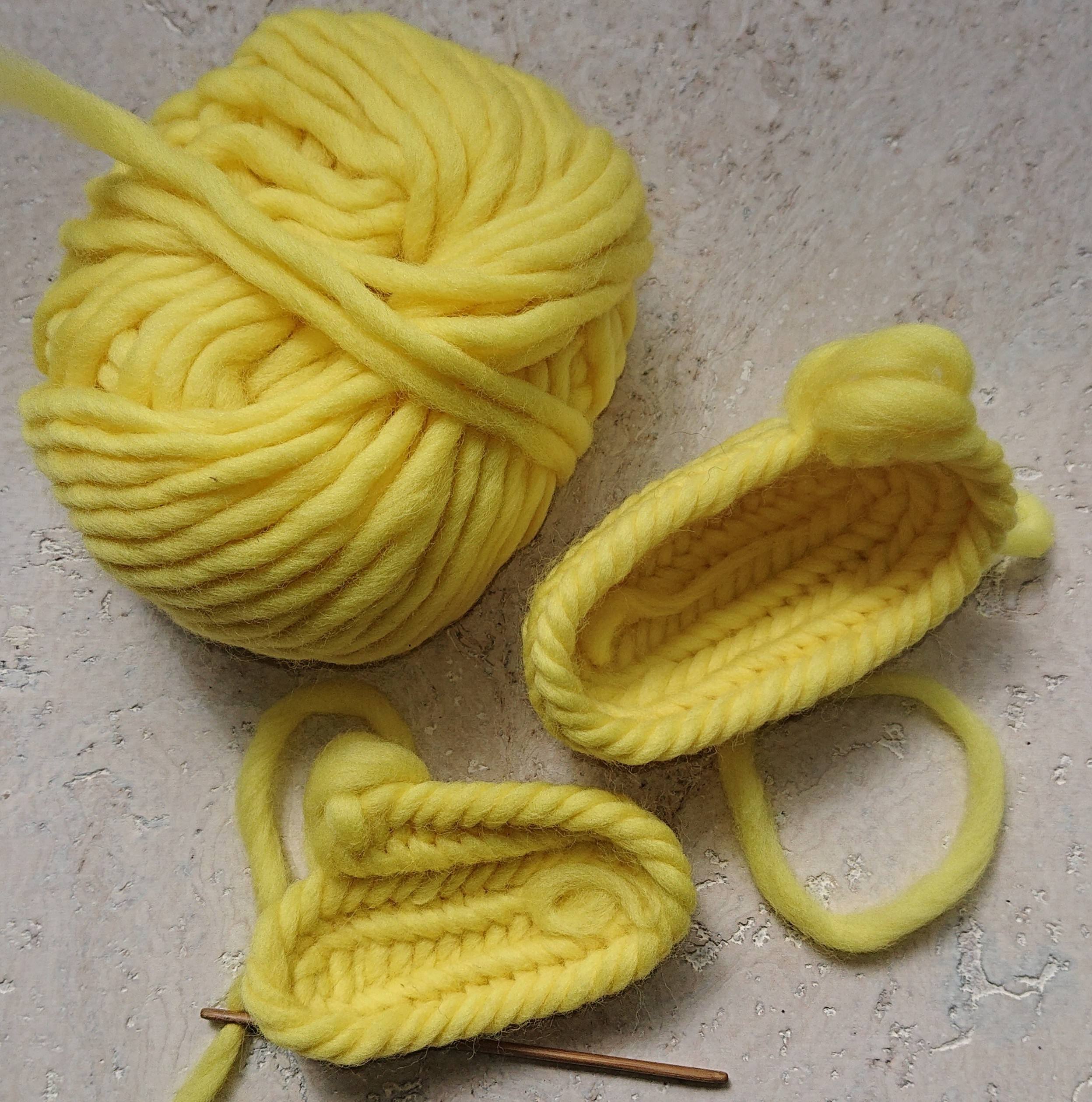
And the next rows increase 2 stitiches on both sides, so that the sock becomes wider.
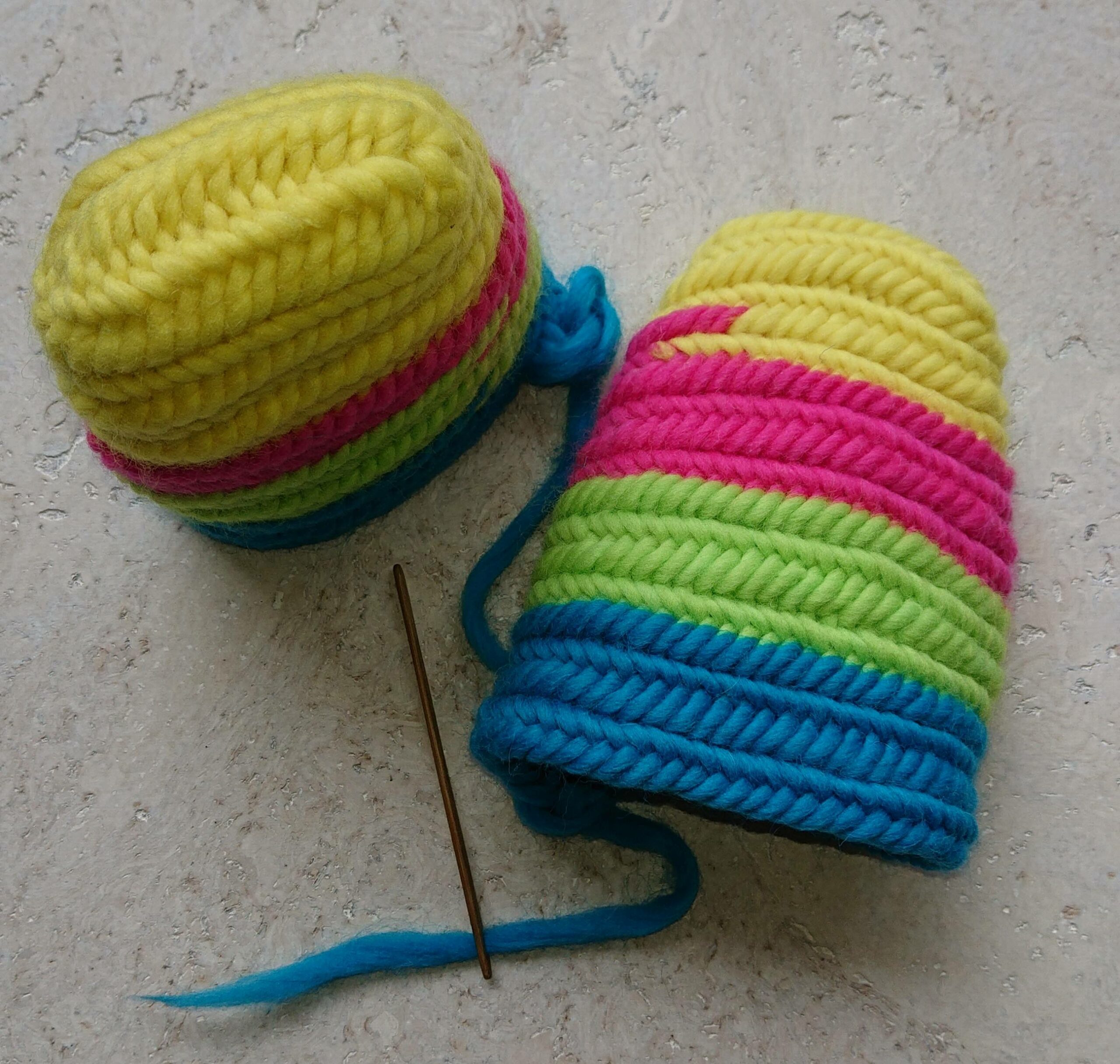
I Needlebind socks at the same time so that they are made with the same strength. I regularly adjust the sock around my feet to see if the size is right.
Slightly beyond the center of the foot i make a loose row of stitches so called ‘finger’.
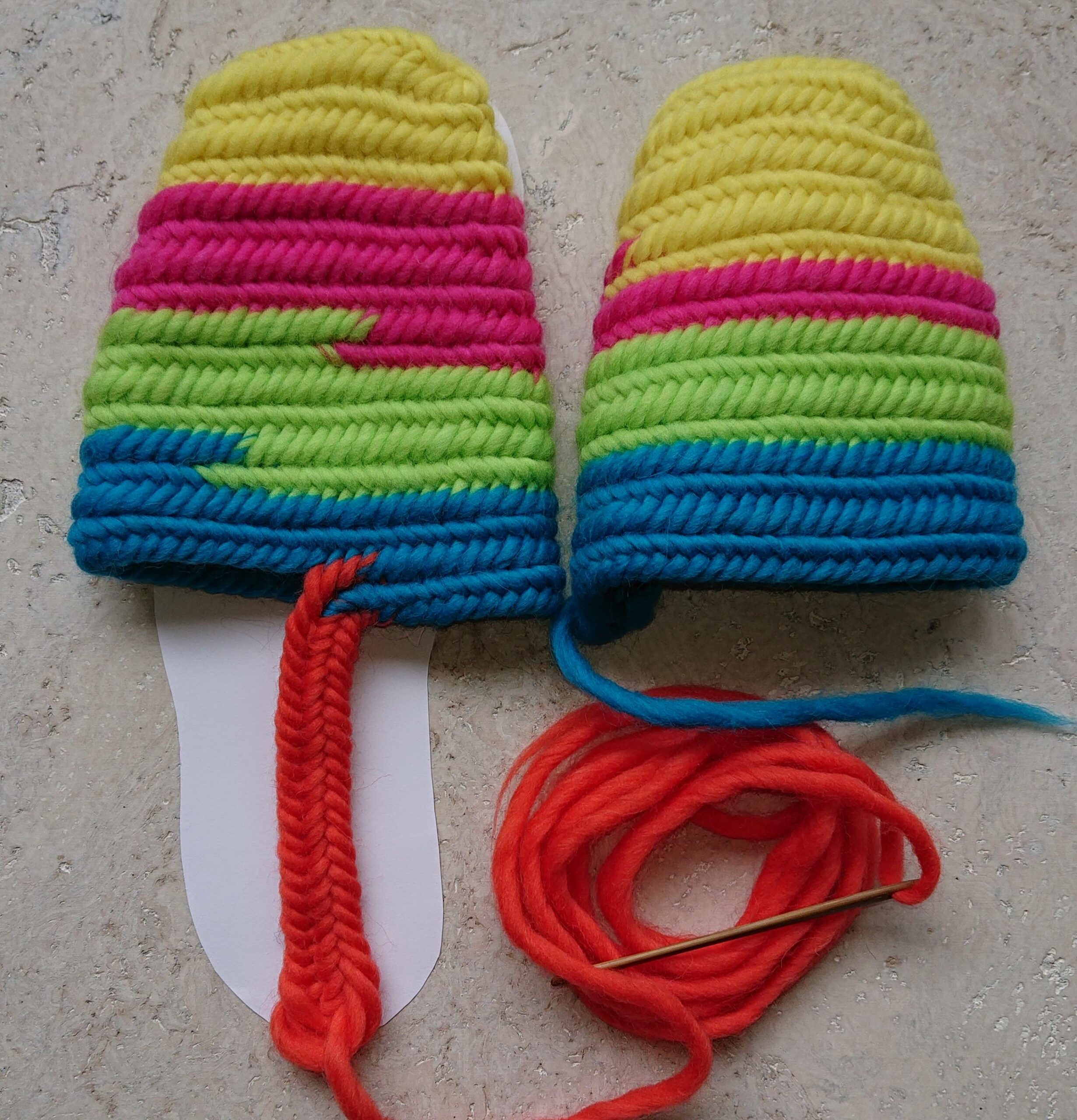
The lenght of the finger is half the lenght of your foot, when needlebind the corner, the lenght of the finger gets shorter, a few centimeters and that is, what we want becauce when you needlebind the heel it becomes longer because of increasing.
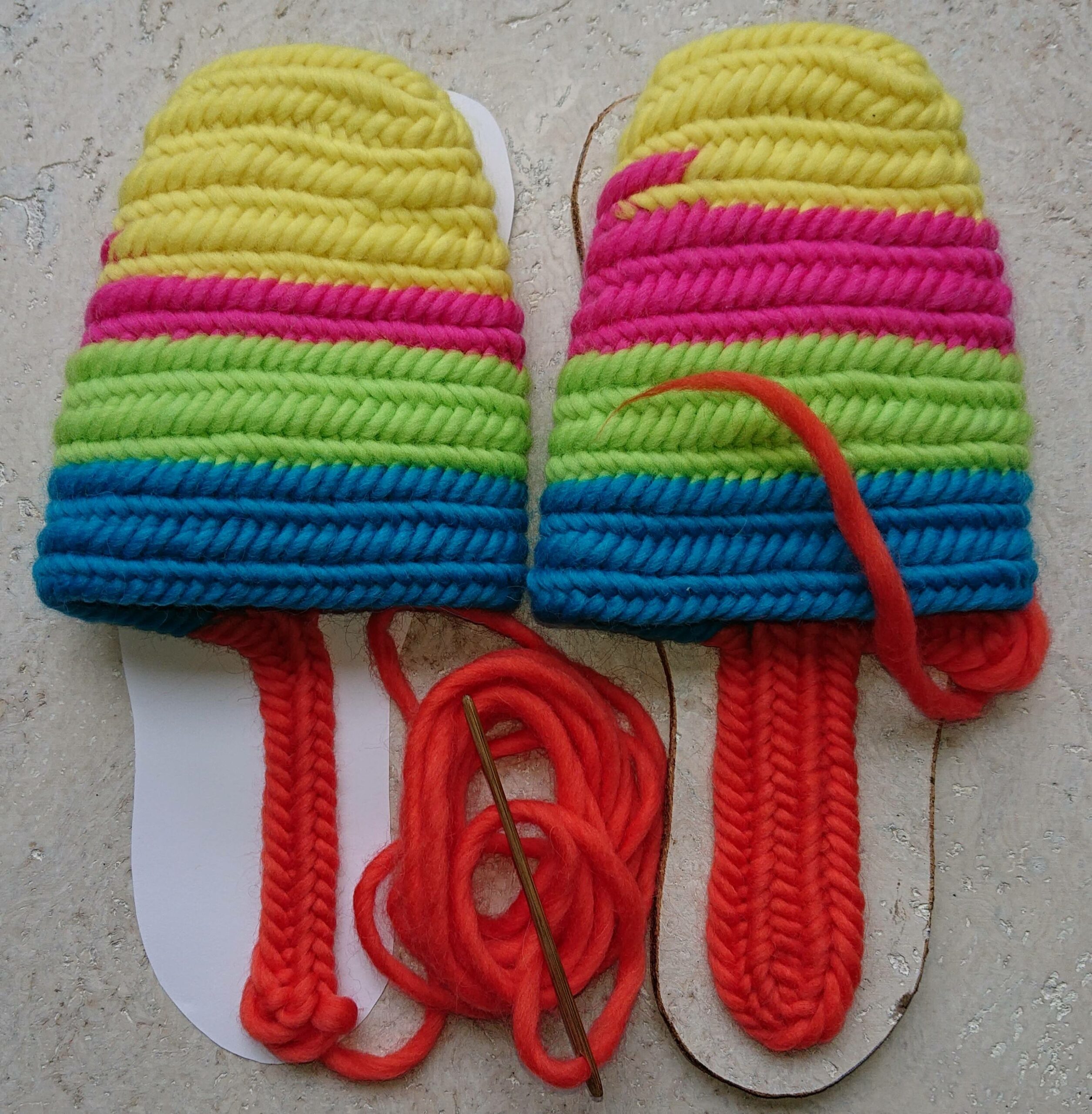
At the base of the finger decrease 3 stitches on both sides.
When you reached the top of the finger increase 5 stitches.
Then at the base of the finger decrease 5 stitches.
When you reached the top of the finger you increace 3 stitches.
Now you nalbind 4 rounds with decreasing 5 stitches at base of the finger so that the sharp corners get round.
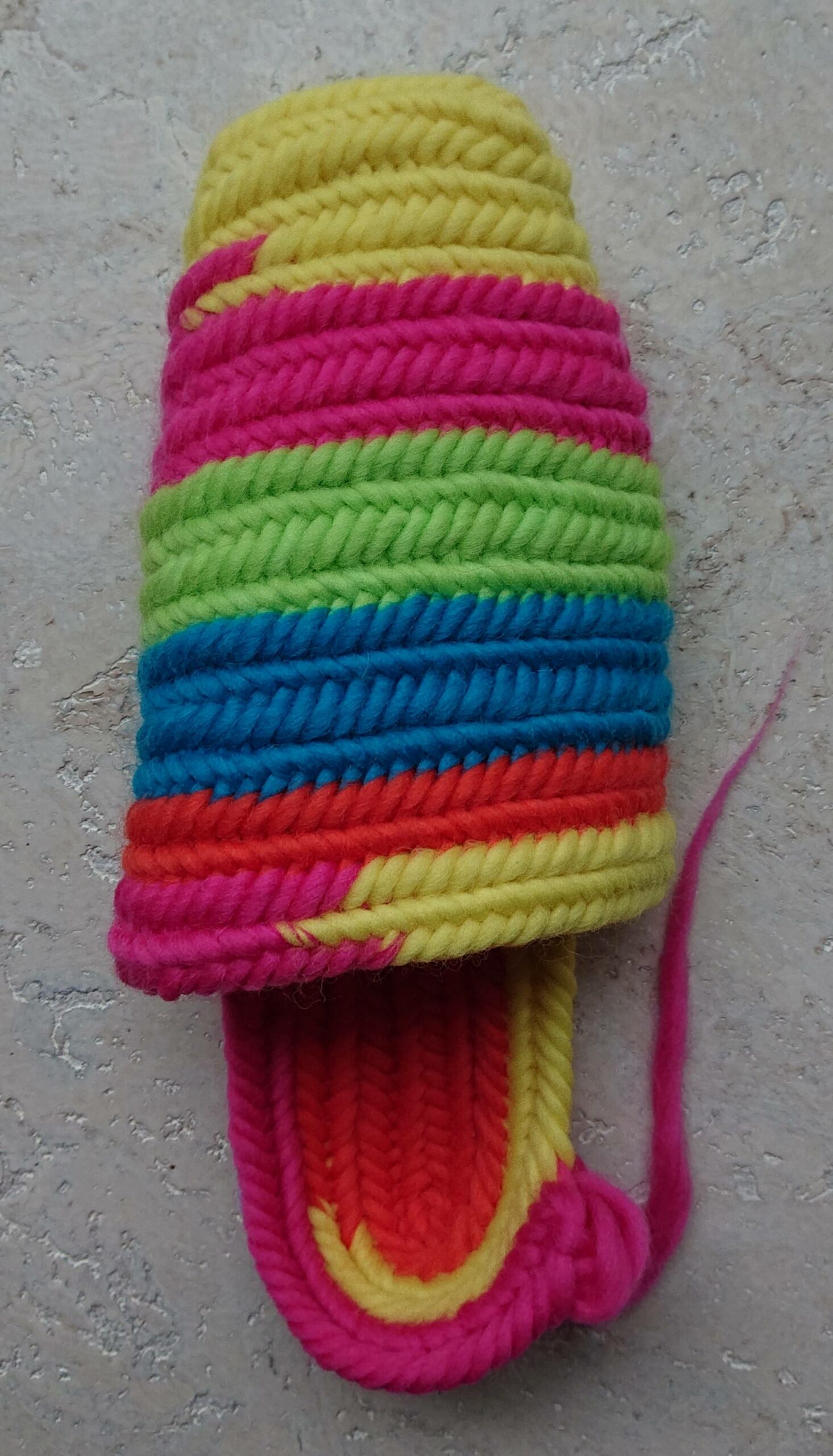
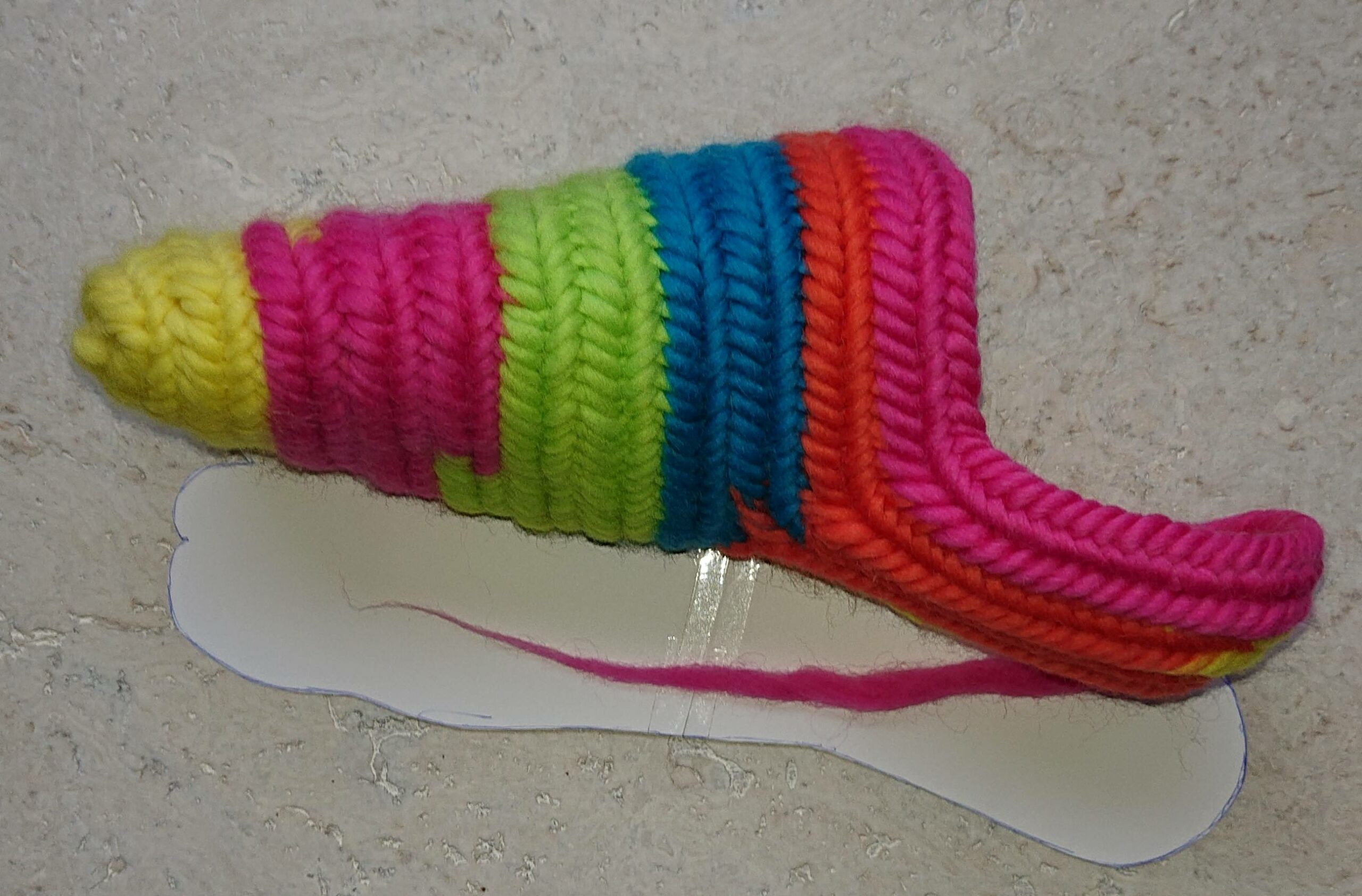
Measure the sock and when you are at the ankle you will not increase more and just needlebind.
If the sock has the desired length then finish the sock.
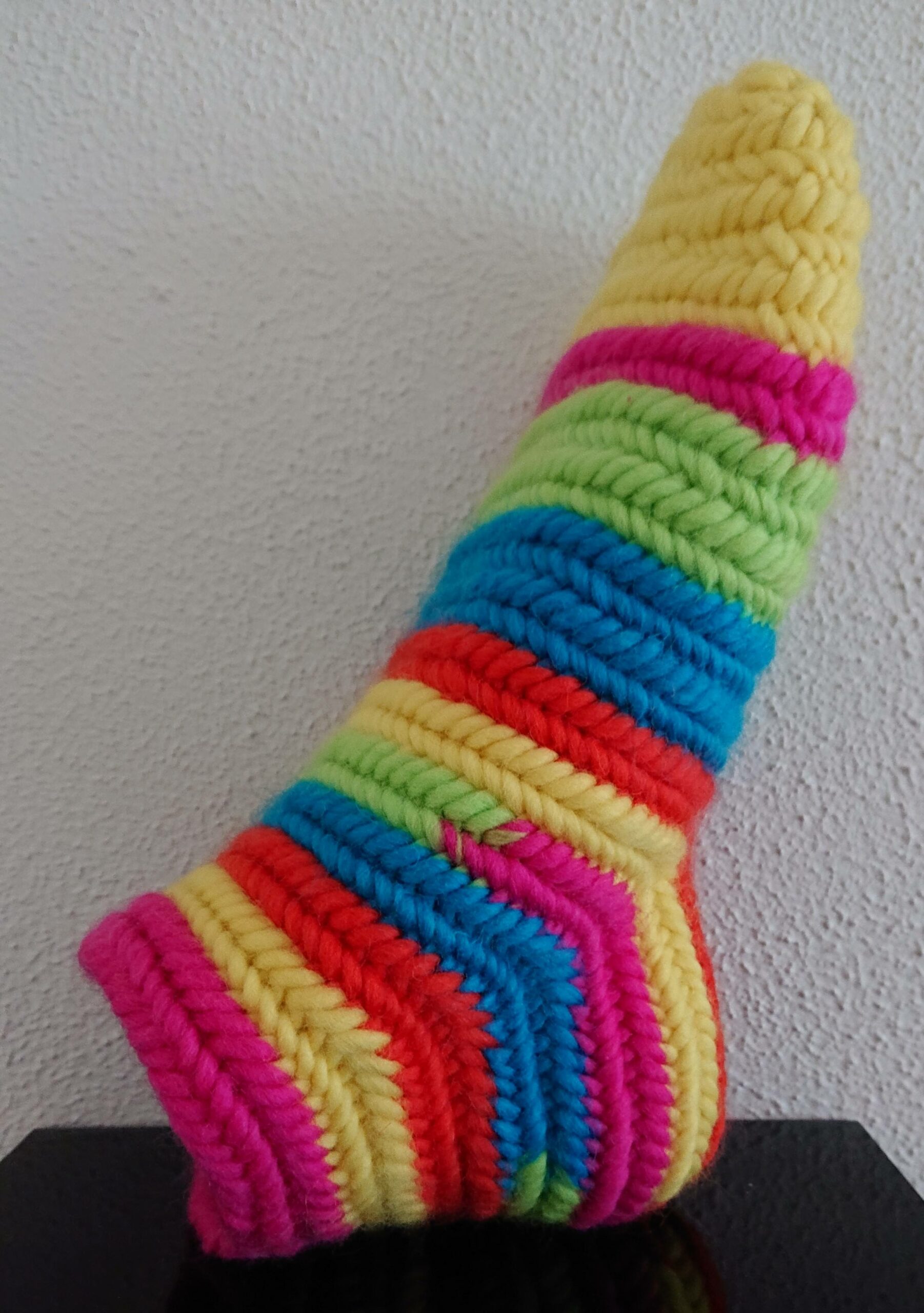
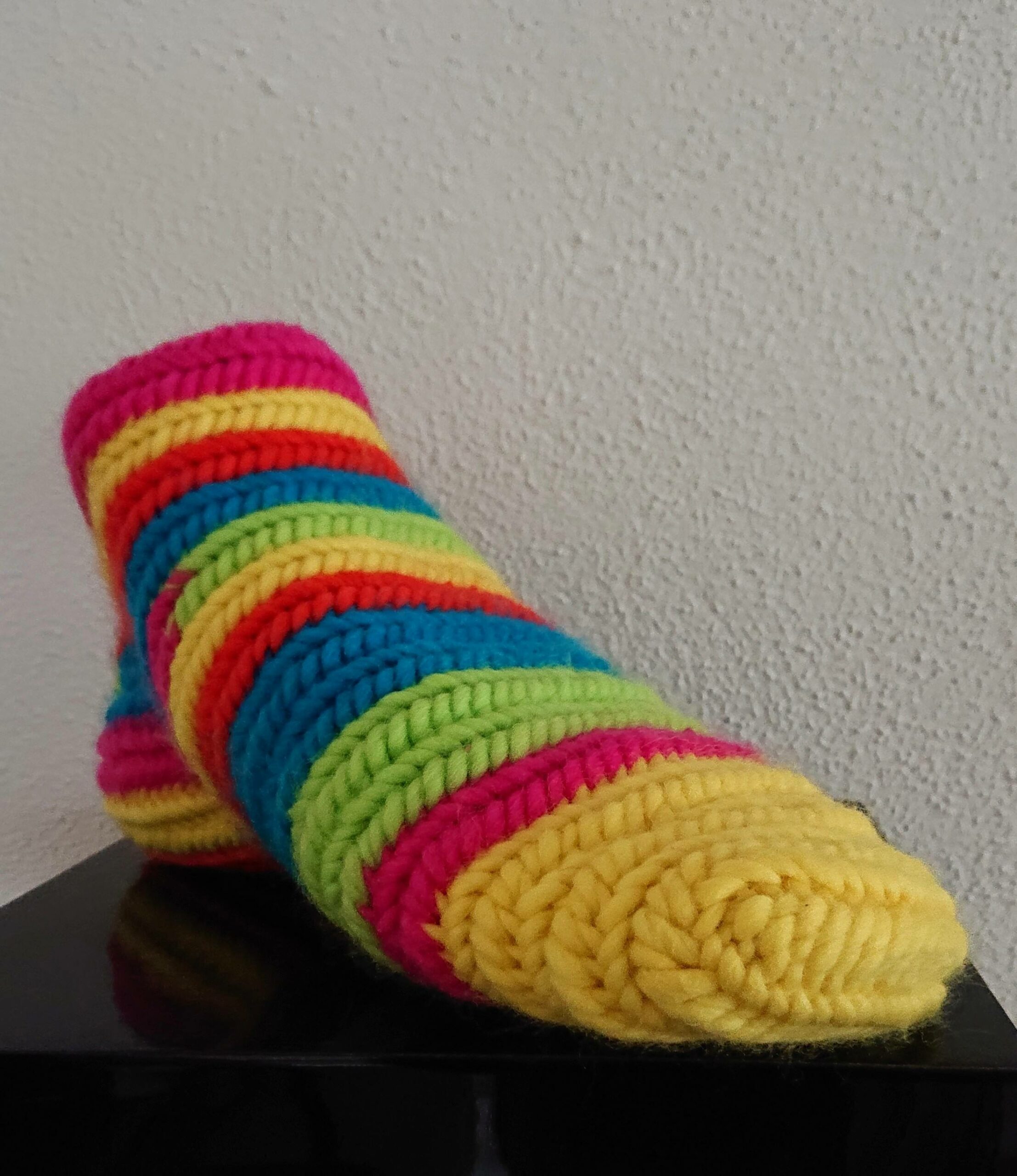
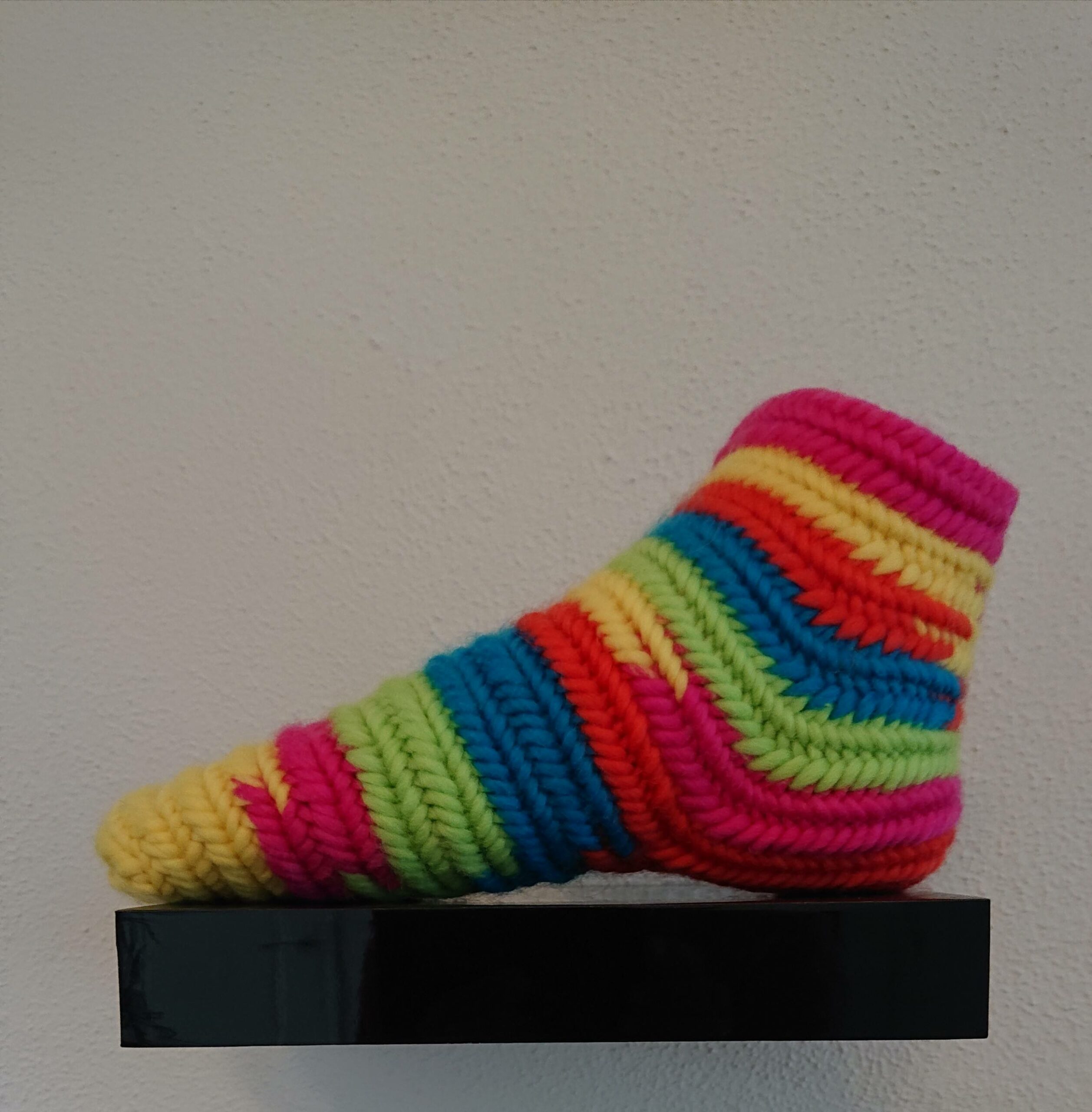
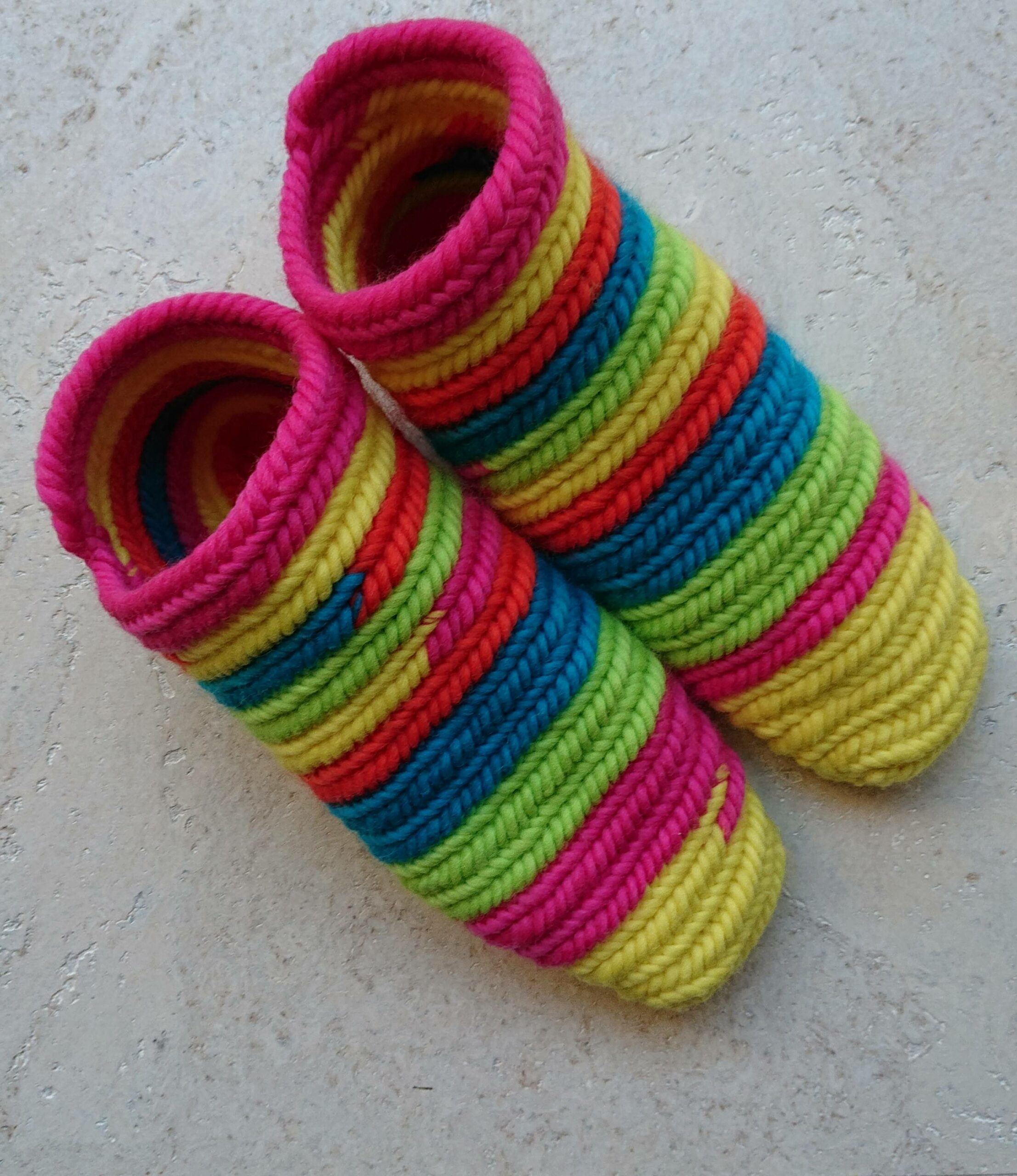
To needlebind socks was a great challenge and i was very very happy that it worked. 🙂
Nalbinding easy slippers is my 37 Youtube video.
I always forget to ask if you’d like to subscribe to my YouTube channel: happy needlebinding If I have a lot of subscribers, I can email magazines to write an article about this wonderful old craft so I can pass it on to the next generation.
Thank you kindly in advance. bert veugelers.
I always needle nalbind Klas Brita heel slippers/socks according to her style because it is much easier and because the shape is beautiful and fits well.
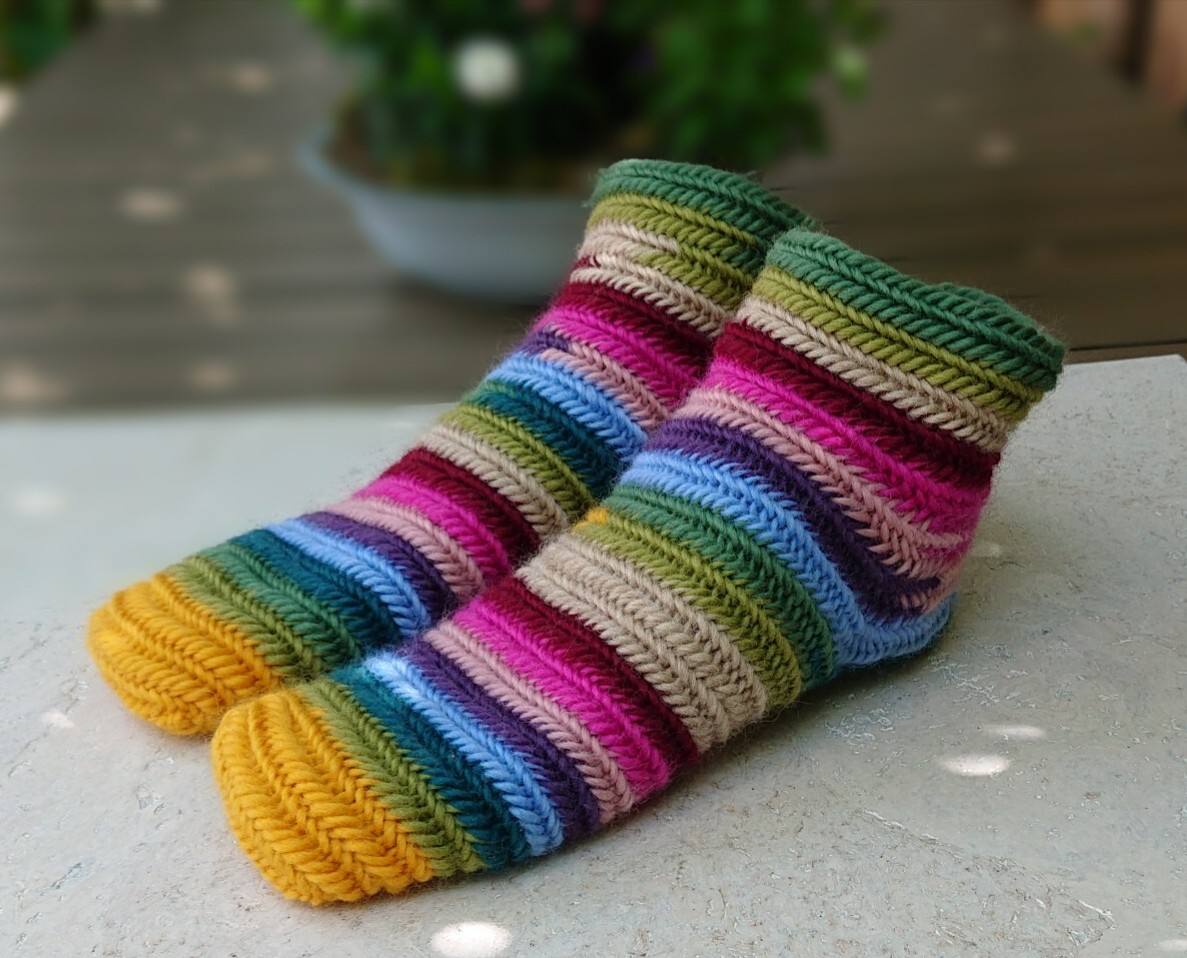
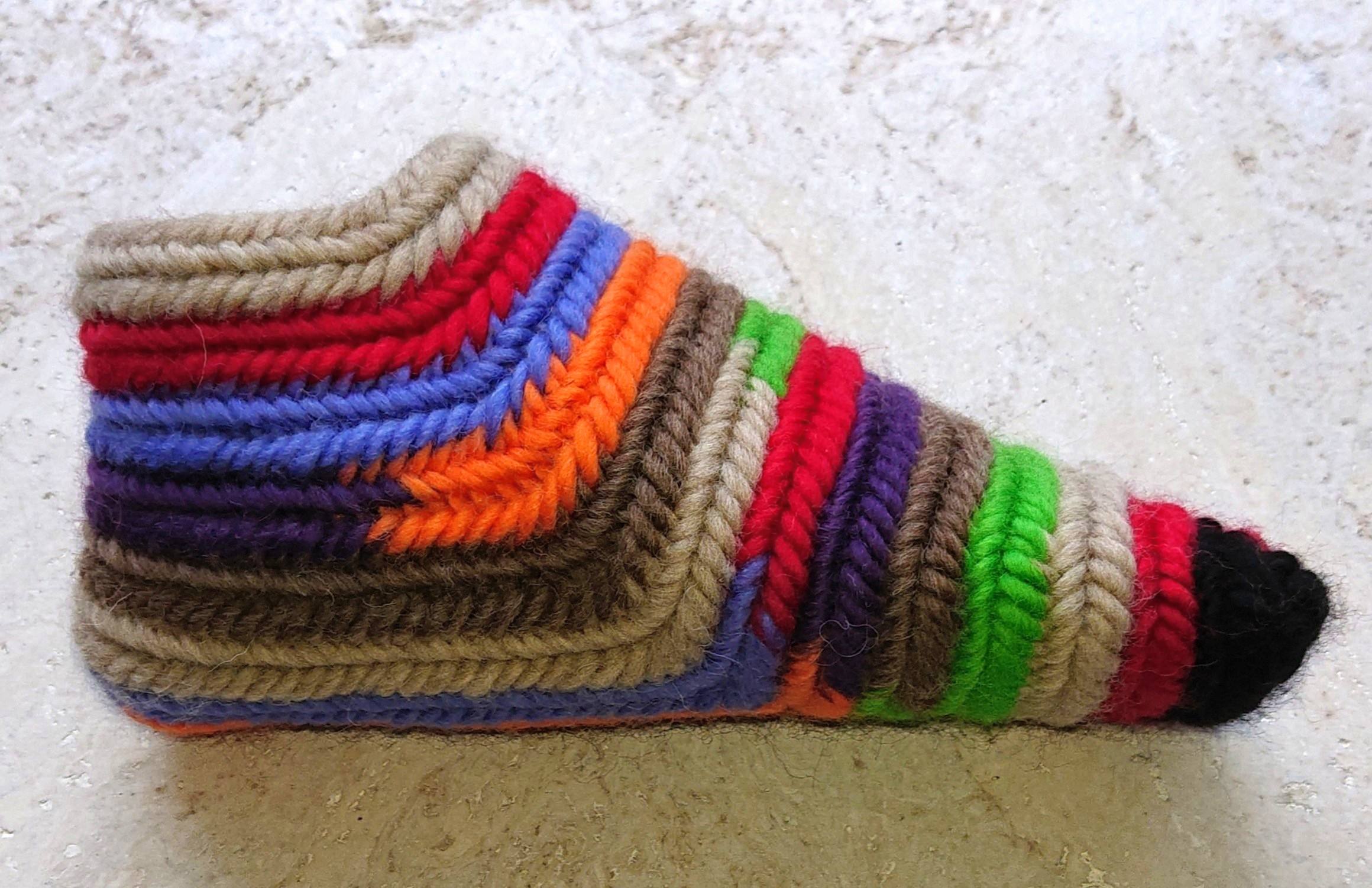
The slippers/socks below are needle-binding according to the above pattern.
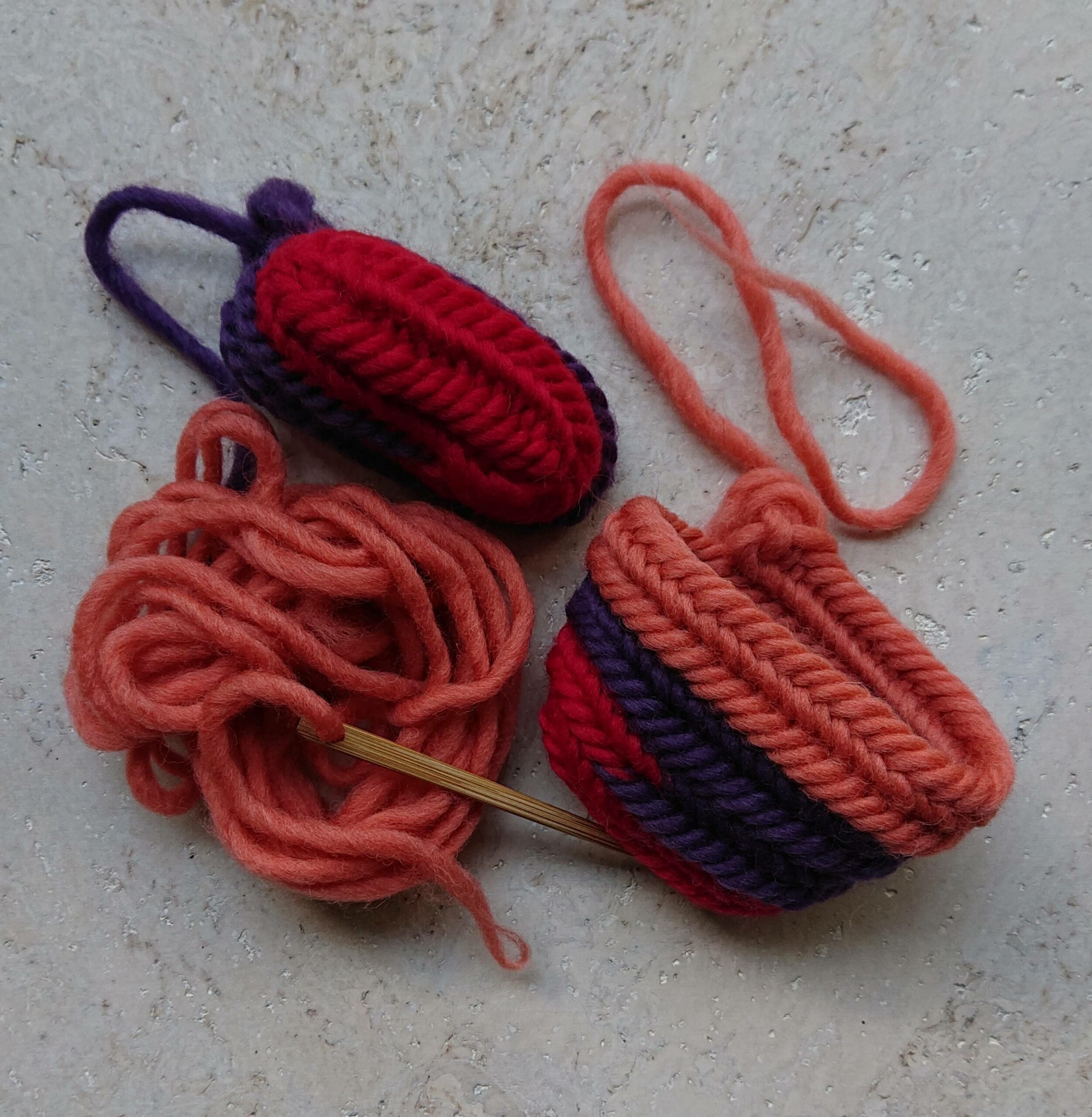
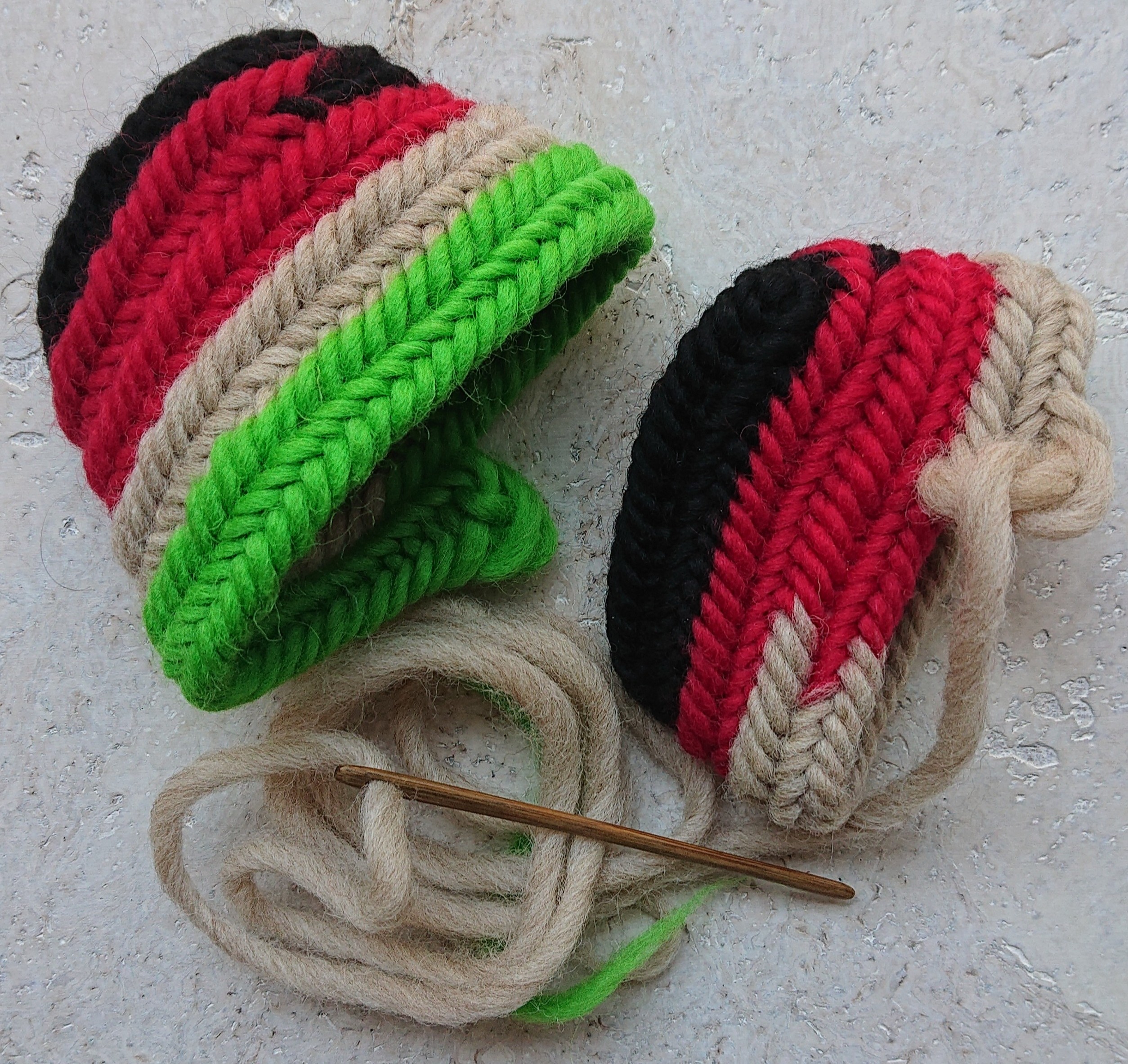
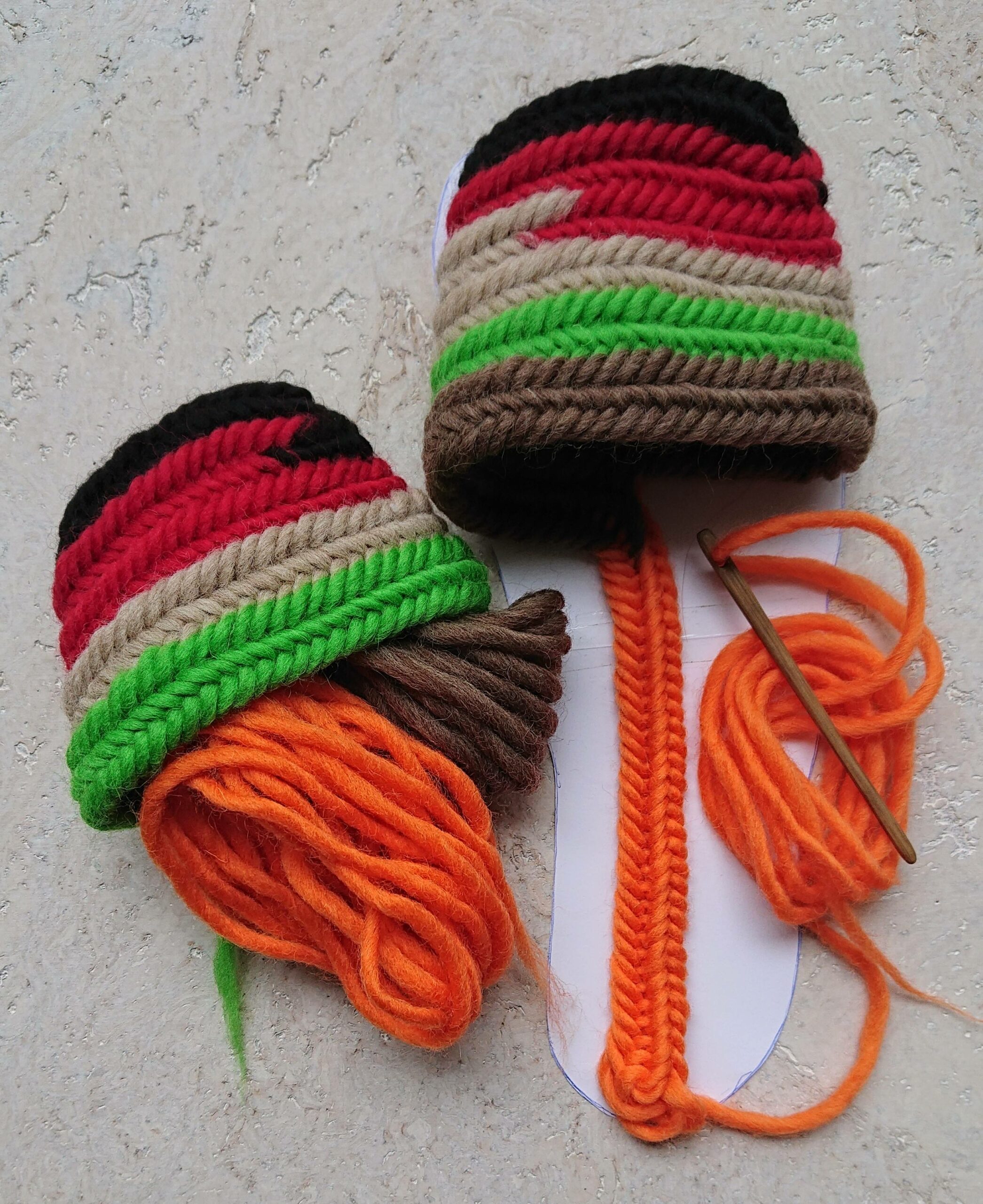
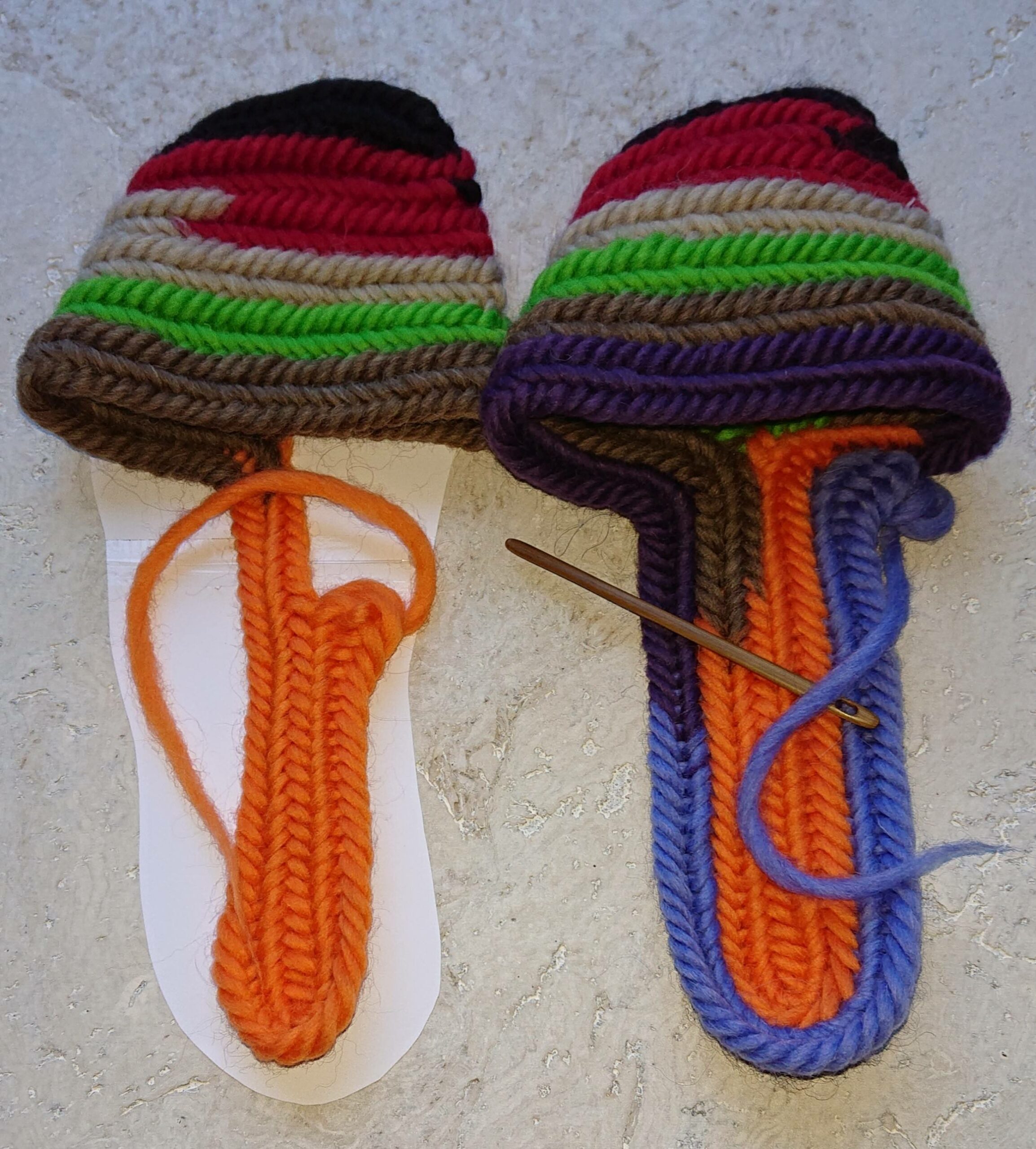
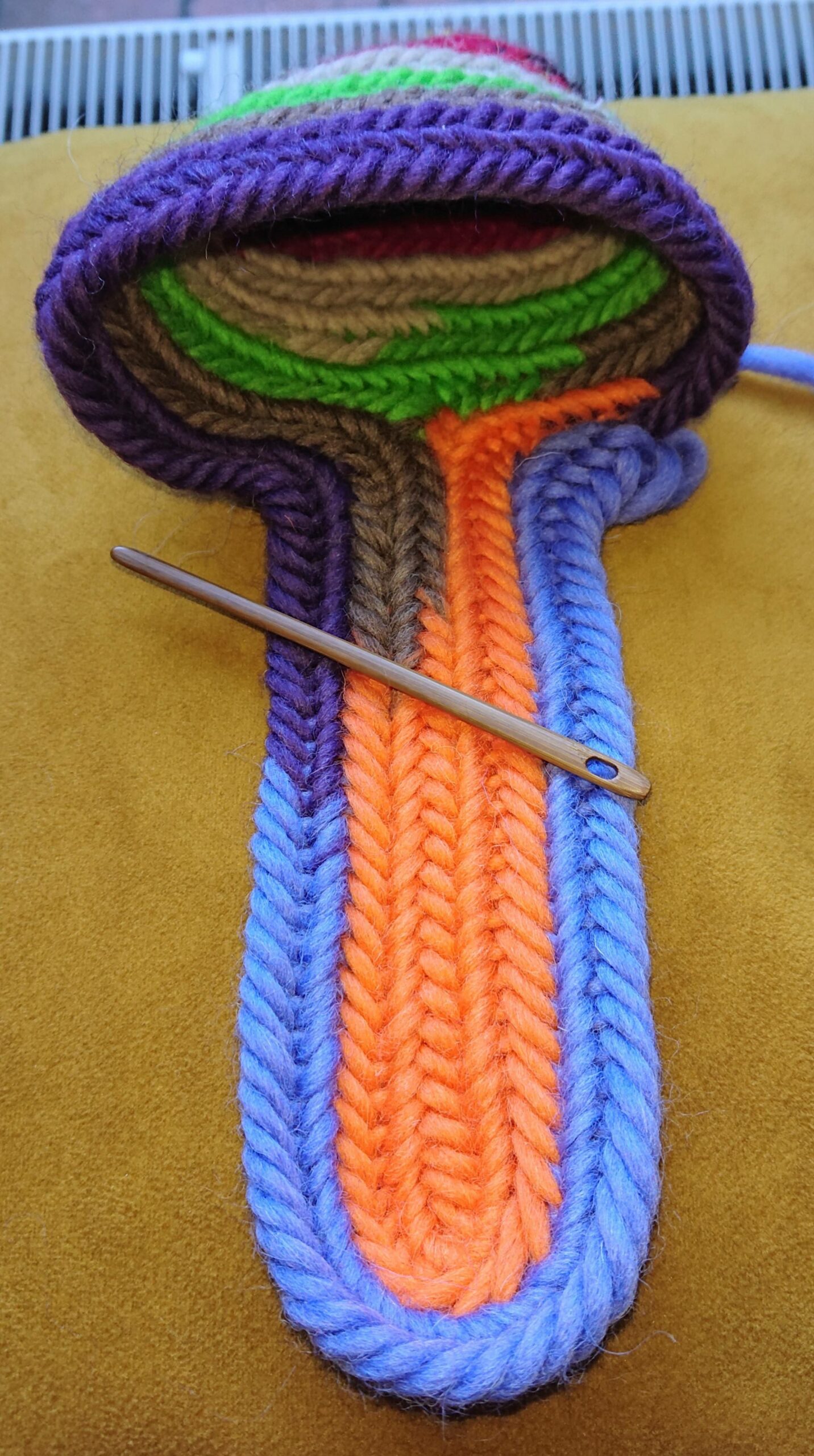
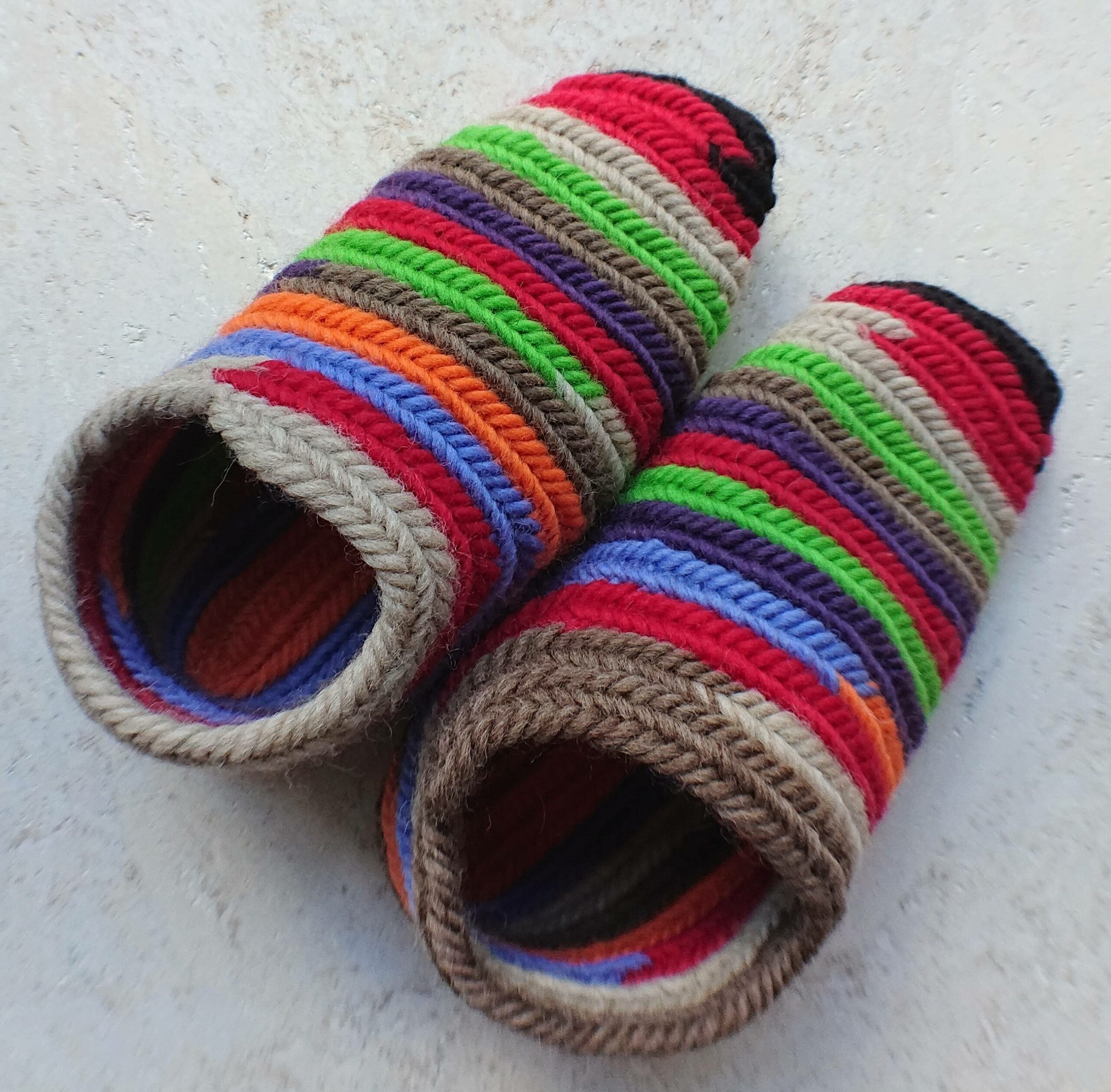
If you tighten the finger of the slipper/sock, a hole can sometimes occur. which you later have to darn with a darning needle.
The following photos should solve this.
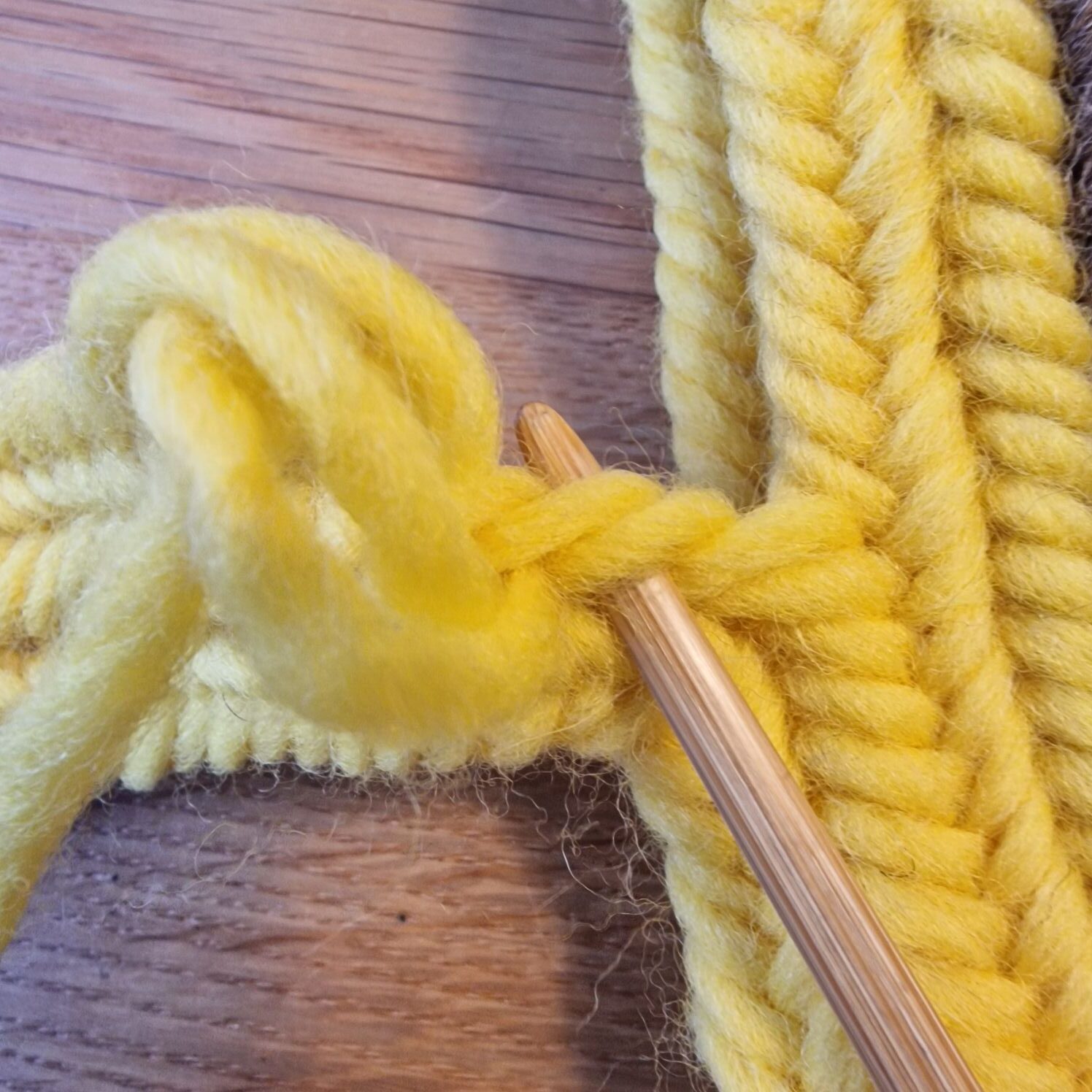
This is the last stitch before the finger is tied..
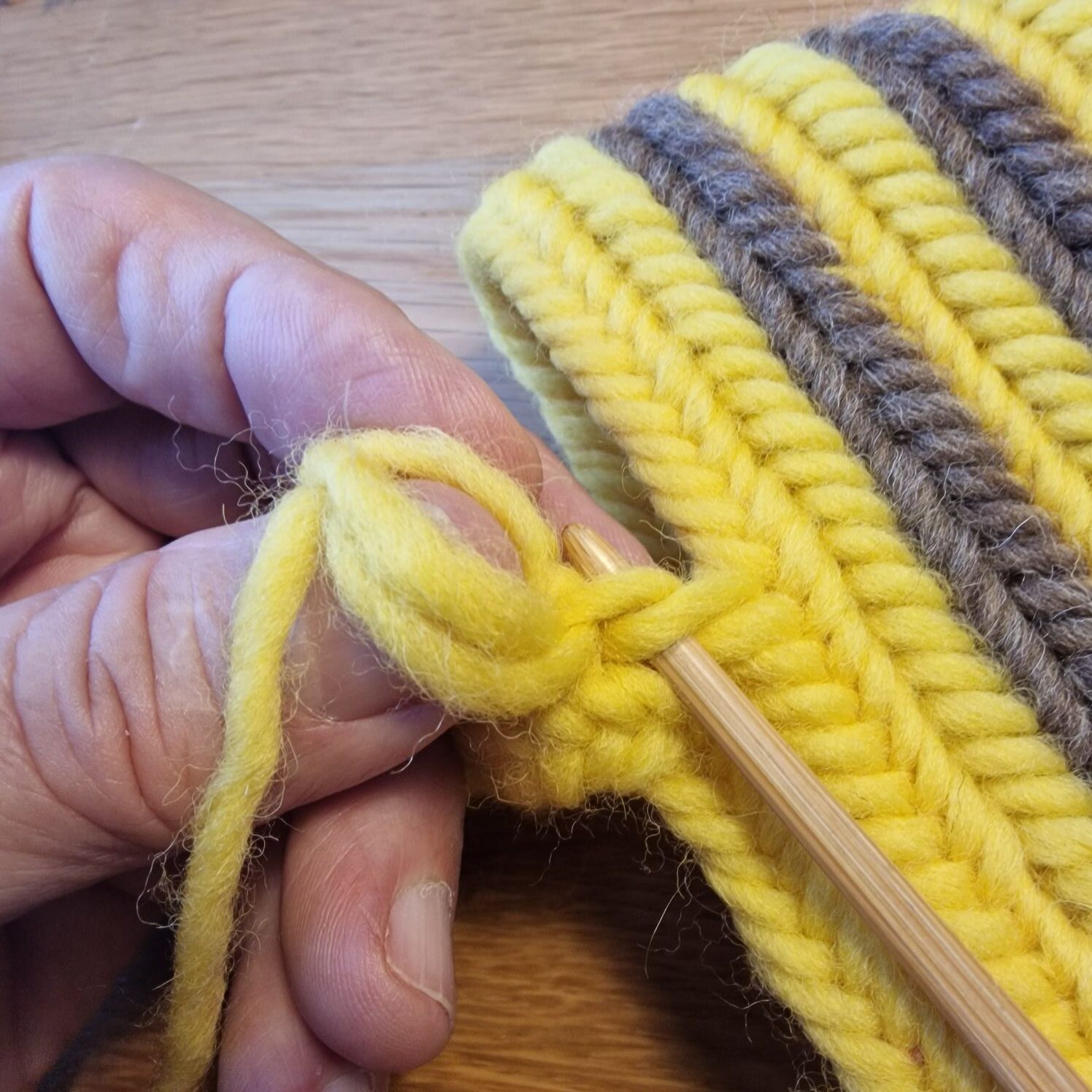
You insert the needle into the loop, see red arrow.
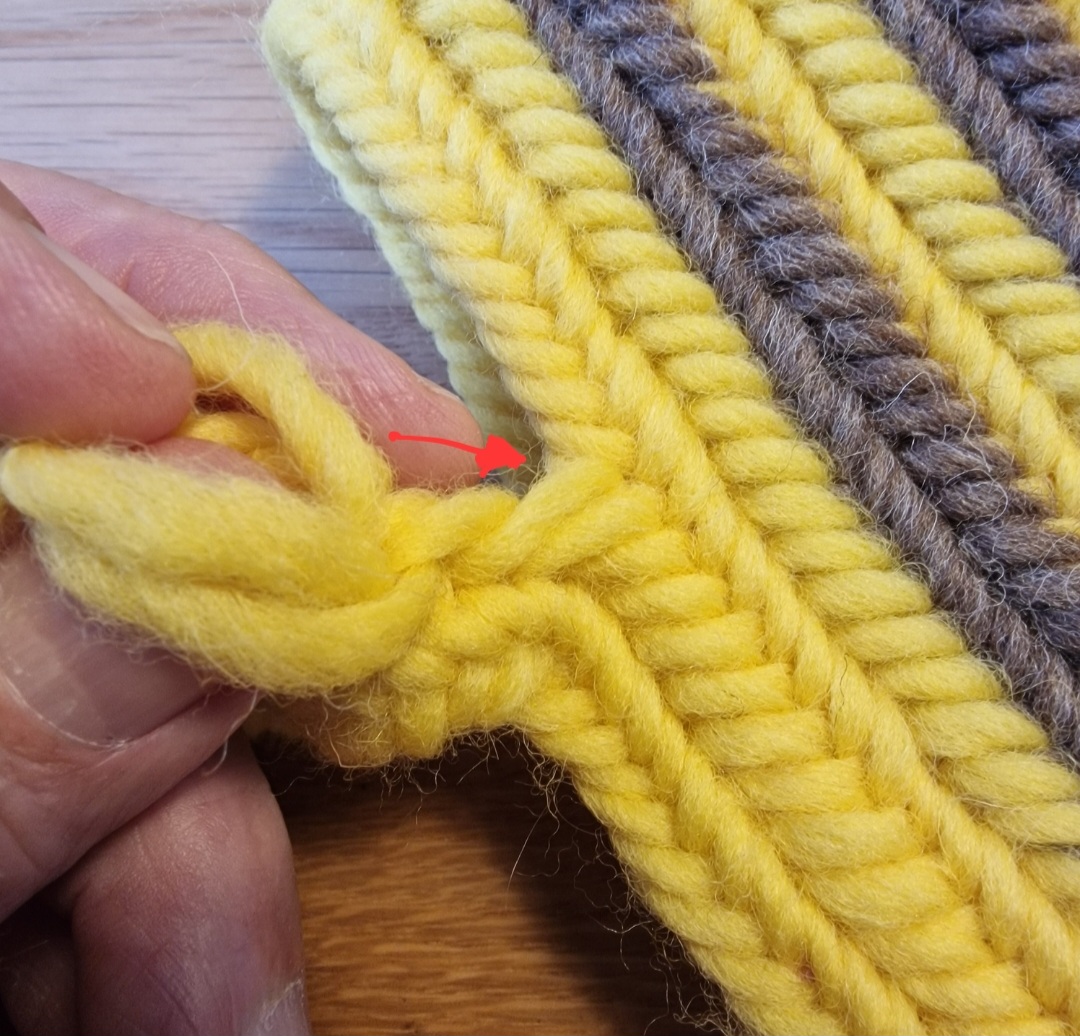
.You make the stitch as you are used to, this time it is the Finnish stitch with connecting stitch F2.
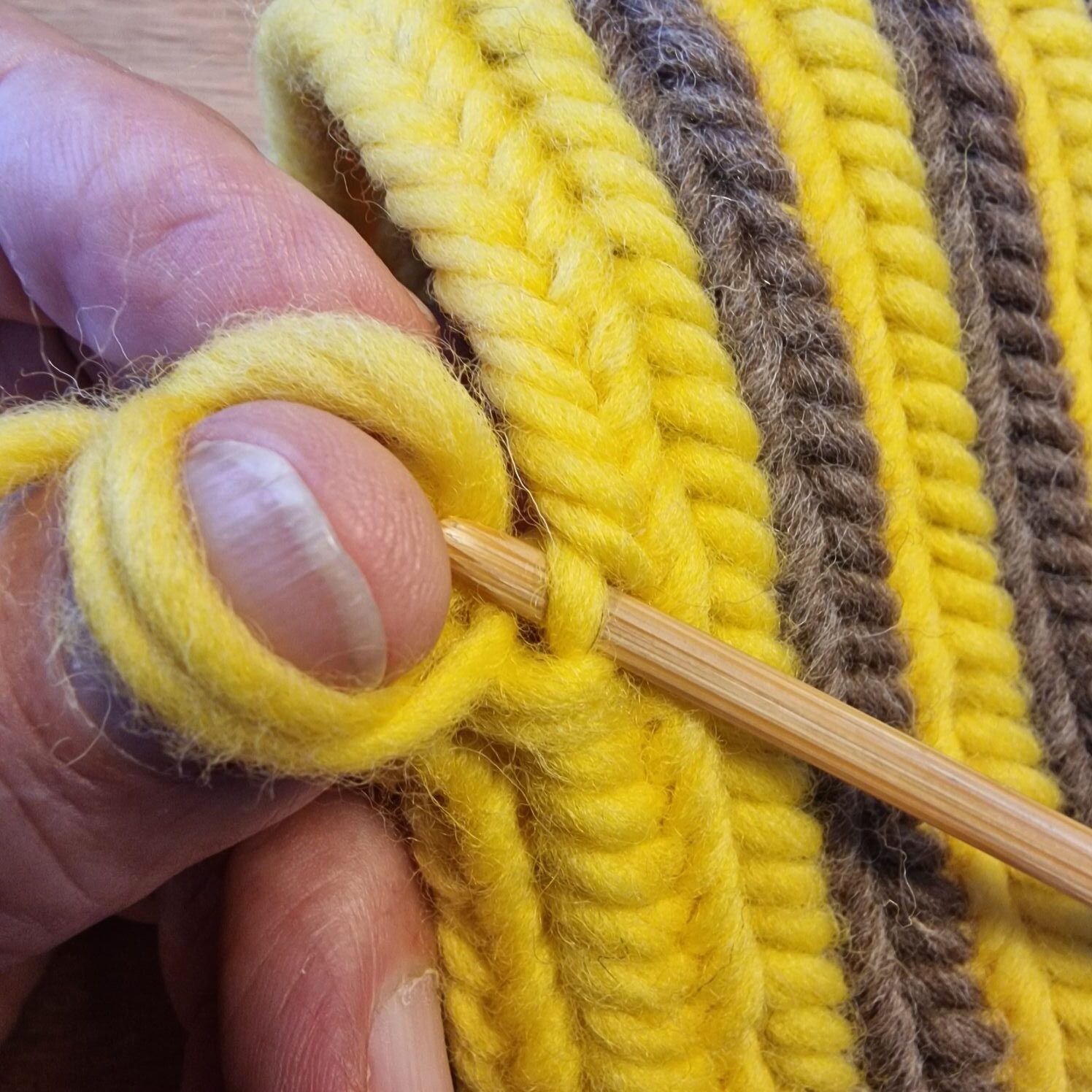
So pick up the stitch and then under the 2 back thumb loops and under the 2 thumb loops and under your working thread.
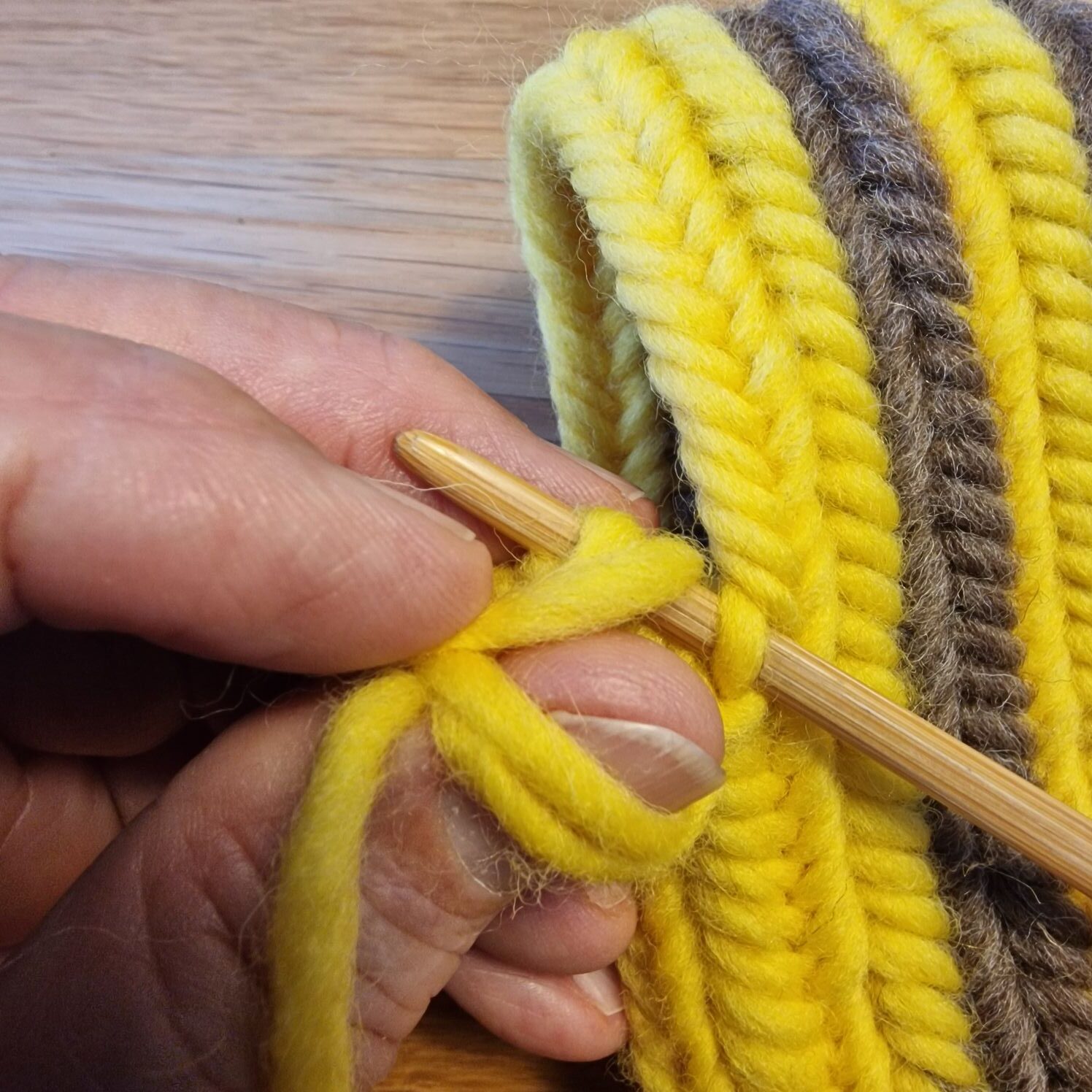
Then the next stitch and then decrease the next 2 stitches.
After that you have no small hole that you have to cover with a darning needle.
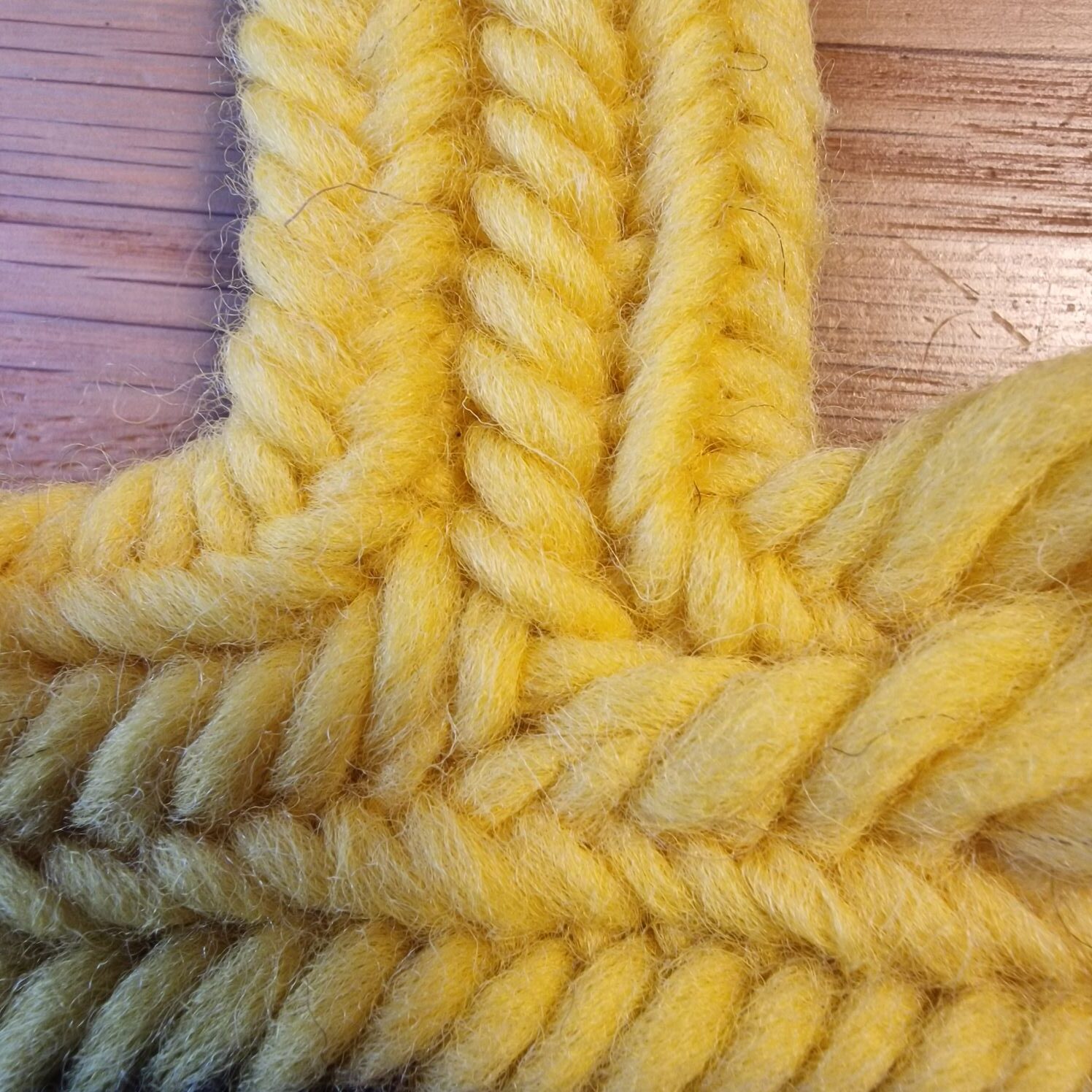
Finished slippers.
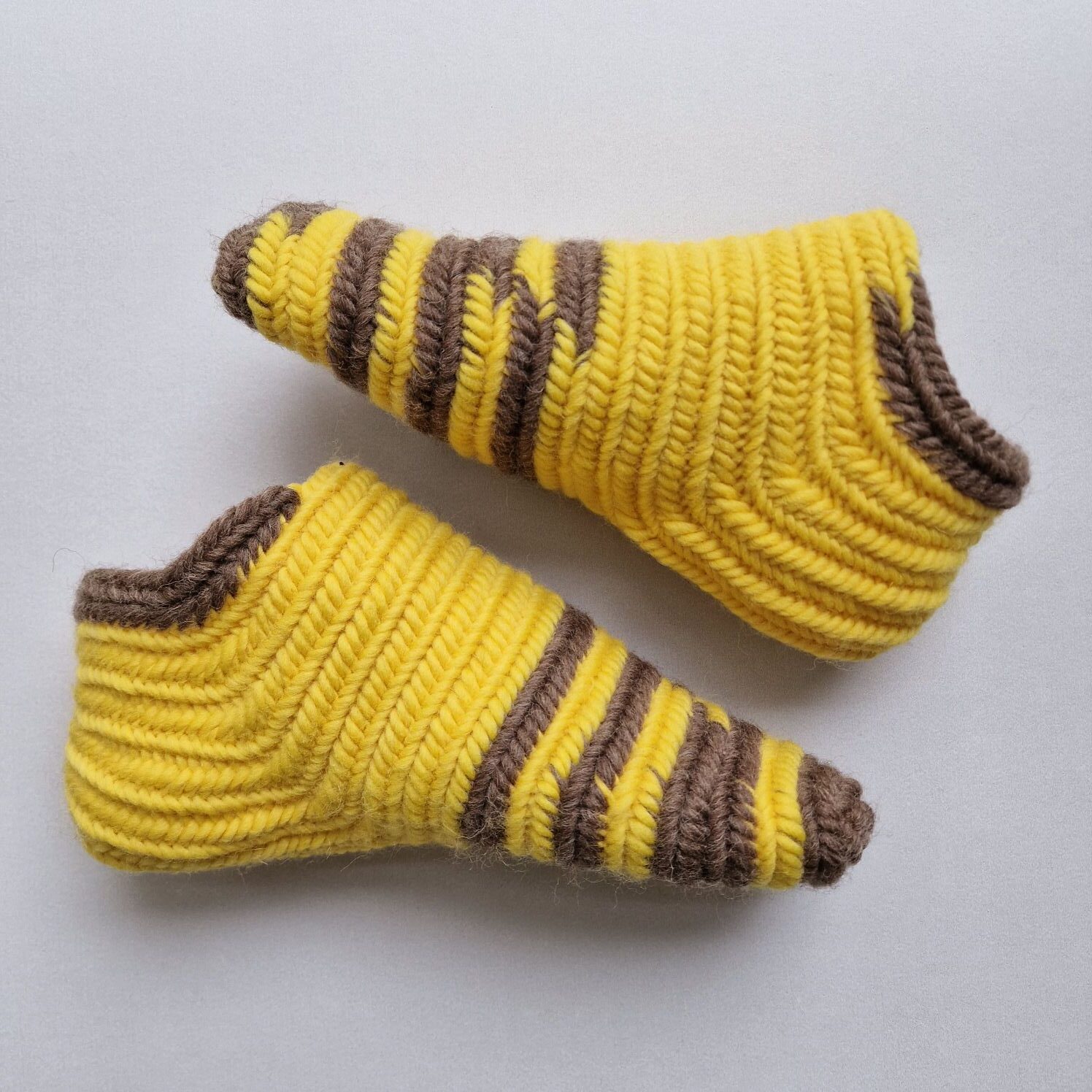
These slippers are made with the Finish stitch 2+2 and connection stitch F2.
I needlebind socks with the Swedish Klas Brita style, it is a different kind of heel nalbinding then basic socks.
These socks are easy to make and have a very beautiful heel.
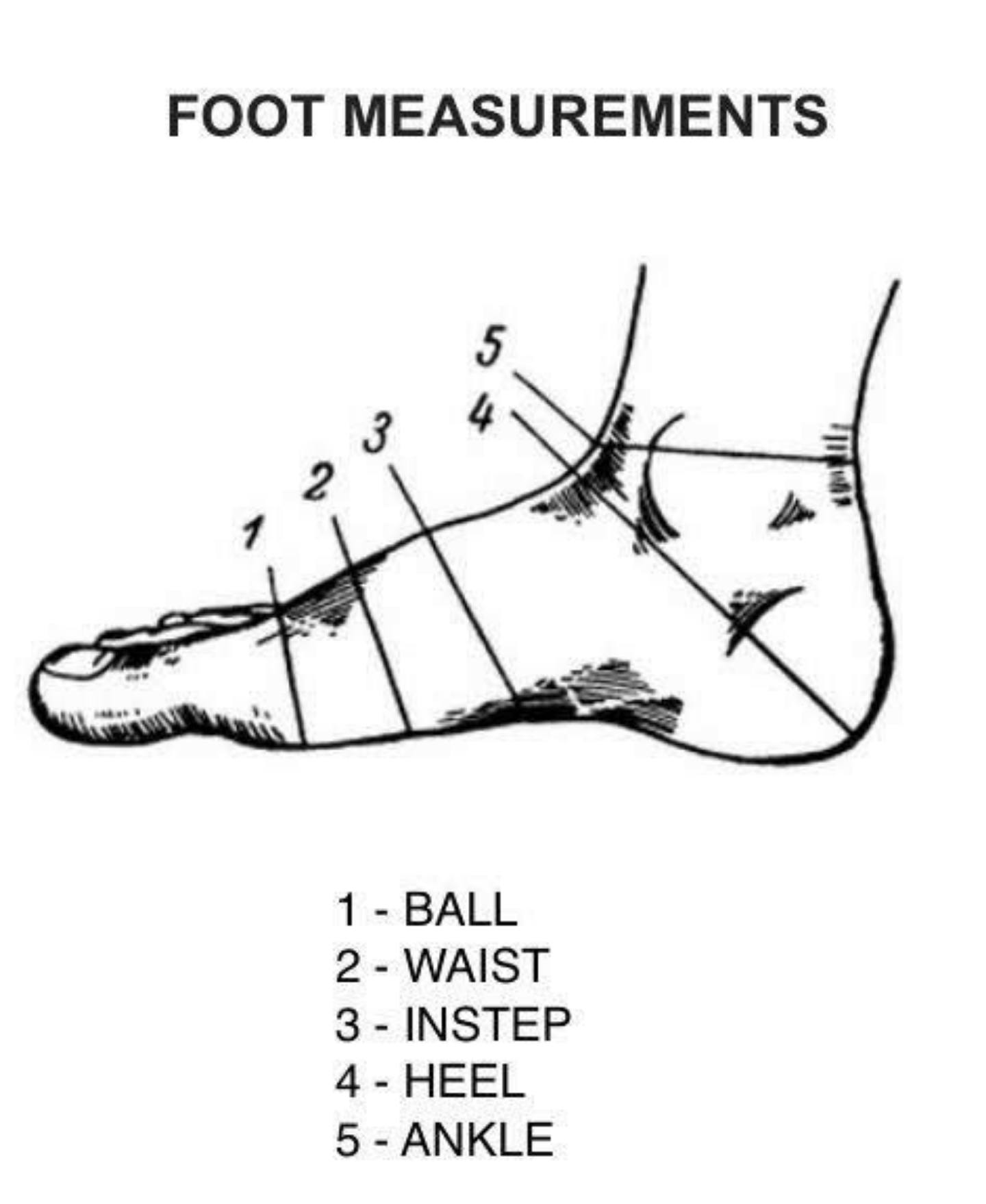
When you needlebind socks or slippers it is useful how long and wide your foot is. I made a mold of my foot, and my wife’s foot and daughter’s foot.
I stand with my bare feet on paper and draw the outline of my feet. the largest foot ( most feet are not the same size) I use.
Then i transfer this size to wood, saw it, rent it and your socks or slippers mold is ready.
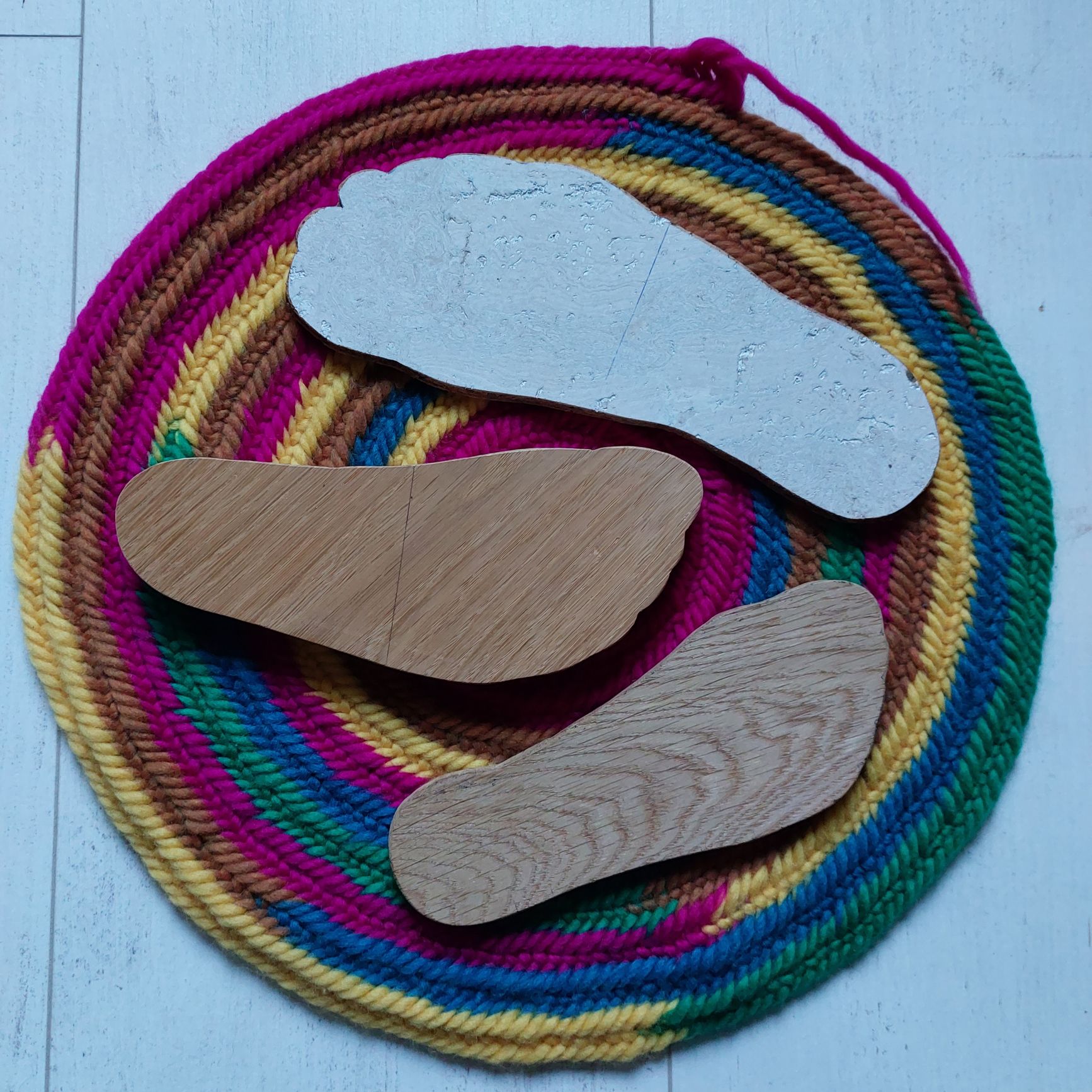
Thin summer socks are made with Fin.stitch 2+2 F2 and start with a row of 20 stitches the with of my toes.
At the end of the row turn around. At the end of the next row you increase 3 stitches.
This is the first and last time that you can see a brand of wool at my foto’s.
I bought the wool myself, no discount because i am not employed by a wool brand.
My independence is very important.
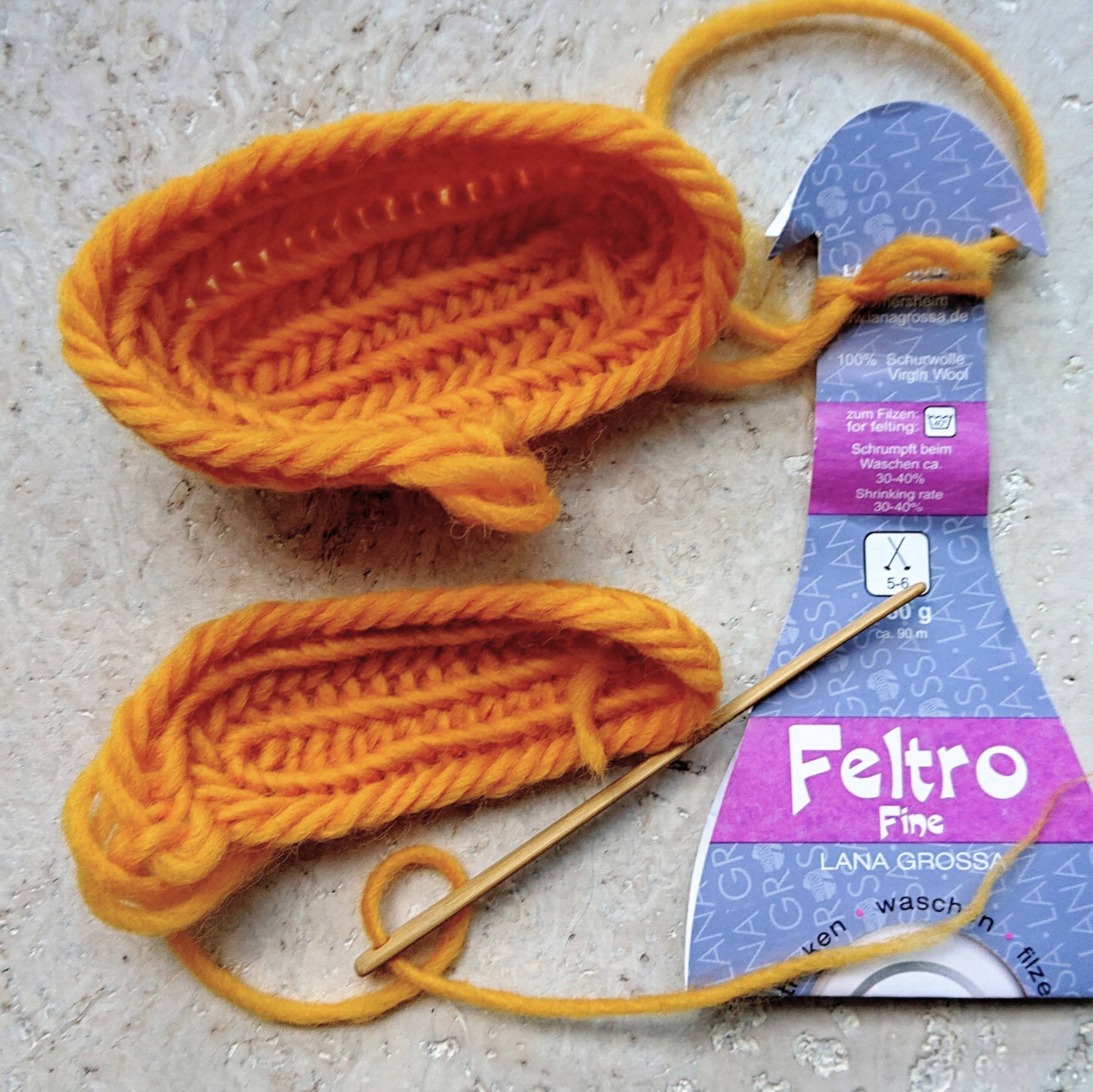
I make an oval start, begin of socks and/or mittens.
I always forget to ask if you’d like to subscribe to my YouTube channel: happy needlebinding If I have a lot of subscribers, I can email magazines to write an article about this wonderful old craft so I can pass it on to the next generation.
Thank you kindly in advance. bert veugelers.
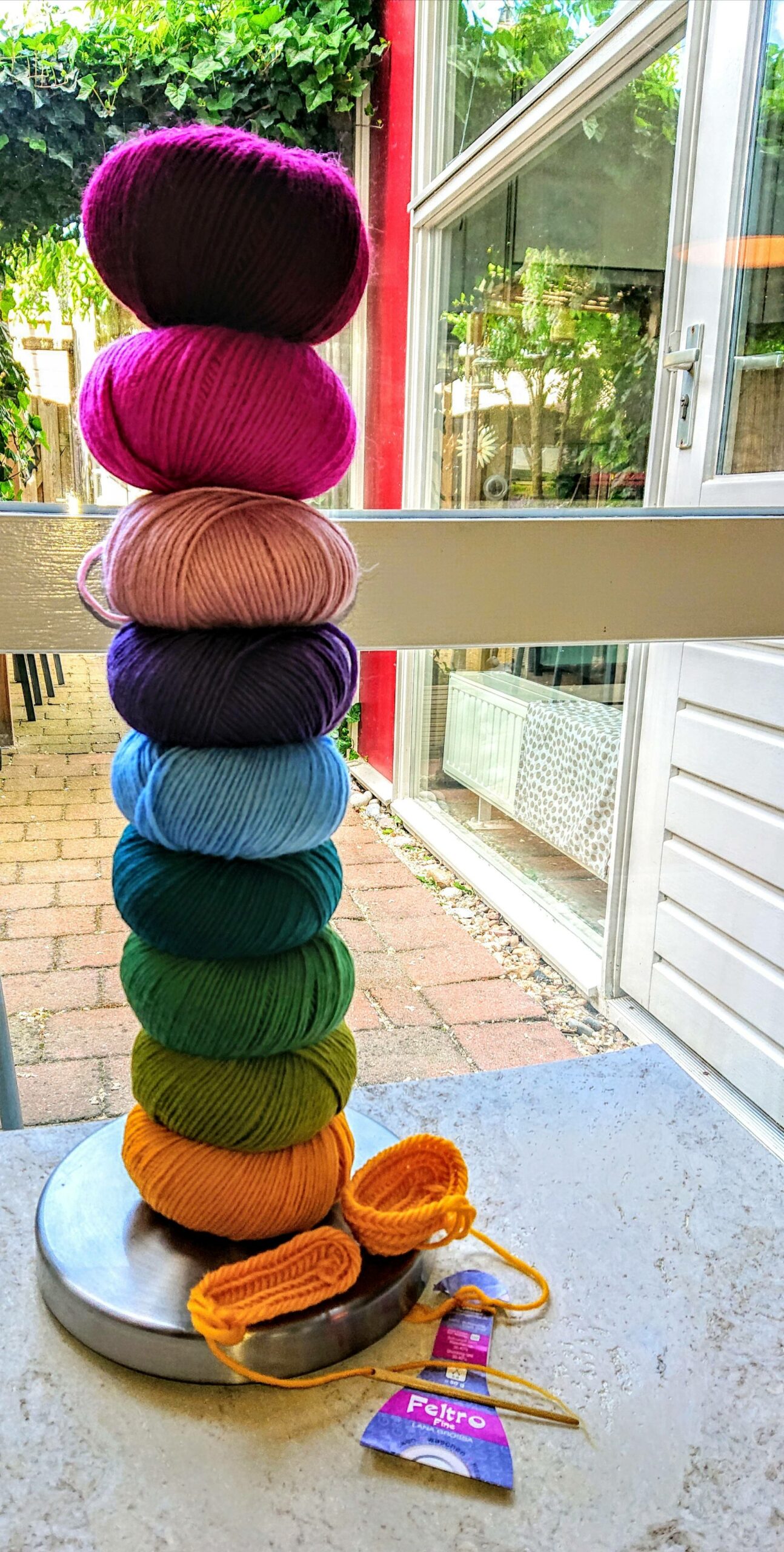
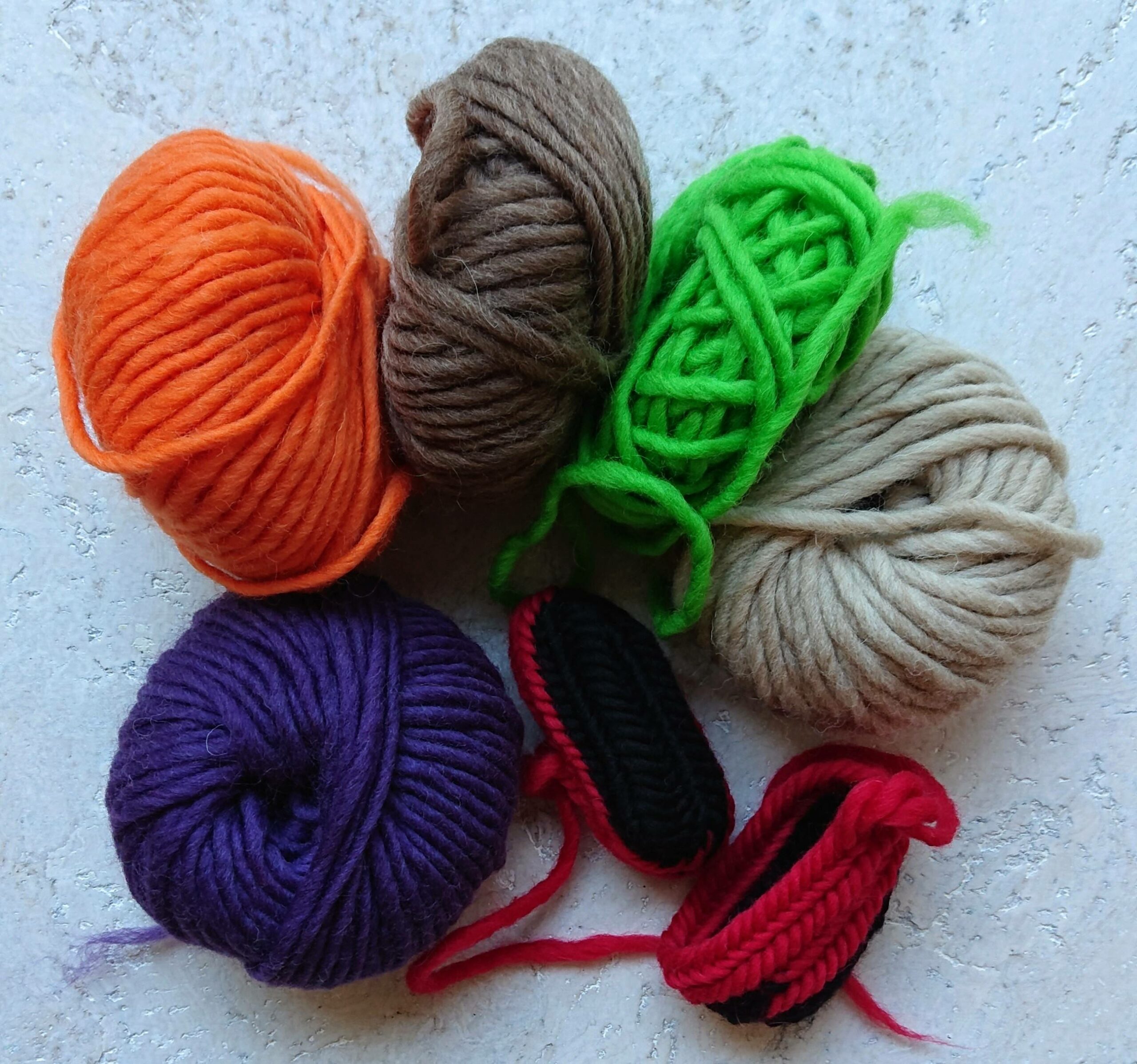
The colors stacked for a while then I remember the order 🙂
Now you increase 2 stitches on both sides of your sock, so that your socks get wider. You regularly try on your sock if they fit.
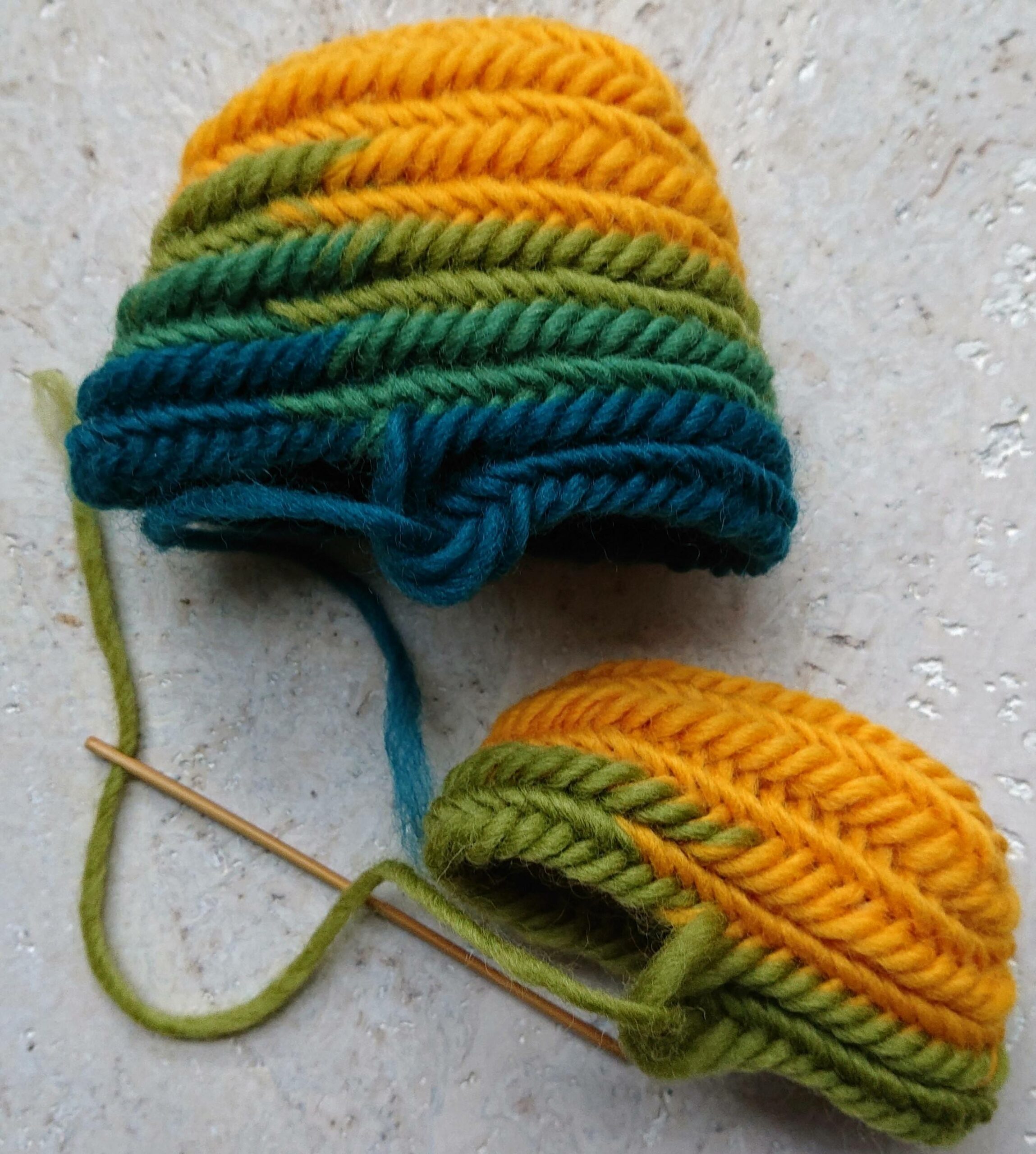
You regularly try on your sock if it fits.
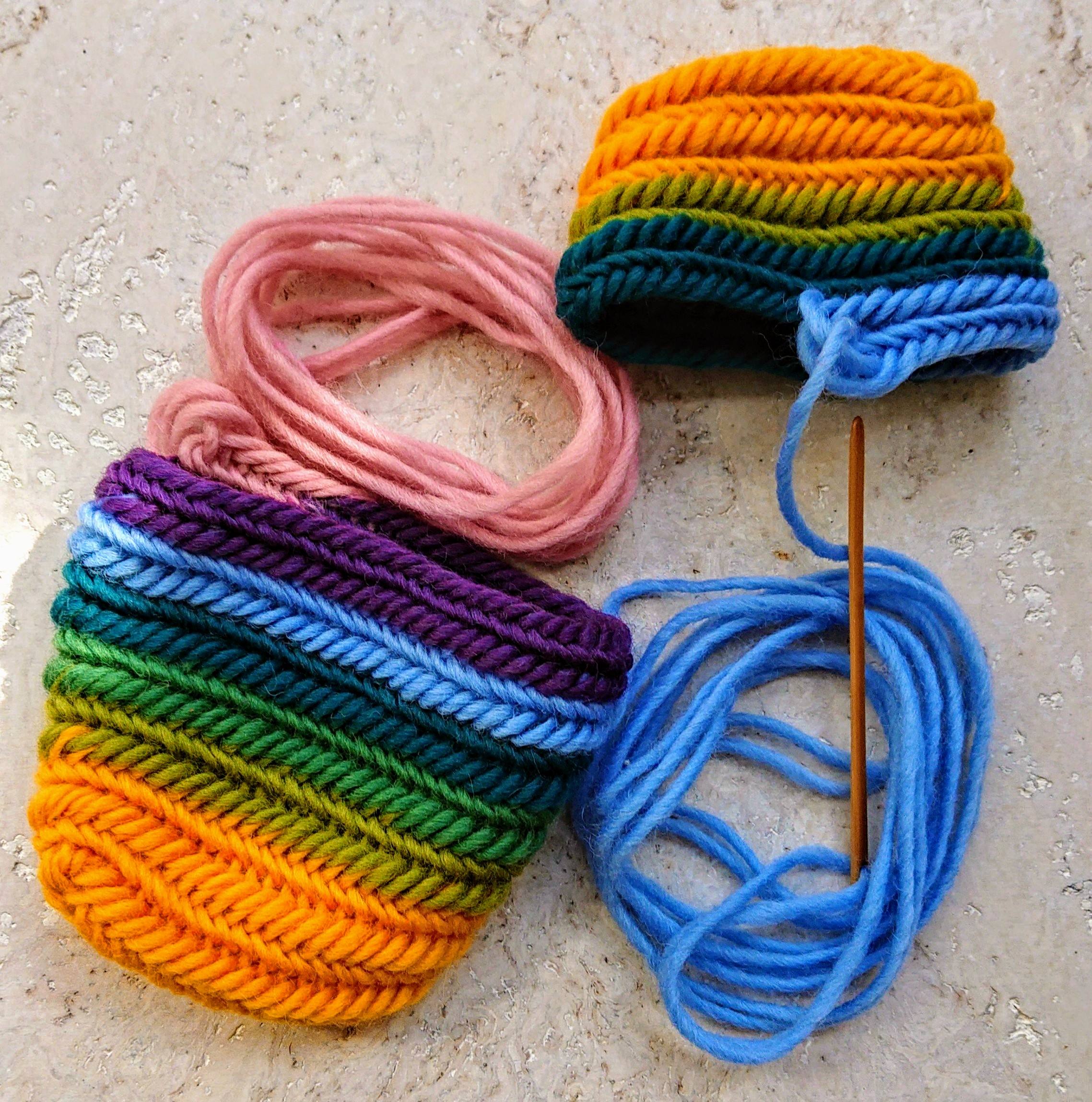
With the blue row you stop with increasing on both sides because you have reached the widest point of your foot.
The length of the foot section is half plus 1 or 2 needle tying rows, this is an approximate ratio. In total I am going to tie 12 rows and then I will make the finger of the foot.
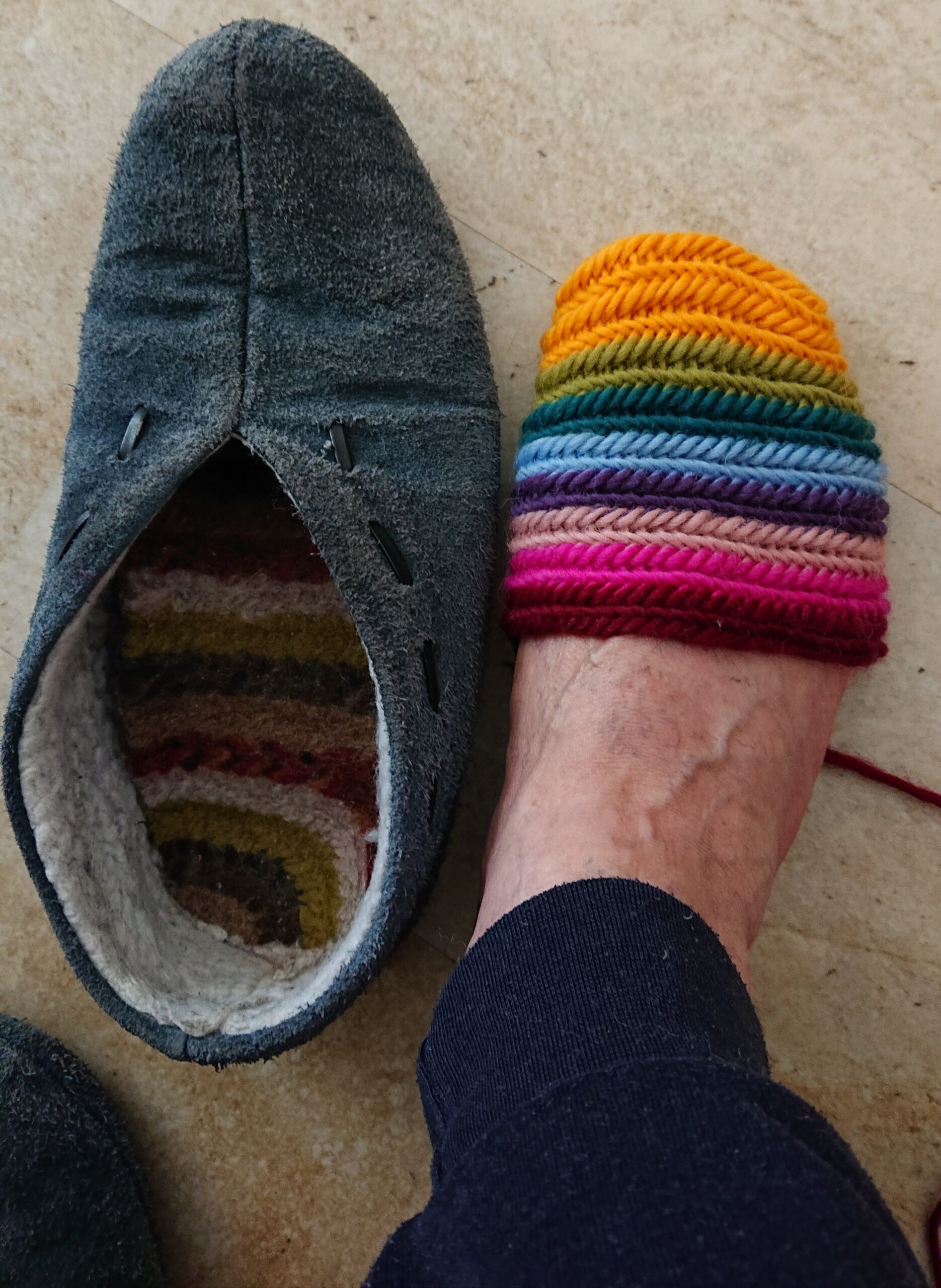
Just a measuring moment.
The bottom of my shoe was a failed sock that was too big after felting and now serves as a 1 cm thick insole. Nice and warm and soft.
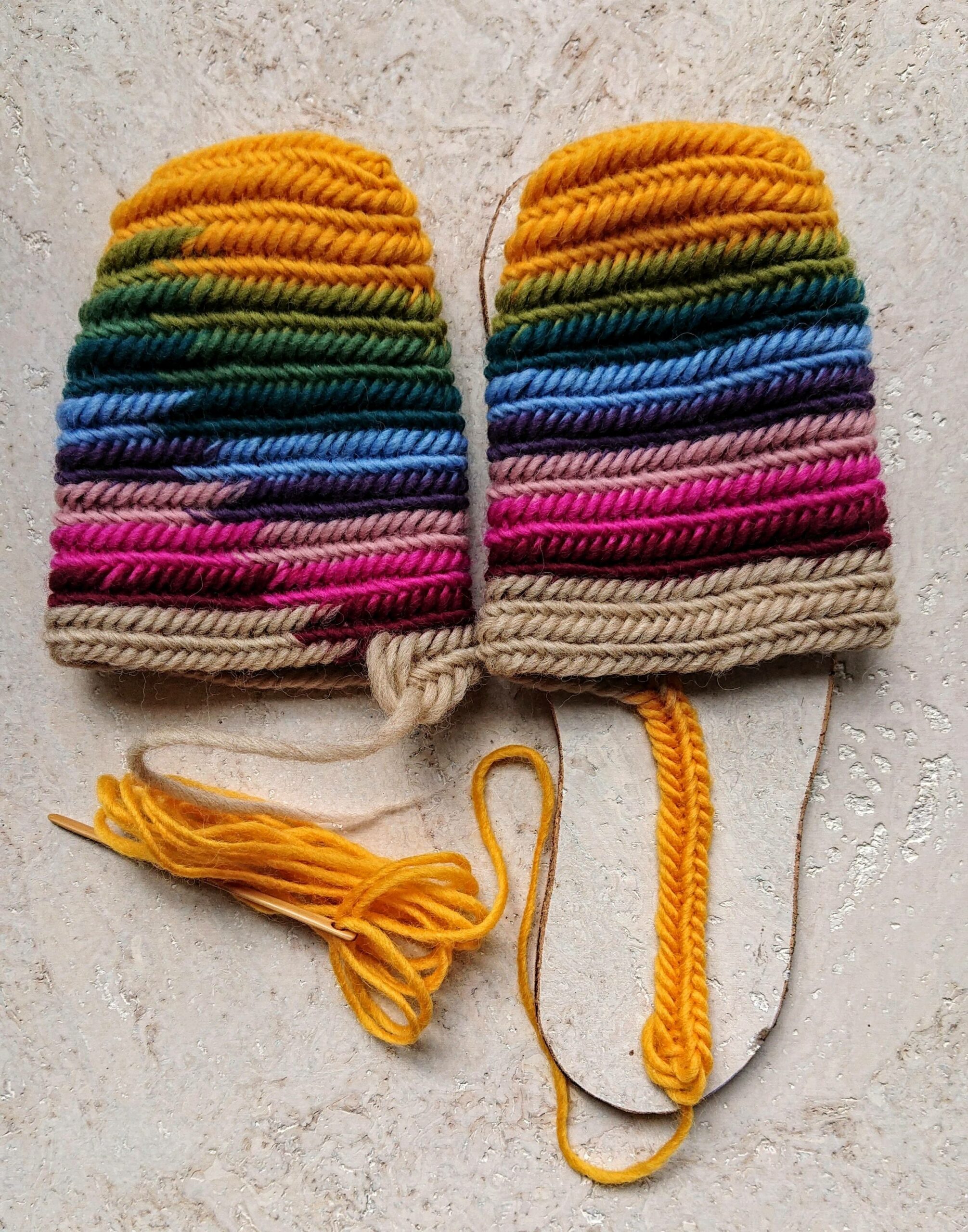
Here you see a single row of stitches they call finger.
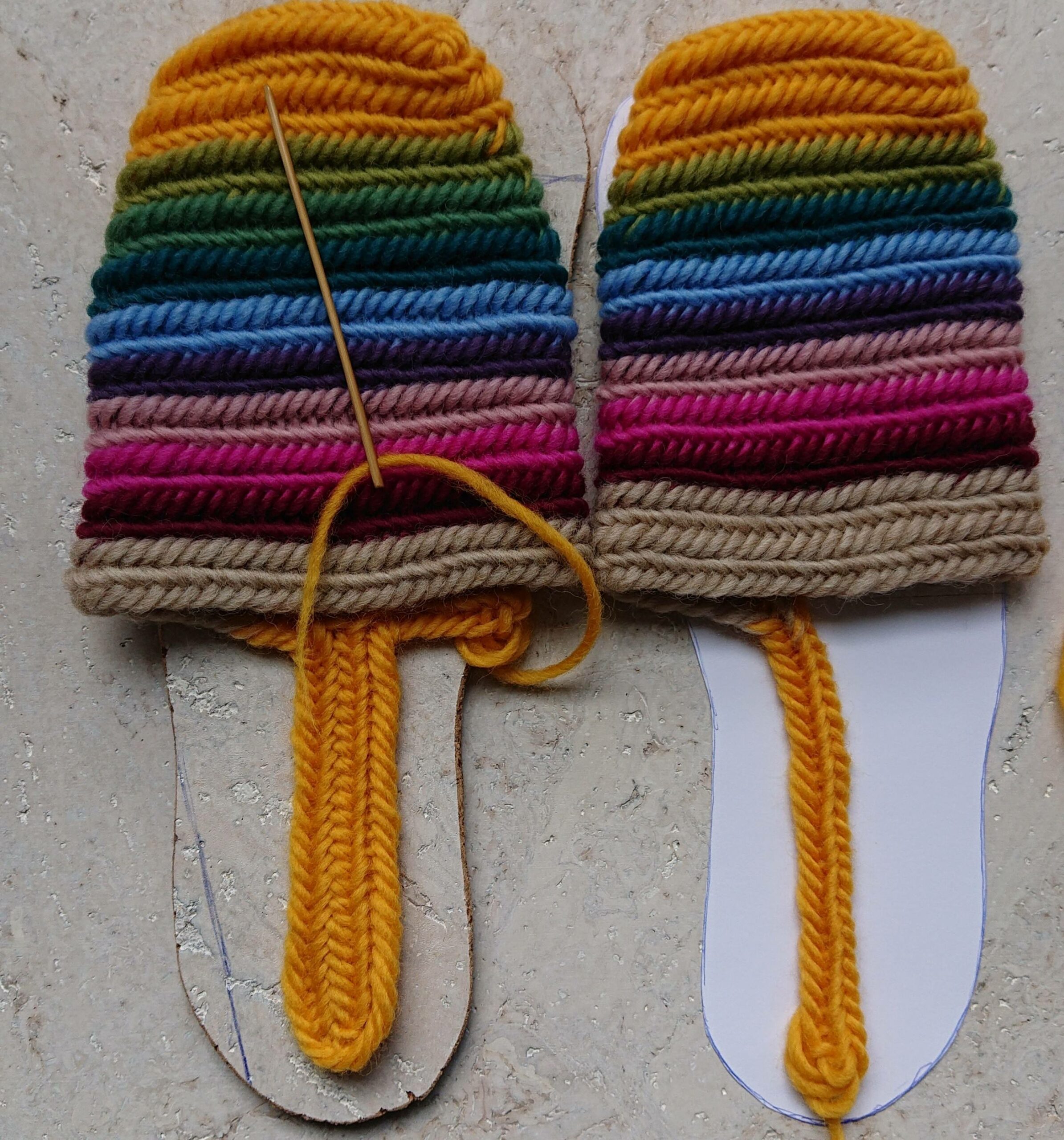
The finger on the left sock is shorter because you made a curf and that is precies what we want because you are going to increase at the top of the finger.
The finger is tied around the needle and fastened again to the foot part and then immediately decrease 3 stitches and continue until you reach the other corner and there you will also decrease 3 stitches.
Then you come to the top of the finger and increase 5 stitches.
In the following rounds you will decrease 5 stitches in the corners.
When you are back at the top of the finger, you will increase 3 stitches and in the corners decrease 5 stitches.
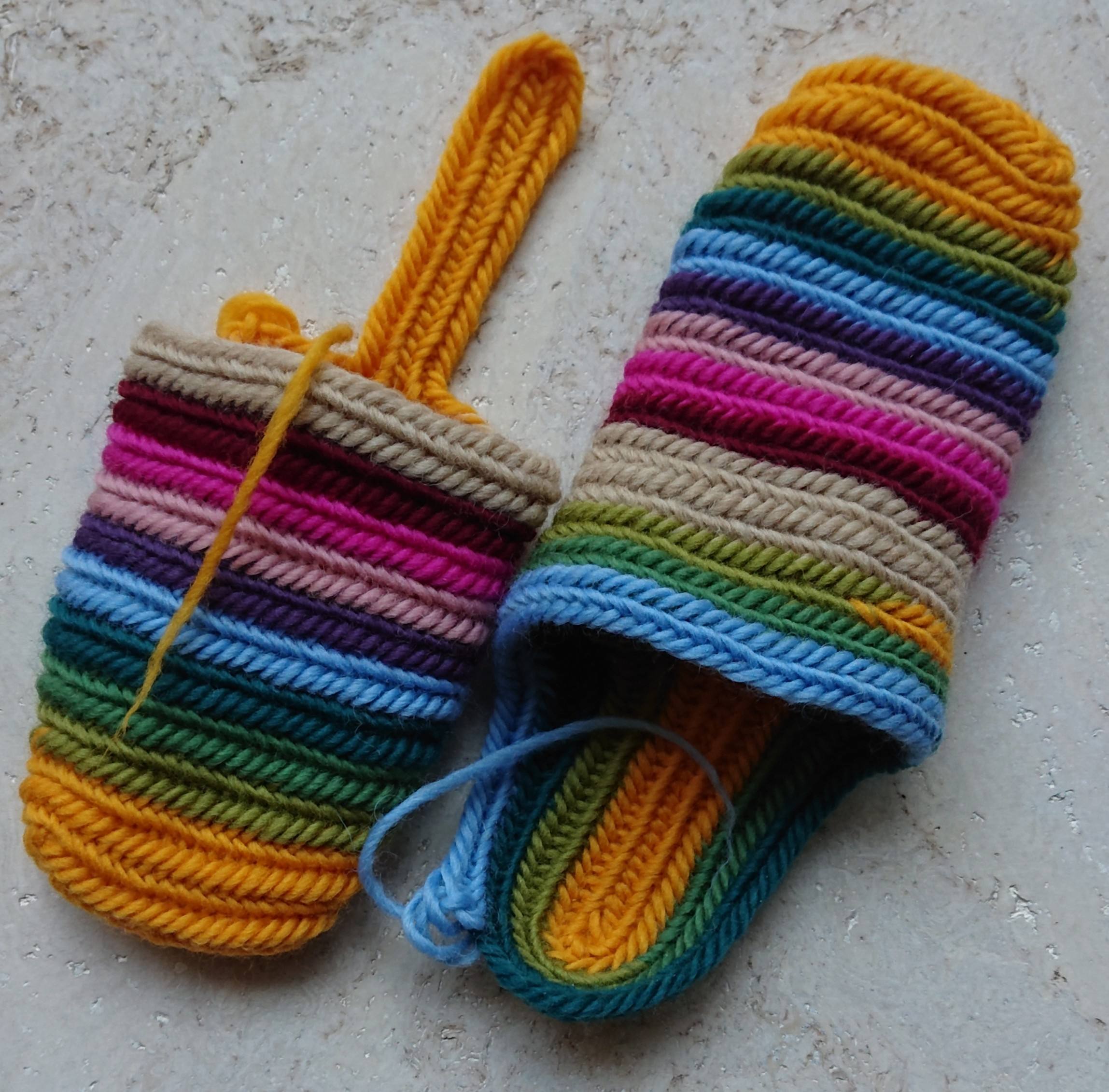
Regularly try on your sock and needlebind as described above.
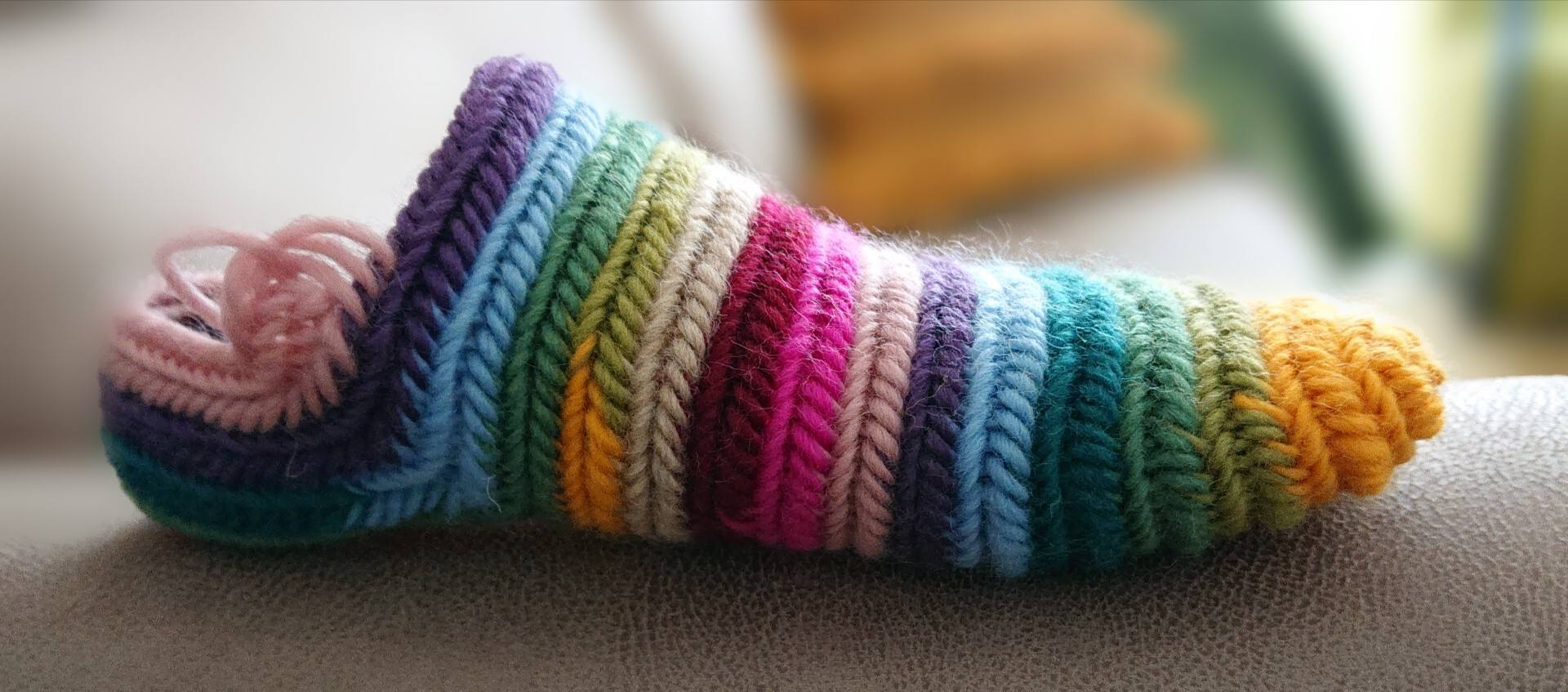
You can already see a bit how the sock is created, it now it looks like a slipper.
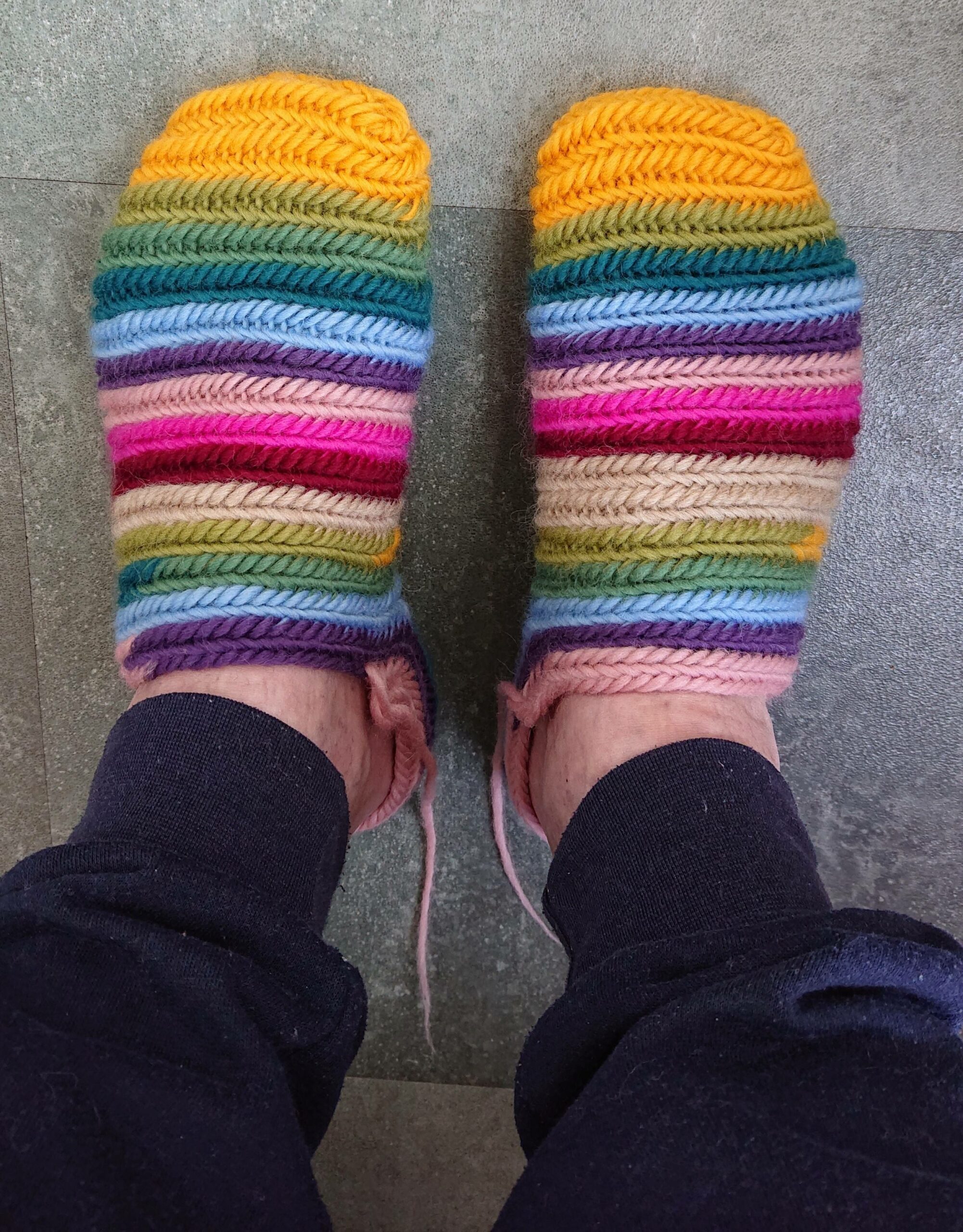
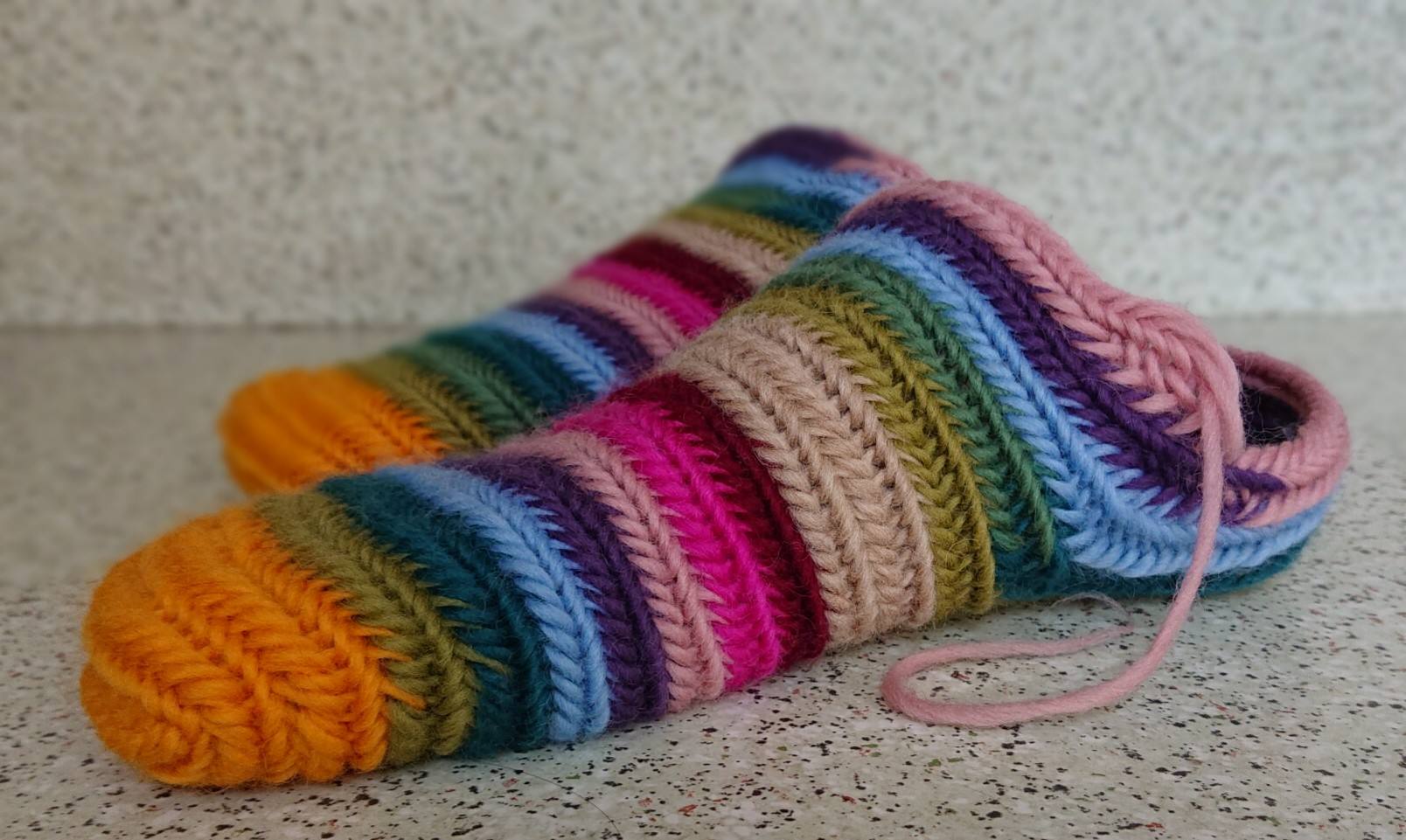
After several rows of needlebinding and fitting I passed the ankle and then needlebinding without decreasing.
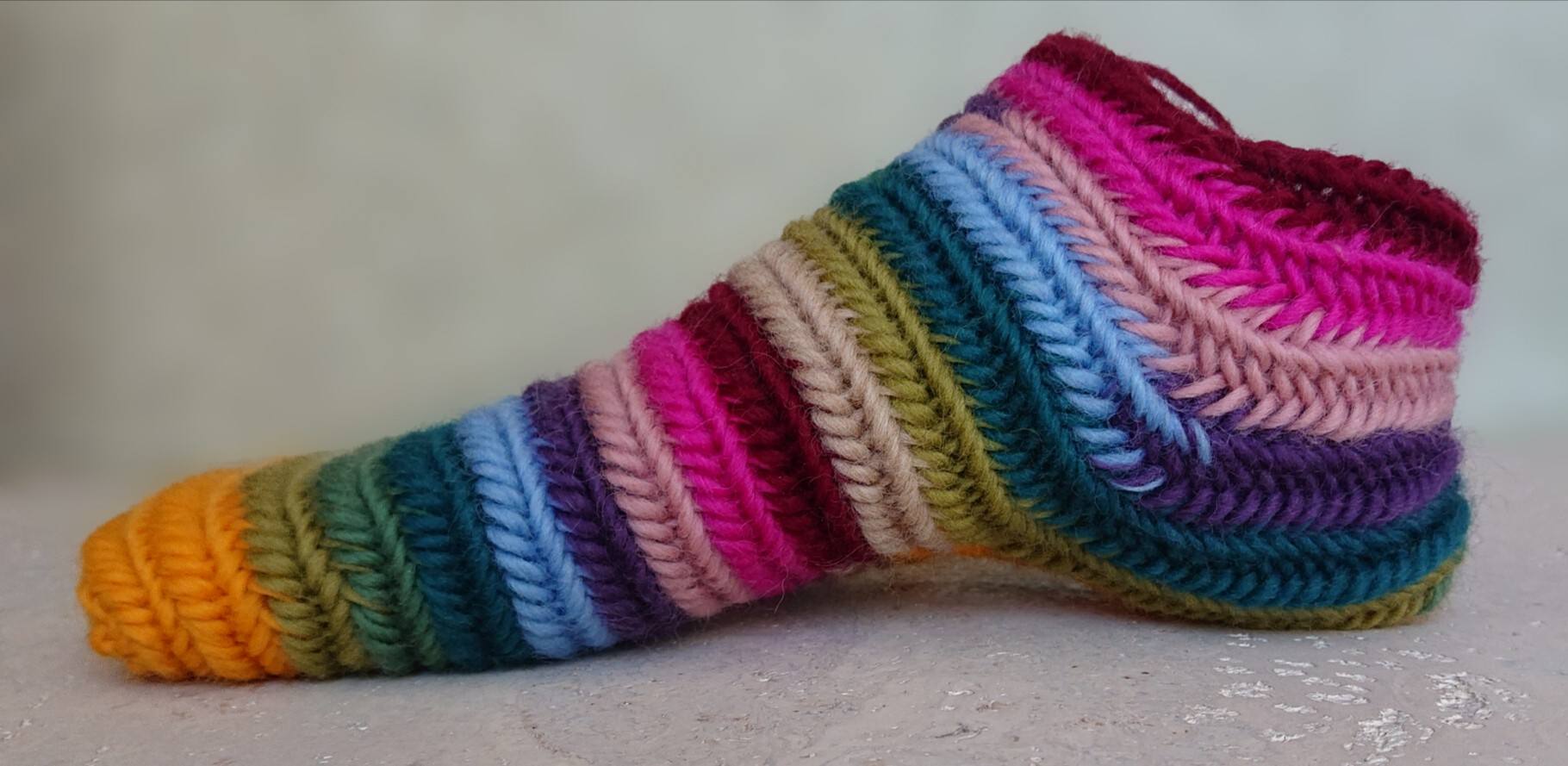
You can choose how long you want to make the sock.