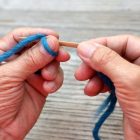
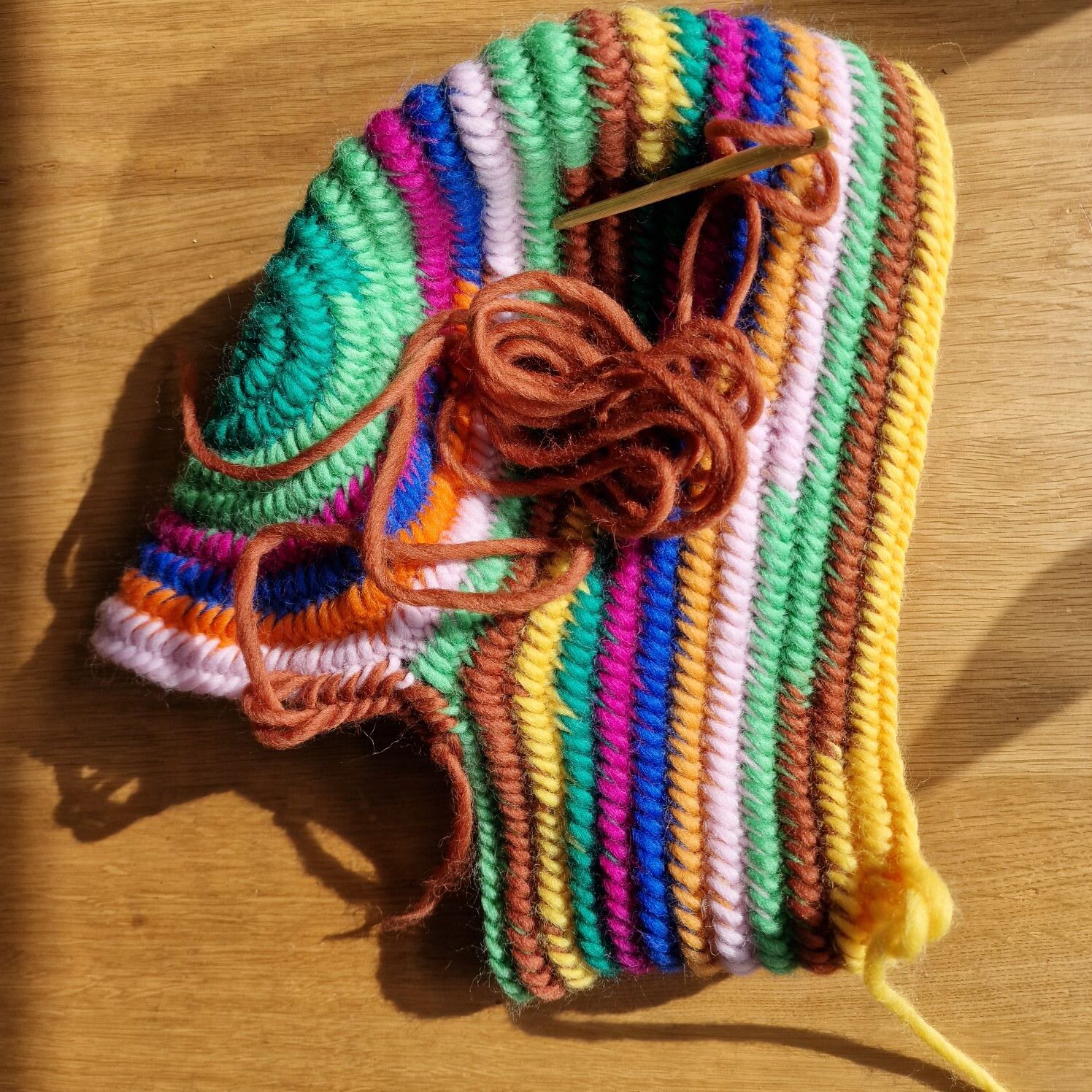
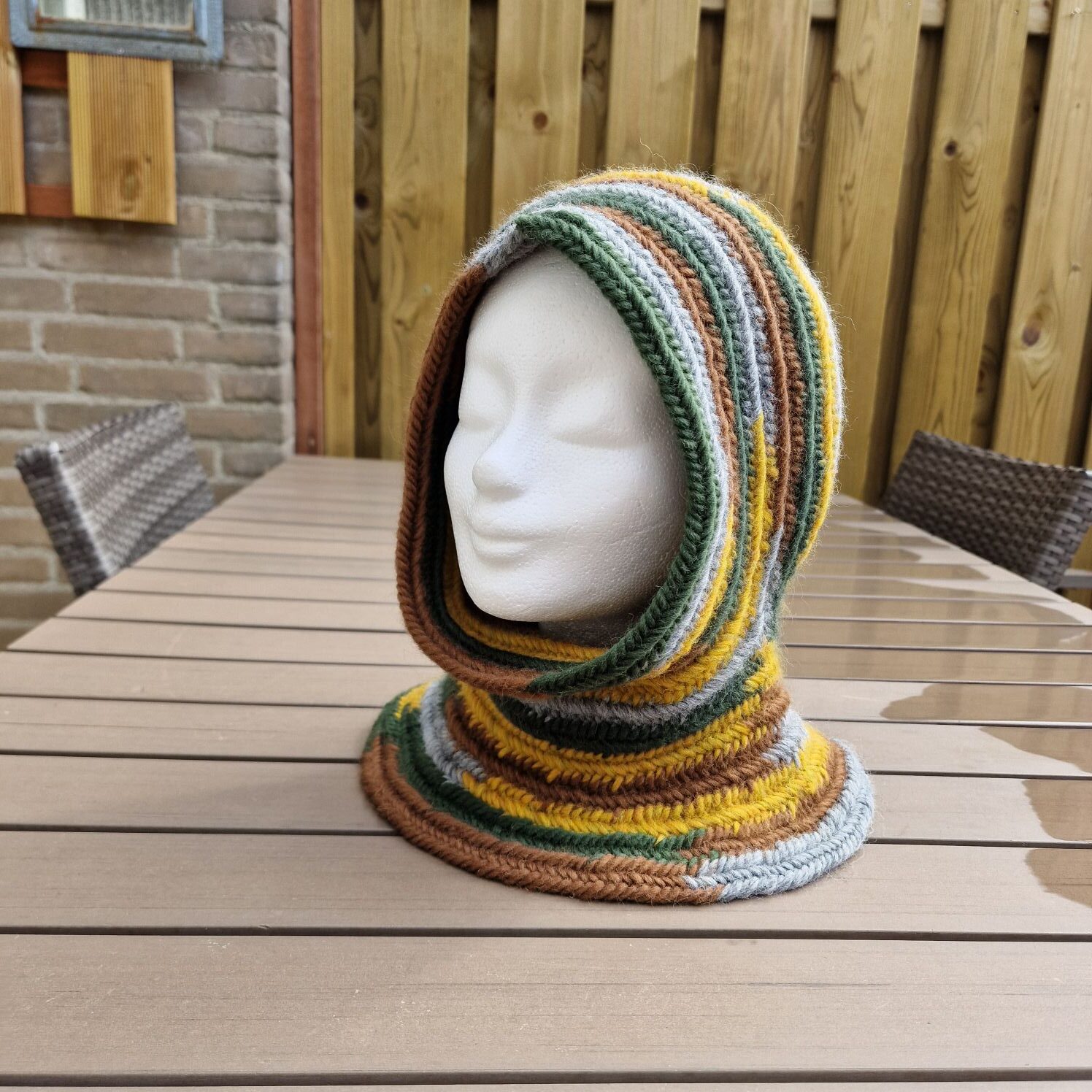
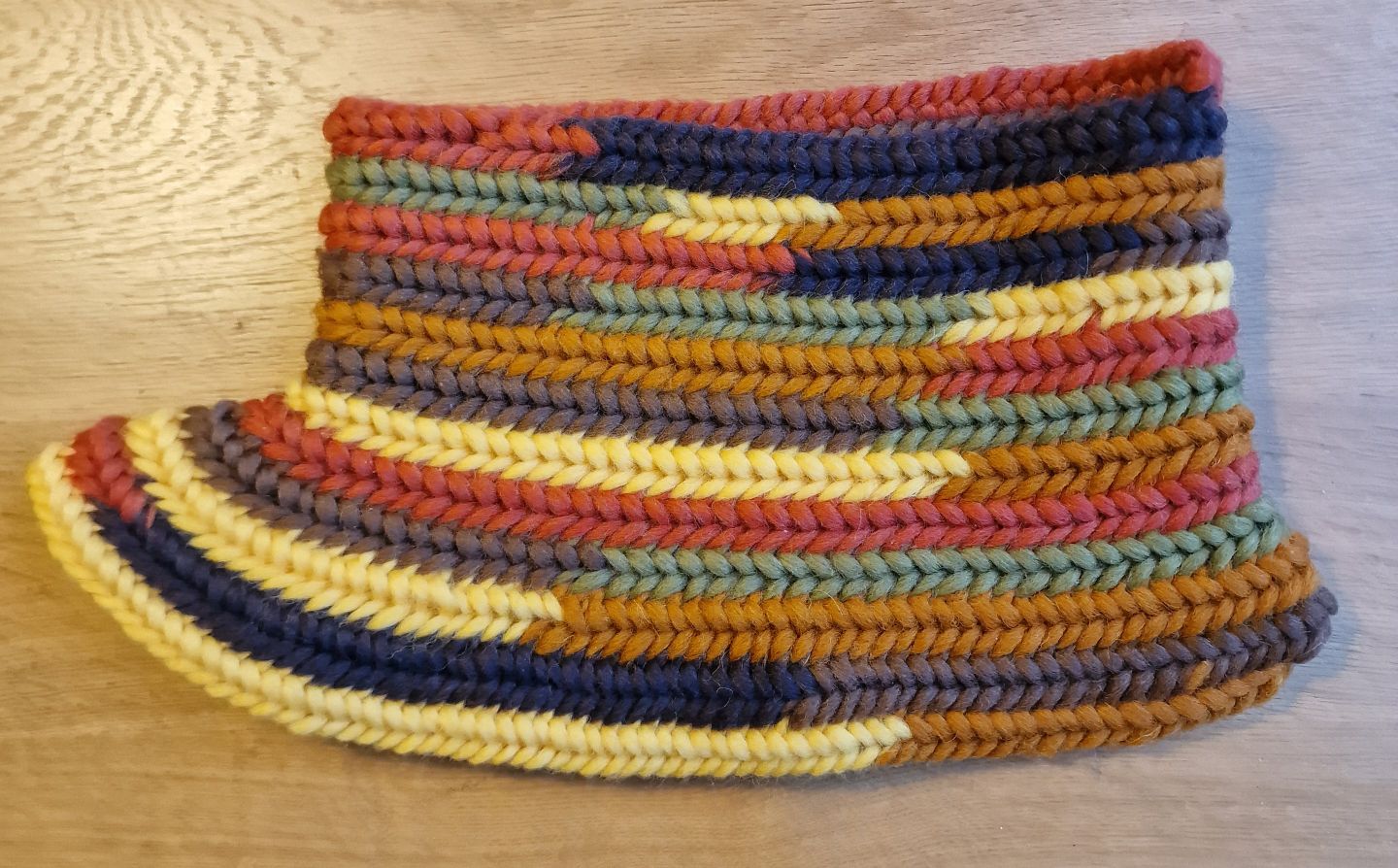
I designed my hood without using scissors and sewing parts together. The hood consists of one piece and I am glad that it worked.
This pattern you can adjust to your own size and shape.
I made this hood on18 februari 2020.
Starting with 17 stitches and needlebind so called magic circle.
I always forget to ask if you’d like to subscribe to my YouTube channel: happy needlebinding. If I have a lot of subscribers, I can email magazines to write an article about this wonderful old craft so I can pass it on to the next generation.
Thank you kindly in advance. bert veugelers.
The stitch that i use is the Fåberg stitch with F2 therefore the fabric becomes more dence.
The first row increase every stitch.
The 2 nd row increase every 2nd stitch.
The 3 nd row increase every 3th stitch and so on.
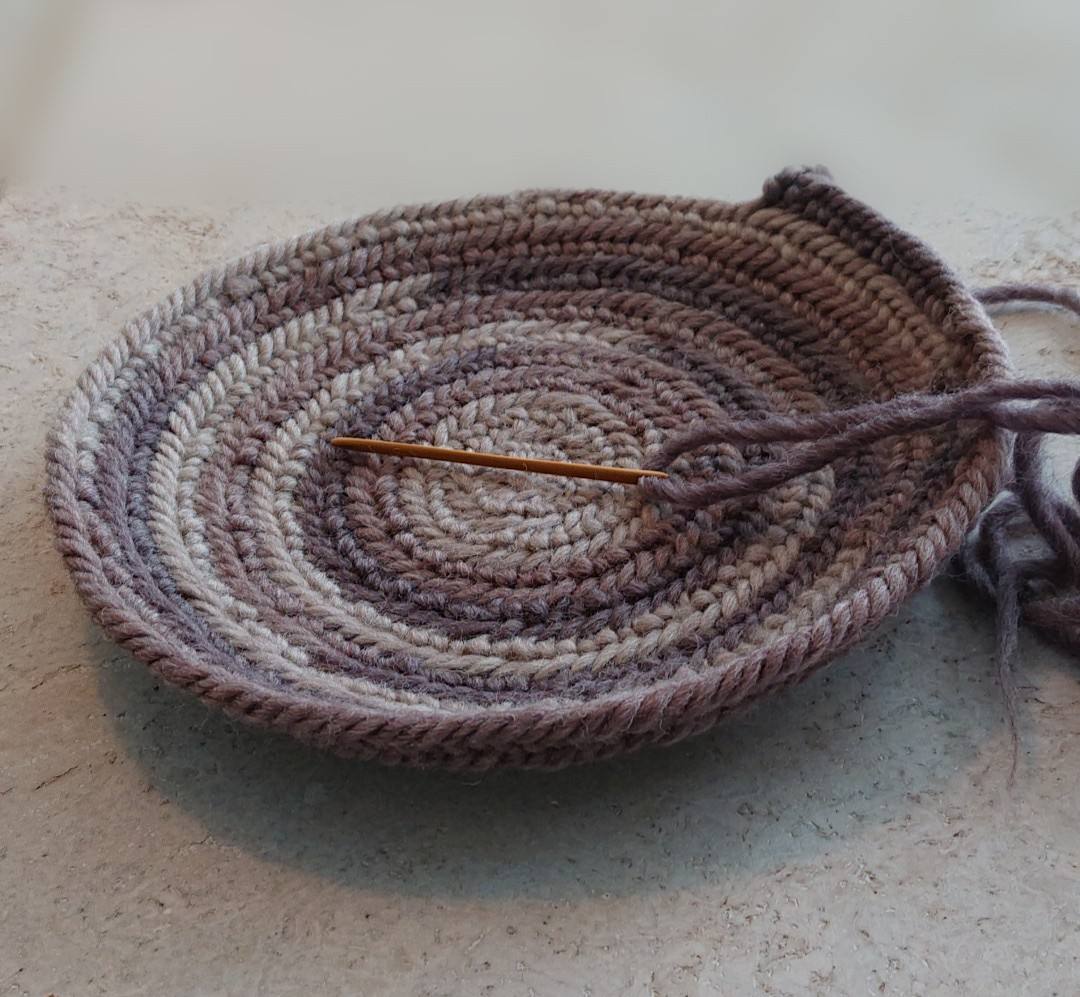
When you reached round 10 you needlebind normal (no increasing).
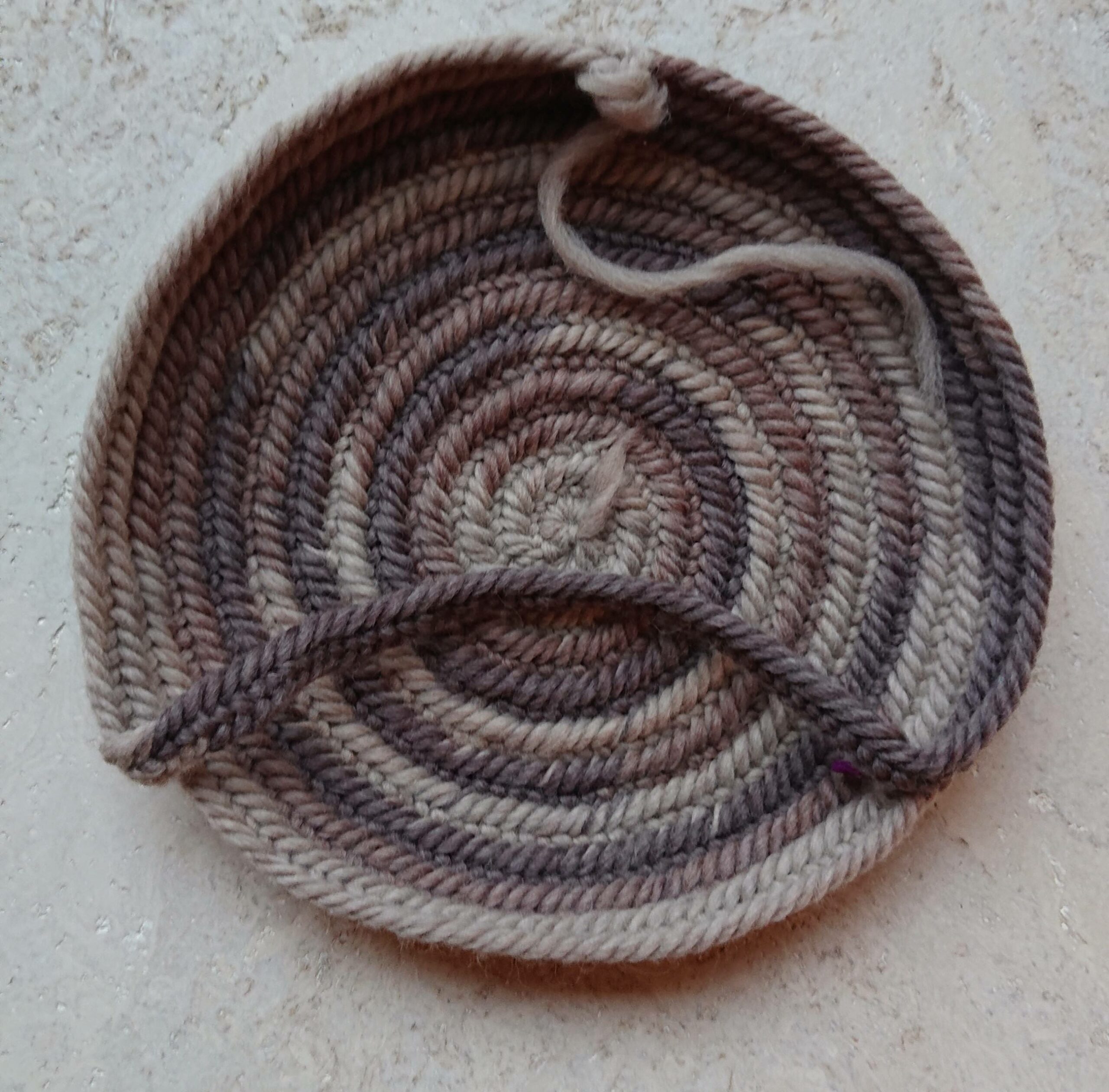
Round 11 needlebind another round normal and then needlebind a loose row and reattached the row stiches.
You have now 144 stitches and the loose row is 42 stitches.
The length of the loose row is half the circumference of your head.
You have to put your head through it.
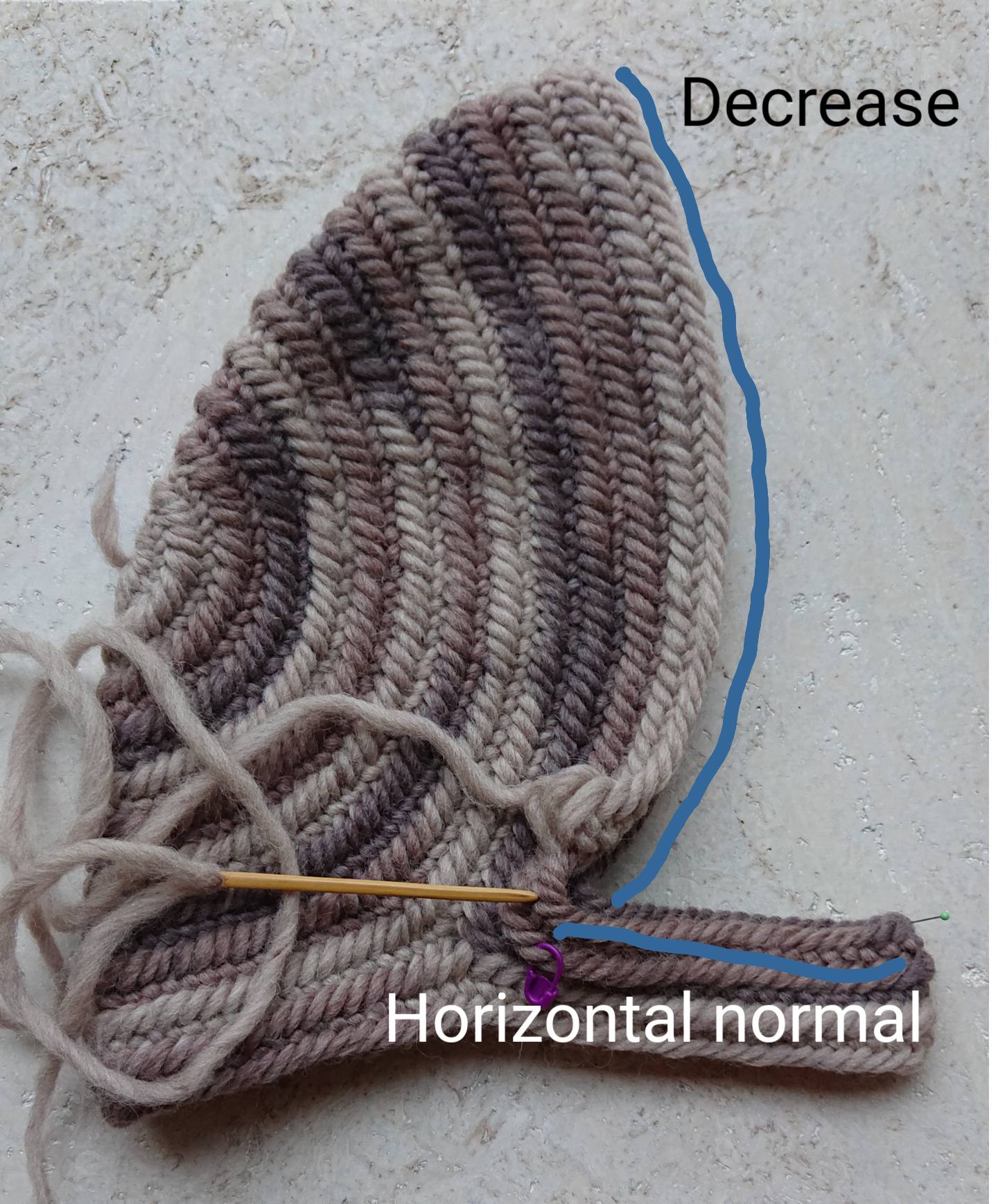
To make the front of the your hood you have to decrease.
To start in the corners (needlepoint) i decrease 2 stitches two rows, to make the corners less sharp.
The horizontal part i needlbind straight for 3 rows, and then i decreased with the same number as the vertical part.
In the vertical curve (the blue strip) 8 stitches normal and 9nd decrease.
The vertical curve 7 stitches normal and 8nd decrease.
Messure if the hood is small enough, if not continue.
The vertical curve 6 stitches normal and 7nd decrease.
Now mesure if it is big enough, you can of course make the size of the hood, what you like, needlebind some more or less rows.
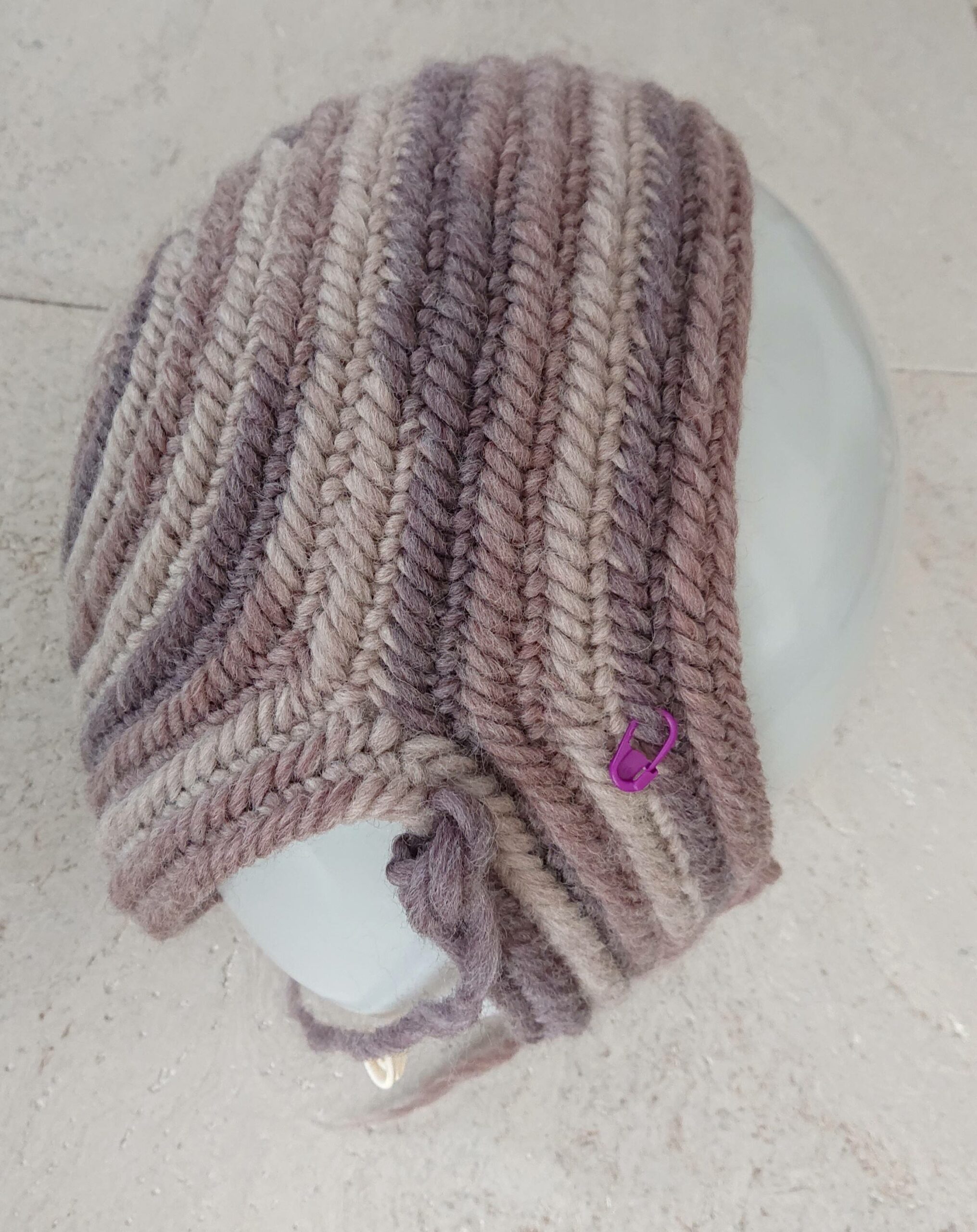
Nalbinding the neck.
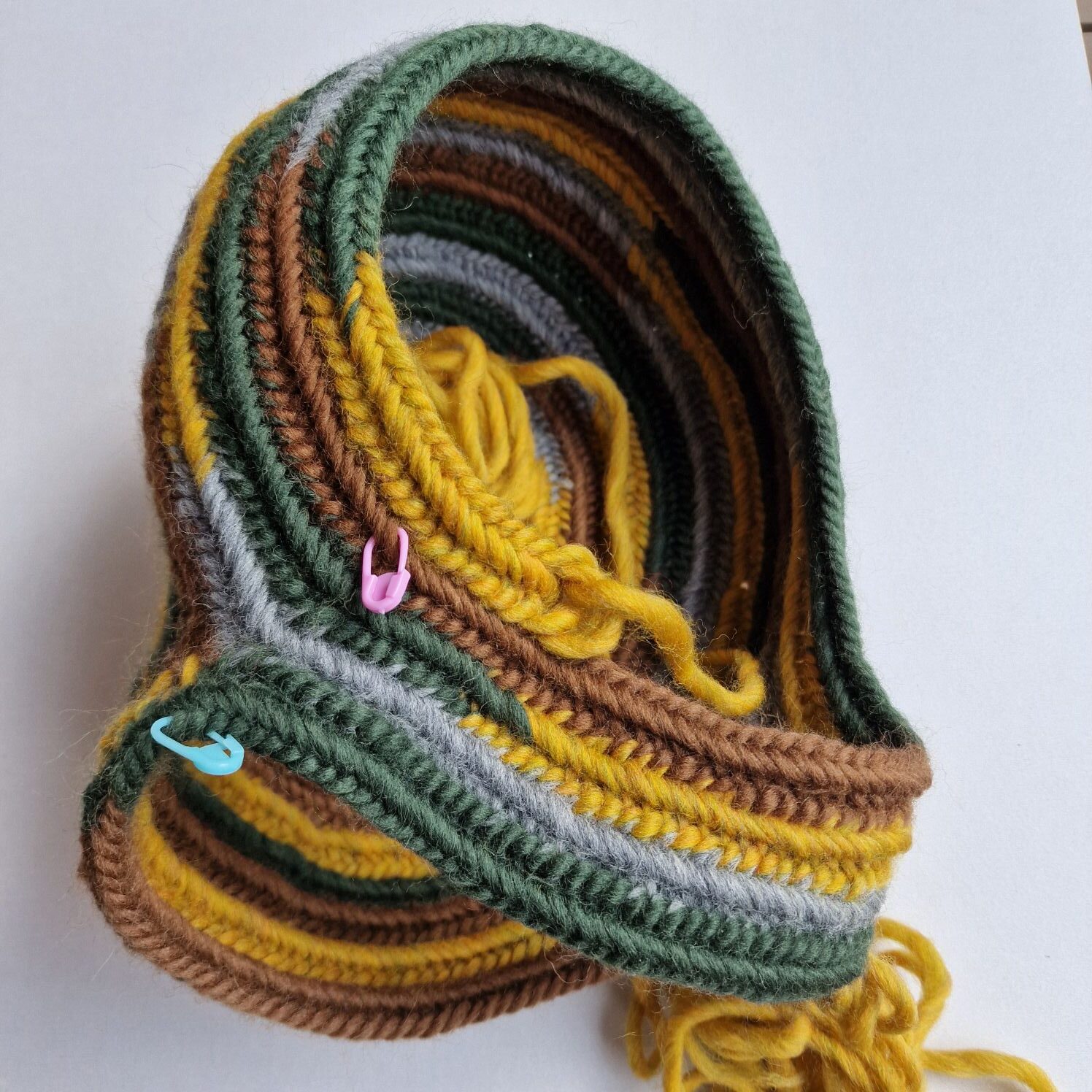
Make a new thread on the edge of the new created small circel and needlebind this first row of the neck of the hood normal.
When this row is ready measure if your head gets through.
The first rows of the neck needlebind normal, measure it, is it to short then needlebind another row.
Nalbinding the shoulder.
Now you are going to increase the neck towards the shoulder.
Next row needlebind 5 stitches normal and the 6 stitch increase.
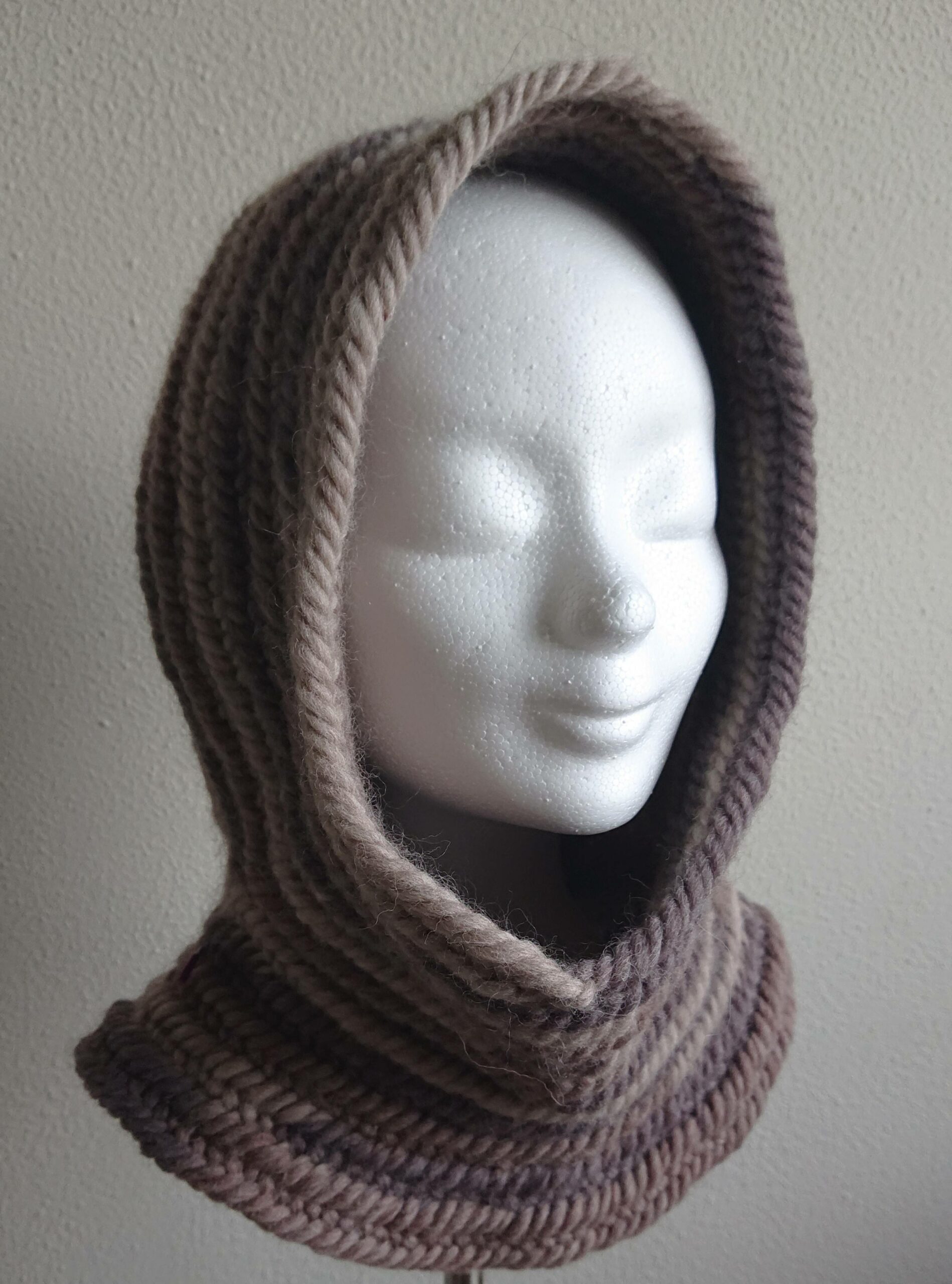
Next row 6 stitches normal and the 7 stitch increase and so on, until it is big enough for you.
Here you see another project of making a hood, with the same patern as above.
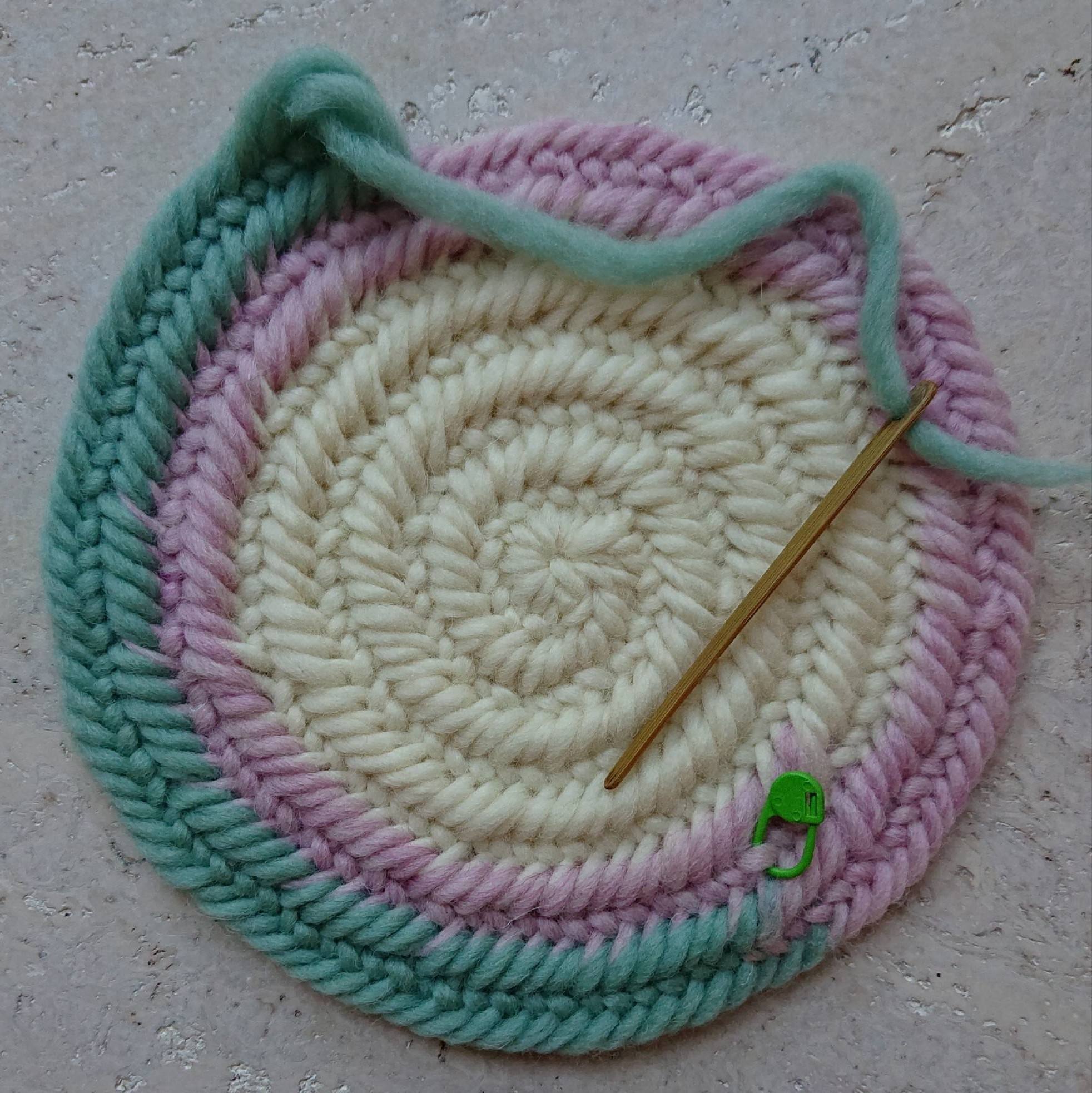
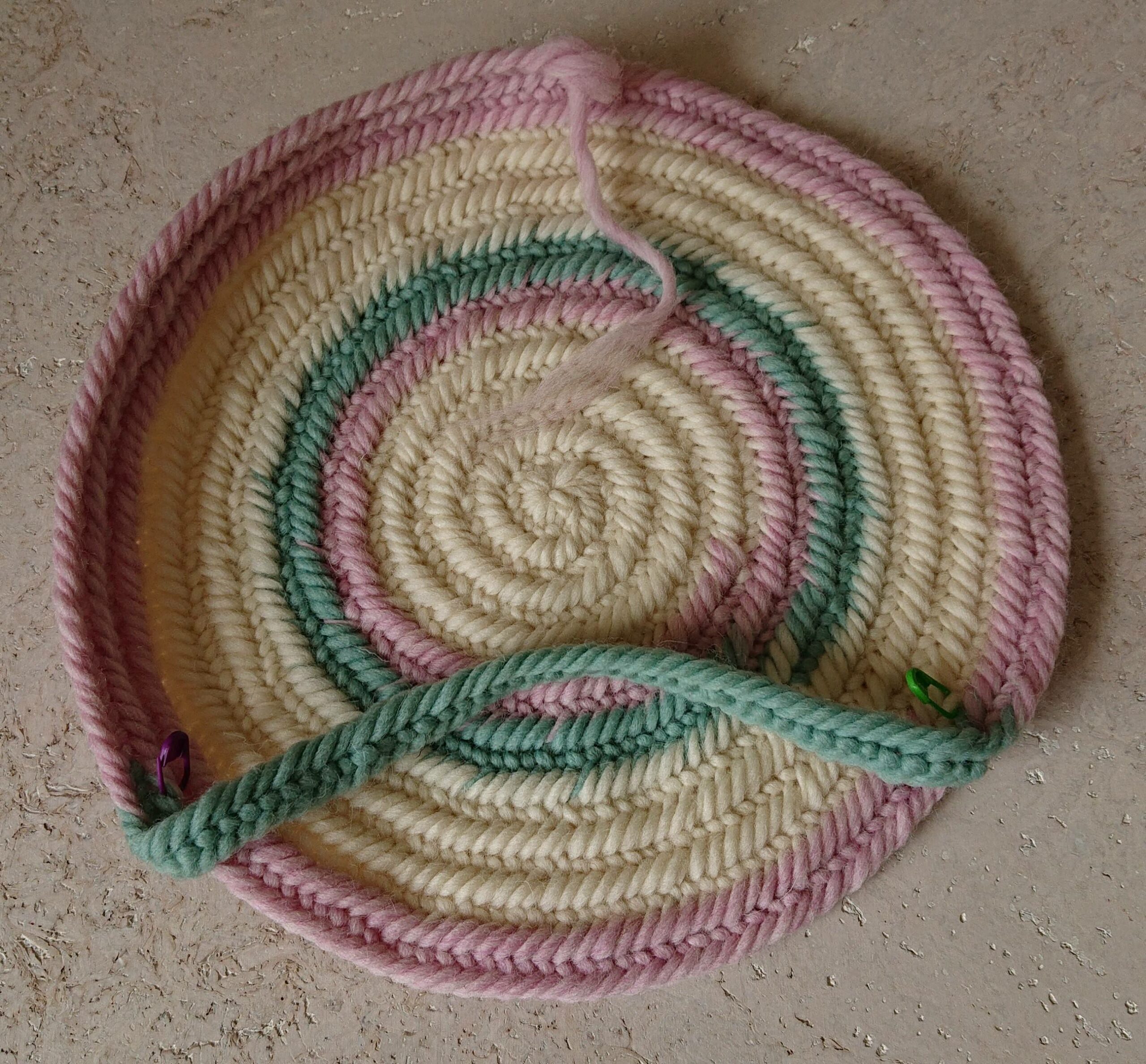
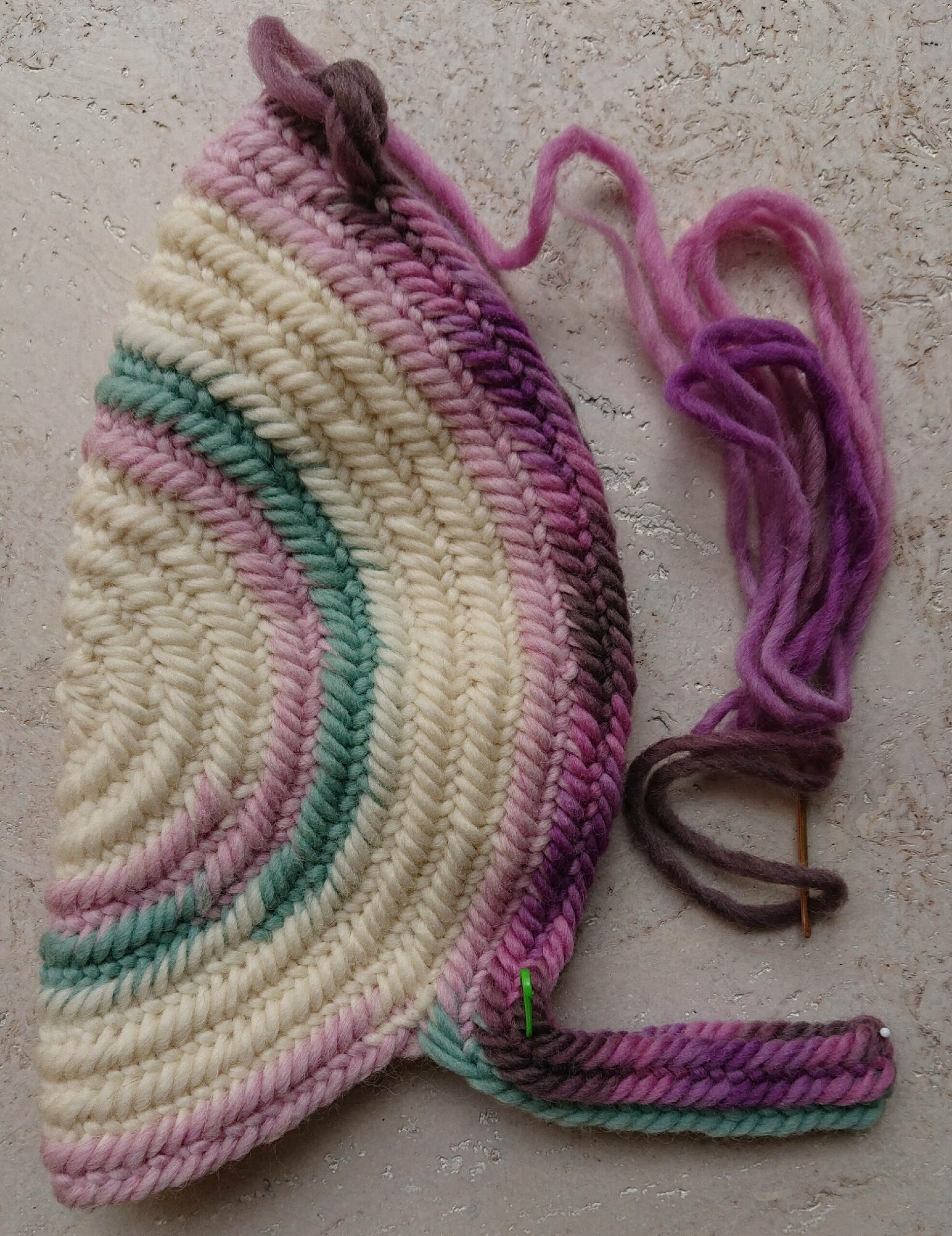
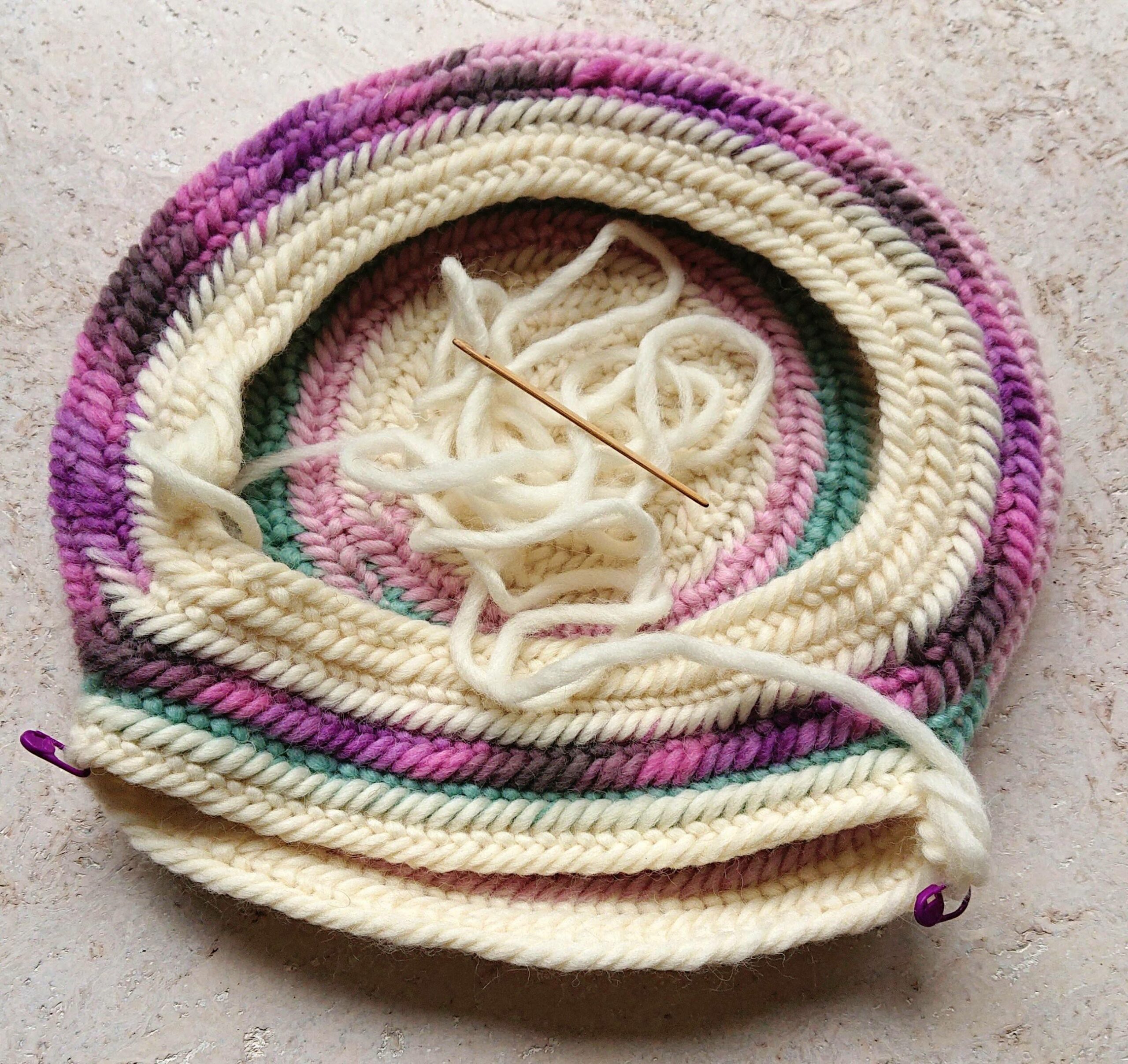
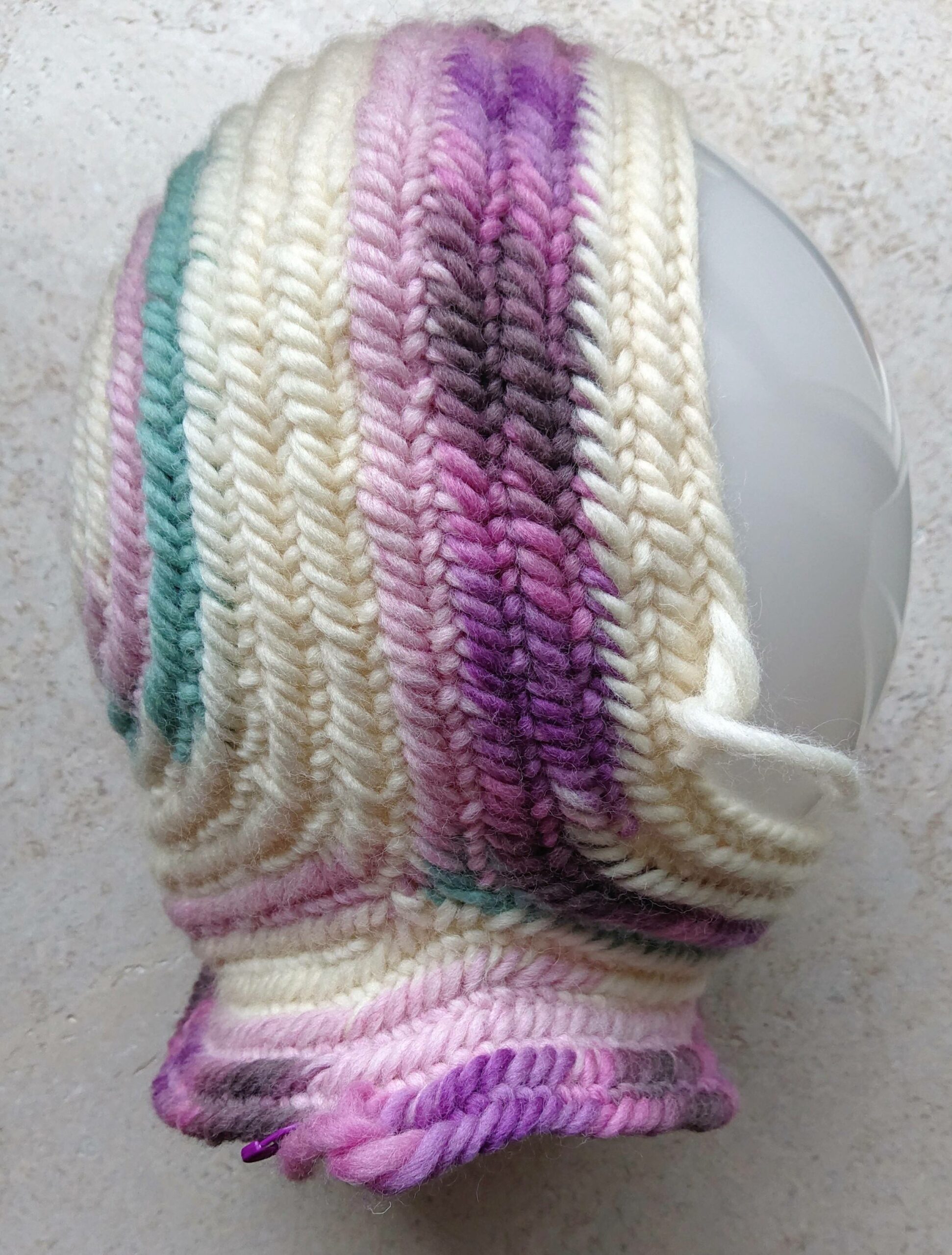
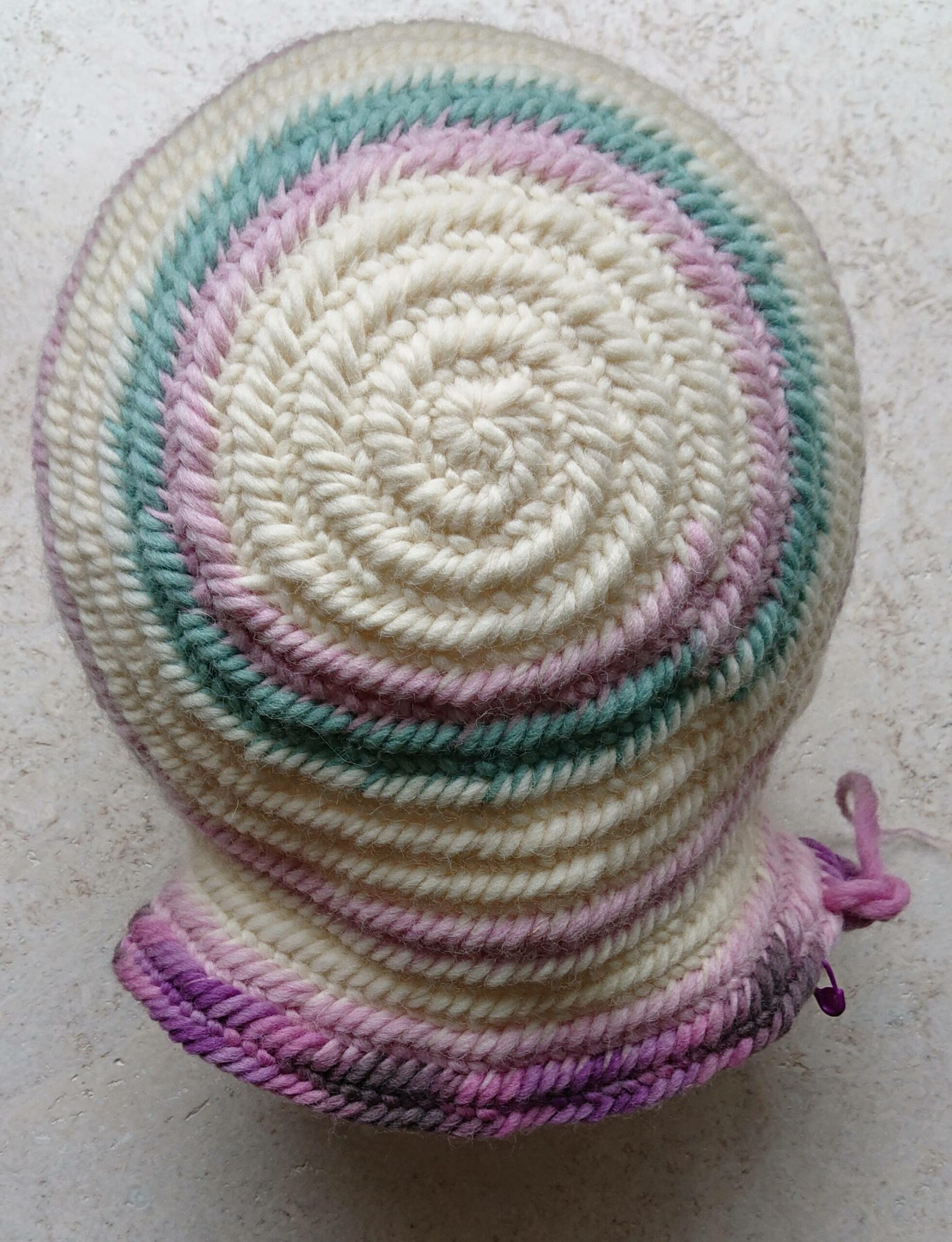
The 2nd hood is another project where the photos are a help for the next Hood (the colors of the wool are no longer for sale).
Today is March 29, 2024 and my new Hood is ready.
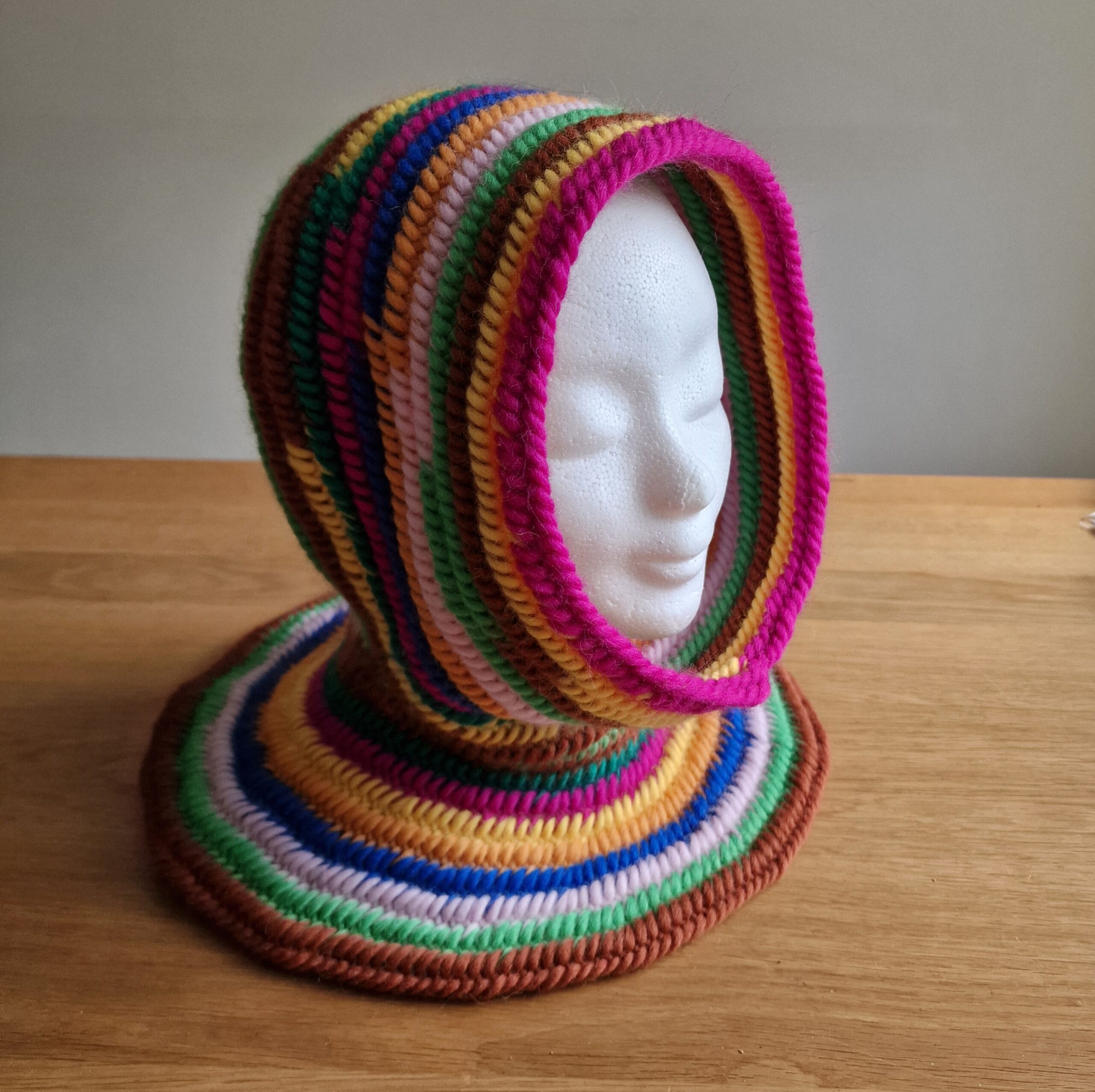
I needle-bound this Hood with a variation of the Asle stitch and with connecting stitch F2.
The wool thickness is approximately 4mm. and I made a cast on of 18 stitches and then started in the round.
Starting 16 stitches is actually better because the fabric had a little wave
After you have closed the circle, place a stitch marker so you know when the circle starts and ends.
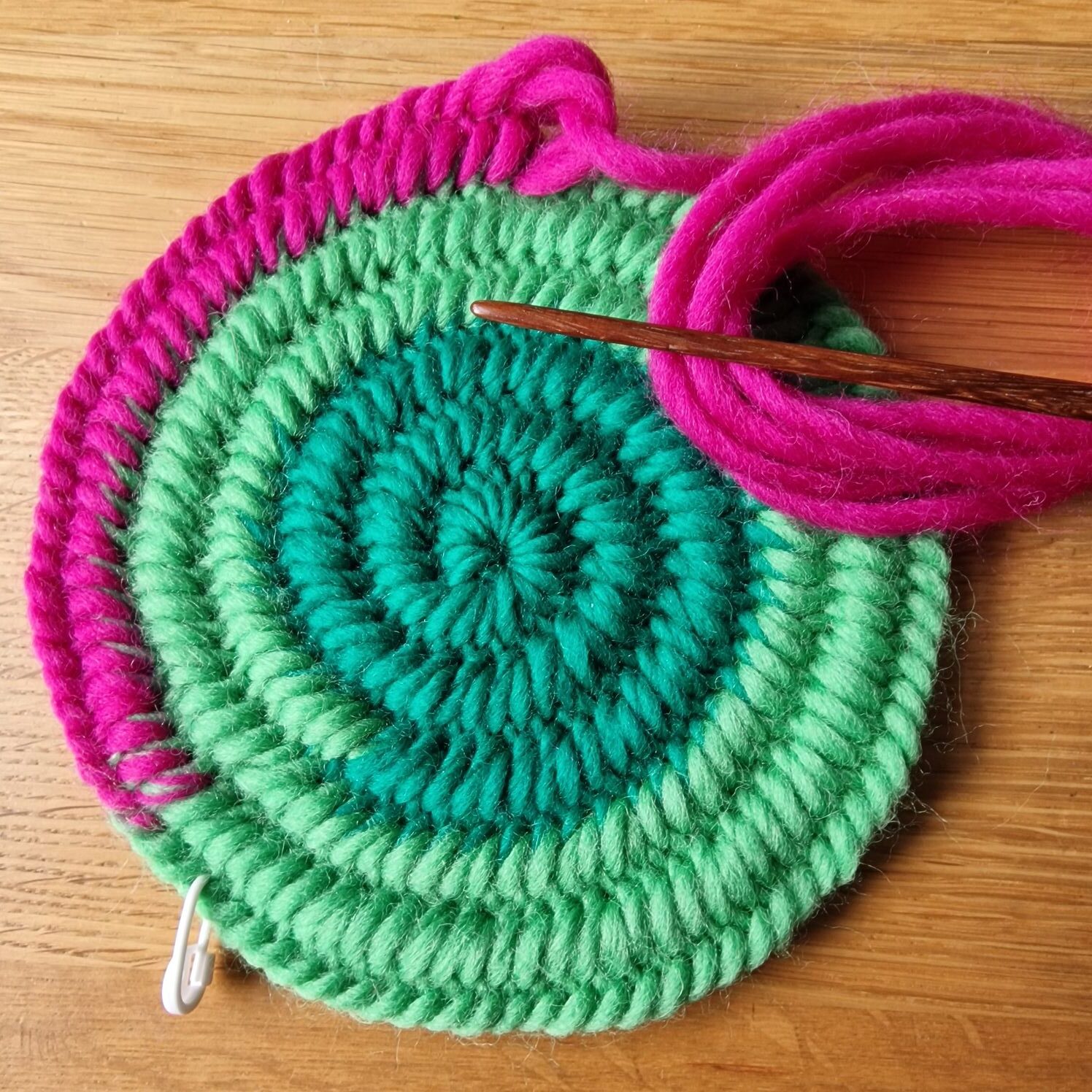
The pattern is as follows:
First round increase all stitches.
2nd round, make 1 stitch and increase the 2nd stitch.
3th rounds of 2 stitches and increase the 3rd stitch.
4th round just 3 stitches and the 4th stitch increase.
5th round, make 4 stitches plain and increase the 5th stitch.
6th round 5 stitches plain and the 6th stitch increases.
7th round, 6 stitches plain and the 7th stitch increase.
8th round, nalbind 7 stitches and increase the 8th stitch.
9 th round nalbinding round all stitches plain.
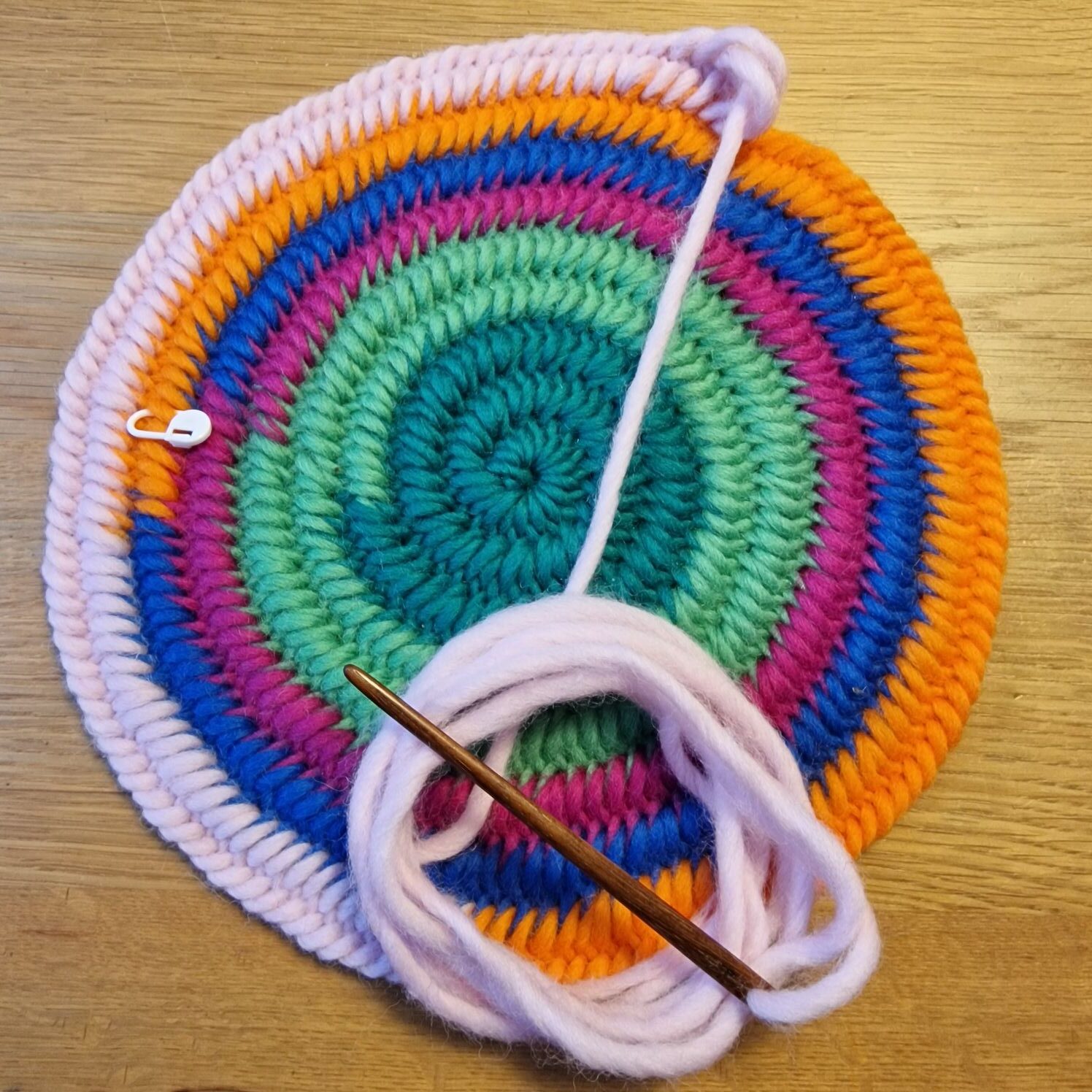
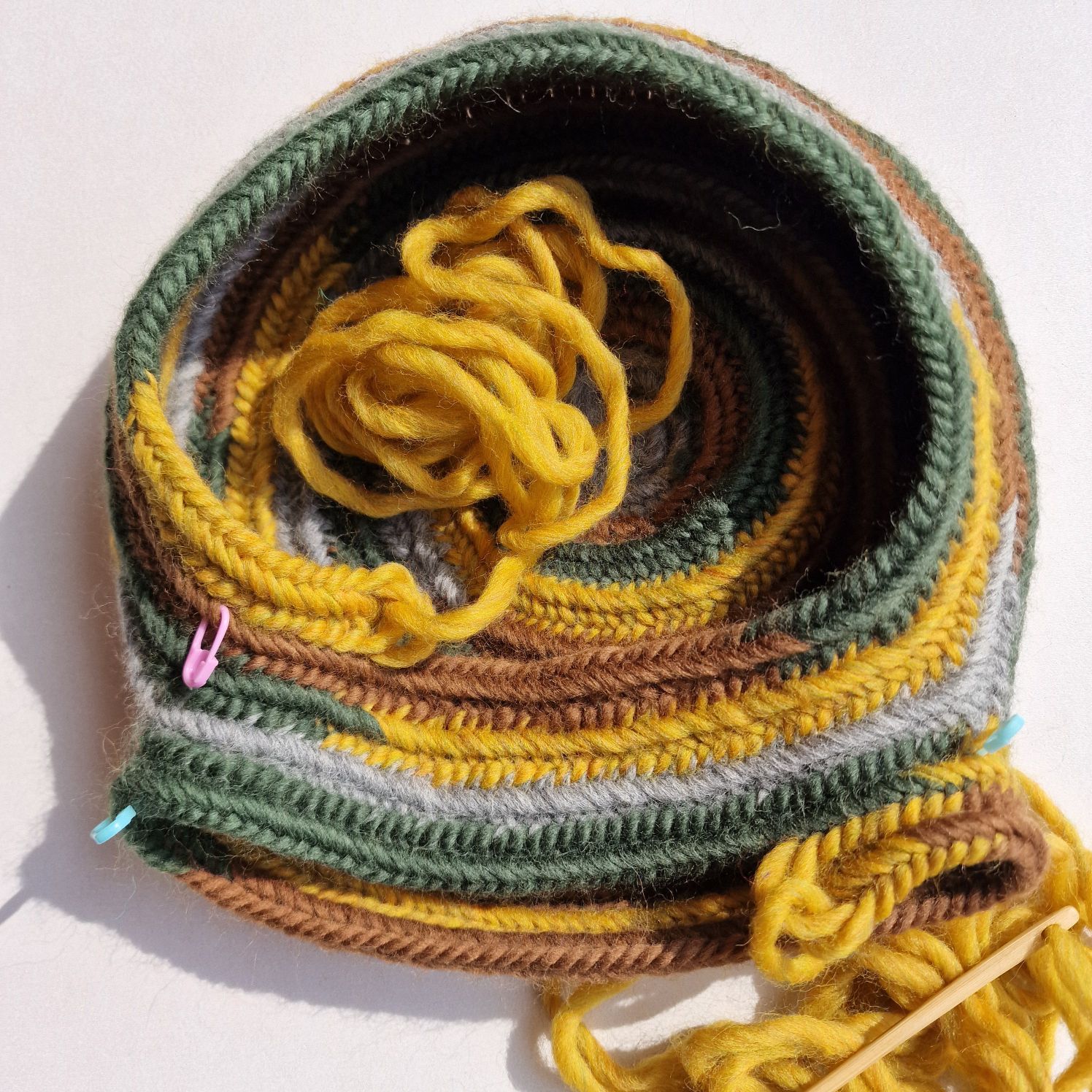
In the next round, simply knit all stitches and make a loose row of stitches that you then fasten again.
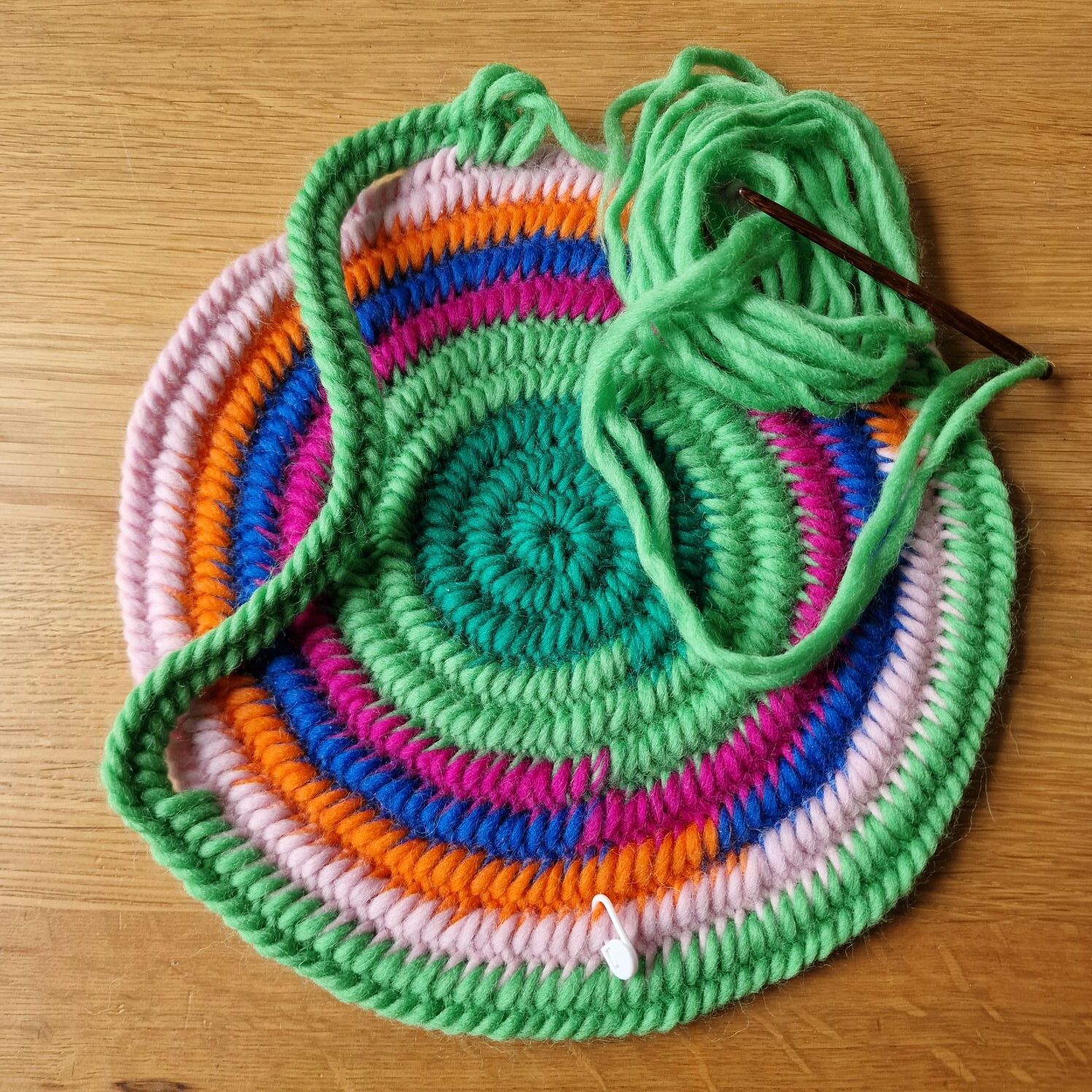
Make the main part with the green thread.
You attach the stitch marker where you attached the green loose thread again.
The length of the loose row is half the circumference of your head.
You now continue with the green wire.
On the 11th round you will decrease 7 stitches and the 8th stitch.
On the 12th round you will decrease 6 stitches and the 7th stitch.
Then do 7 rounds of plain needle binding, and then possibly 1 round of 5 stitches plain and decrease the 6th stitch.
Now we are going to make the neck part.
Simply needlebind the first 2 rows normal, no increace or decrease.
And then you’re going to make the shoulder part.
You start with: 5 plain stitches and increase the 6th stitch.
Then 6 stitches as plain and increase the 7th stitch.
Then 7 stitches plain and increase the 8th stitch.
Just nalbind 8 stitches and increase the 9th stitch and then finish or continue.
You can of course change the pattern to your own insight and size.
The Asle stitch is a very close stitch so that this Hood is nice and warm and also very colorful.
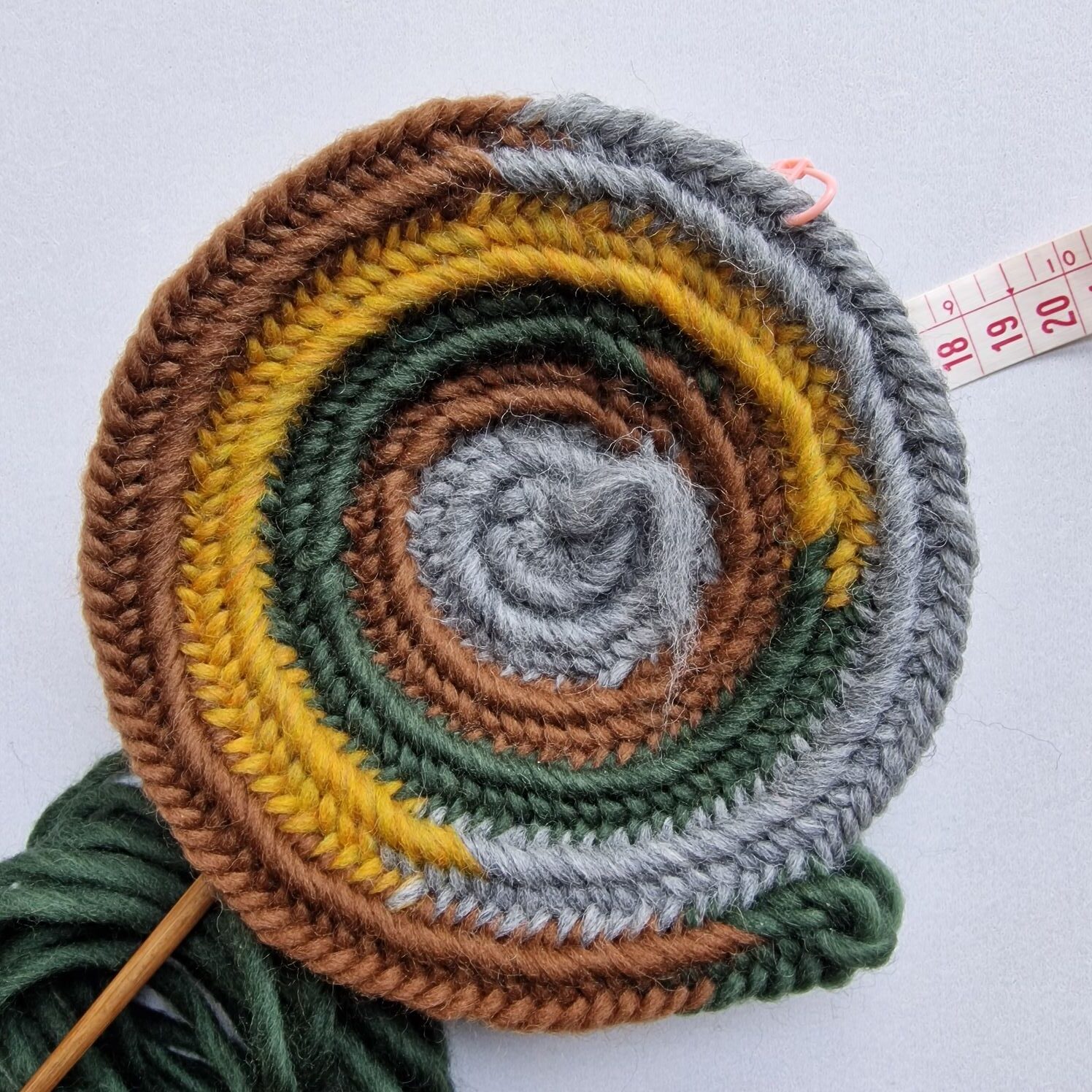
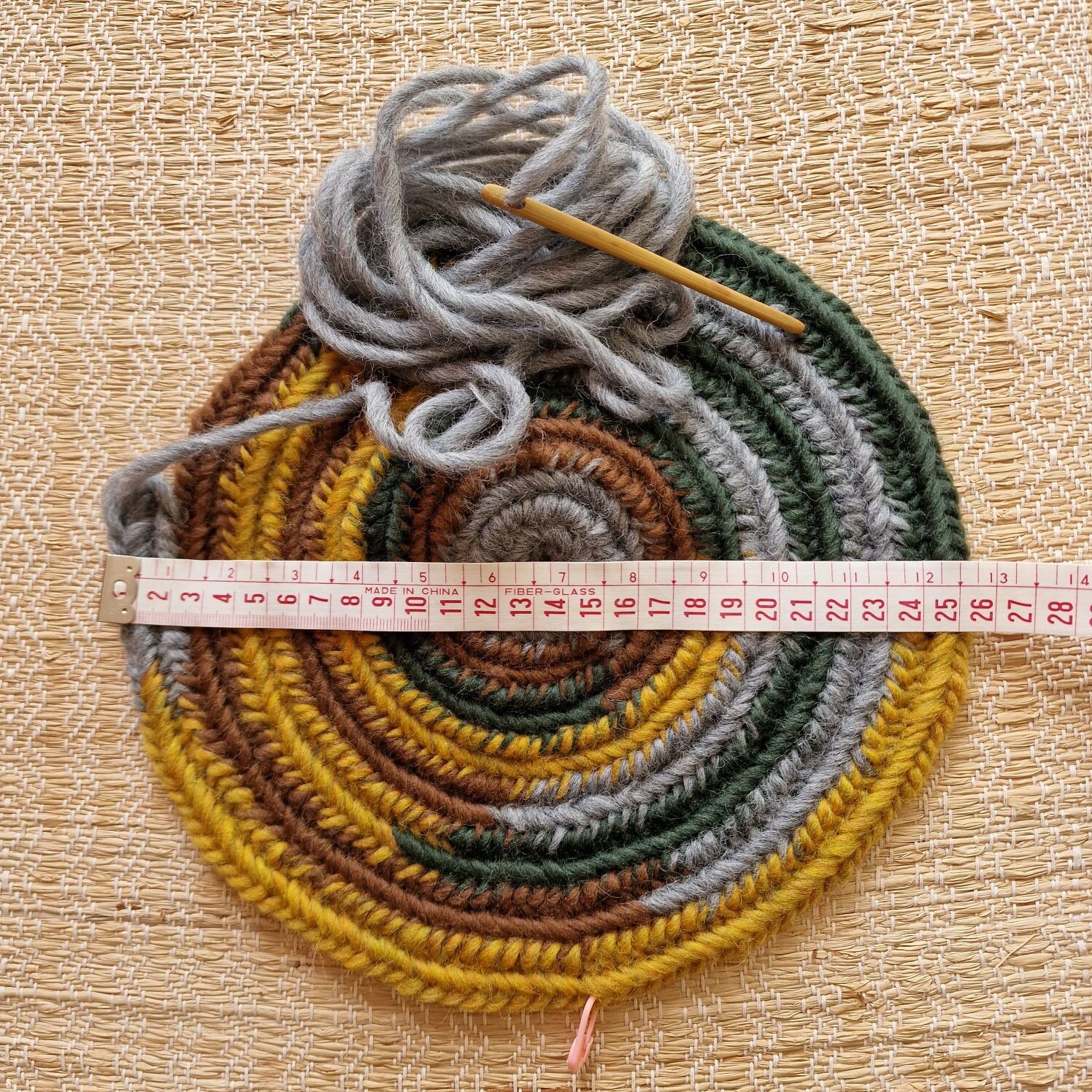
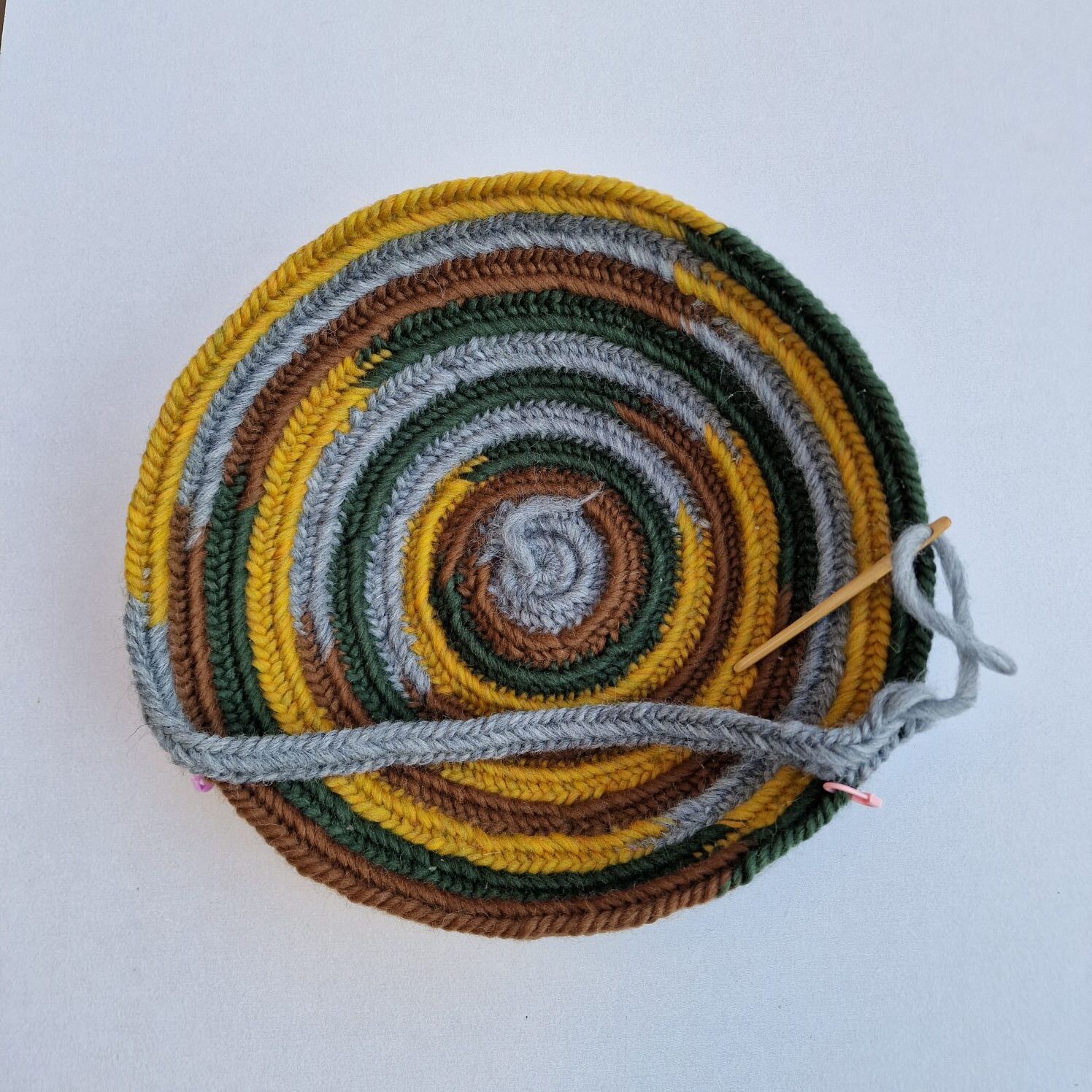
My 4th Hood with the Korgen stitch end F2 connection stitch.
My 4th hood is made following the above pattern. (the third Hood).
Easy Åsle variation F1.
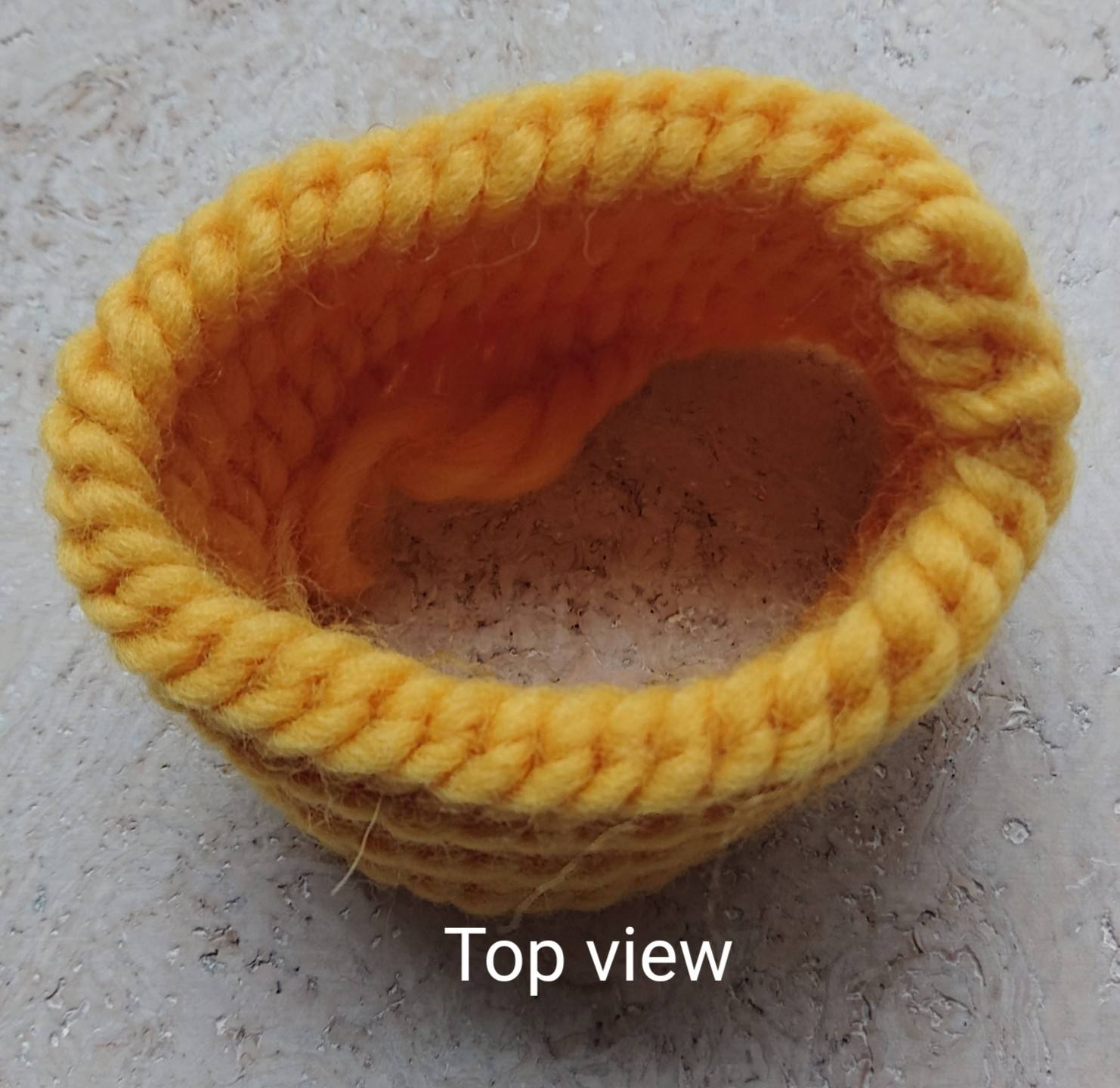
The Åsle stitch, named for a 16 th century mitten found in Våstergötland in the southwest part of Sweden.
The stitches on this page are examples of Sanne-Mari Pihlajapiha from Finland, she is great authority of needlebinding and a very big inspiration for the needlebinding community.
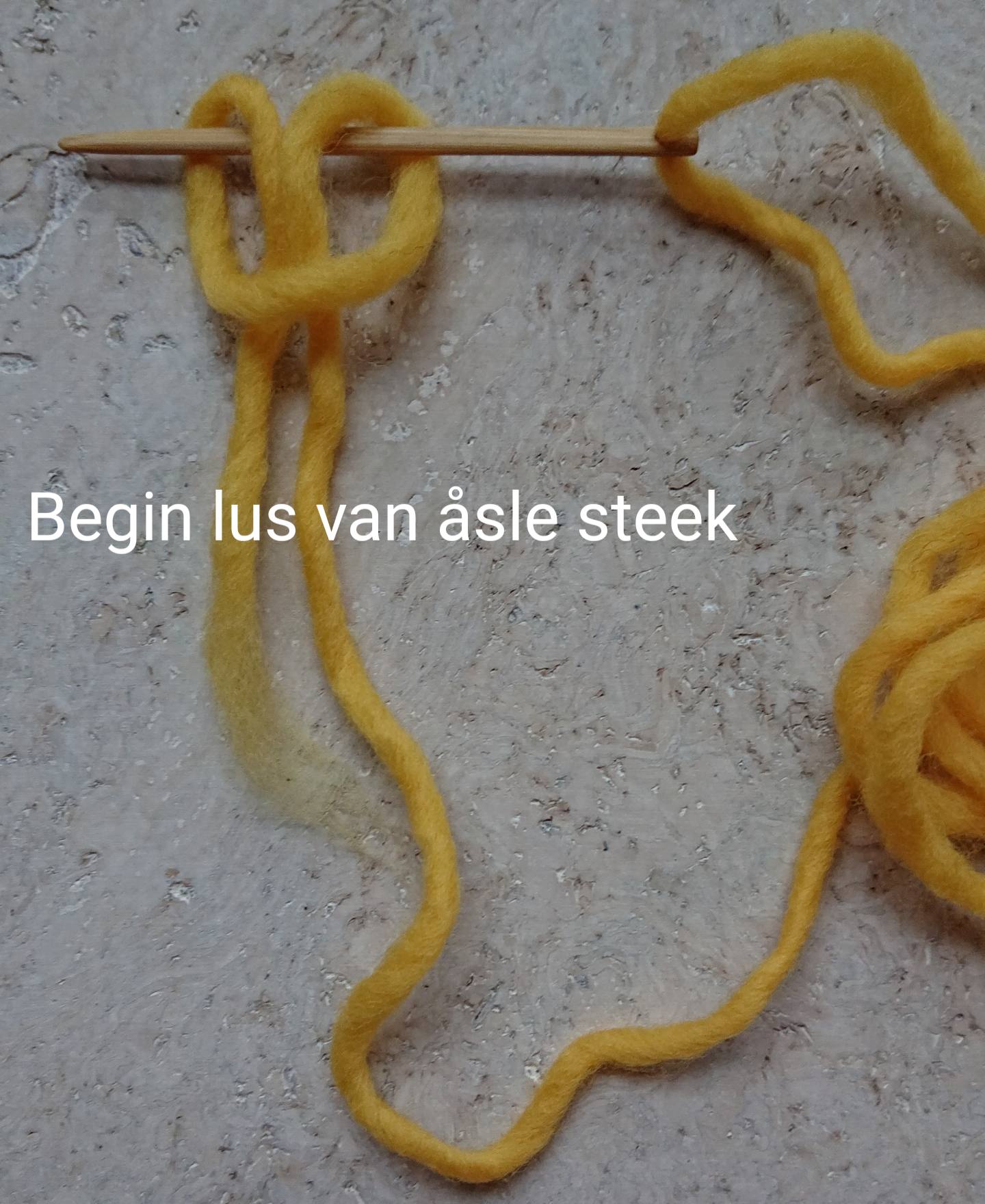
This is a new way to start needlebinding.
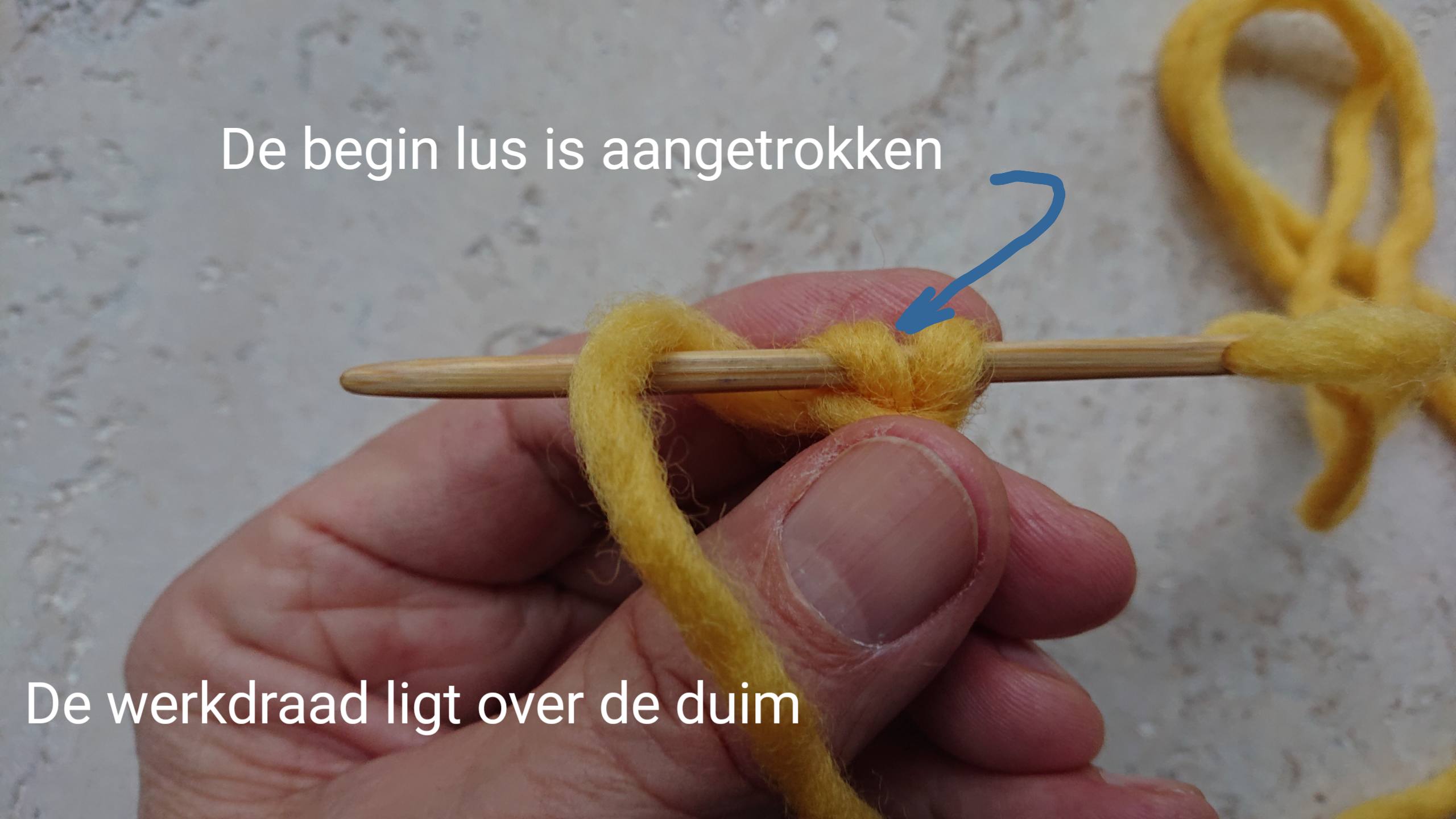
The start loop is tightened and the working thread lies over the thumb.
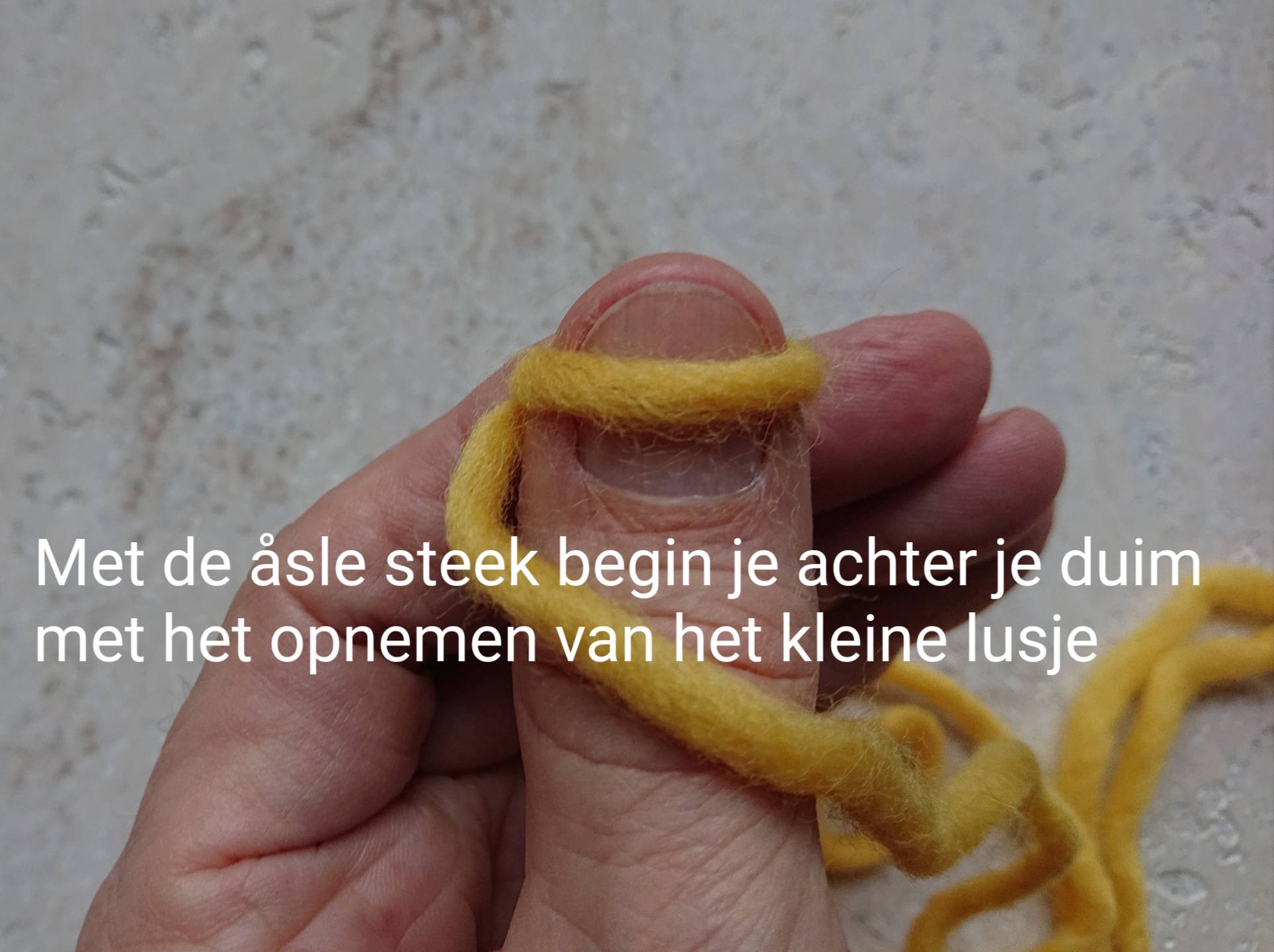
After the working thread has pulled, you now have one thumb loop.
You start with the åsle stitch on the back of your thumb to insert your needle through the small loop.
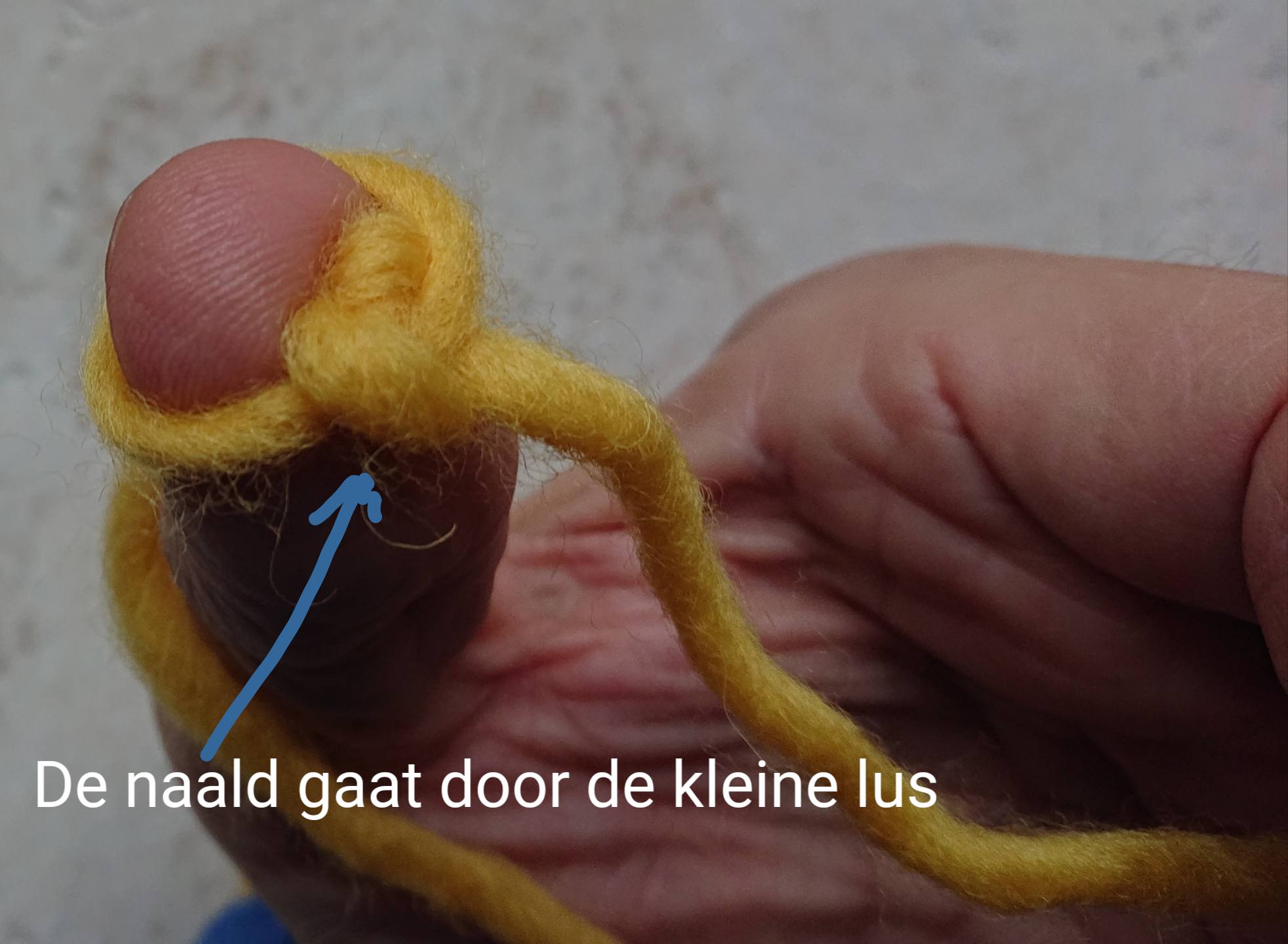
The needle goes first through the small loop.
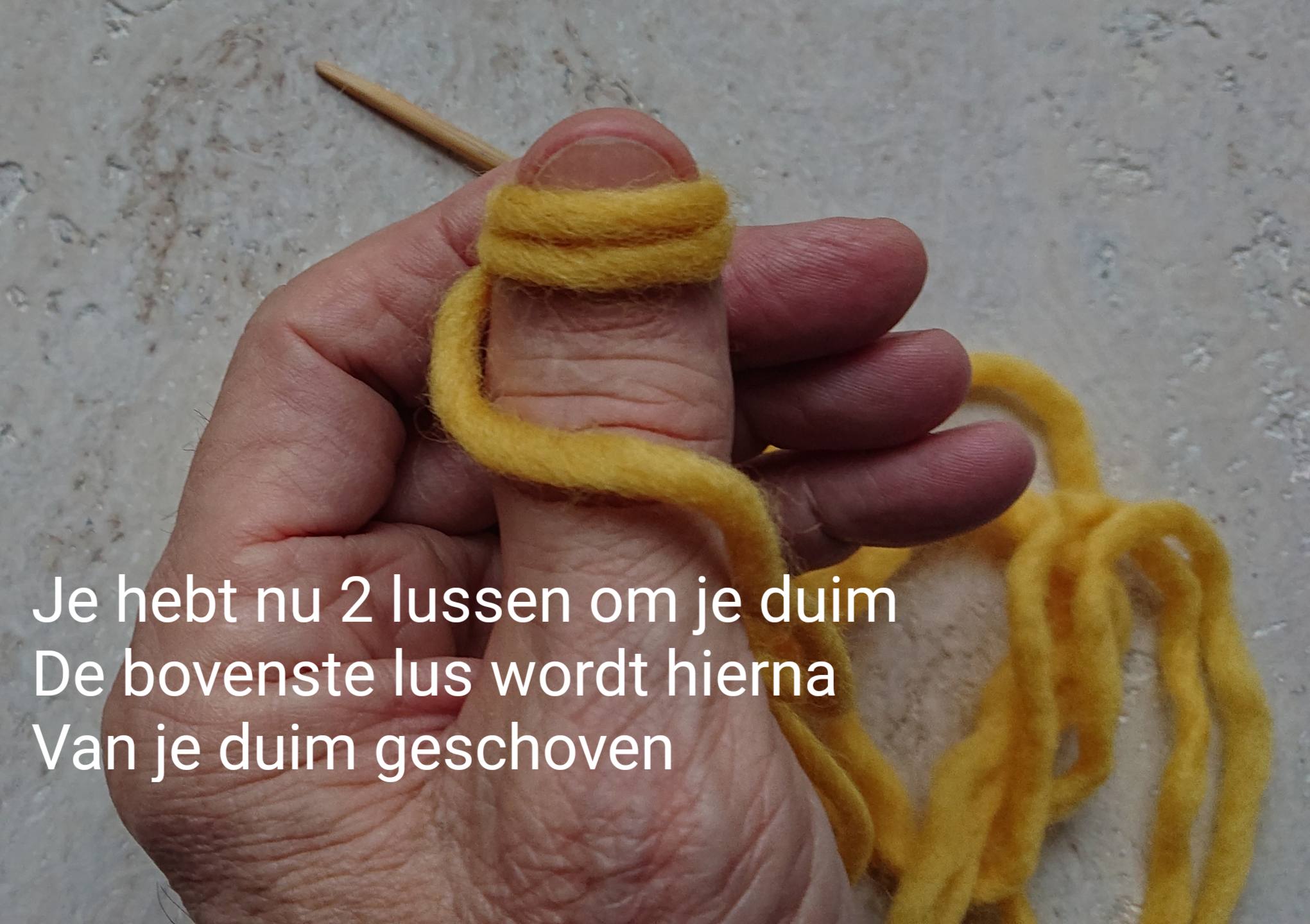
After the working thread has pulled, you have 2 thumb loops
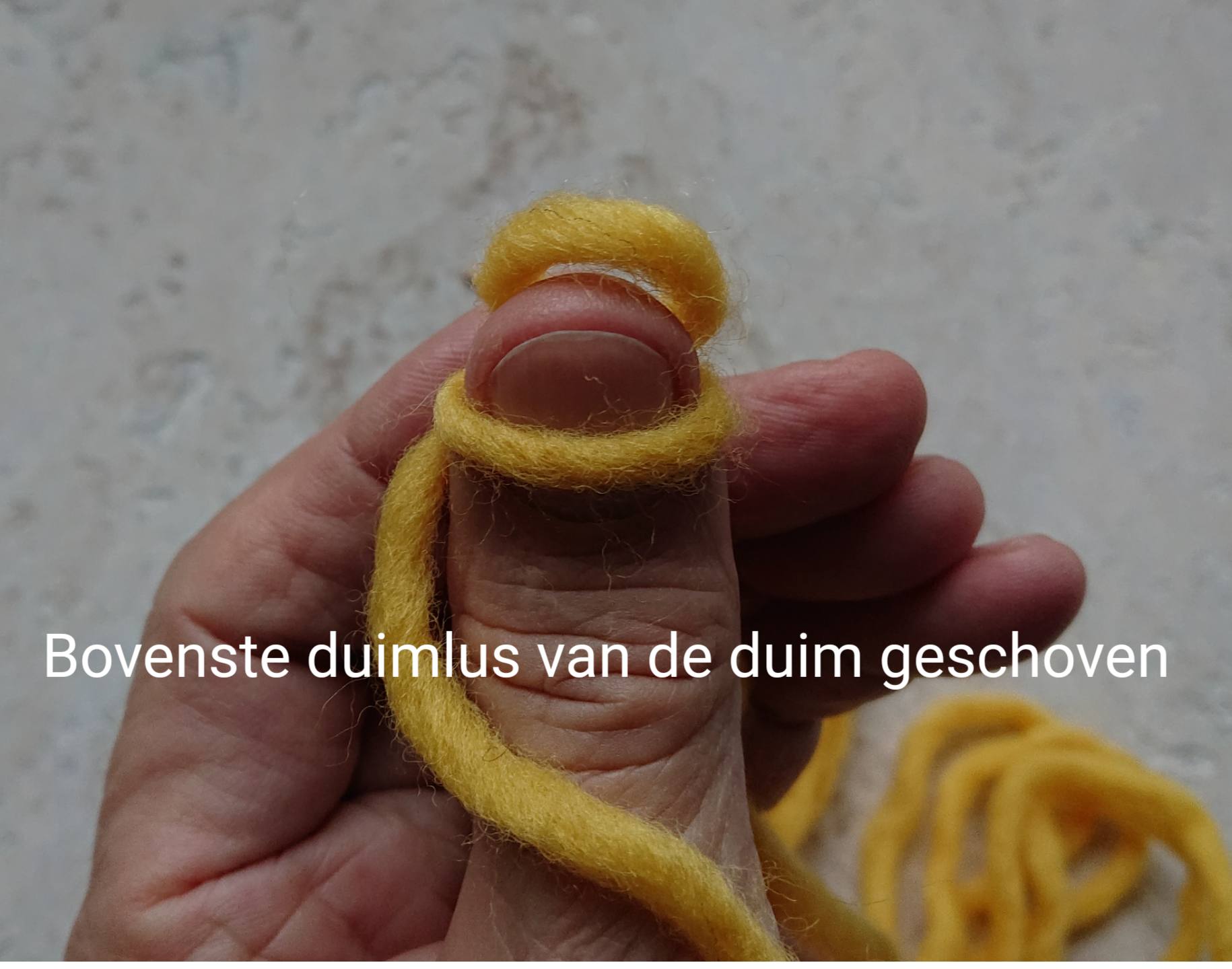
The upper loop is pushed off the thumb.
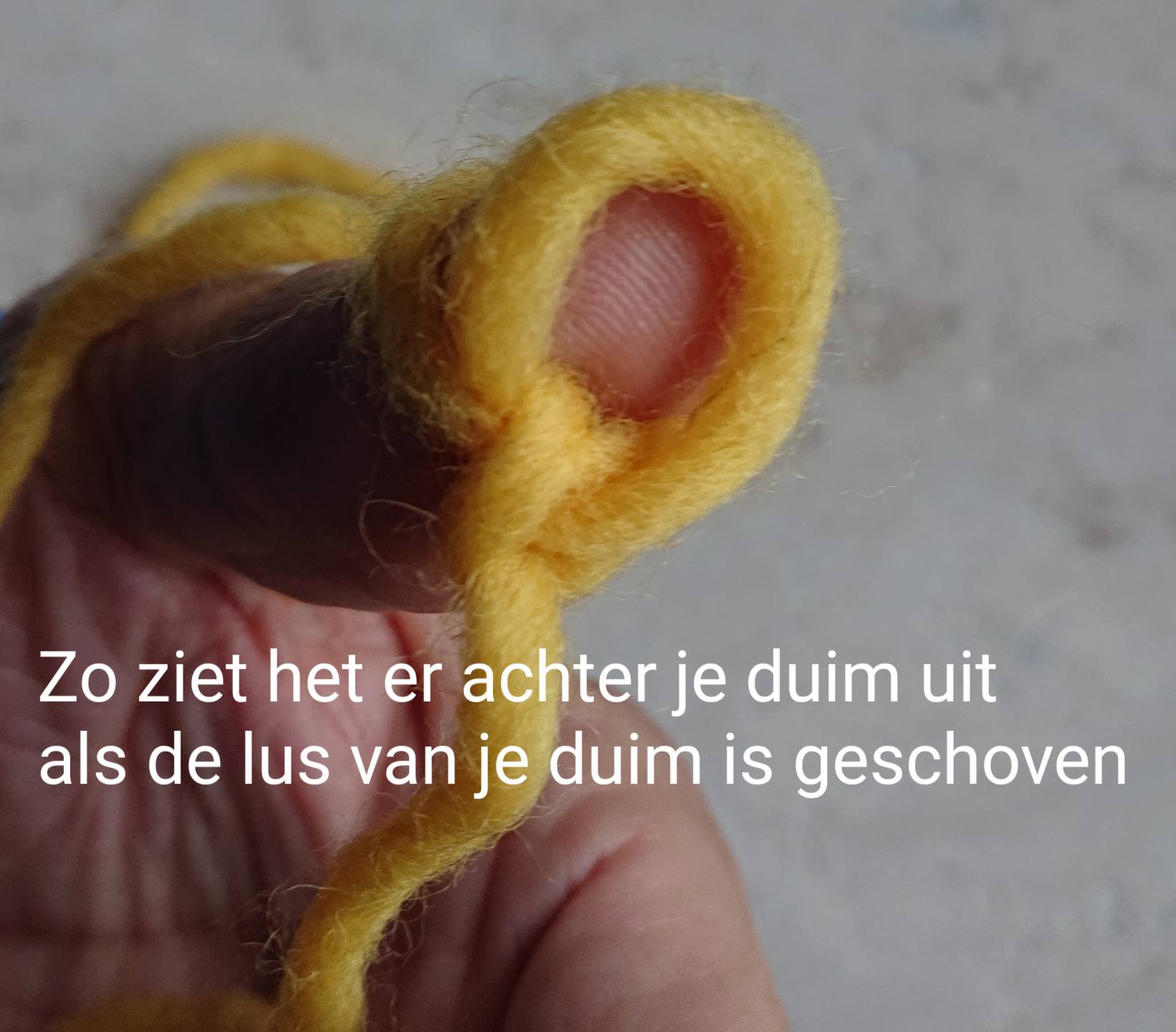
This is what it looks like behind your thumb when the loop of your thumb is slid.
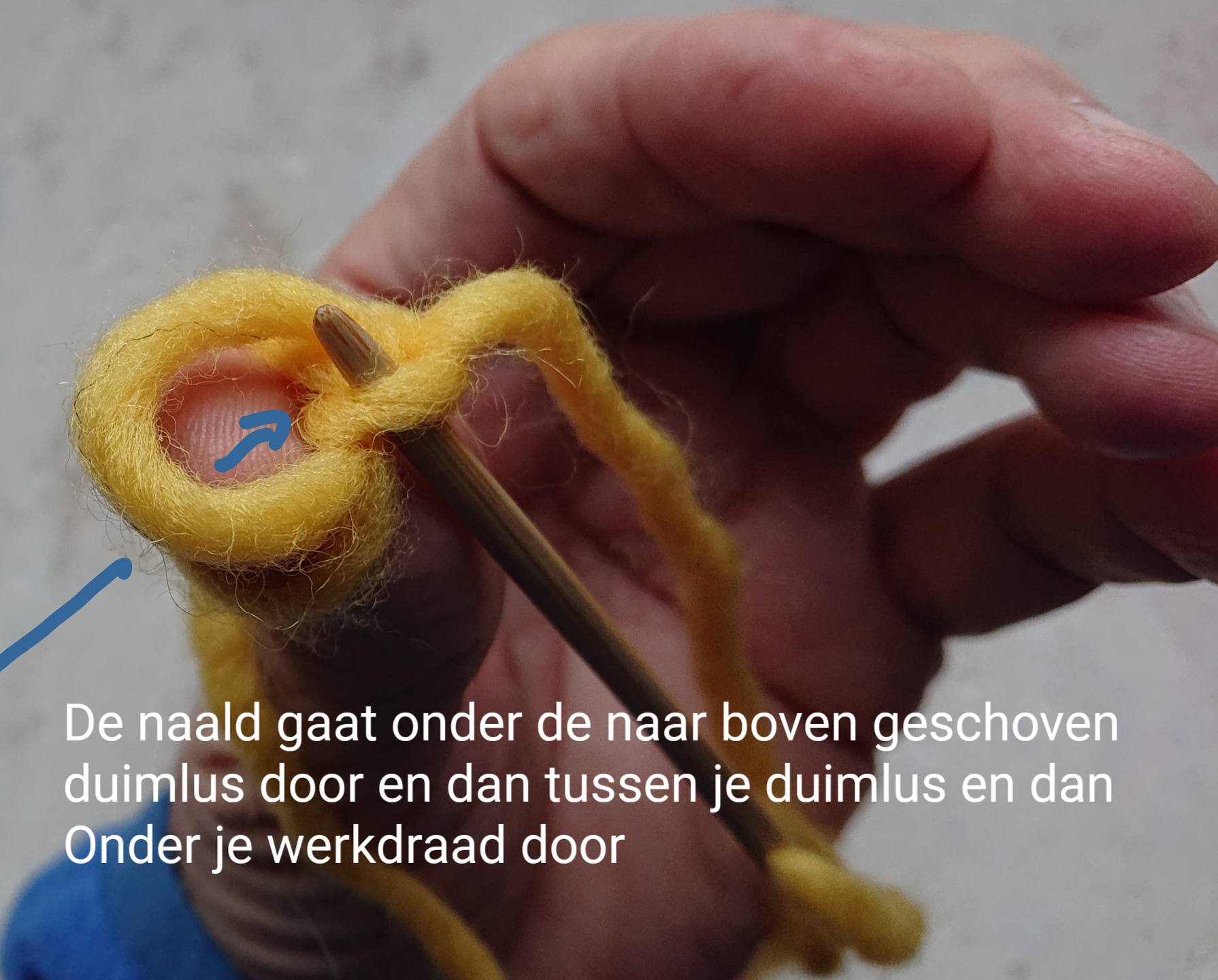
The needle goes first through little loop and and pick up the big loop and rotate the needle counter clockwise. ( the åsle stitch is a turning stitch).
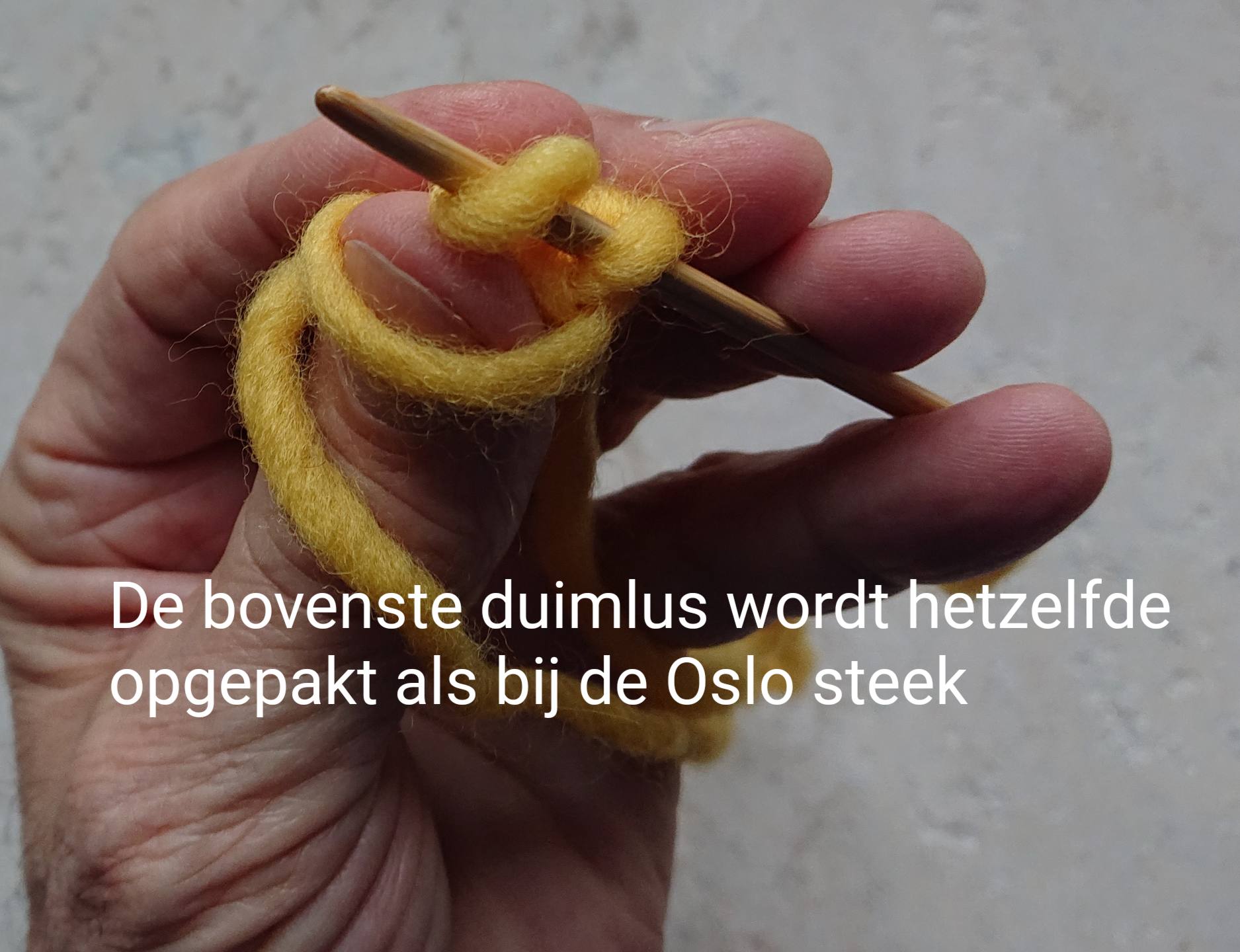
The upper thumb loop is picked up the same as with the Oslo stitch.
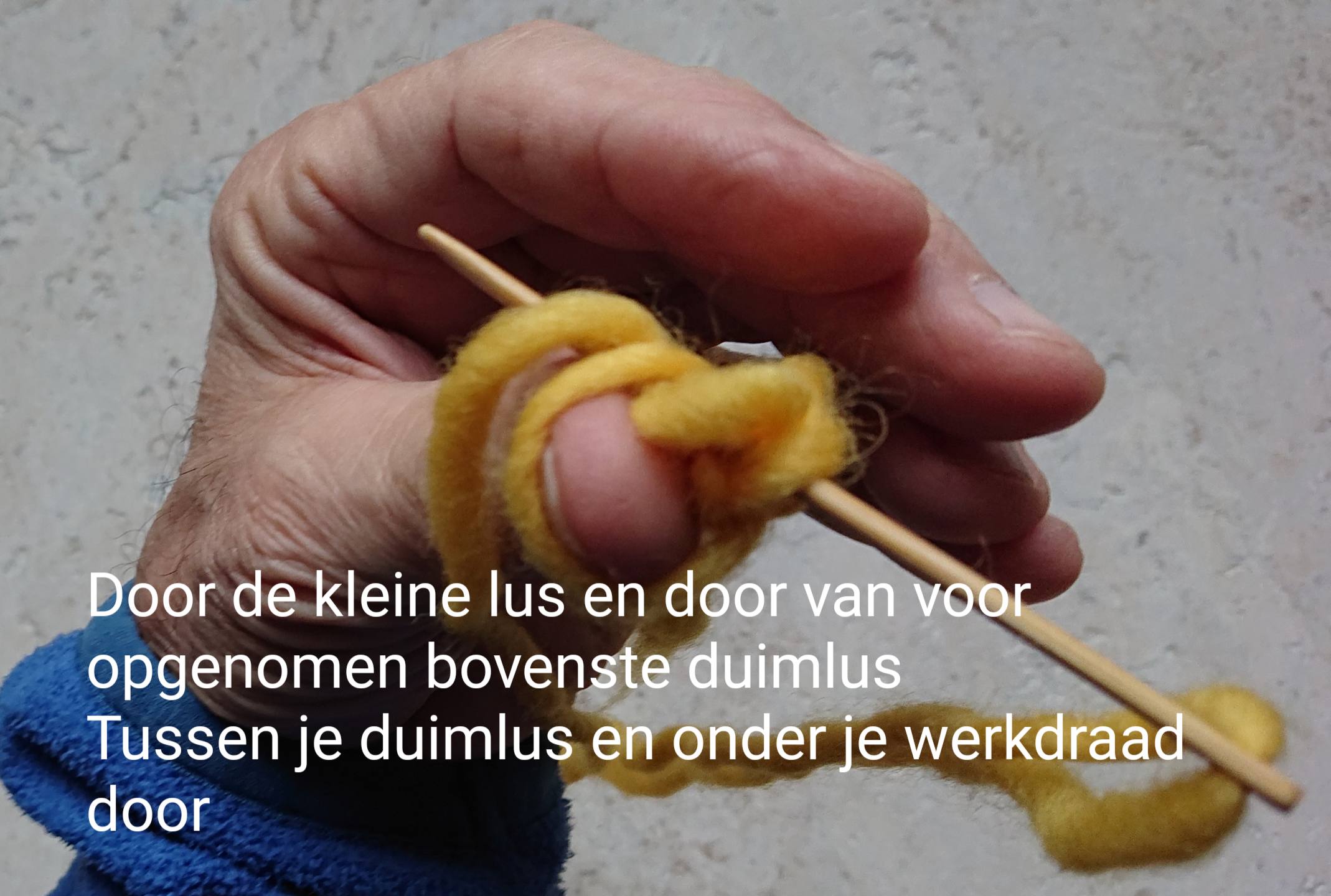
Through the small loop and throug the included upper thumb loop between your thumb loop and under the working thread.
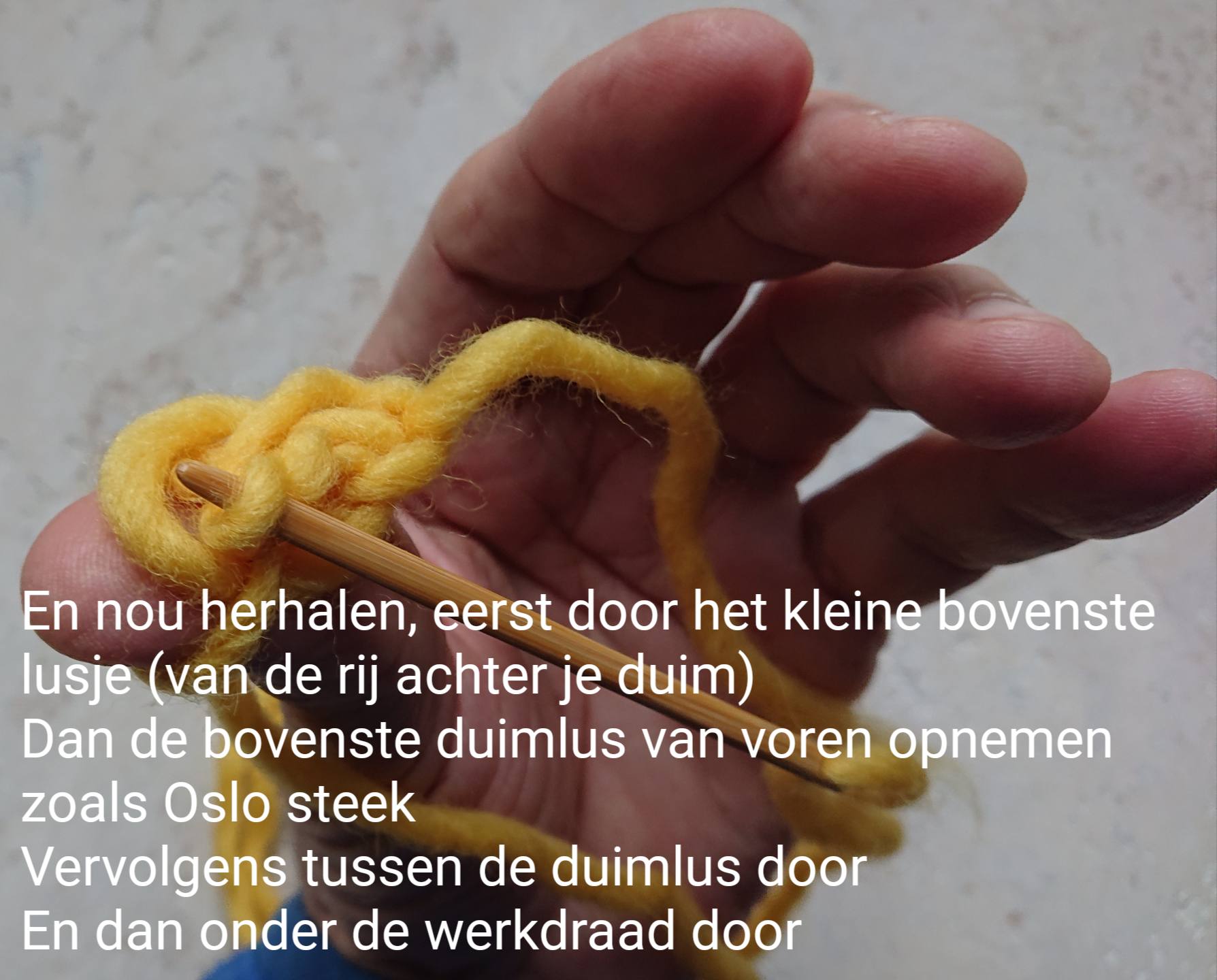
And now repeat first through the small loop (from behind your thumb), then pick up the top thumb loop from the front like the oslo stitch, then trough the thumb loop and under the working thread.
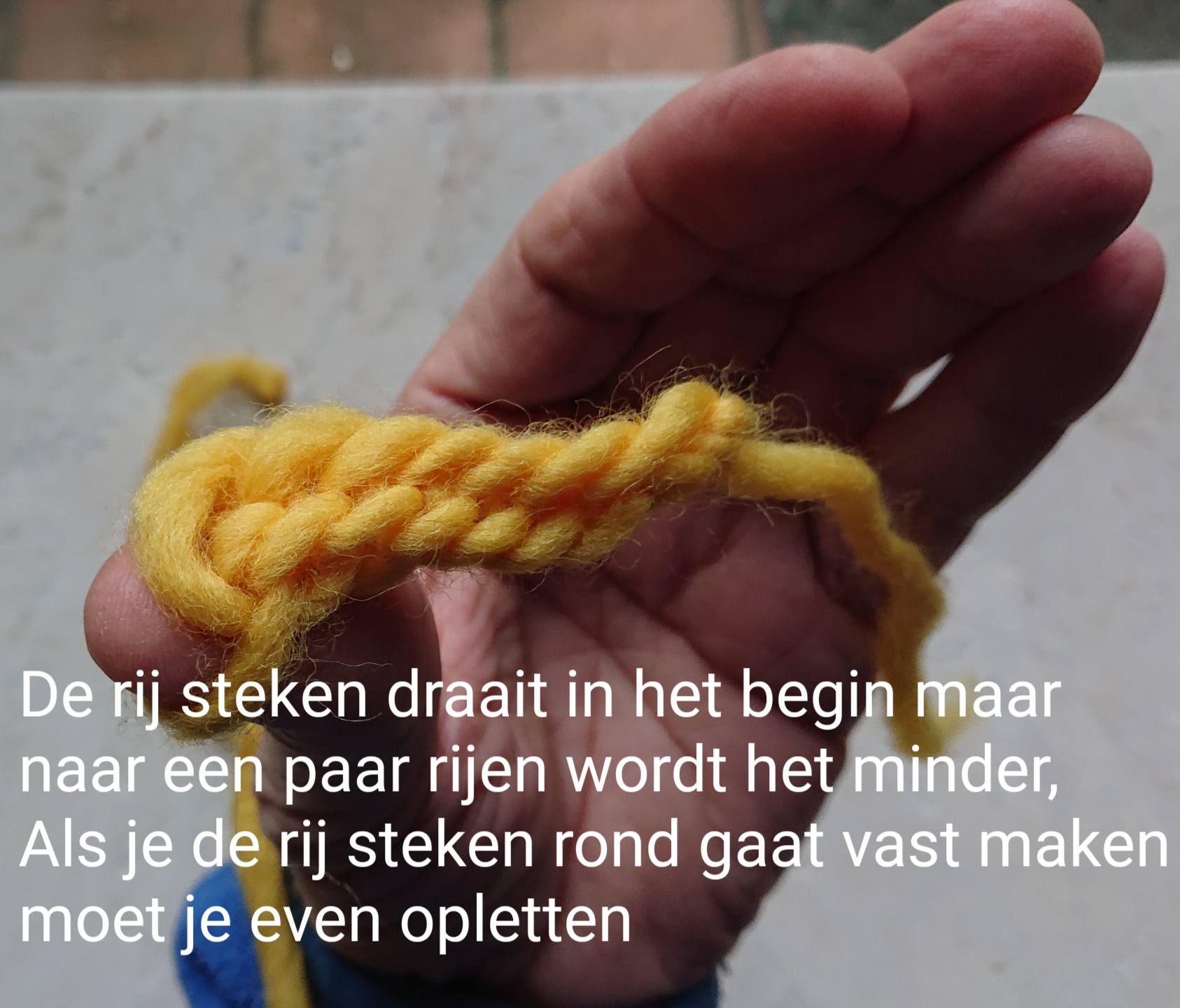
The row of stitches turns in the beginning but after a few rows it becomes less, if you are going to fasten the row of stitches around to you have to pay attention.
Today it is 13 july 2023 and i made a new YouTube video (number 30 ) called Oslo stitch and ………
I always forget to ask if you’d like to subscribe to my YouTube channel: happy needlebinding If I have a lot of subscribers, I can email magazines to write an article about this wonderful old craft so I can pass it on to the next generation.
Thank you kindly in advance. bert veugelers.
The happy colors hat is made with the easy åsle variation F1.
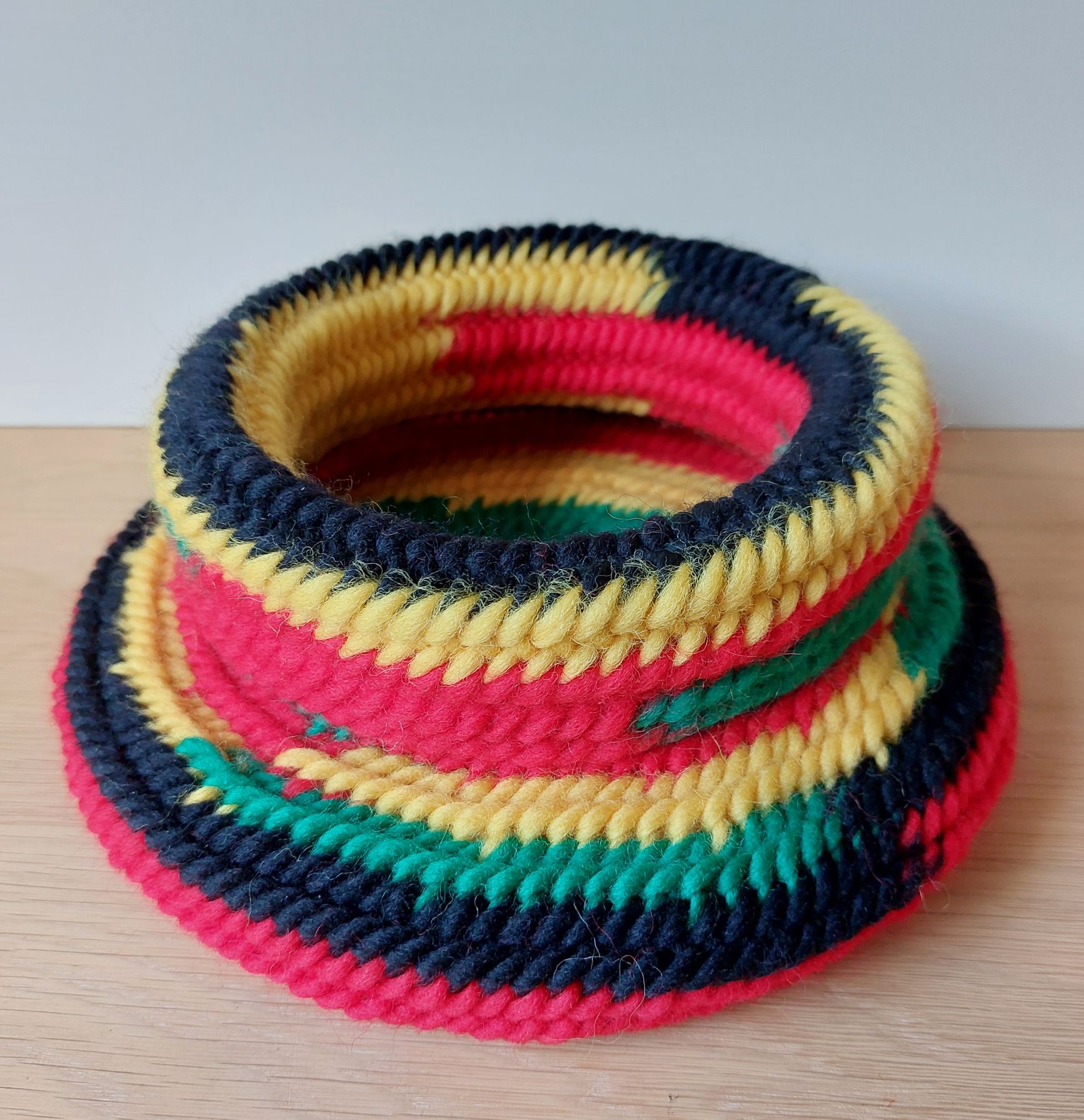
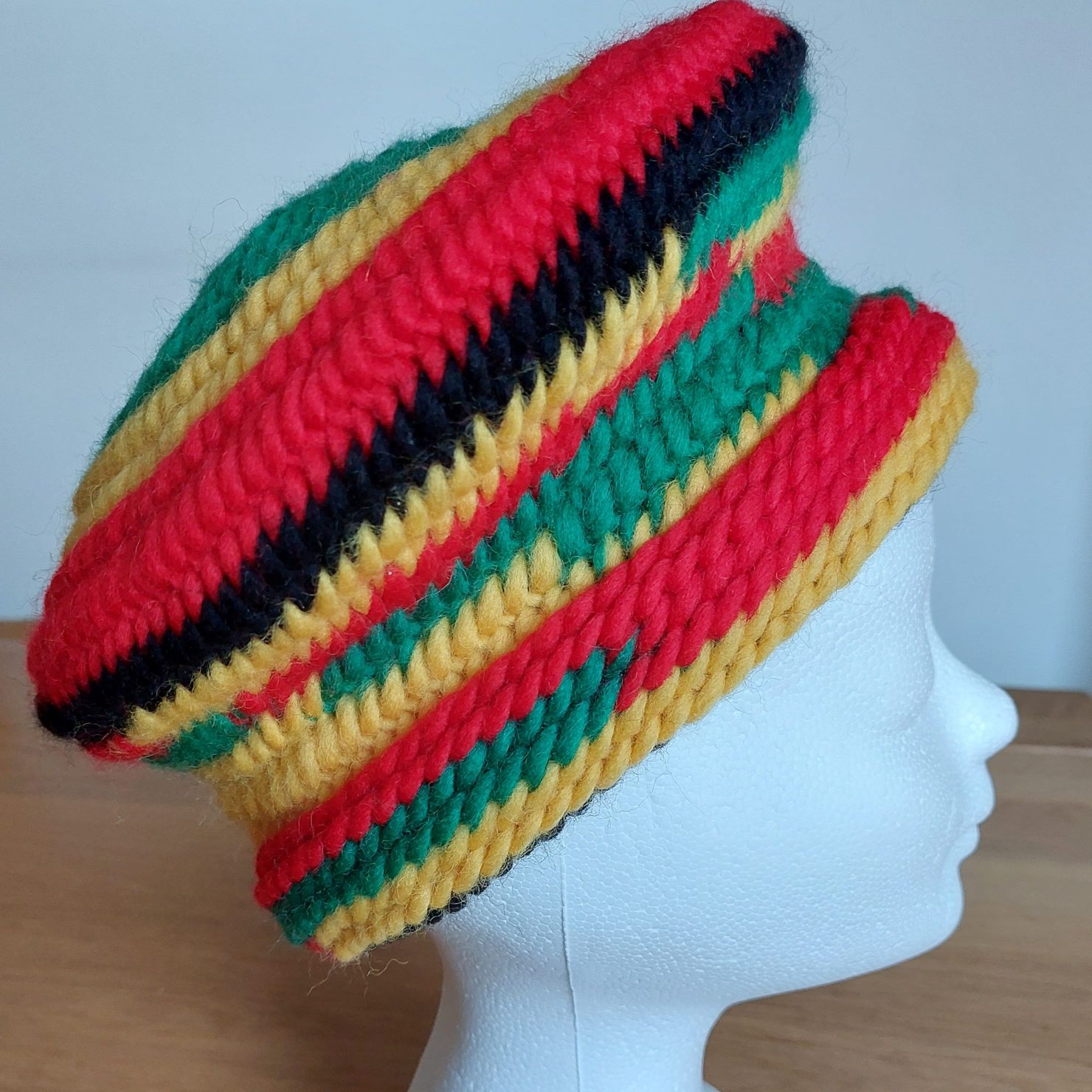
Arboga stitch.
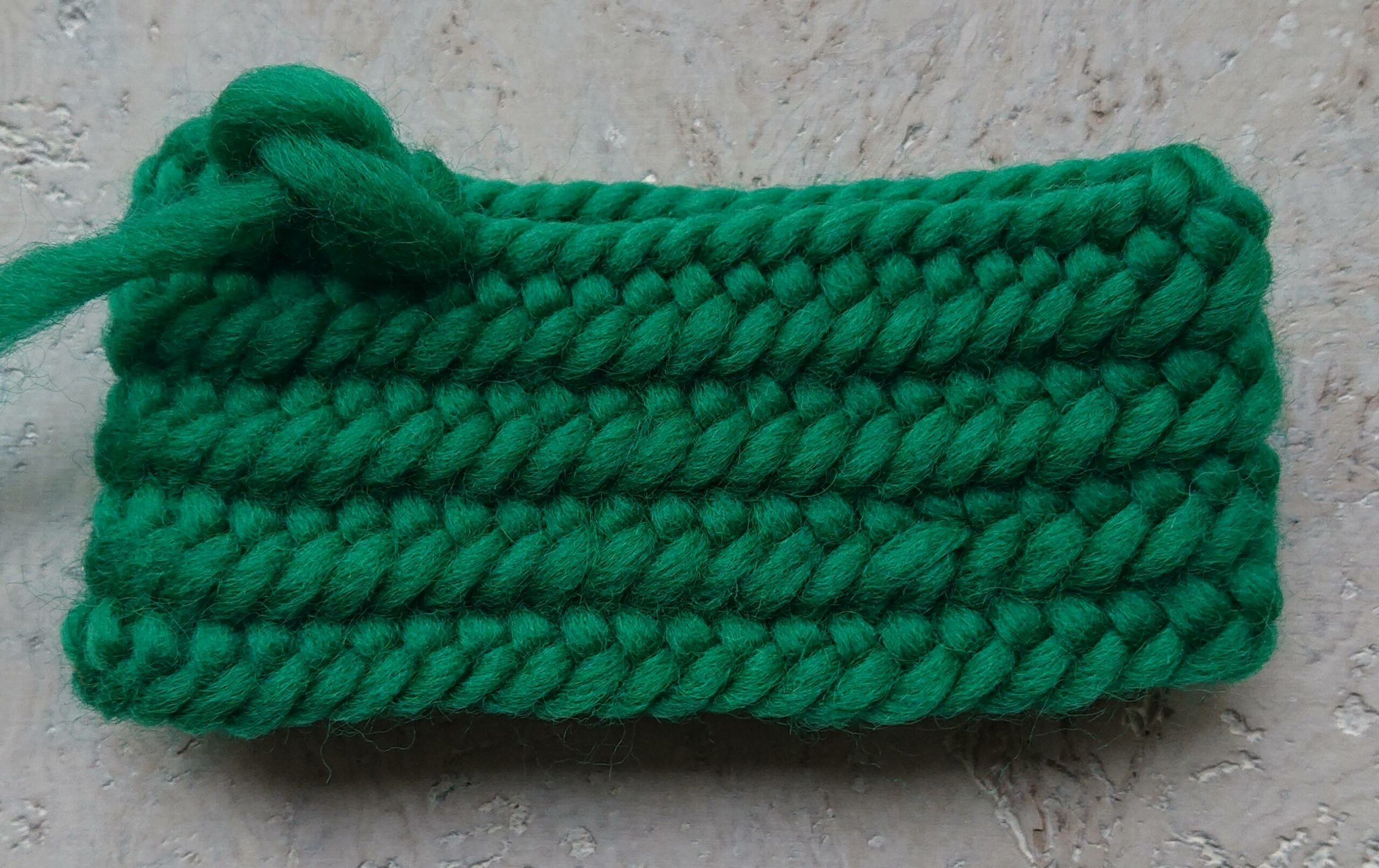
reverse side.
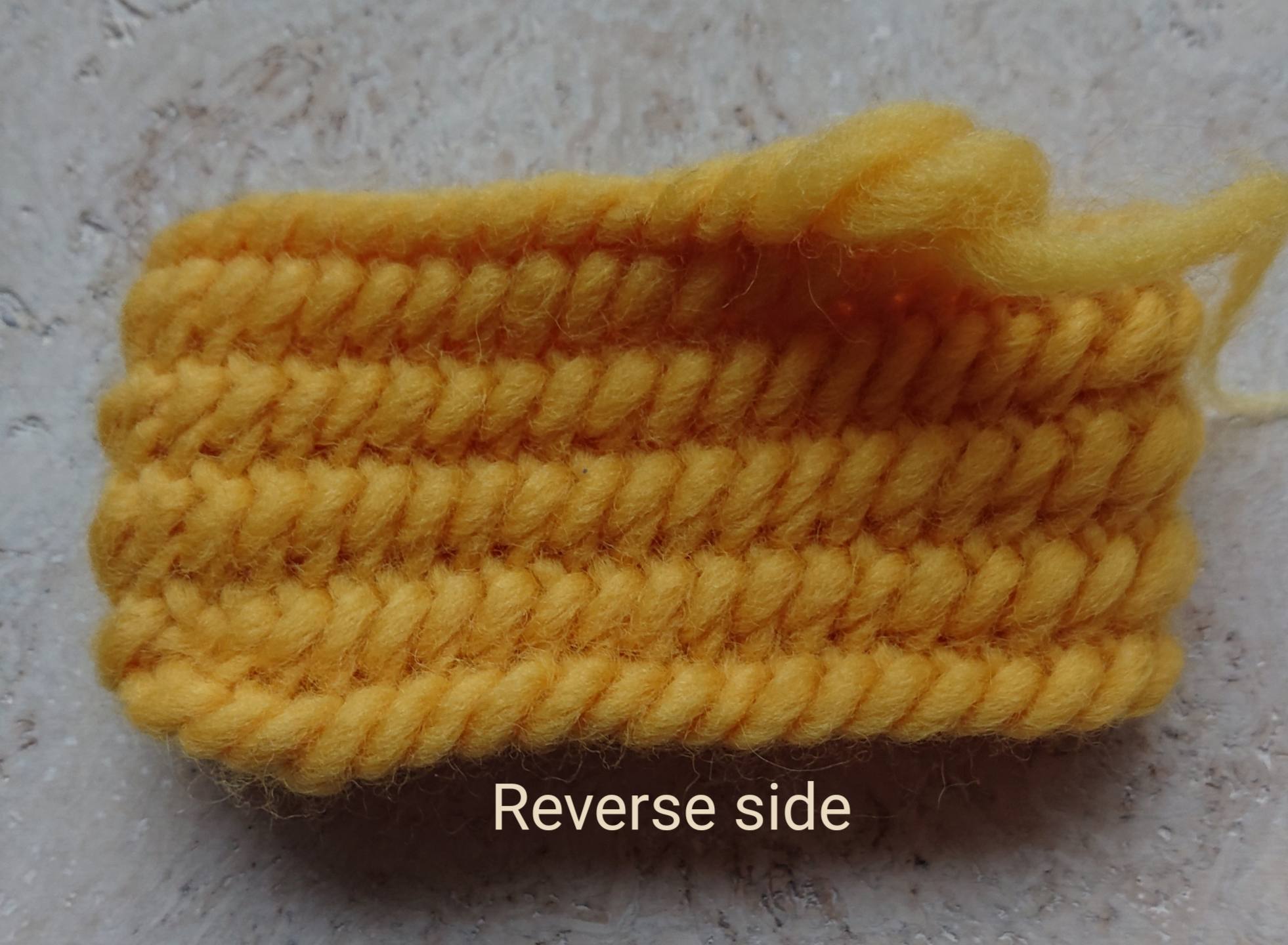
With the arboga stitch you start just like the start of the åsle stitch.
When you have 1 loop around and 1 loop behind your thumb.
The needle goes behind your thumb pick up the small loop behind thumb turn needle clockwise and the other thumb loop in front.
Both loops on your needle goes through thumbloop and under the working yarn.
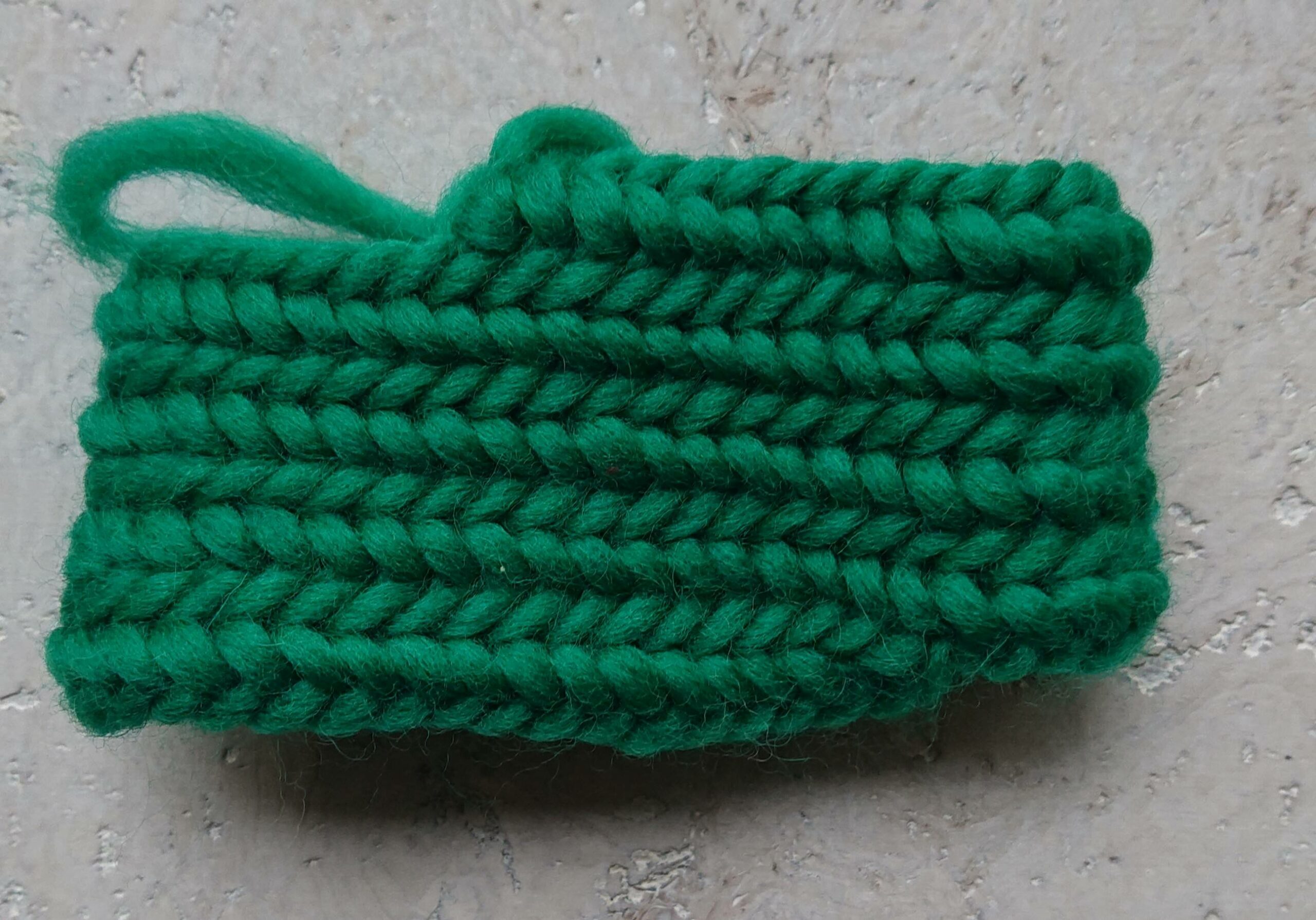
front side
The arboga stitch is a nice, dense and compact fabric looks like knitting but than of course stronger.
Björsbo stitch.
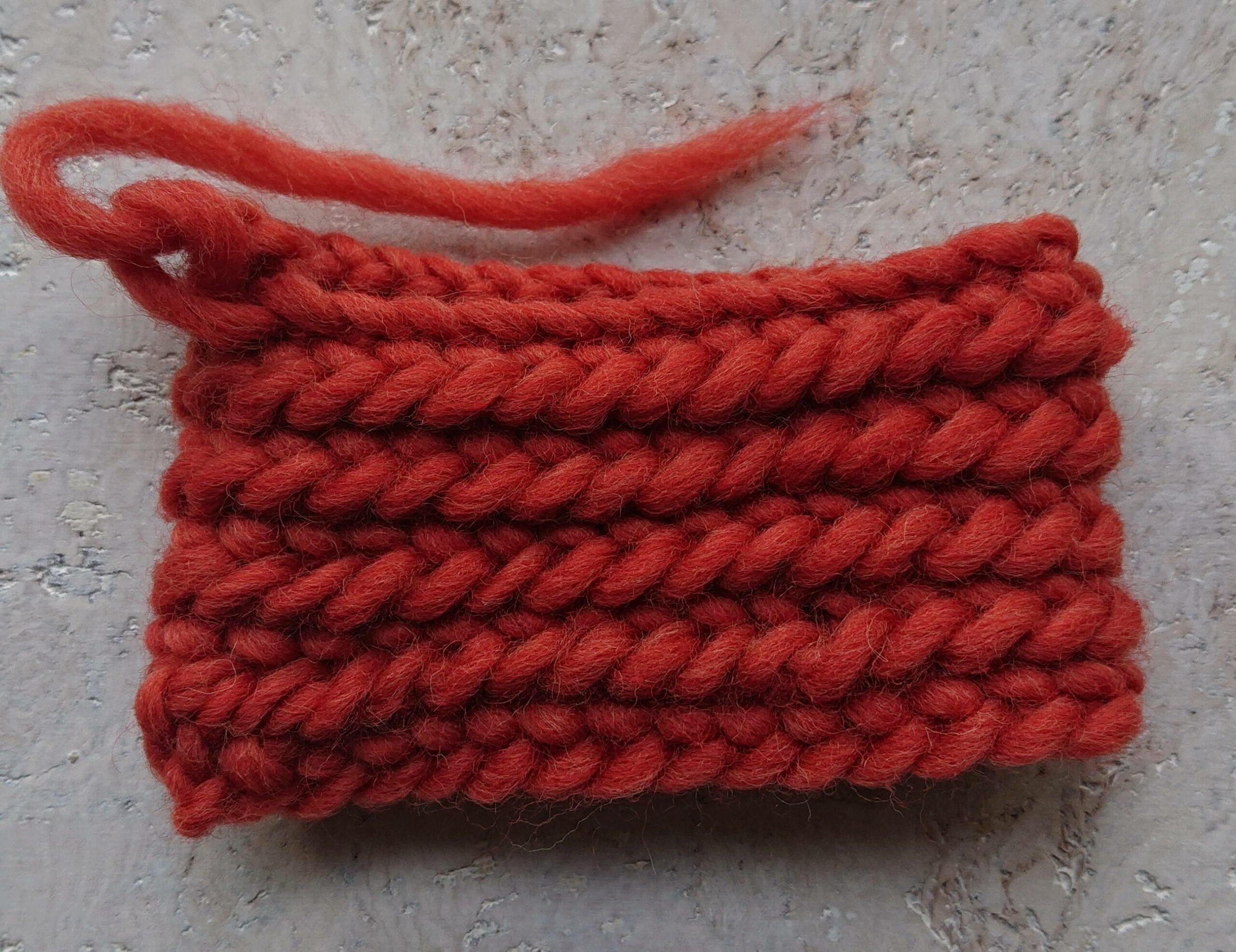
reverse side
The björsbo stitch is almost the same as the oslo stitch.
You start with a loop around and behind your thumb.
Instead of going Under the working yarn when you ending your stitch, you go Over the working yarn with your needle. It is a nice variation of the Oslo stich .
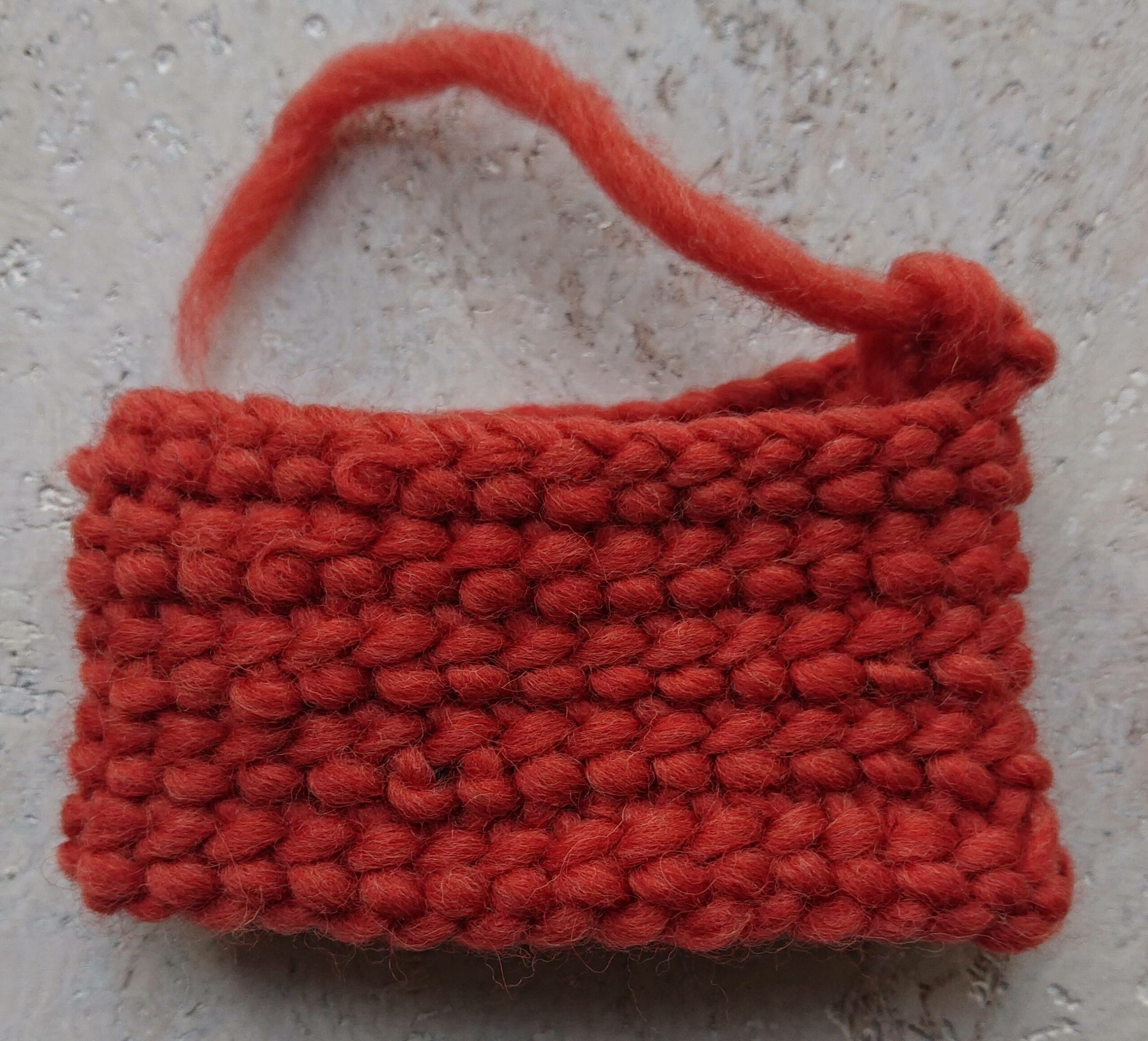
front side
The björsbo stitch has a loose and flexible fabric like the arboga stitch and is very fast to needlebind, no extra loop to pick up behind your thumb.
This fabric is a little denser then the oslo stitch.
ArBo stitch.
When i was discovering some stitches i thaught why not mix or combine some stitches? Needlebinding is using imagination and creativity and to discover new stitch combinations. I start with the arboga stitch and at the end of the stitch i go not Under the working thread but i go Over the working thread at the end of the stitch.
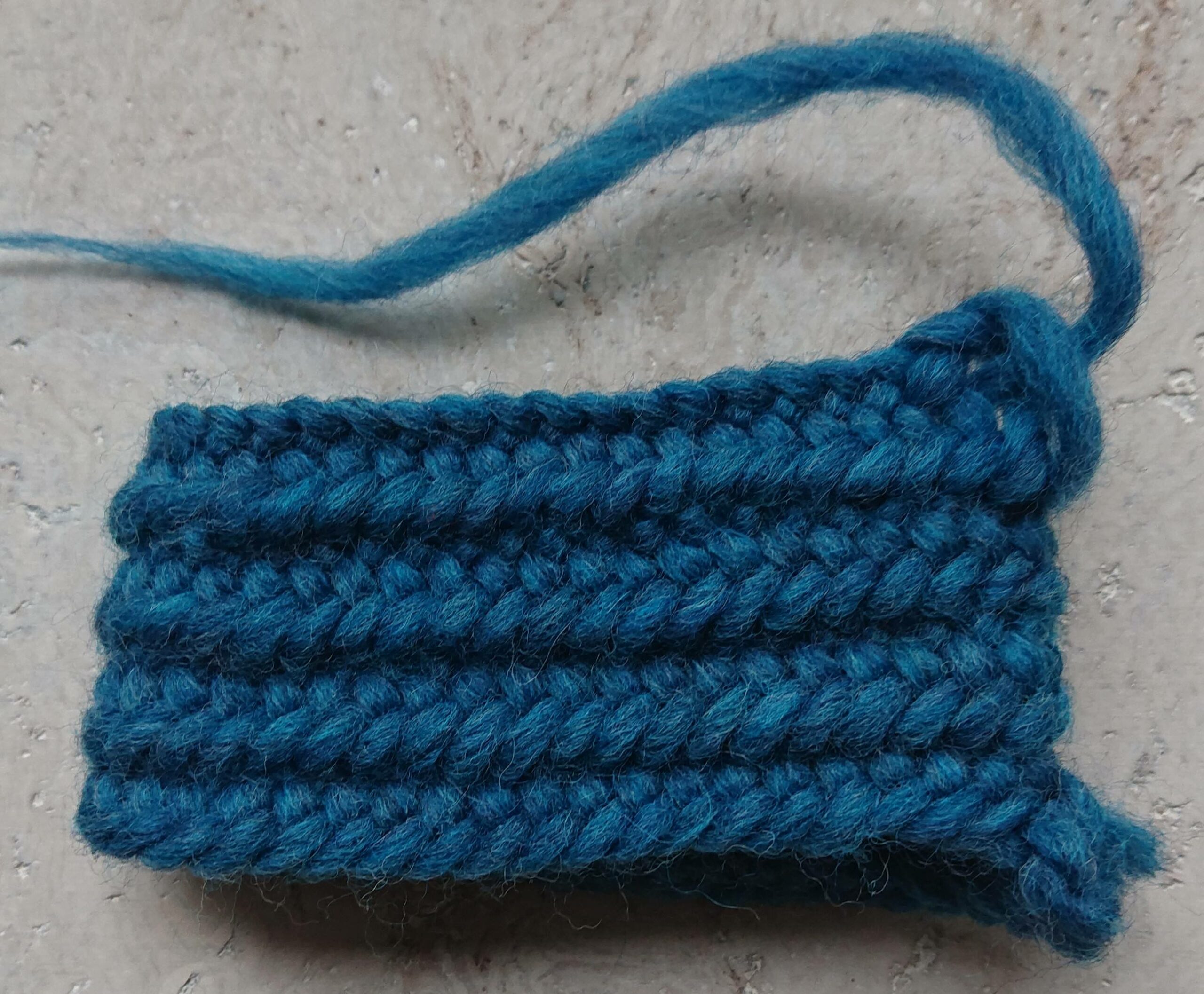
reverse side
My new invented stitch called: ArBo stitch it is an combination of the Arboga and the Björsbo stitch.
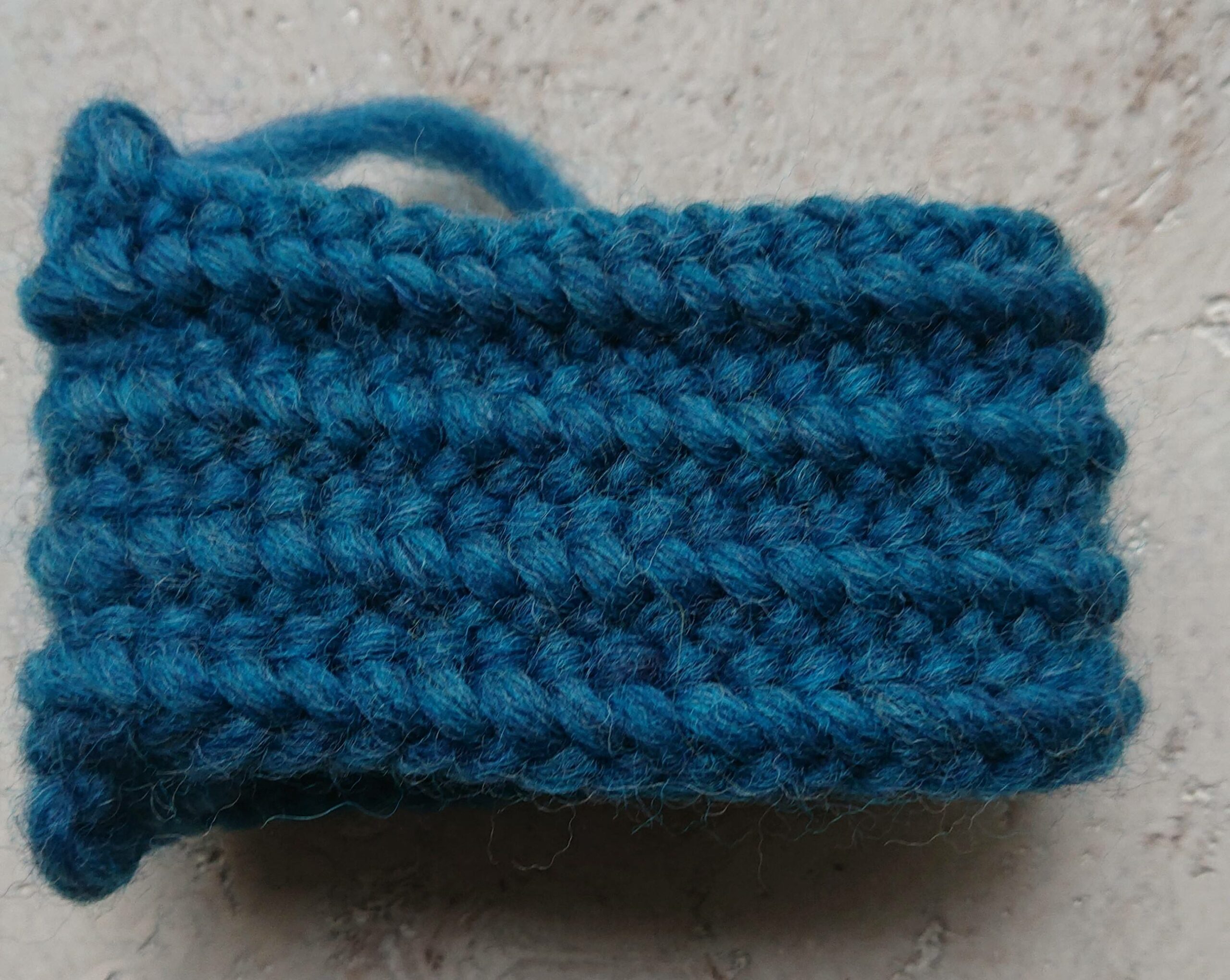
front side
The ArBo stitch is a flat almost woven fabric it is denser then the björsbo stitch and wider then the arboga stitch. I am very happy with this ”New” stitch, probably it has already invented in the past and maybe it has also a name………….
York or Coppergate stitch.
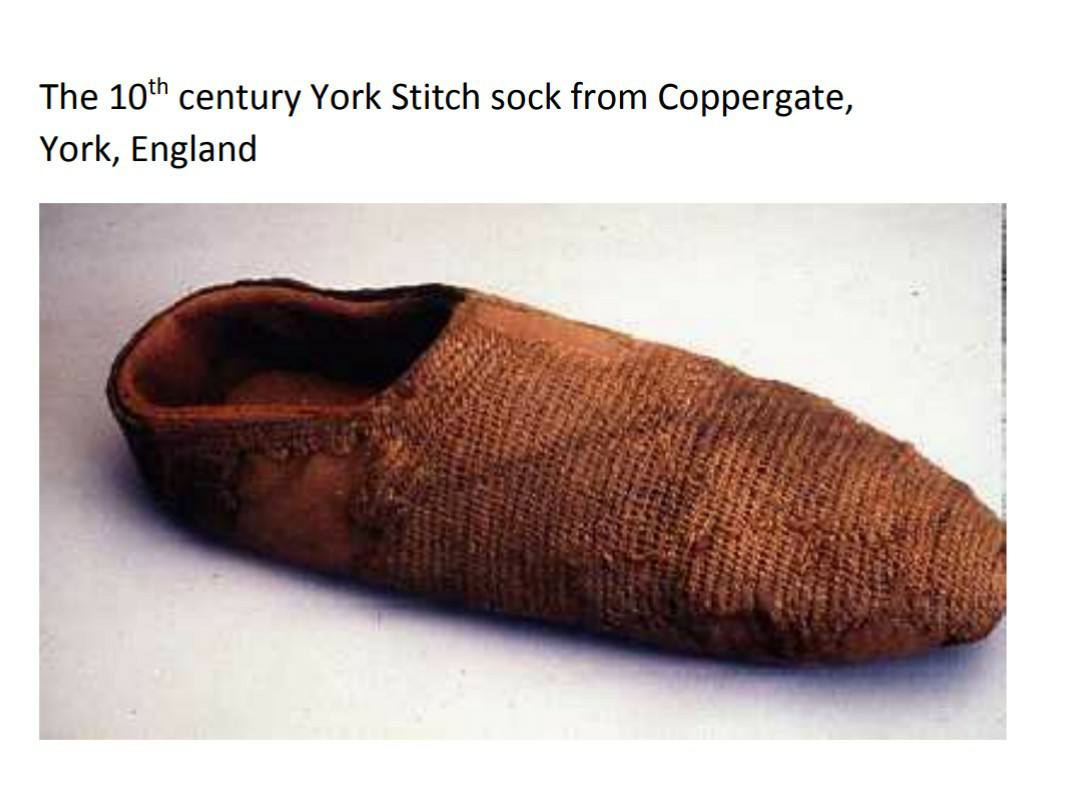
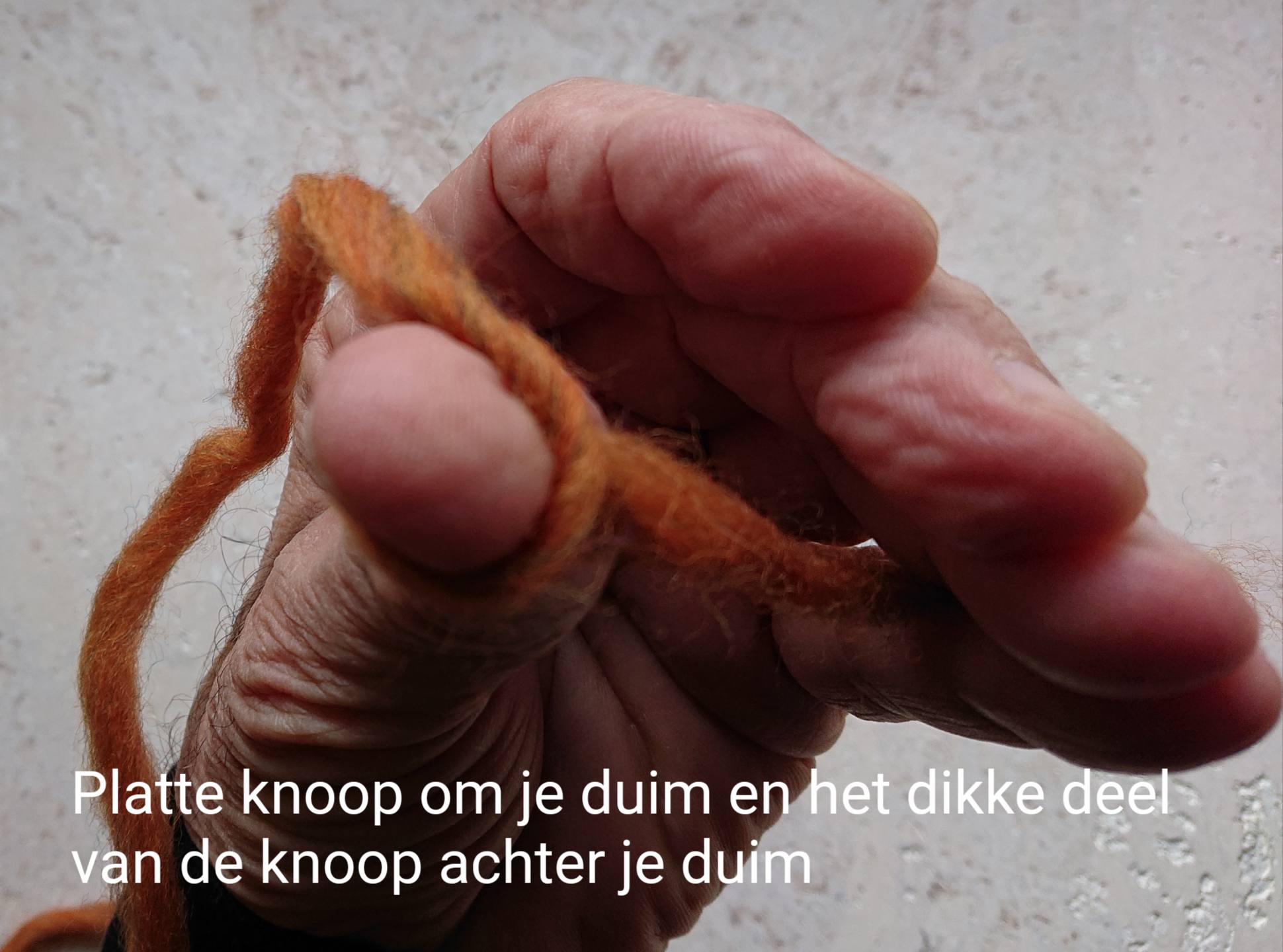
You start with a pretsel knot around the thumb and the thick part of knot behind your thumb .
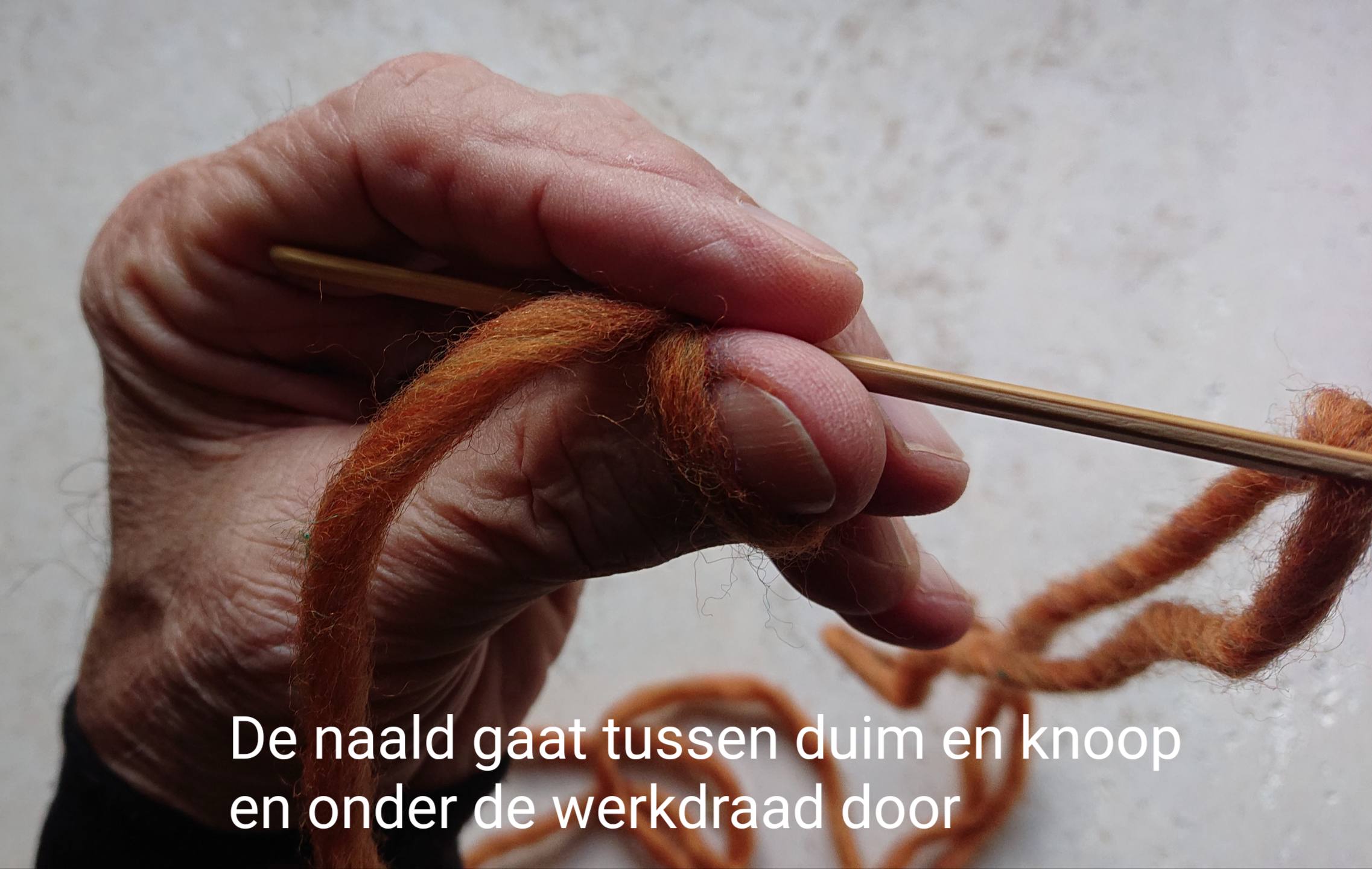
The needle passes between the knot and the thumb and under the working thread.
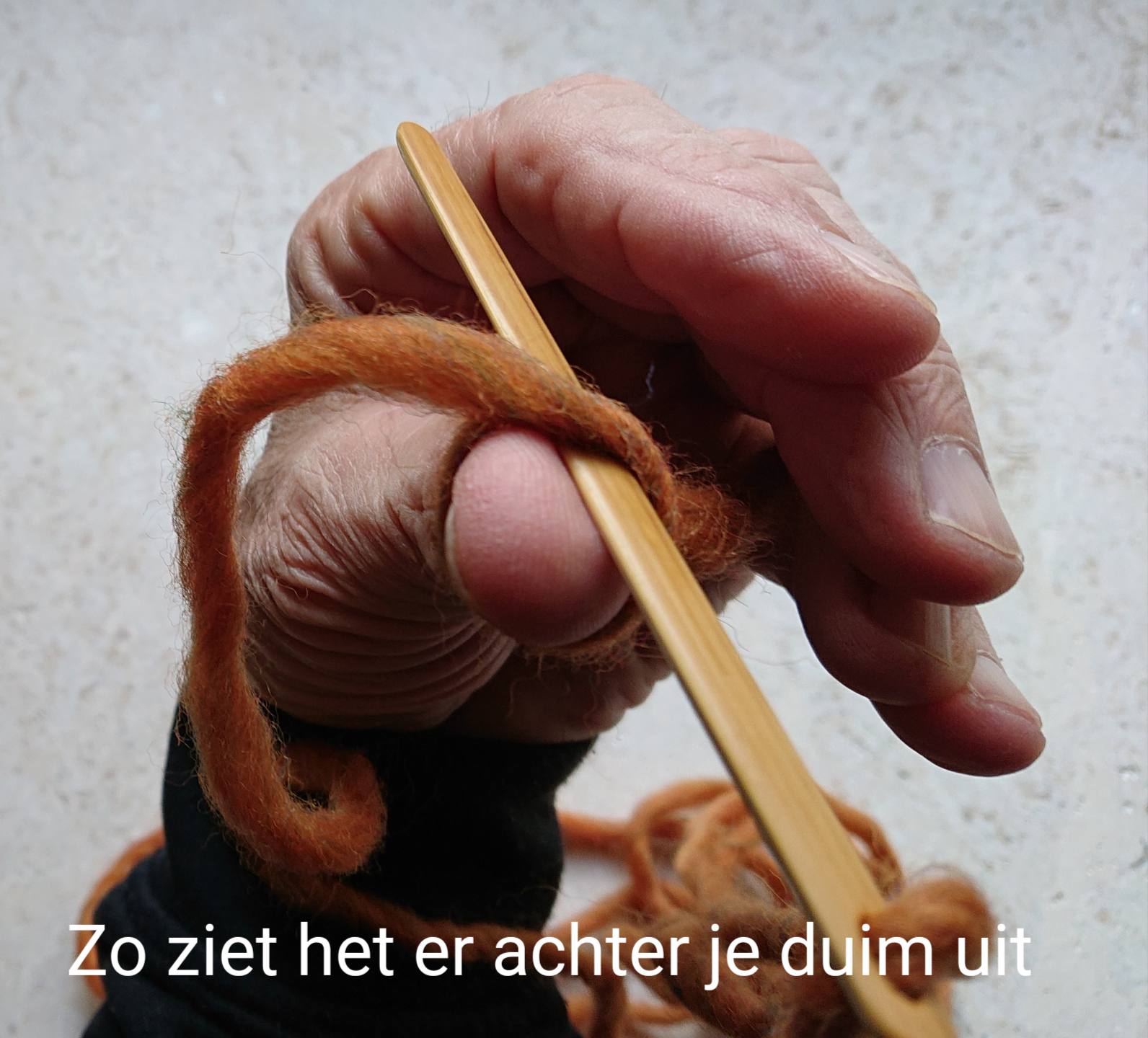
Here you see how it looks behind your thumb.
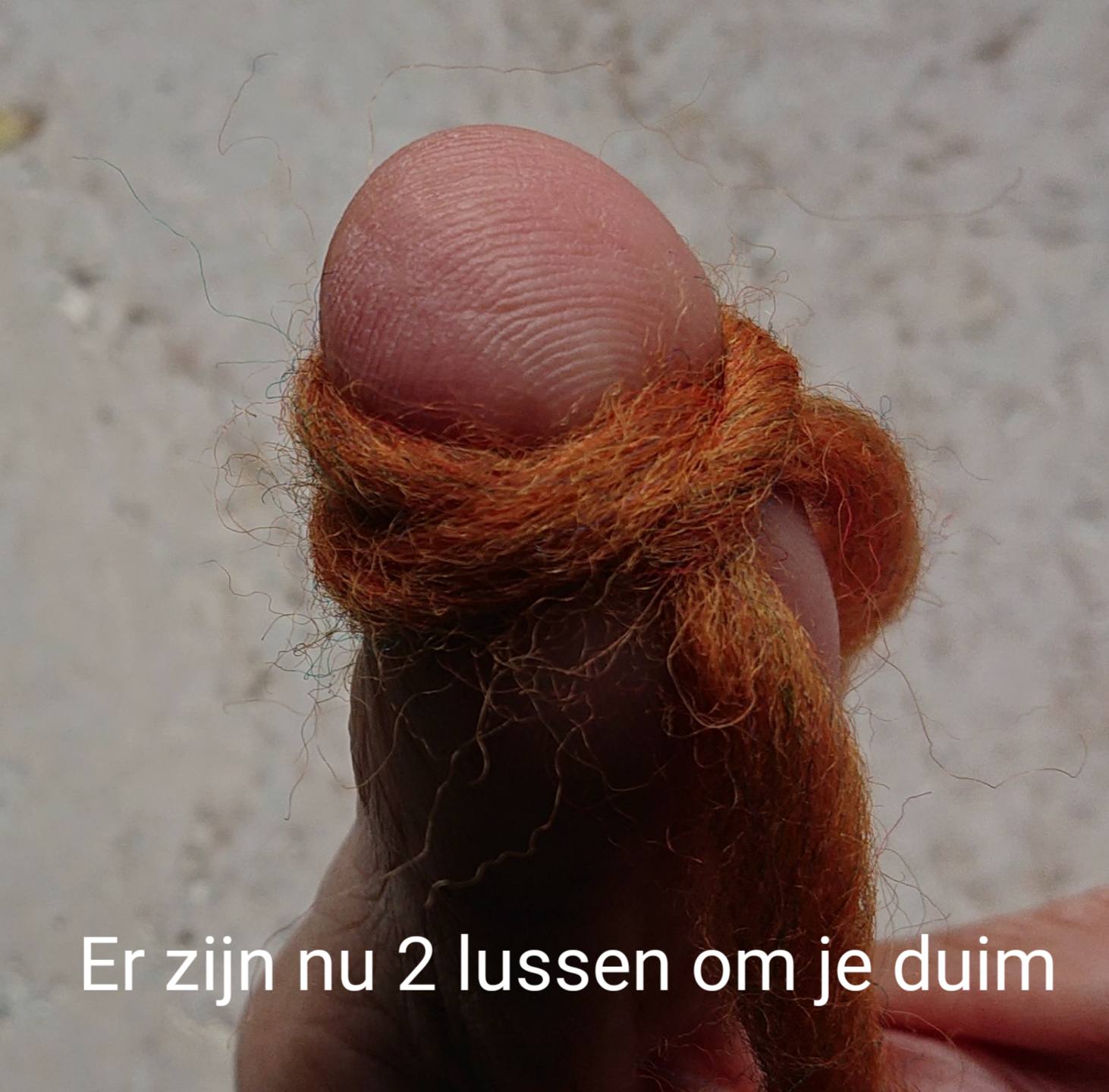
There are now 2 loops around your thumb.
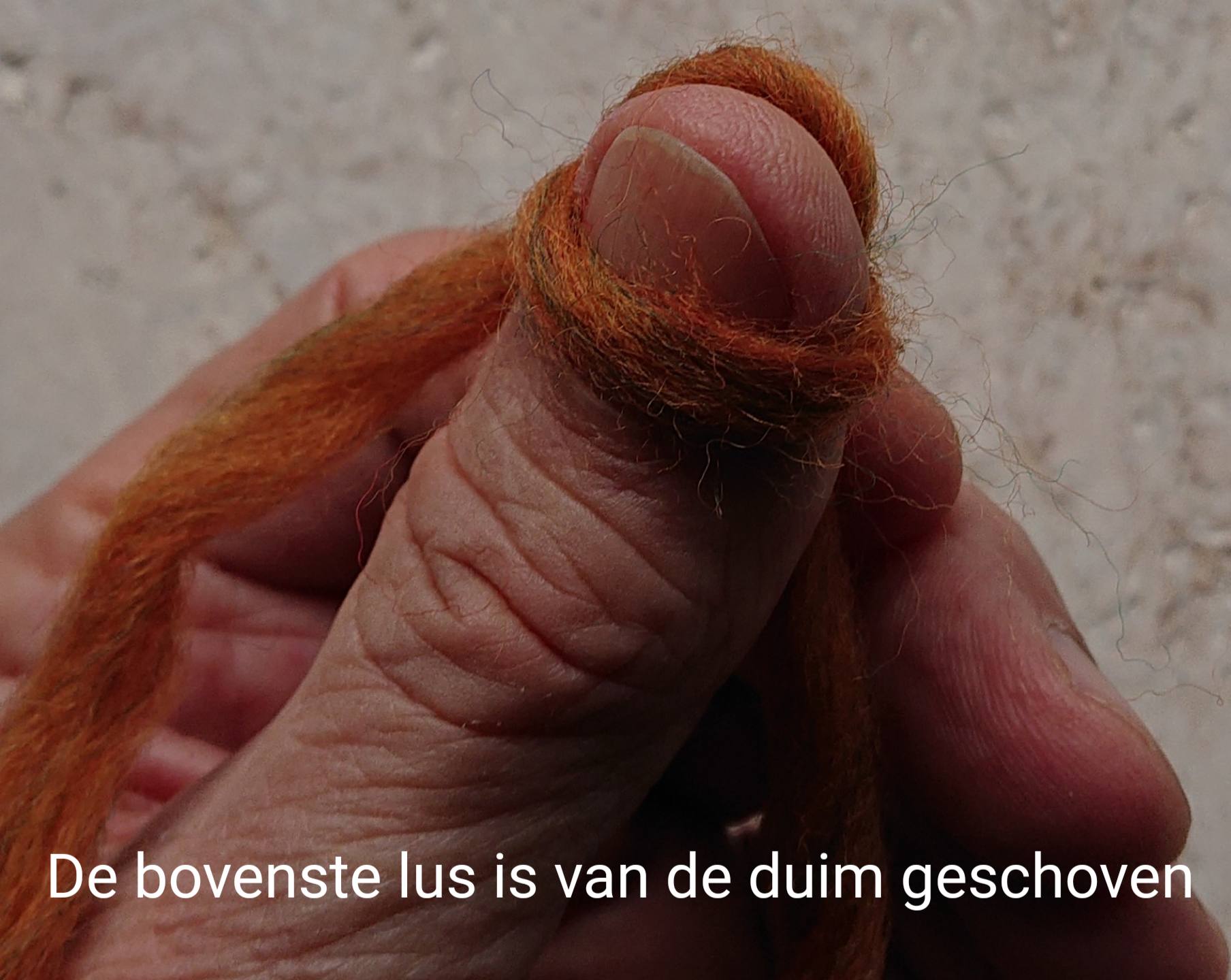
The upper loop of the thumb is gently pussed over the thumb.
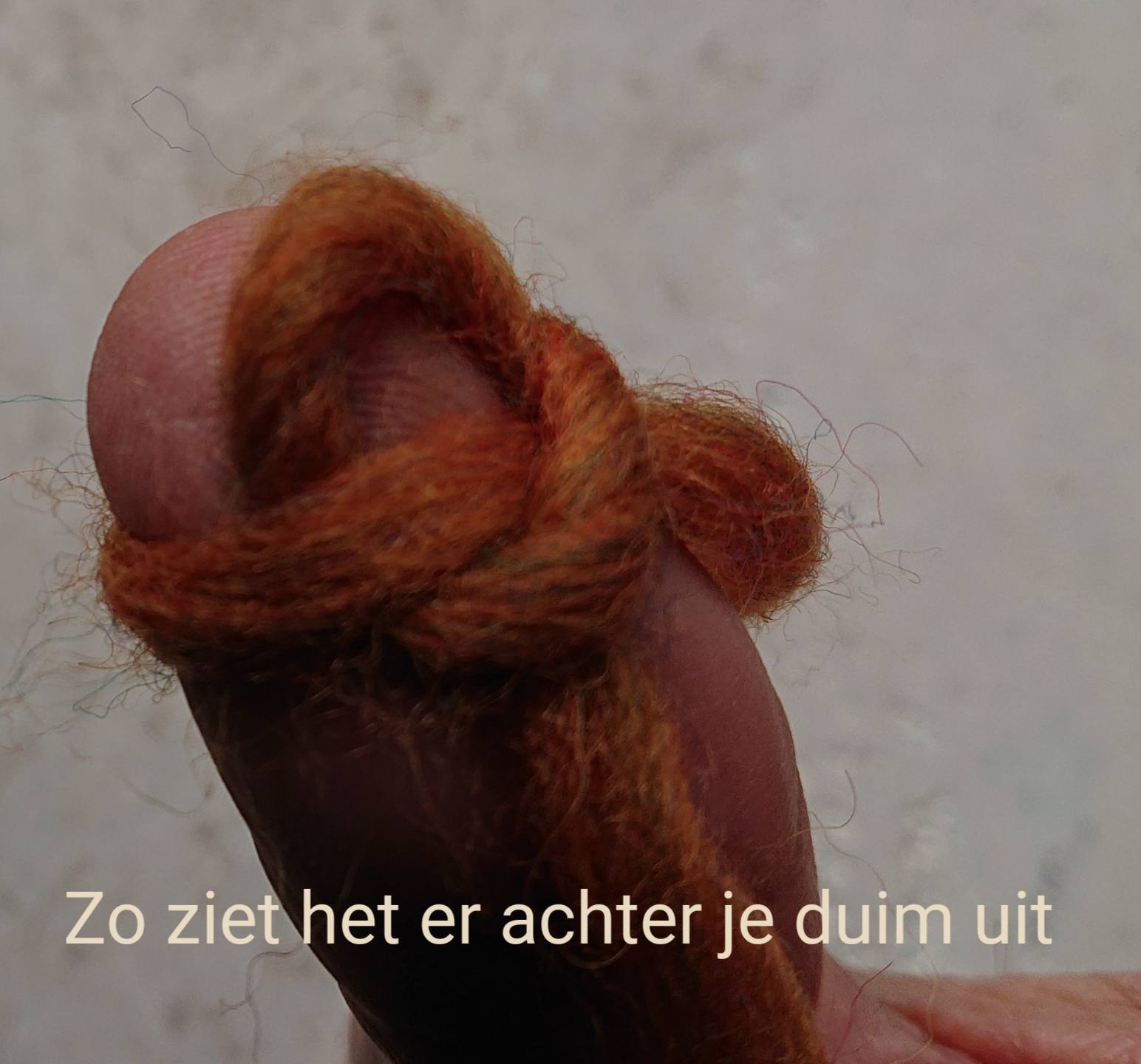
Here you see how it looks behind your thumb.
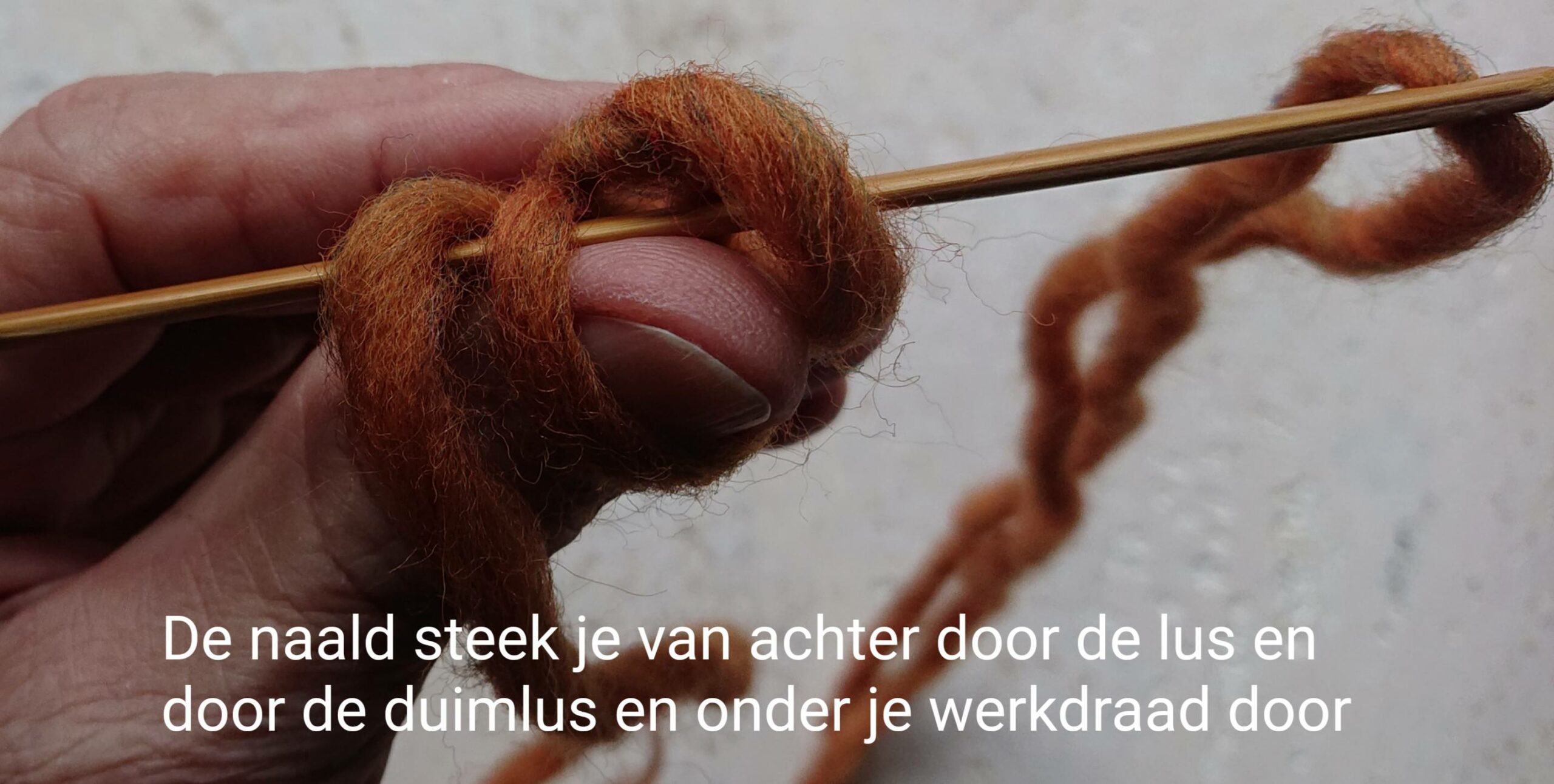
The needle goes from behind through the loop, under the thumbloop and under the working thread.
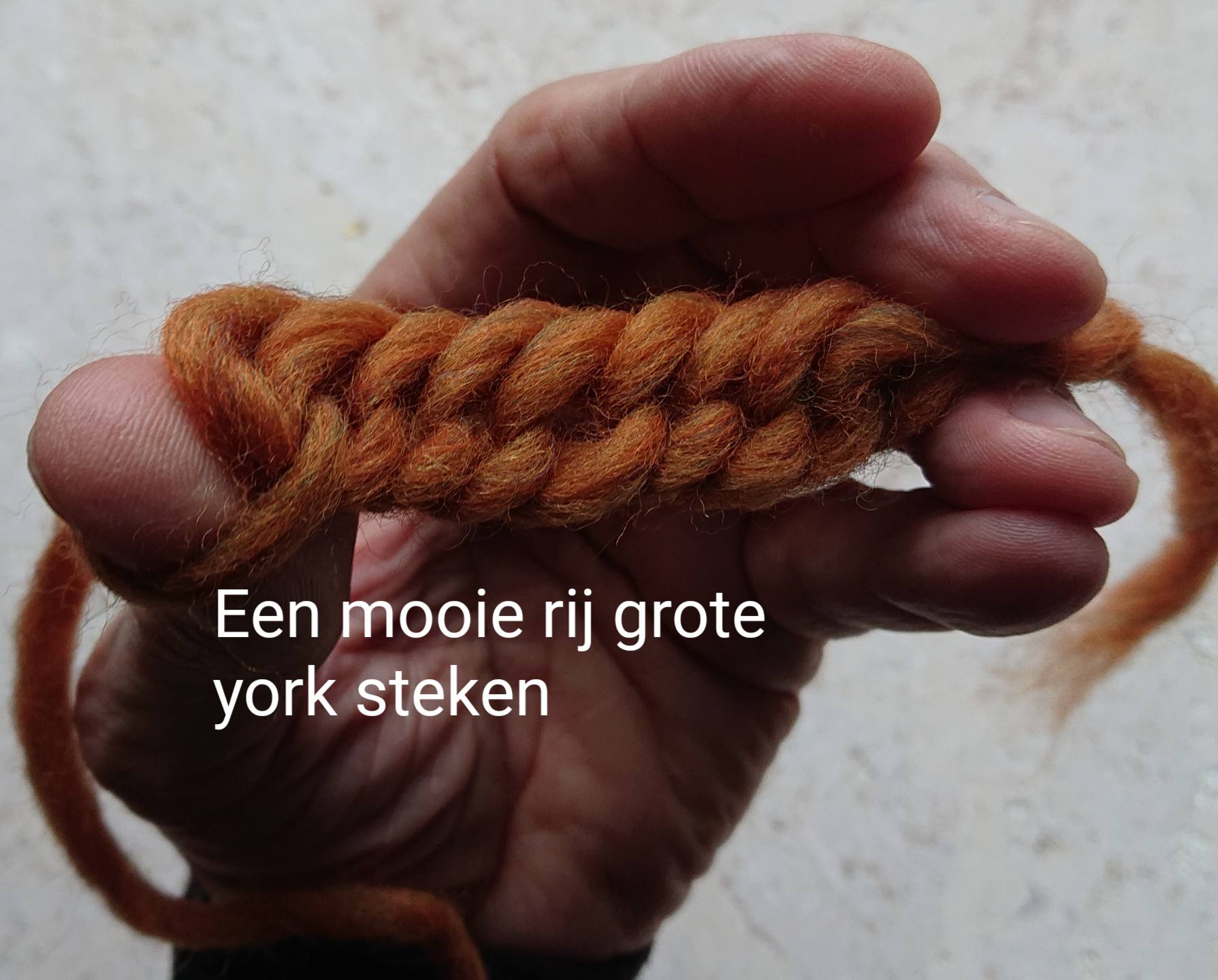
A nice row of York stitches and they are big and stretchable to.
The row of stitches turns in the beginning but after a few rows it becomes less, when you fasten the row around you have to pay attention.
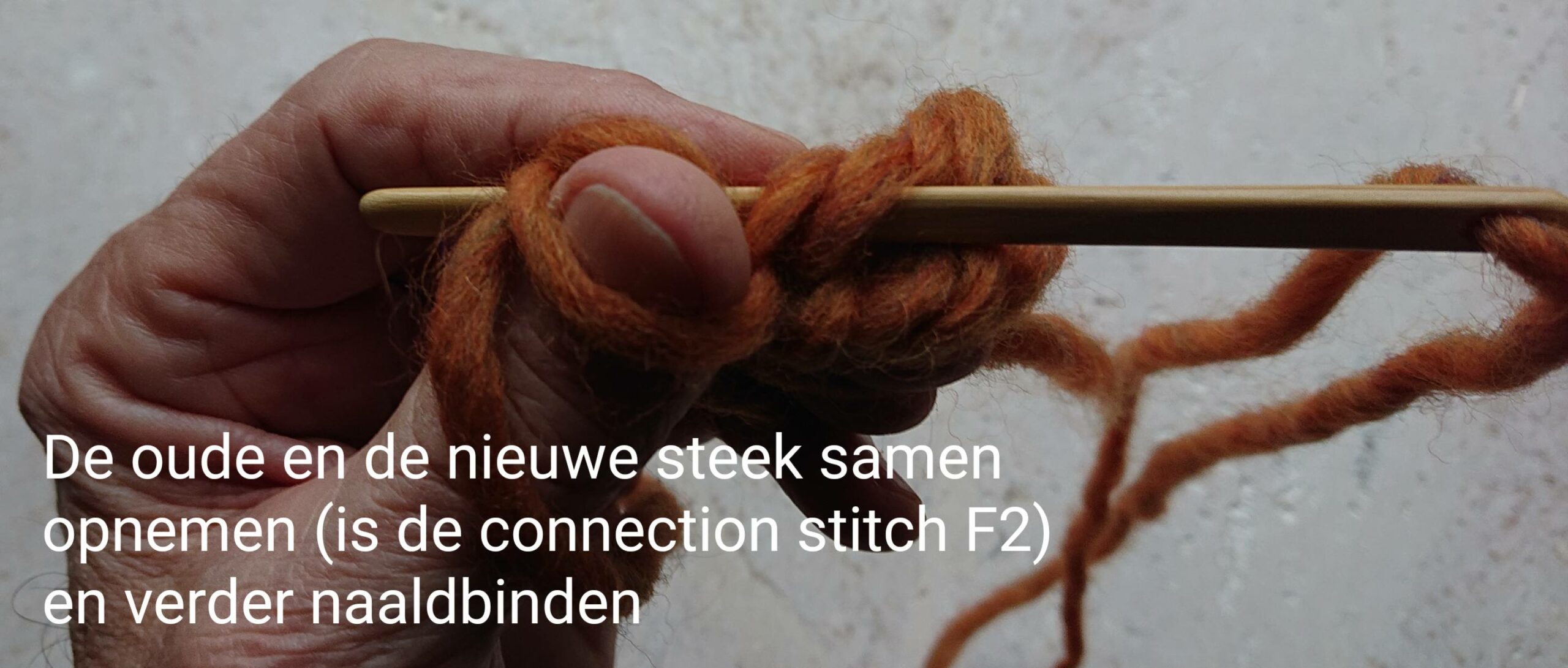
To connect a circel row, insert your needle in the first 2 loops and behind the back loop thumb and through thumbloop and under the working thread.
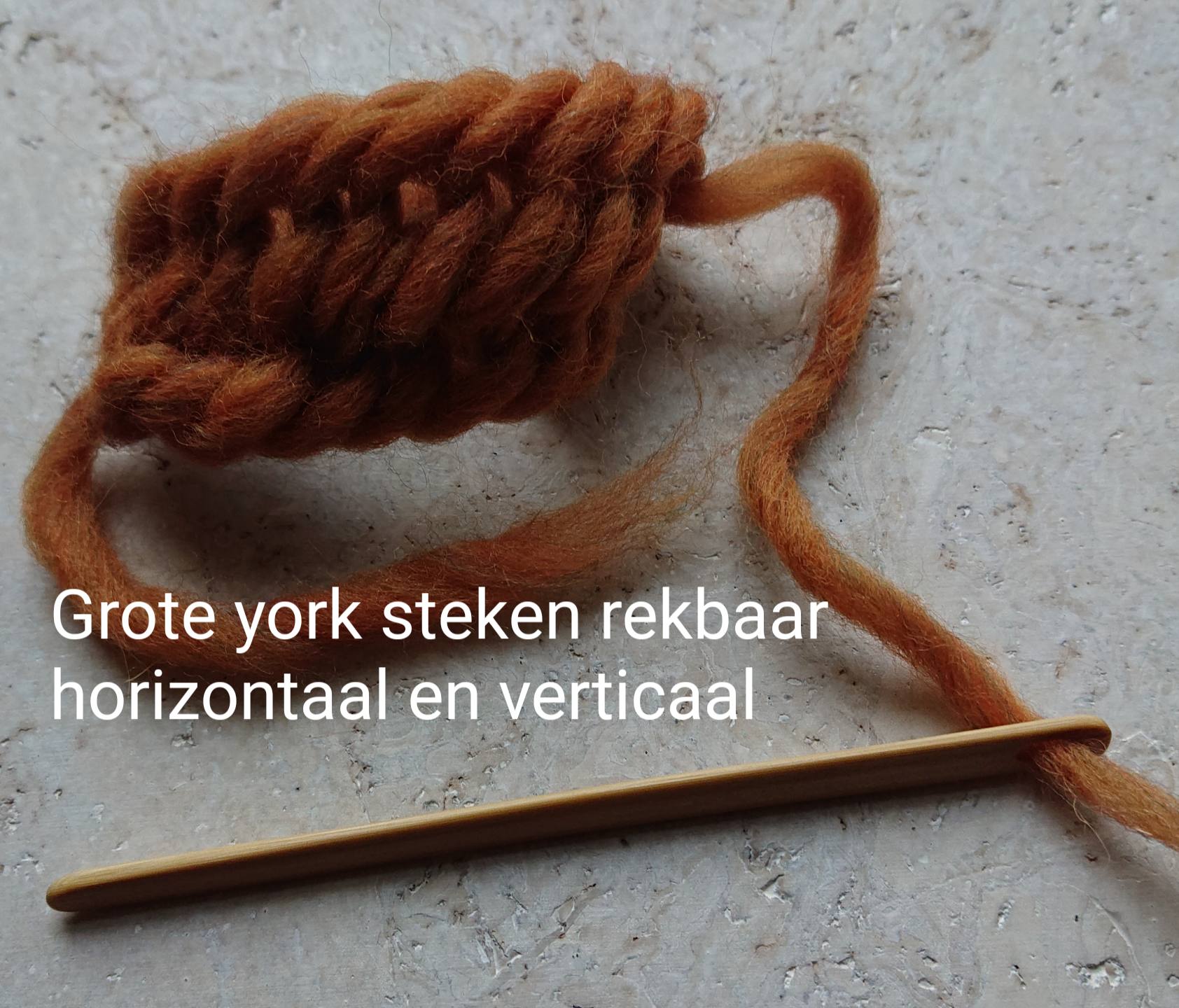
Big stitches and they are stretchable.
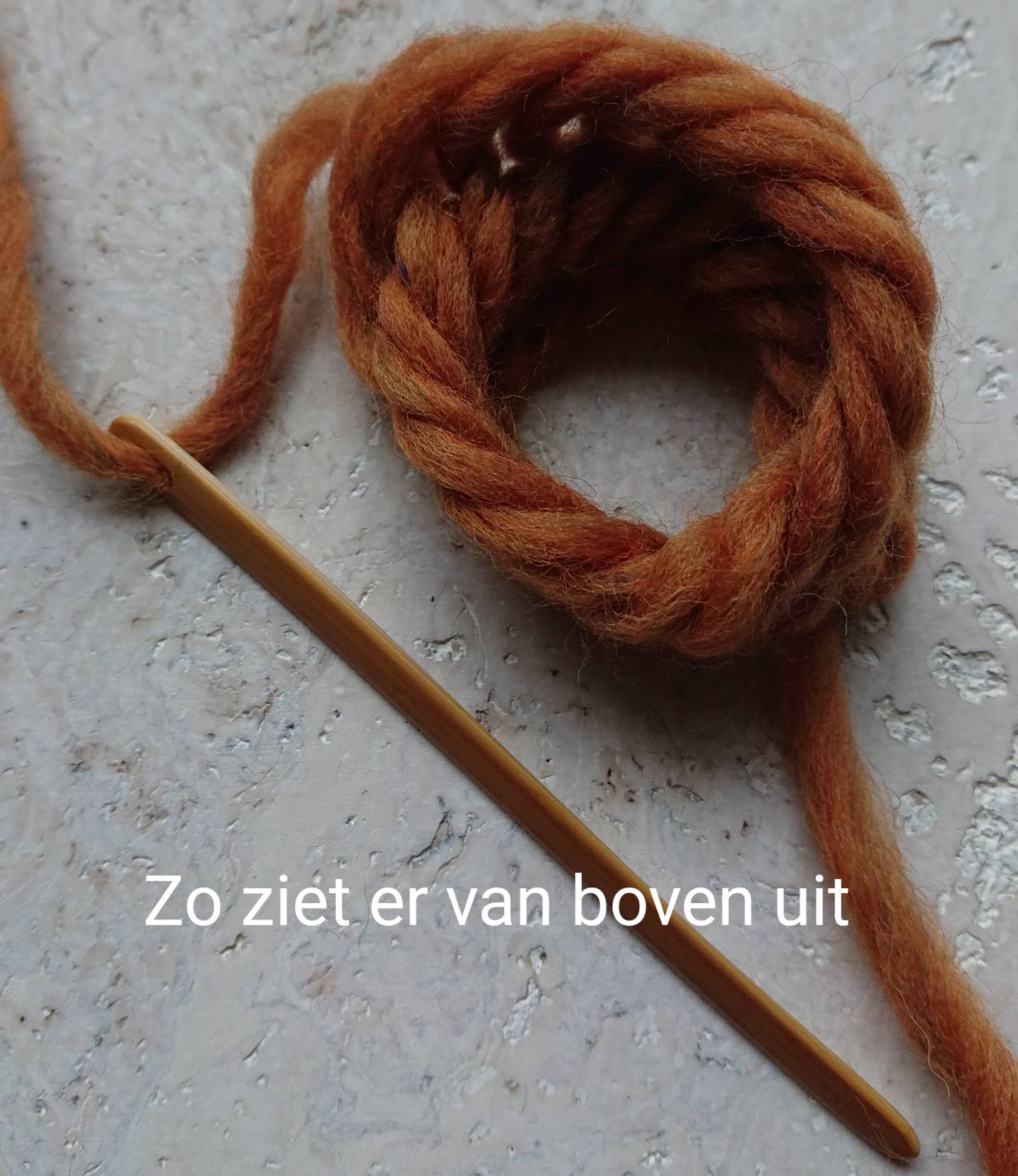
Above it looks like this.
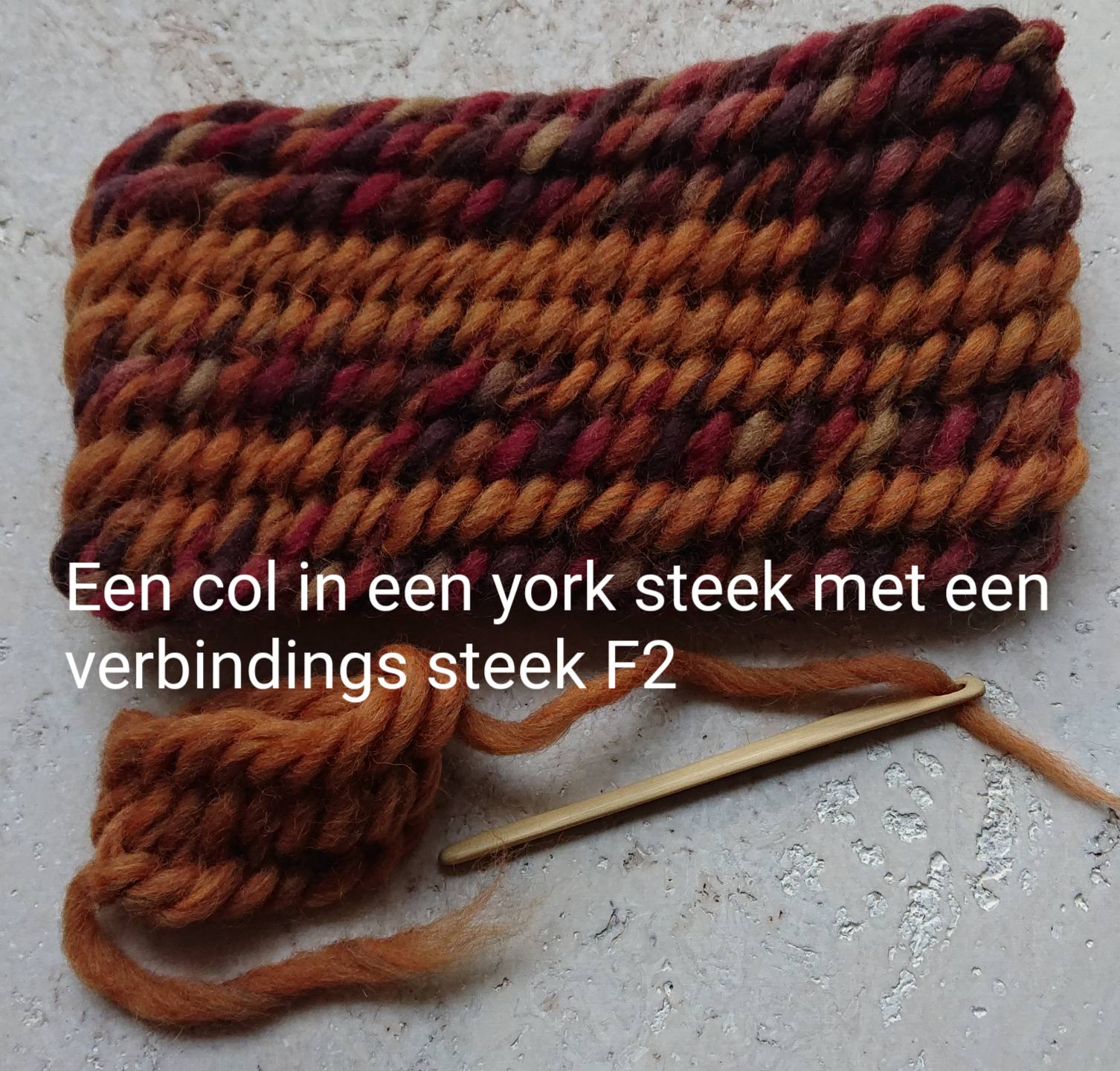
This is in a Dutch language it explanes the Korgen and the Mammen stitch.
The Korgen stitch has 1 loop around your thumb and 2 loops behind your thumb and connection stitch is F1.
The Mammen stitch is the same as the korgen stitch But has a connection stitch F2 and therefore the fabric is dencer. (Mamman = 2 m = F2 to remind it easy). 🙂
I made some more neckwarmers/col.
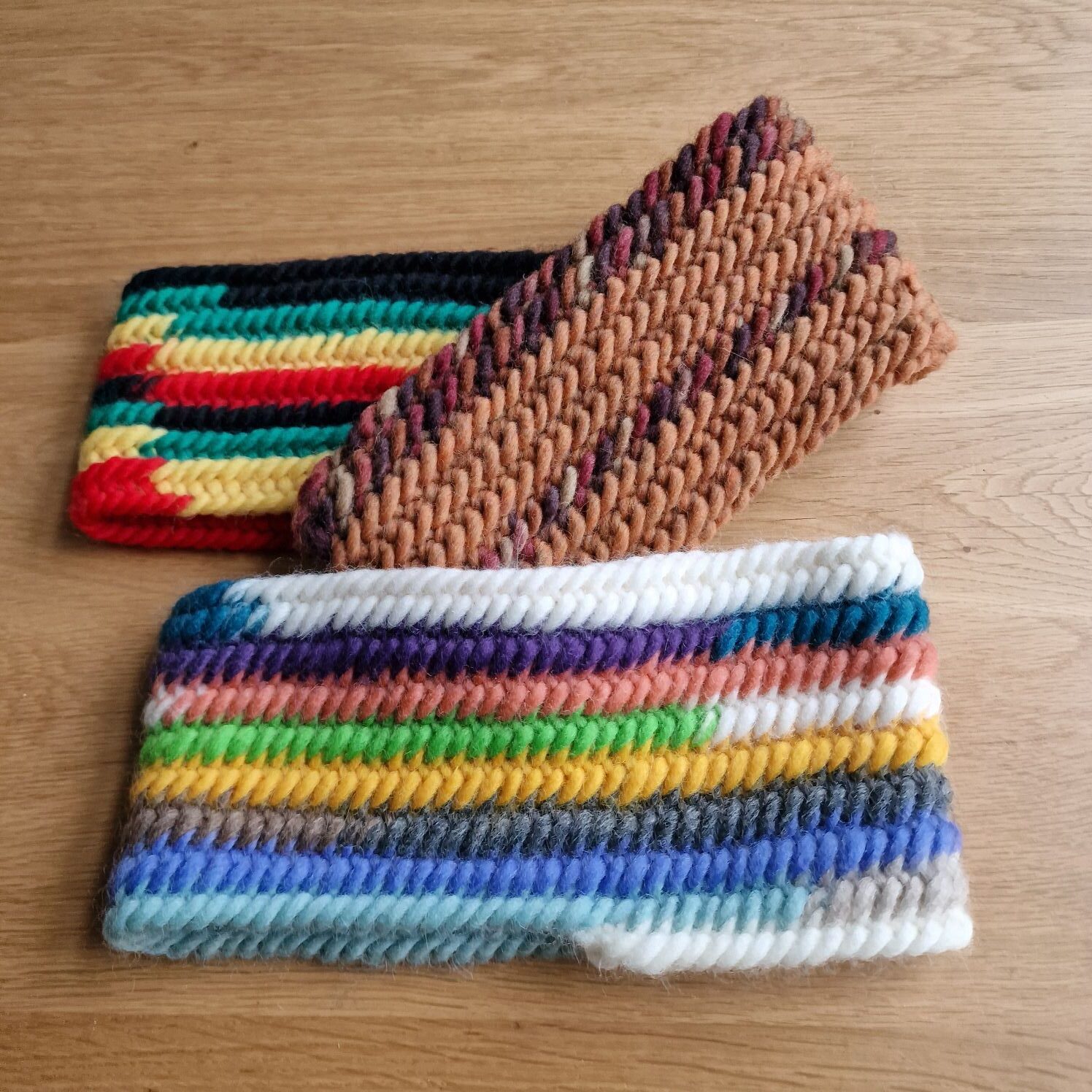
I was nalbinding a neck warmer and made de connection stitch with a twist and discovered the Morbius cowl.
You make the morbius cowl by simply continuing to needlebind the crossed row of stitches as you would make a neckwarmer/col.
Morbius cowl.
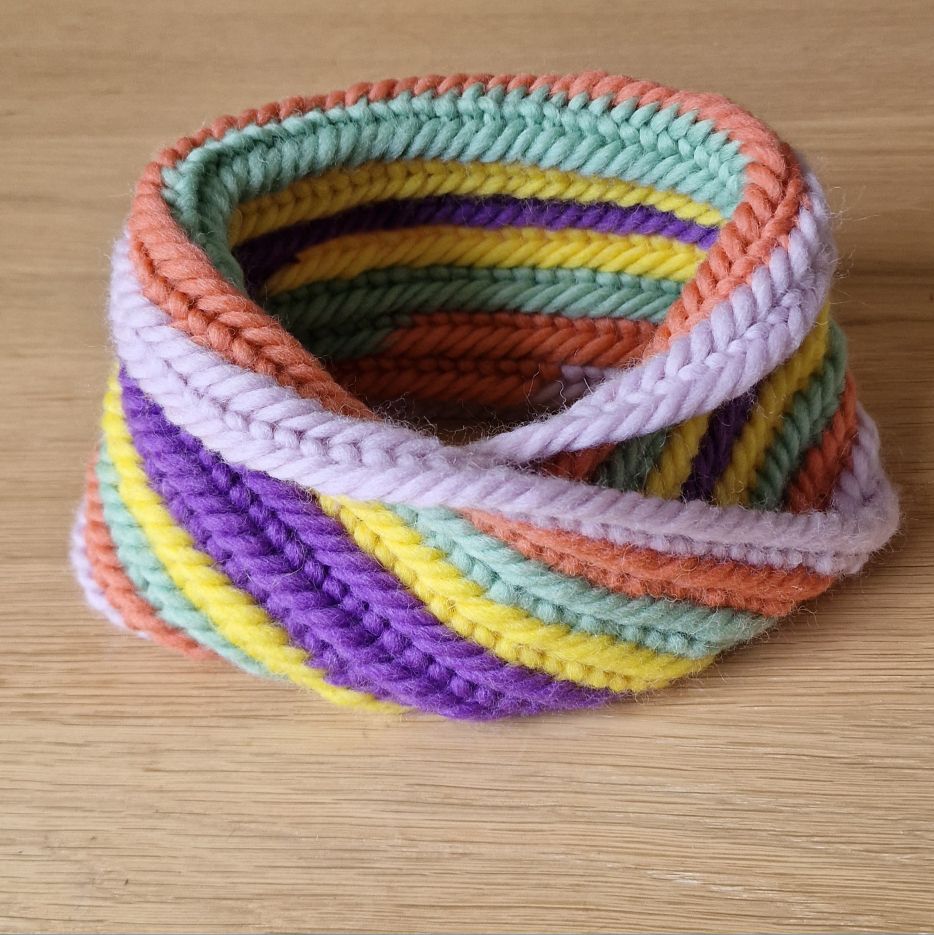
Morbius cowl.
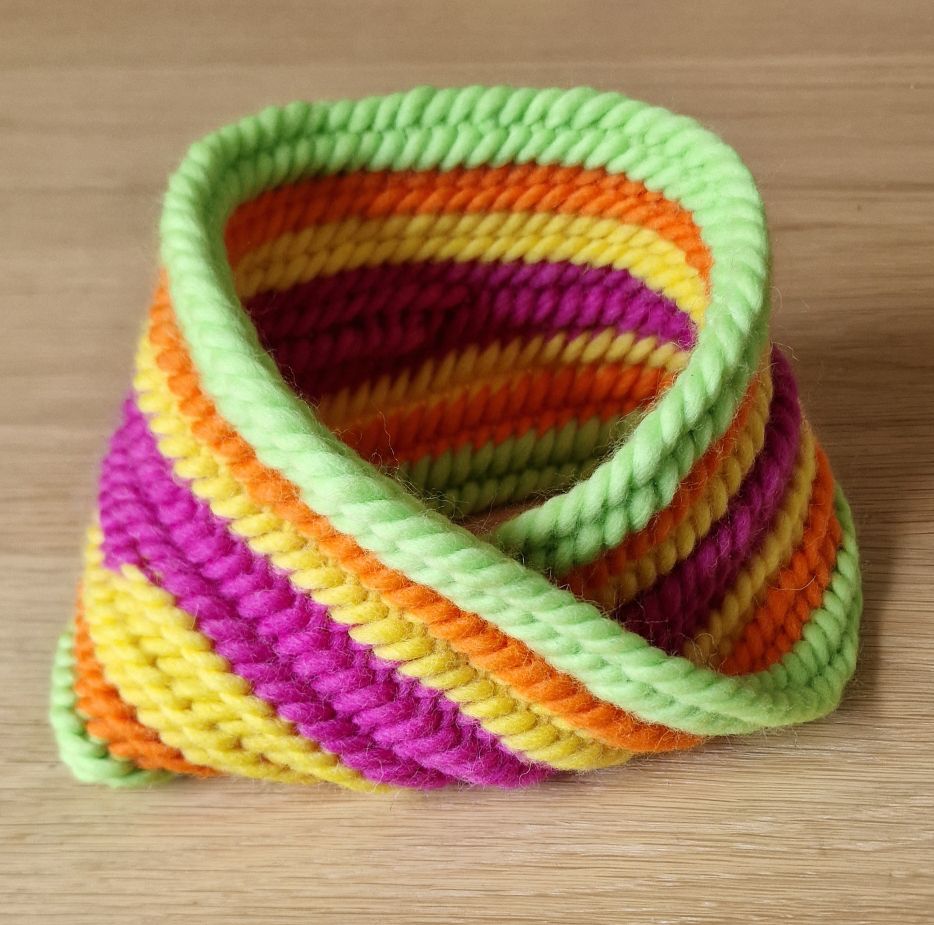
Cowl was made with the york stitch and F1 B1 connection stitch. (b1 is behind).
The first 4 row are needelbind plain.
The 5th round 1 side increase 2 stitches and place a stitchmarker.
The 6th round increase 3 stitches.
The 7th round increase 4 stitcjes.
The 8th round increase 5 stitches.
The 9th round increase 6 stitches.
The 10th round increase 7 stitches, and that was long enough.
You can make it as big as you want, to prevent the edge from waving you can make 1 stitch plain and increase the next stitch and then 1 stitch plain again, etc.
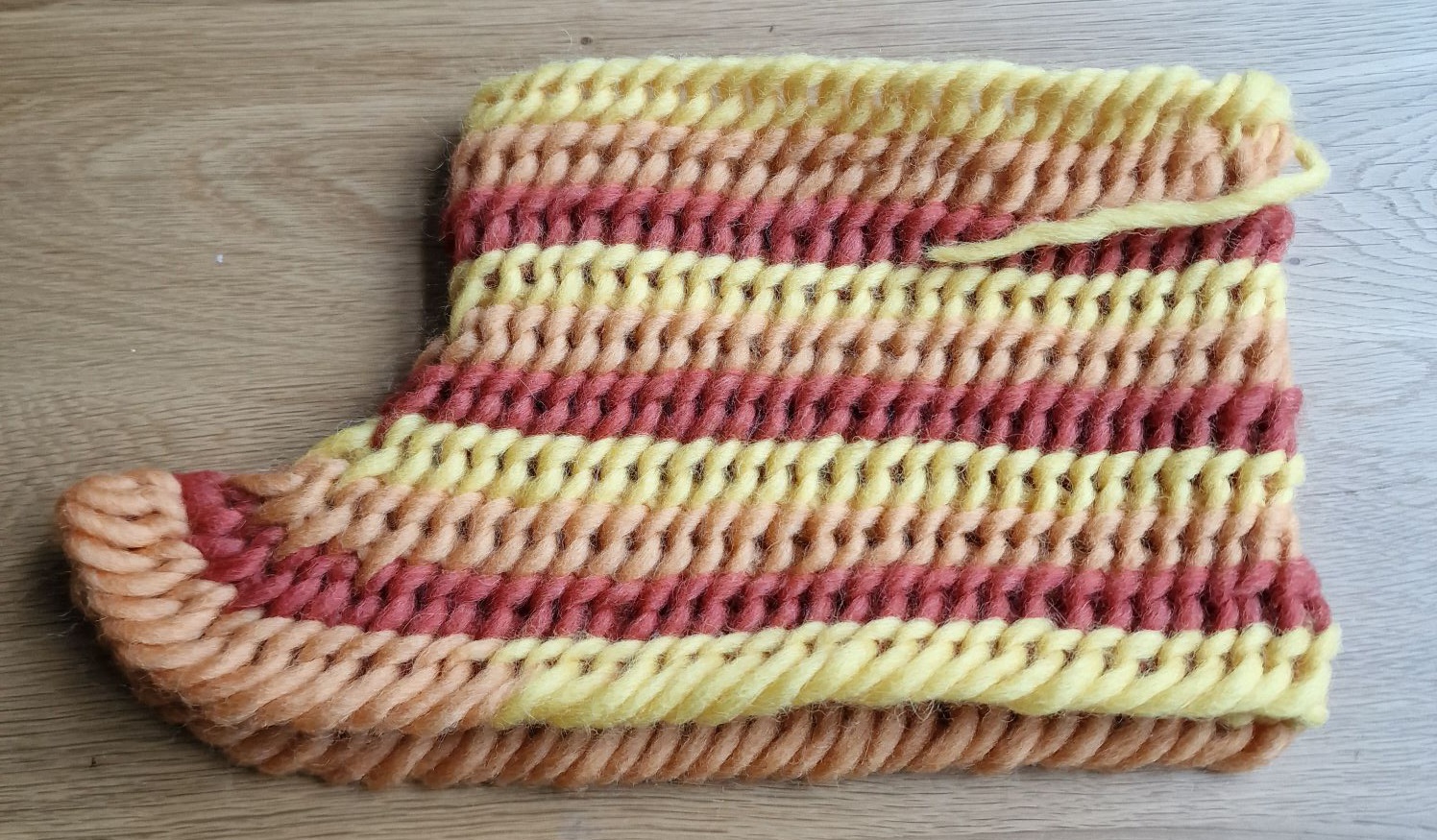
You can also wear the cowl as it is.
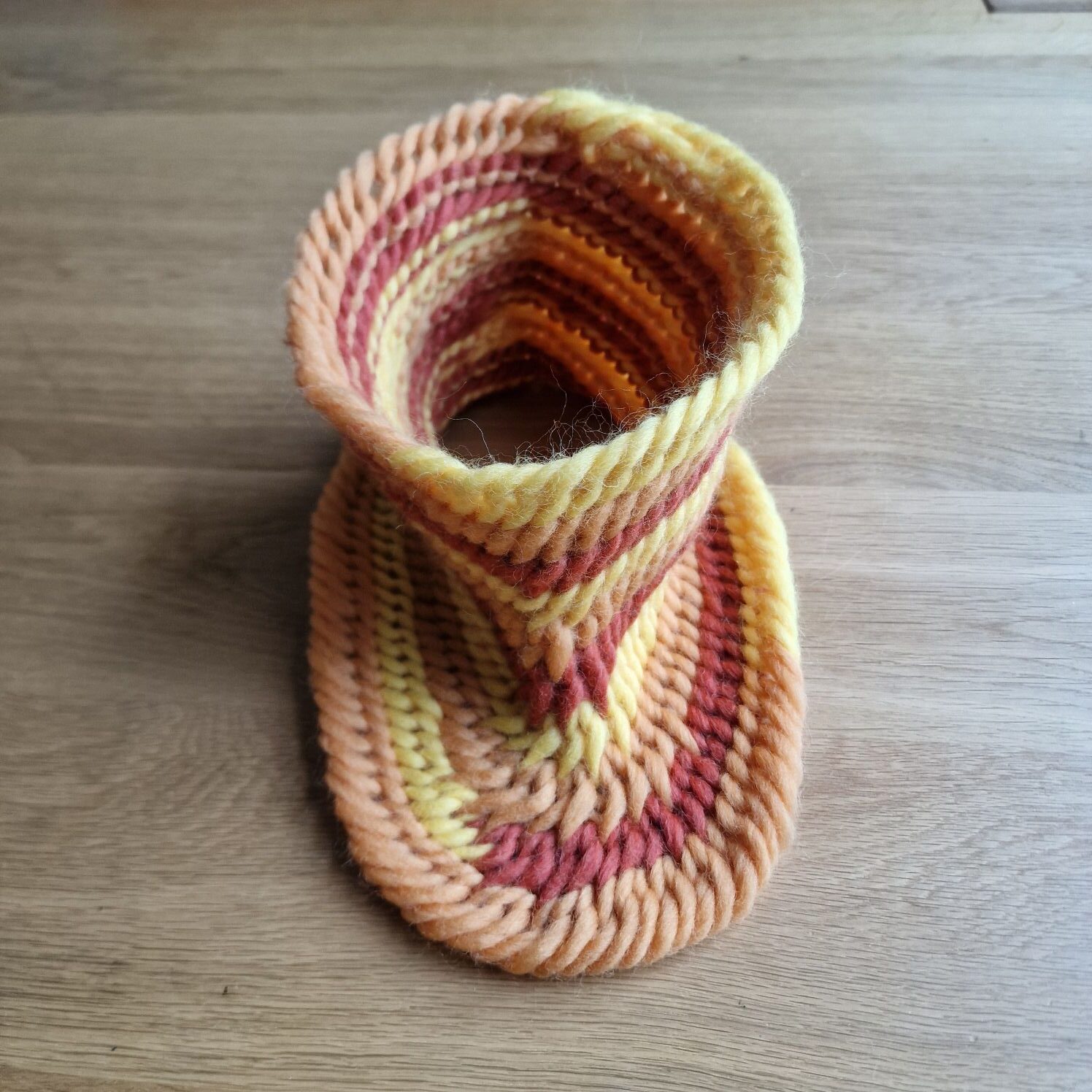
I folded the edge.
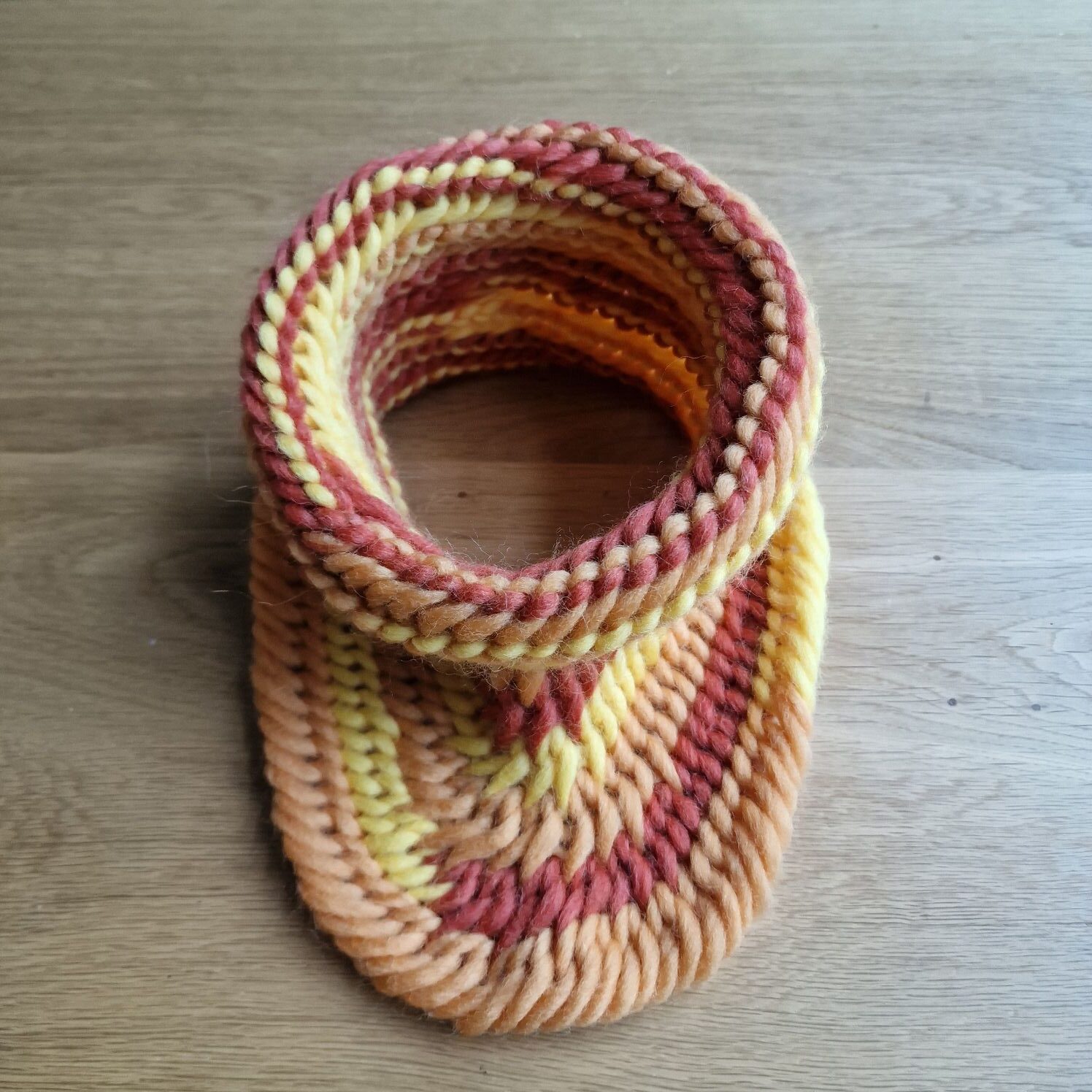
I’m going to make the next collars a little bigger with another stitch.
Cowl with the Arboga stitch and F1 connection stitch. ( same patern as above ).
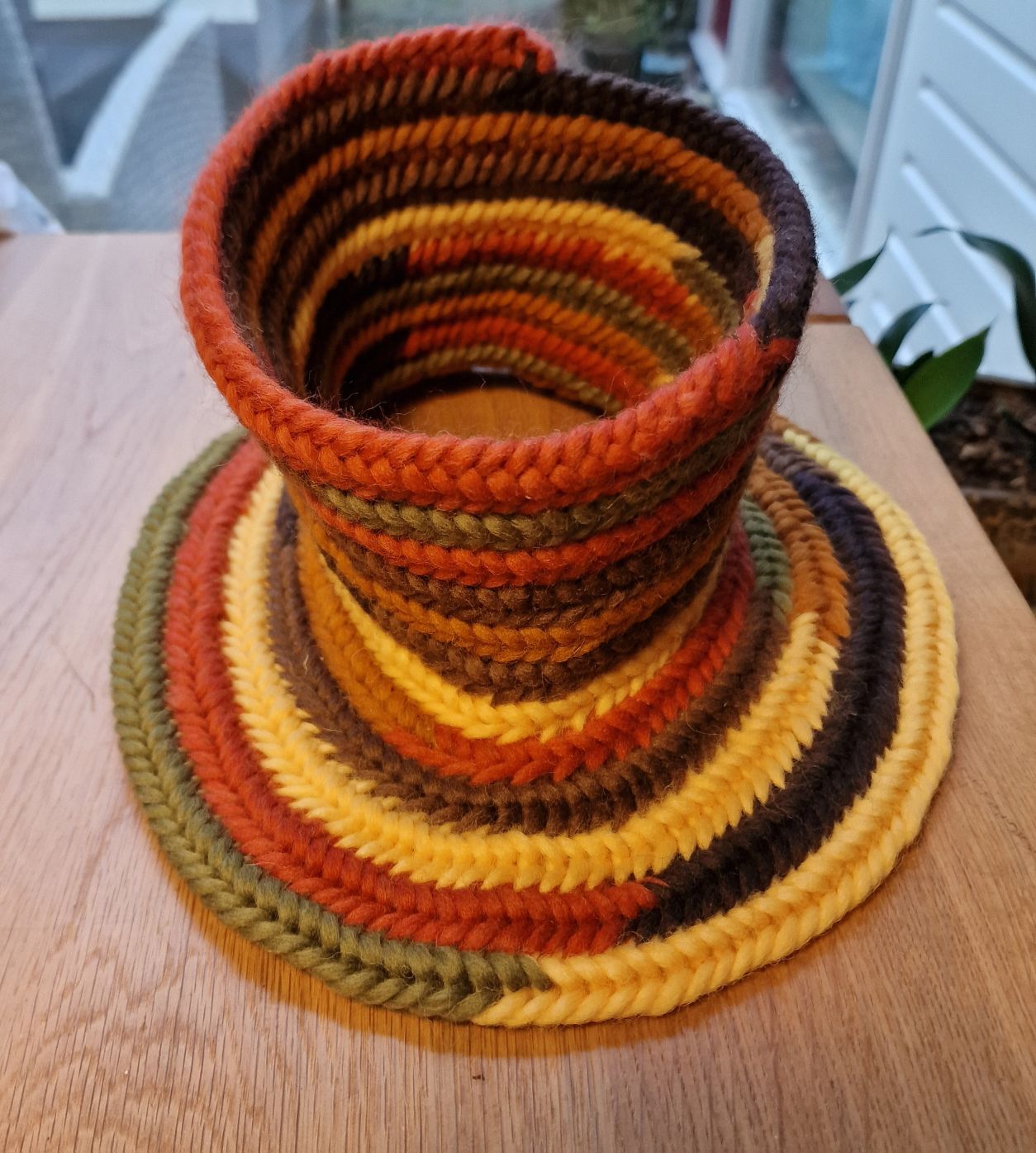
The easy Arboga stitch is one of my favorite stitches ( very beautiful ).
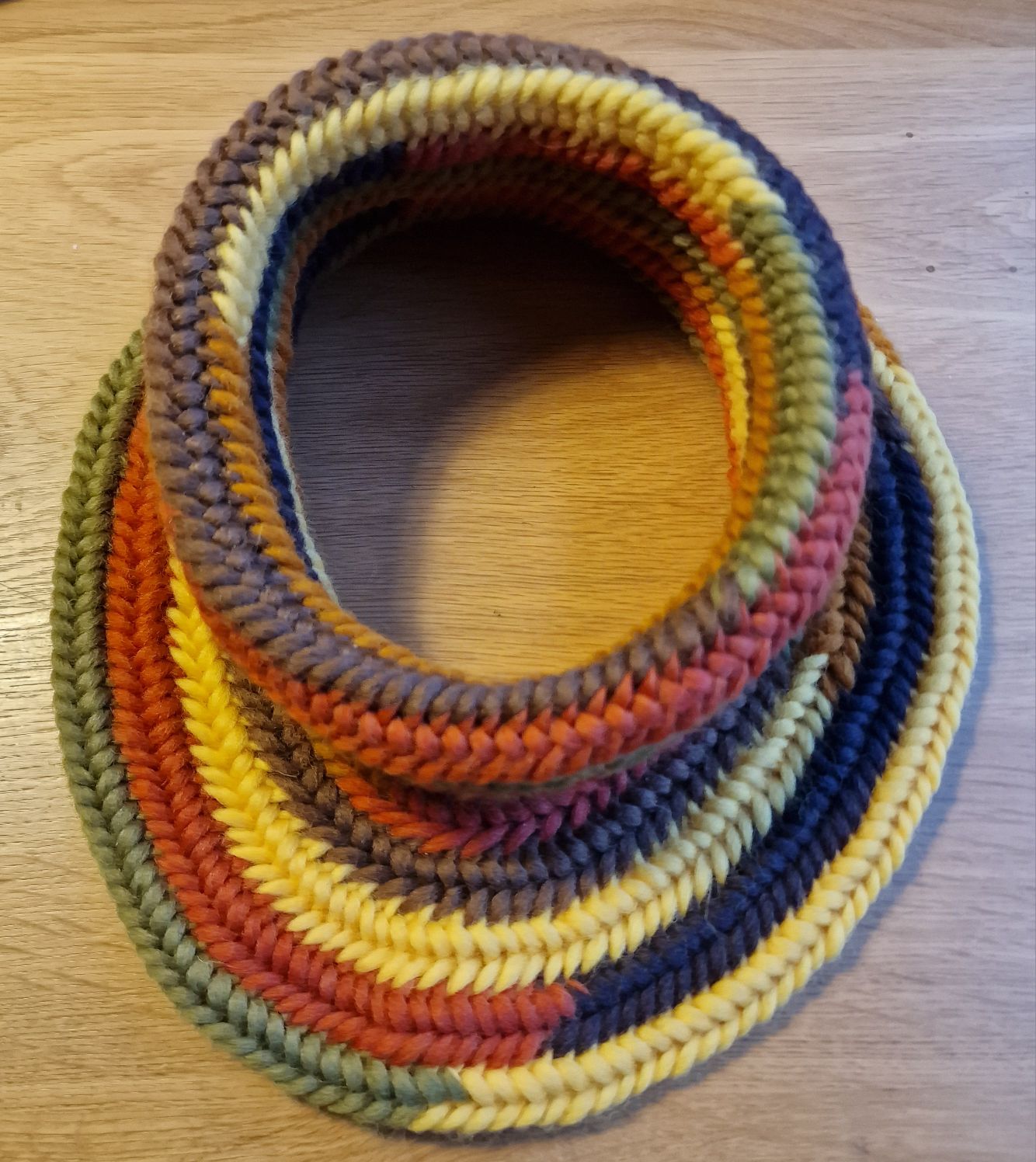
This Arboga F1 fabric was a lot denser than the York F1 B1 and that was my intention.
Today it is 22 december 2023 and i made my 34 th video at my YouTube channel happy needlebinding.
The video shows how i make a Cowl/Col.
Another Cowl with the Faberg stitch with the edge with connection stitch F1 B1 and continue the next rounds with connection stitch F1.
The first 6 rounds are needlebinding with plain stitches.
The next round 3 stitches plain and the 4th stitch increase.
The next round 4 stitches plain and the 5th stitch increase.
The next round 5 stitches plain and the 6th stitch increase.
This cowl is slightly larger than the previous one.
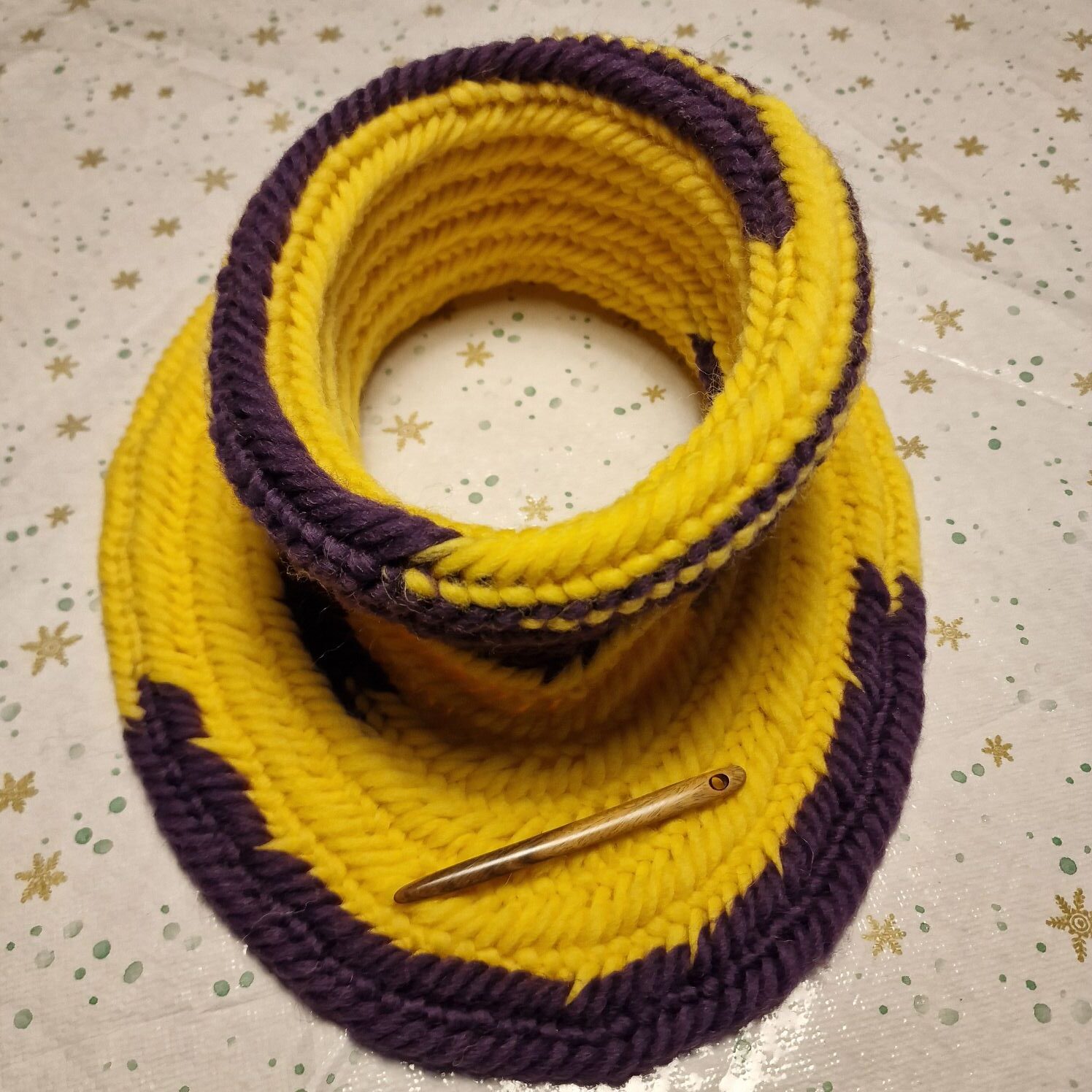
The needle is made of Pock wood, very hard and beautiful wood for nalbinding.
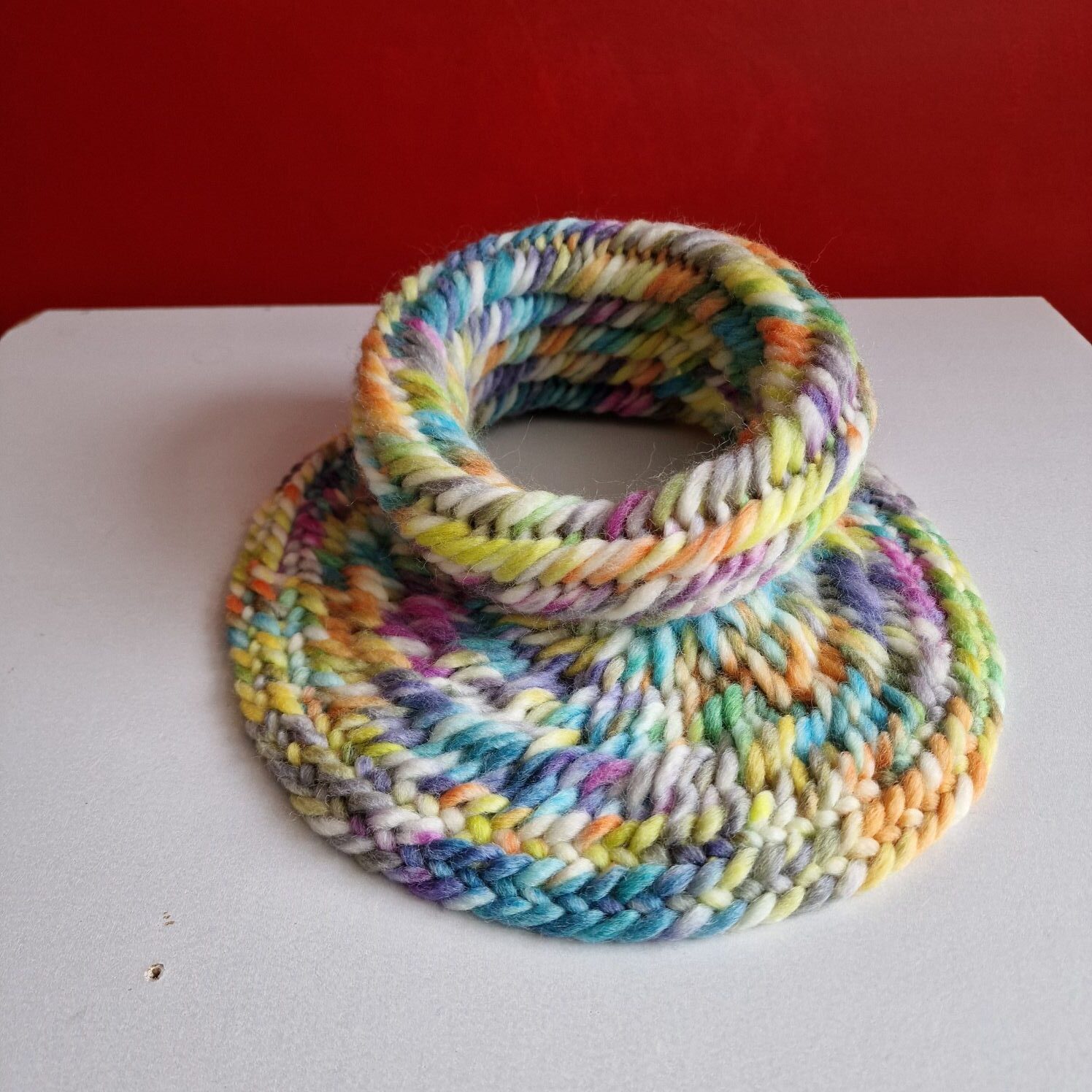
This cowl is made with the York stitch and the edge is made with the Oslo stitch and the connection stitch is F1.
When you nalbind your mobius neckwarmer a bit larger it is going to be a hairband, so your ear get warm in the winter.
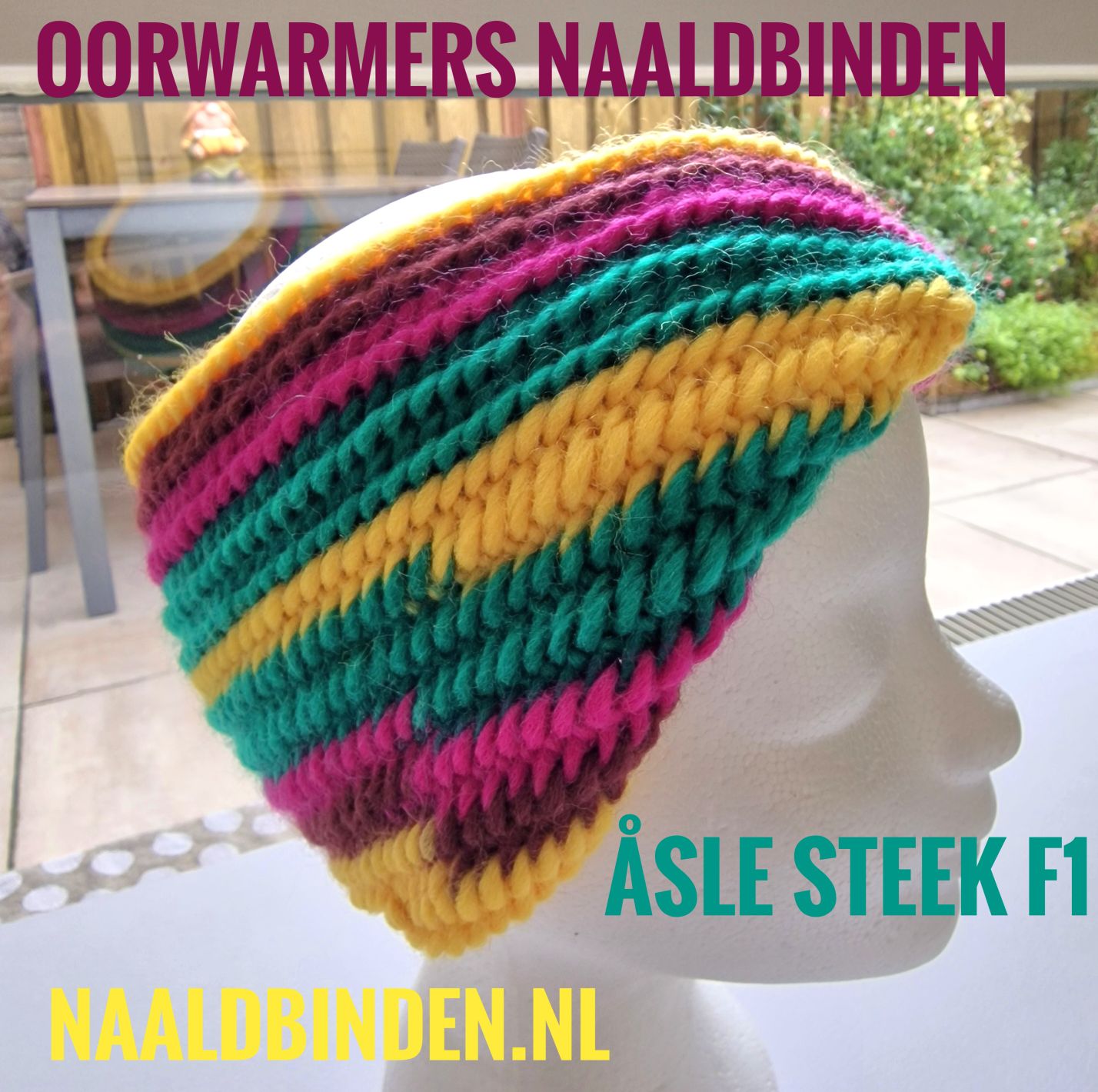
The asle stitch is a very dense stitch and you get a very warm ears mobius warmer.
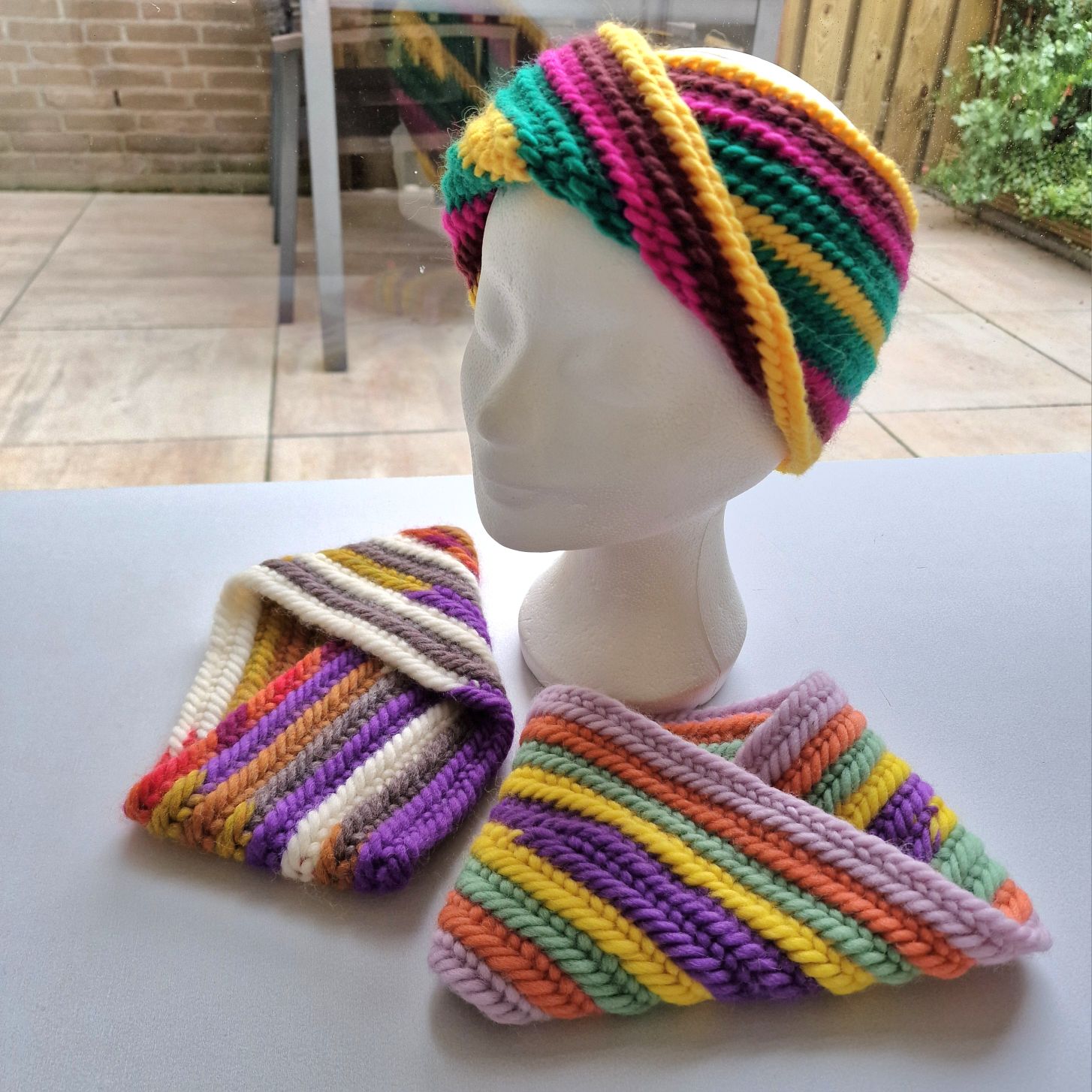
The next simple neckwarmer is nalbind with the York stitch F1 and the edge is nalbind with the Oslo stitch also F1.
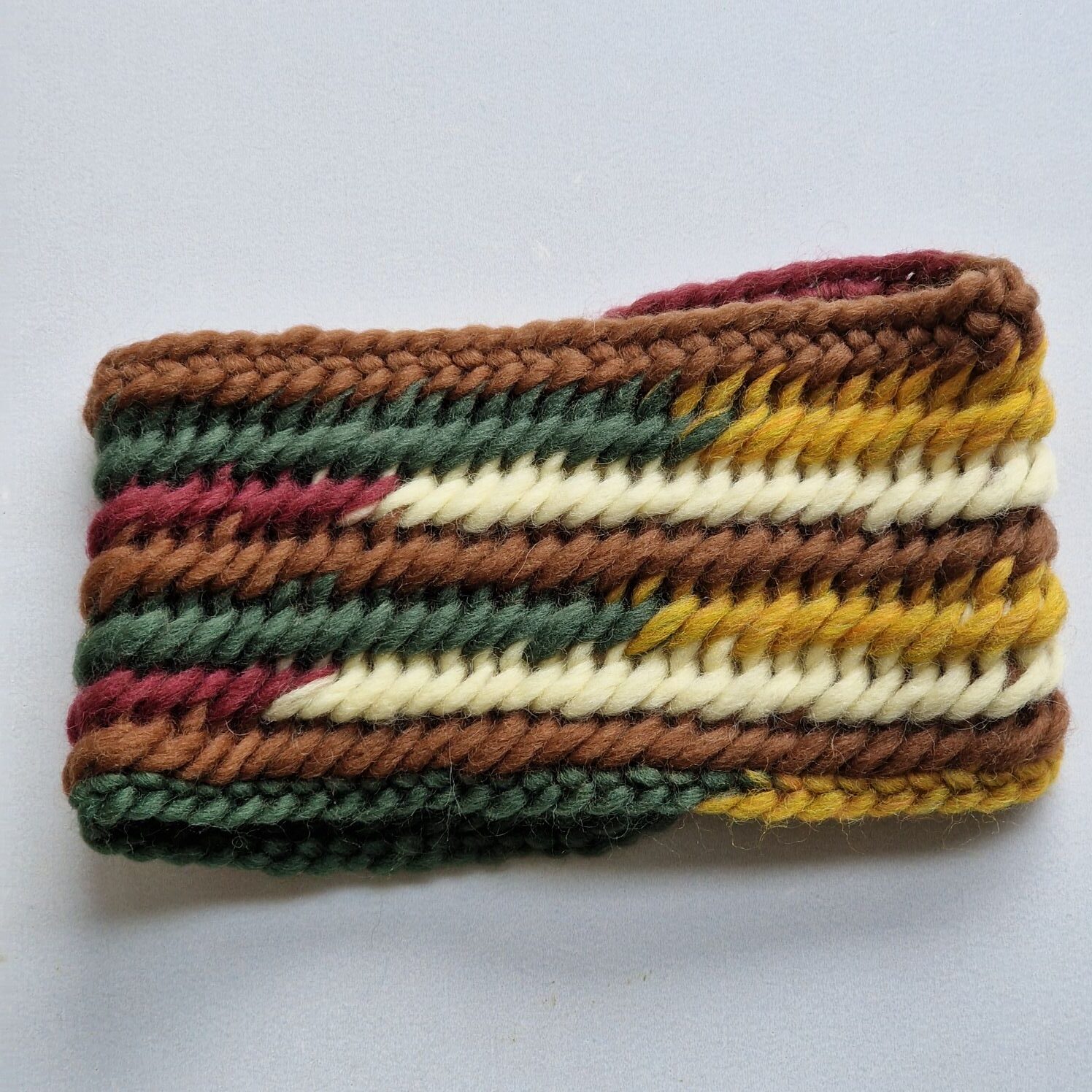
The edge of the York stitch is very loose, with an edge nalbind with the Oslo stitch you get a nice sturdy edge.
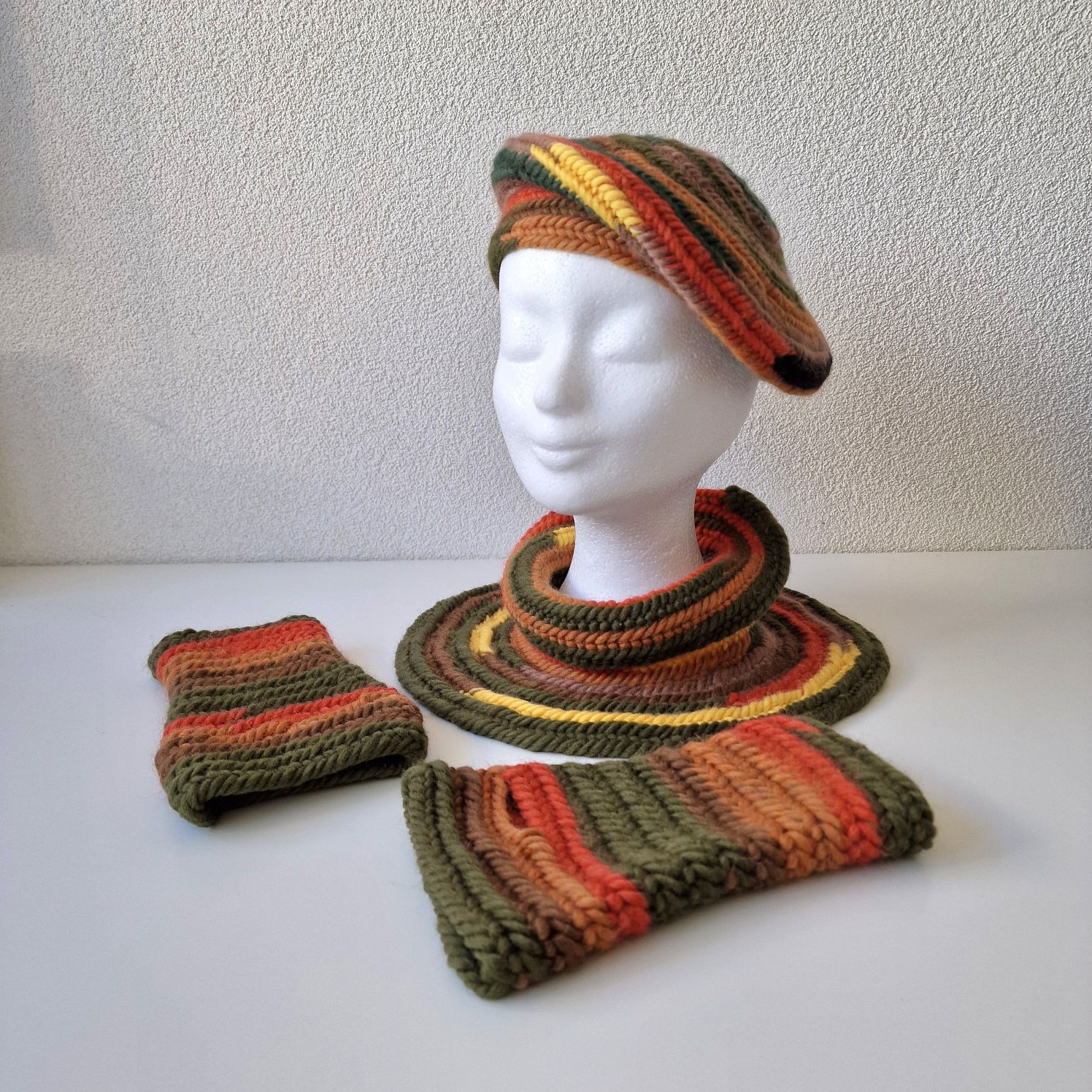
In the section on the beret, you can see how it is constructed using the *nalbinding* (needle-binding) technique.

The cowl follows a very simple pattern: work a row of stitches and join them together to create an opening large enough for your head to pass through. Once the collar reaches the desired height, place a stitch marker and begin increasing. In the first round, work 4 stitches normally, then increase in the 5th stitch. In the second round, work 5 stitches normally, then increase in the 6th stitch. In the third round, work 6 stitches normally, then increase in the 7th stitch, and so on—you can decide for yourself how large the cowl should be.
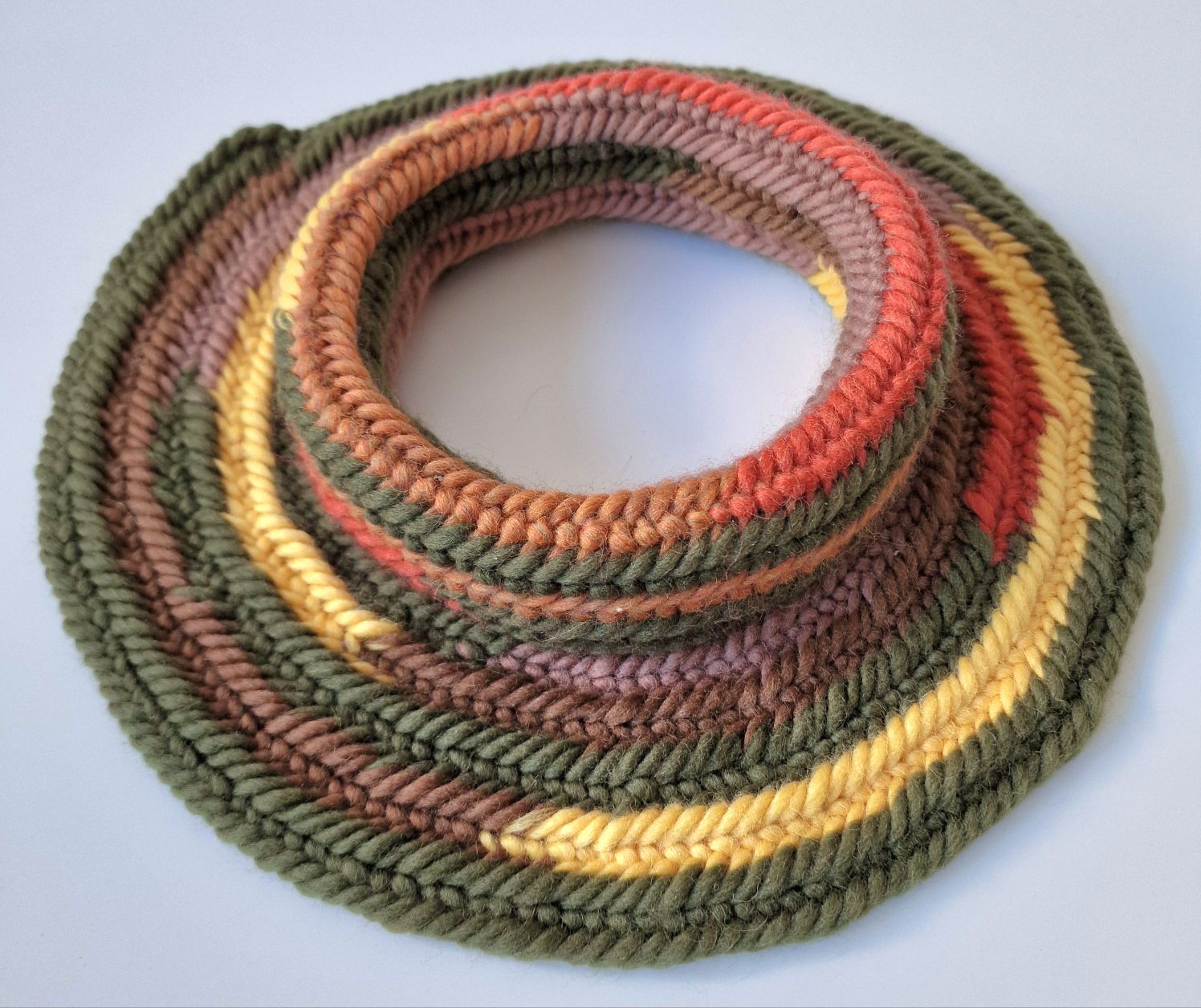
I am currently nalbinding a cowl with a very large collar, which will eventually become a sort of poncho.
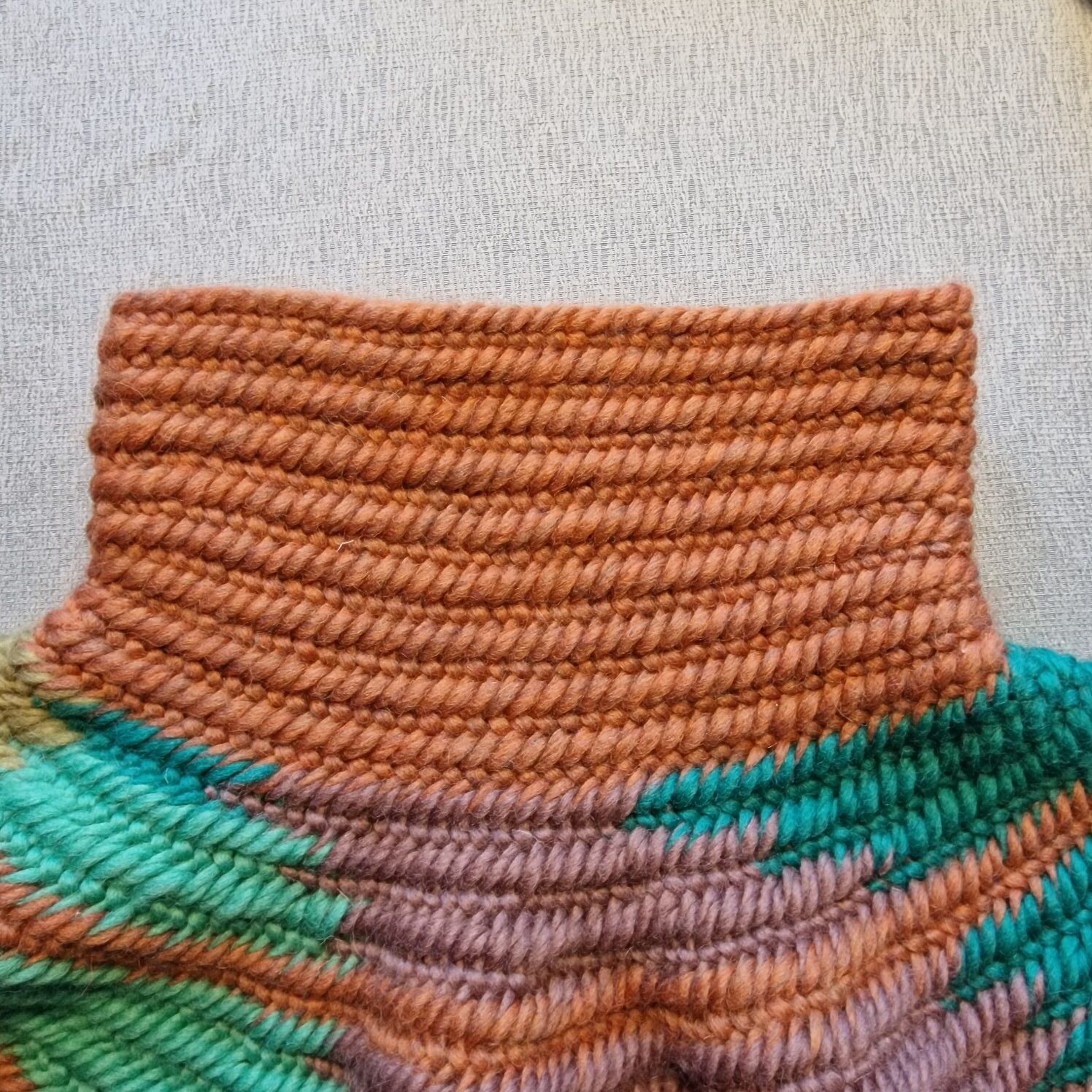
Once the cowl reached the desired height, I began increasing. The first increase involved working 3 stitches normally and then increasing on the 4th stitch; this makes the cowl larger, but it also causes it to become "wobbly"—as you can clearly see in the photo above. For a witch's hat, this is a desirable effect, as you want the brim to "ripple" or "wave." The cowl in autumn colors, however, has a nice, flat edge; this was achieved by using a higher frequency for the increases—specifically, working 4 stitches normally and then increasing on the 5th stitch. In the following round, you work 5 stitches normally and increase on the 6th, and so on.
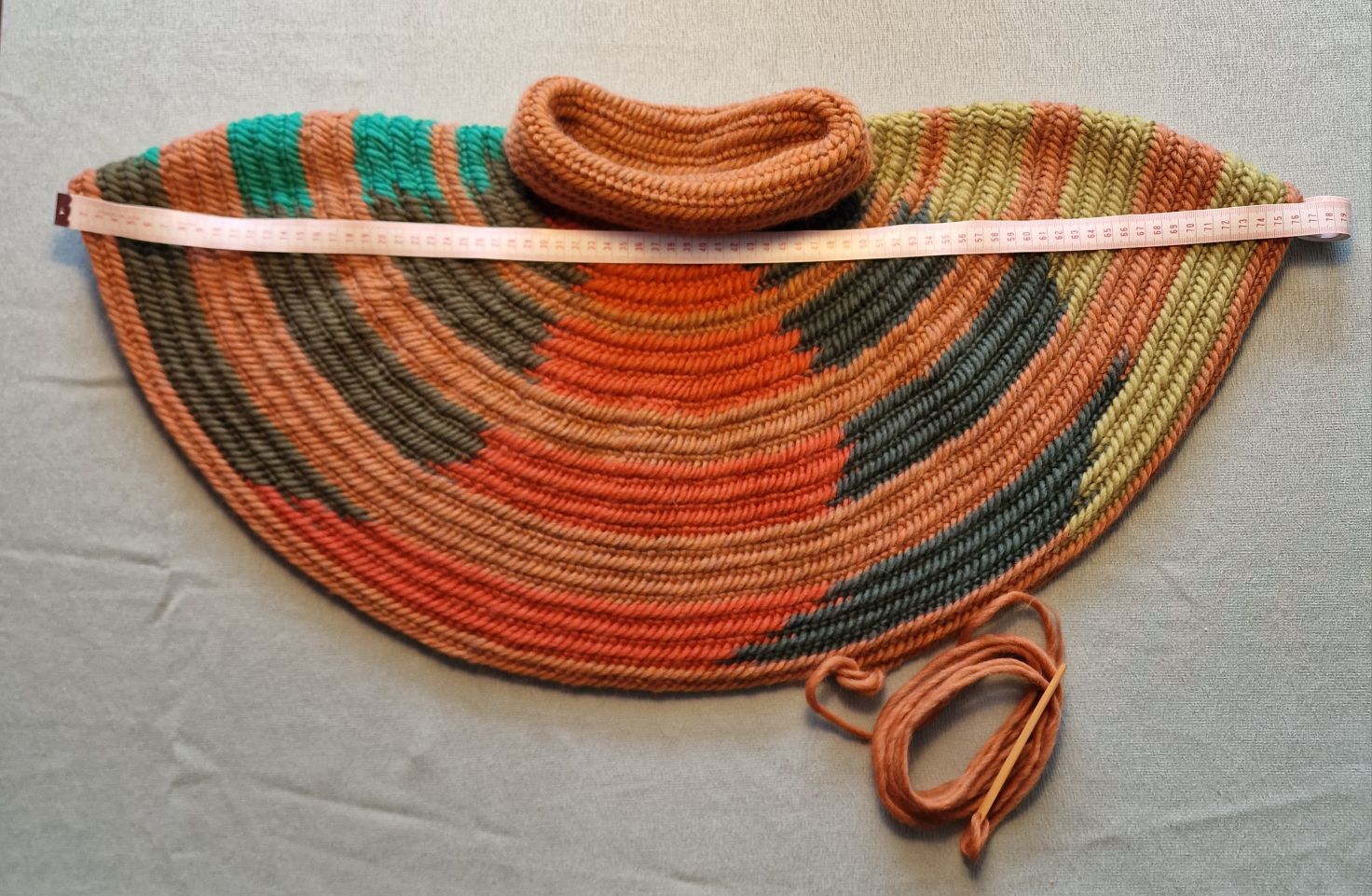
The stitch I am using here is the Faberg stitch (the Oslo stitch with an extra loop around your thumb), and the connection stitch is the F1 stitch.
im new to this craft, i recently joined a viking living history group in mackay nth queensland, australia. i also discovered my ancestors came from visby gotland. i came across your site, just wanted to say hi, and i am looking forward to learning this beautiful craft.
This is really beautiful. Well done!
This hood is beautiful… off to grab my needle and yarn ❤️❤️❤️
Thanks for posting the link to your website on the Nalbinding FB group. I have really enjoyed seeing your work and reading your insights. Nalbinding is one of about 19 hobbies I have, so I don’t do a lot of it but I just bought a fabulous wool on sale and I think I need to try mittens. I have focused on neckwarmers, hats and cowels and only did mitts once. Anyway, thanks Bert.
On another note- the Dutchness here makes me feel cozy. My step-father was a Dutchman and I learned how to say Hagelslag, Scheveningen and Uitsmijter and to eat herring, but not eel.
I put my partner’s website as I have a small, still invisible page there until I want to show my work.
I have made many hats (we call them toques in Canada) with the Oslo stitch. i feel confident enough now to try something different. This hood is perfect. Thank you so much for sharing.